REVIEW · OAHU
Through A Glass Darkly The Strange and Tragic History Of Honolulu
Book on Viator →Bookable on Viator
Honolulu has two histories, and this walk connects them. Through A Glass Darkly uses a tight loop of famous sites to show the strange and tragic turns of Oahu’s past, with a guide who tells it like a story and like a warning. I love that it takes you beyond postcard Hawaii and right into power, faith, and survival, one stop at a time.
I also like the small-group feel, since you get room to ask questions and hear the details behind what you’re looking at. One thing to think about: the tour includes plenty of standing, so plan for a slower pace if your legs get tired.
In This Review
- Key highlights you should know
- Terry’s storytelling pace on a 90-minute Honolulu walk
- Starting at the King Kamehameha I Statue: conquest as a turning point
- Iolani Palace, then Washington Place: the monarchy under pressure
- Missionary-era sites: Kawaiaha’o Church and the Hawaiian Mission Houses
- Honolulu Hale and the State government vibe: pretty buildings, ugly stories
- Cathedral of St. Andrew and the stories people carry
- Ali’iolani Hale and Capitol Modern: law, art, and old hotel glamour
- If you want history you actually remember, this is a good fit
- Price and value: is $39 worth your time?
- Logistics that make a difference on the ground
- Should you book Through A Glass Darkly in Honolulu?
- FAQ
- How long is the Through A Glass Darkly walking tour?
- What is the meeting point and where does it end?
- What time does the tour start?
- Is the tour offered in English?
- Is there a mobile ticket?
- Is admission included for every stop?
- What group size should I expect?
- Is the tour accessible for people with mobility needs?
- Are service animals allowed?
- Can I get a full refund if I cancel?
- Is the tour near public transportation?
Key highlights you should know
- Guided by Terry: clear storytelling, with humor and strong context that sticks.
- Small group (max 20): easier pacing, less crowd noise, more time on meaning.
- Real-world contrasts: royal sites, church buildings, and government buildings all in one loop.
- Ghost stories, too: expect a bit of the spooky, which some people weren’t ready for.
- Most stops are free: only two key places have admission not included.
Terry’s storytelling pace on a 90-minute Honolulu walk
This is a 1 hour 30 minutes walking tour that starts at the King Kamehameha I Statue at 447 S King St, Honolulu at 10:45 am. The group is kept to a maximum of 20, which matters more than you’d think in downtown, small groups just feel calmer, and you can actually hear what the guide is saying.
You’ll move from one important site to the next without long detours. And because you’re outside for much of the time, go prepared for sun or a quick weather shift. I like that the guide keeps an eye on comfort and tries to keep people in the shade when it’s available. If you’ve got mobility questions, note that assistance is available for stairs or inclines, and most travelers can participate.
Also, you’ll want to bring your curiosity. This isn’t the kind of tour that just points at landmarks. It links places to big themes, conquest, religion, law, and political collapse, so the buildings start to feel like evidence, not scenery.
You can also read our reviews of more historical tours in Oahu


Starting at the King Kamehameha I Statue: conquest as a turning point
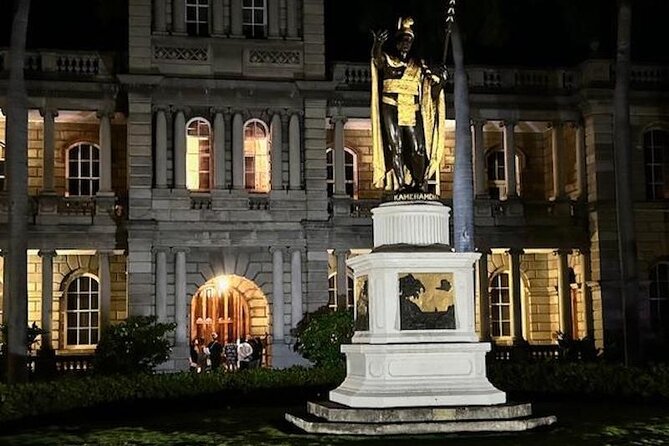
You begin at the King Kamehameha Statue, and the first moments set the tone: the guide explains the conquest of Oahu under King Kamehameha. It’s the kind of story that’s gripping because it’s not tidy. You come out of this stop with a clearer sense that power on islands like Oahu wasn’t just romantic destiny, it was hard, strategic, and costly.
This is also a good “warm-up” stop. It helps you build context before you step into later sites tied to monarchy and its end. If you only know Hawaii from beaches and songs, this is the moment you’ll start seeing the island as a place where major decisions were made in the open, then the consequences changed everything.
Iolani Palace, then Washington Place: the monarchy under pressure
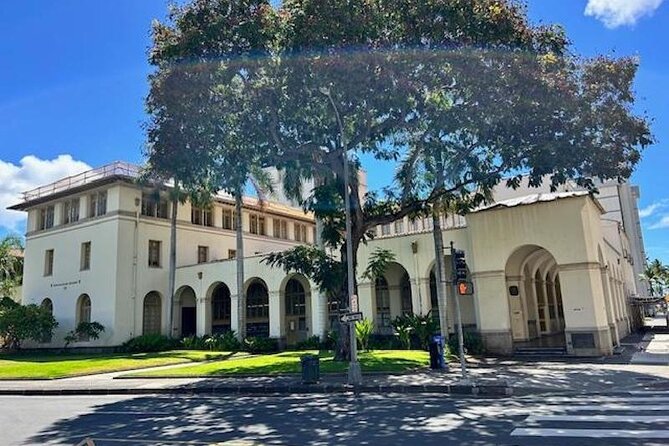
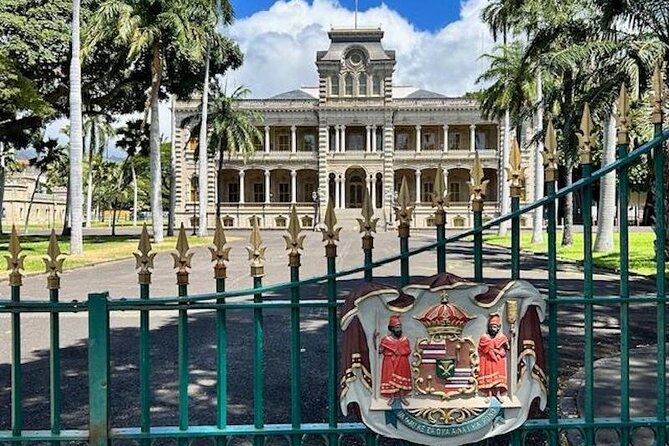
Next you’ll head to Iolani Palace, a royal palace you can’t ignore even from the outside. The big draw here is the contrast: you’re looking at a setting associated with kings and thrones, yet the story ends with the tragic overthrow of the monarchy. That contrast hits harder when the guide frames it in plain terms instead of treating it like distant museum history.
Important practical note: Iolani Palace admission is not included, so you may need to plan for that if you want inside time. Even if you don’t, you’ll still get the historical context while you’re there.
Then the tour pivots to Washington Place, Queen Liliuokalani’s home. This stop lands emotionally. You’ll hear about an unhappy marriage, and how she returned there after the monarchy was overthrown. It’s one of those places where your brain has to adjust: the scale is human, the story is political, and the tragedy isn’t abstract.
If you’re the type of traveler who likes history that explains why people acted the way they did, this section is a highlight. It’s less about dates and more about how lives and institutions get crushed, or reshaped, when power shifts.
Missionary-era sites: Kawaiaha’o Church and the Hawaiian Mission Houses

After the palace and its fallout, the tour shifts to the religious era, not as a simple good-versus-bad tale, but as cultural collision.
At Kawaiaha’o Church, you’ll learn it was designed by the missionary Hiram Bingham. The term stone church can sound straightforward, but the guide frames it through local perspective, including what these structures represented to Hawaiians at the time. Even if you’ve visited churches in other parts of the world, this one feels loaded, because you’re not just looking at architecture. You’re looking at intention and impact.
Nearby is the Hawaiian Mission Houses Historic Site and Archives, a stop that’s short but thought-provoking. The idea is clear: missionaries arrived saying they came to do good, and the guide explains how that message played out in real life. This isn’t about dunking on one side. It’s about understanding the results.
These stops also break up the emotional weight of monarchy stories. They remind you that change didn’t only happen through battles or decrees. It happened through buildings, schooling, and daily habits, slow pressure that often becomes irreversible.
Honolulu Hale and the State government vibe: pretty buildings, ugly stories
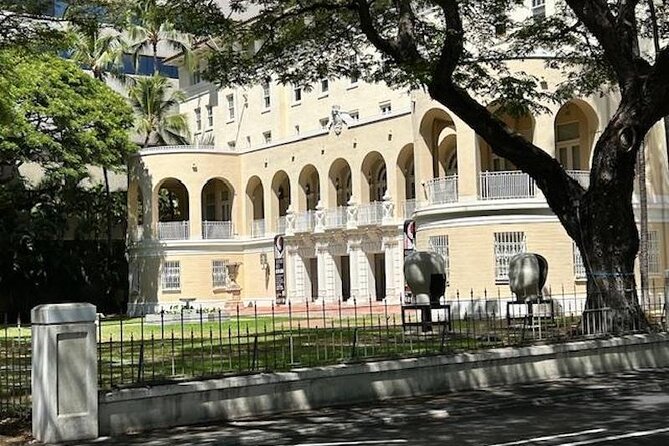
Next up is Honolulu Hale (City Hall), a lovely Italianate Spanish Colonial Revival structure. It’s the kind of building that looks like it belongs in a movie montage. The guide’s job here is to put the glow in its historical context, including an unlovely past.
Then the tour moves to the Hawaii State Capitol, where you’ll get a quick look at an elegant expression of the aloha spirit, plus a statue story tied to the queen who embodied that spirit. Even if you’re not a political-architecture person, this stop helps you see how public spaces can carry meaning, and how symbols can be used, softened, or reclaimed.
If you’re the type who usually zooms past government buildings, slow down here. You’re not just admiring design. You’re learning how meaning gets built into stone and then used in politics.






Cathedral of St. Andrew and the stories people carry
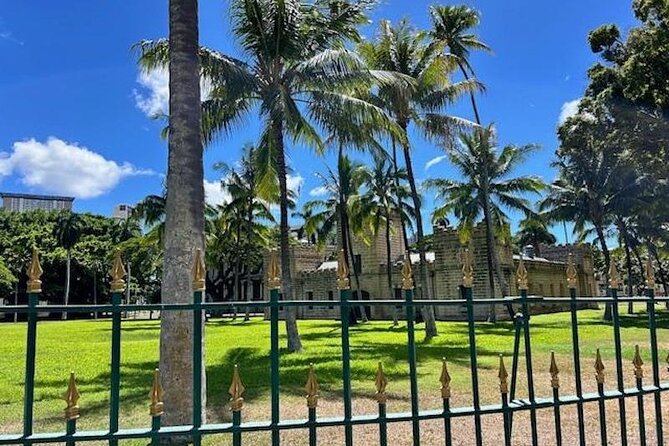
You’ll spend a short stop at the Cathedral of St. Andrew, and the details are specific enough to make it feel real. The church was built from thousands of block of sandstone cut in England and shipped to Hawaii. That alone is the kind of logistical fact you can’t get from a casual glance.
Inside is described as a magnificent stained glass nave, and the guide links the beauty to tragedy. There’s a tale tied to a king and his little boy, and it’s the sort of story that makes the cathedral feel like more than a landmark.
This is also where the tour’s tone may shift for you. The guide weaves in a slightly spooky angle, some visitors expected more history and less atmosphere, while others loved the added layer. Either way, it works best if you stay open. The tour is using story to help you remember what you’d otherwise forget.
Ali’iolani Hale and Capitol Modern: law, art, and old hotel glamour
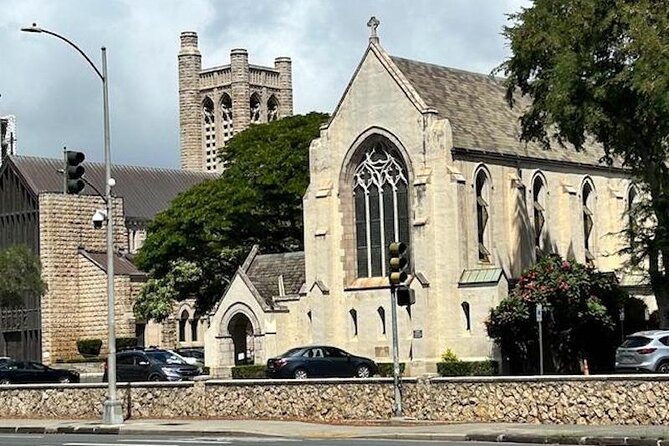
Two more stops keep the themes moving: Ali’iolani Hale and Capitol Modern.
At Ali’iolani Hale, the tour explains that it’s now the Judiciary Building and home to the Hawaii State Supreme Court. You’ll hear about where the Massie Affair played out, called the marquee event of Hawaiian jurisprudence. This stop is short, but the legal framing changes how you interpret the earlier political loss. It’s not only about what happened to the monarchy. It’s about how power and rules were handled afterward.
Admission note: Capitol Modern (the Hawai’i State Art Museum) is described as the original Royal Hawaiian Hotel built in 1872. It’s also explained that a second Royal Hawaiian was built on Waikiki Beach, often called the Pink Palace. That’s fun, but it’s also a reminder that buildings move through time: a place built for hospitality can later become a place for state-level culture.
Practical note: Capitol Modern admission is not included, so if you want to go in, plan for that separately. Even without entry, the guide’s storytelling ties the “hotel success” narrative to the larger story of what Honolulu was becoming.
If you want history you actually remember, this is a good fit
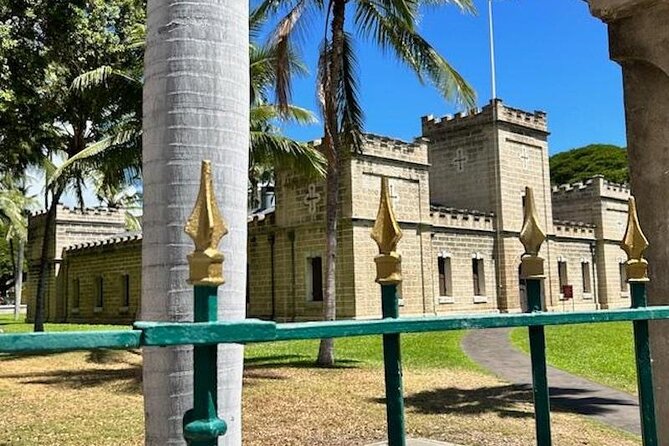
One reason this tour works is the guide’s voice. People talk about Terry as the kind of presenter who keeps things moving and clear, and who has the patience to handle multiple generations in one group. If you like your history with context, not just names, you’ll probably enjoy the pacing.
You also get a few emotional gears shifting across the loop:
- conquest and power (first stop),
- monarchy and its overthrow (palace and Liliuokalani),
- faith and cultural change (church and mission houses),
- symbols in public buildings (city hall and capitol),
- law after upheaval (Ali’iolani Hale),
- and how places get repurposed (hotel to art museum).
That structure is value. It means you don’t leave with five separate facts stuck to your brain. You leave with a storyline.
Price and value: is $39 worth your time?
At $39 per person, this is priced like a real walking experience, not a cheap sampler. The value comes from two things you can feel right away: the tight 90-minute format and the depth of interpretation the guide gives to major sites.
Most stops are free admission. Only two places note admission not included: Iolani Palace and Capitol Modern. So if you treat this as a context tour where you can optionally pay for entry if you want, the math usually works well.
Also, the small group size (up to 20) keeps the experience personal enough that you aren’t just overhearing facts. For history-minded travelers, that makes the price easier to justify.
Logistics that make a difference on the ground
A few practical points help you plan smoothly:
- You’ll use a mobile ticket.
- The tour is offered in English.
- It’s near public transportation.
- You start and end back at the same meeting point near King Kamehameha I Statue.
- Service animals are allowed.
- There’s assistance for stairs or inclines if needed.
If you’re sensitive to standing, treat this like an intentional walking tour, not a casual stroll. Bring water, wear shoes you trust, and plan for stops with limited sitting.
Should you book Through A Glass Darkly in Honolulu?
Book it if you want Honolulu to make sense as a place shaped by conquest, monarchy, missionary-era change, and law, not just as a backdrop for photos. I’d especially recommend it if you like guides who tell stories with context and a little attitude, and if you’re curious about the parts of Hawaiian history that don’t get equal screen time in everyday tourism.
Skip or consider something else if you’re very limited on standing time, or if you strongly prefer tours that avoid the spooky side. This experience can lean into ghost stories, and while it’s usually in service of atmosphere and memory, it’s still a shift from strict history-only tours.
If you’re pairing this with a museum day, the tour can be a smart warm-up. It gives you a set of connections that make later stops feel less random.
FAQ
How long is the Through A Glass Darkly walking tour?
It runs for about 1 hour 30 minutes.
What is the meeting point and where does it end?
The tour starts at King Kamehameha I Statue, 447 S King St, Honolulu, HI 96813, and it ends back at the same meeting point.
What time does the tour start?
The listed start time is 10:45 am.
Is the tour offered in English?
Yes, the tour is offered in English.
Is there a mobile ticket?
Yes. You’ll receive a mobile ticket.
Is admission included for every stop?
No. Iolani Palace and Capitol Modern note that admission is not included. The other listed stops show admission as free.
What group size should I expect?
The tour has a maximum of 20 travelers.
Is the tour accessible for people with mobility needs?
Assistance is available for those who need help with stairs or inclines, and most travelers can participate. There is also standing during the experience, so plan accordingly.
Are service animals allowed?
Yes, service animals are allowed.
Can I get a full refund if I cancel?
Yes. You can cancel for a full refund if you cancel at least 24 hours before the experience starts. If you cancel within 24 hours, the amount paid is not refunded.
Is the tour near public transportation?
Yes, it’s listed as near public transportation.