REVIEW · OAHU
Honolulu Historic District a Smartphone Audio Walking Tour
Book on Viator →Operated by Tripvia Tours · Bookable on Viator
Downtown Honolulu tells stories street by street. Start at Aliʻiolani Hale, follow a live map, and let the tour’s audio guide you from royal buildings to theaters and city monuments on foot. It’s the kind of tour that turns “I’m just walking downtown” into “I get why this place looks like this.”
I especially like the offline-friendly setup: download on WiFi before you go, and during the walk you don’t need signal or data. I also like that you can take your time since there are no hard time limits, and the commentary auto-plays at each stop so you can just focus on the streets.
One catch to consider: this is an outdoor walking tour, and attraction entry isn’t included. If you’re expecting to go inside any of the sites you pass, you’ll want to plan that separately, and I’d also bring earbuds because the audio can be easy to miss from a distance.
In This Review
- Key Highlights You’ll Actually Use
- Why This Tour Works for First-Timers (and Busy Days)
- Before You Go: Set Up for Offline Audio
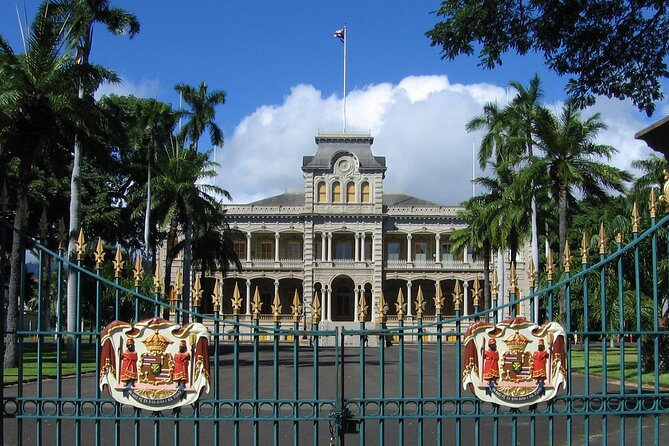
- Start at Aliʻiolani Hale: Where the Route Gets Its Meaning
- King Kalakaua’s 1879 Legacy Comes Into Focus
- Kamehameha I Statue: Folklore in Bronze
- Victorian-Era Kanaina Building: A Different Style in Hawaii
- Patsy and the Story Behind the Statue
- The Reading Room That Kept Sailors Out of Mischief
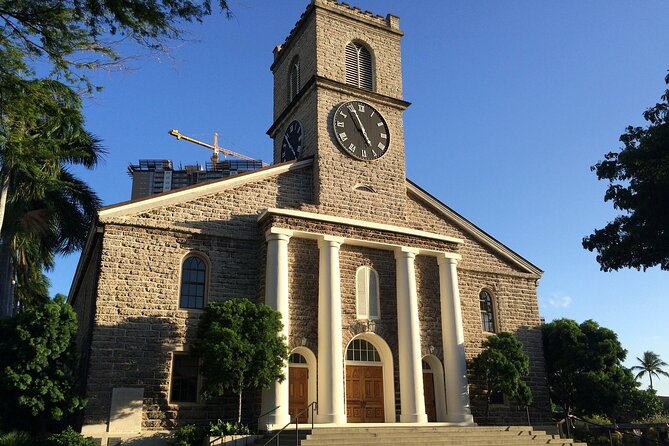
- Hawaii’s Oldest Church: Faith That Predates the Downtown Views
- King Lunalilo’s Choice and the Royal Mausoleum Question
- City Hall and the Engraved Years That Don’t Match
- Frank F Fasi Building: 2006 and a Very Specific Design
- Seagull Schools and the Stone Folks on the Grounds
- Honolulu Police Department: Something Unique You’ll Hear On-Site
- Bell of Nagasaki: Peace and US-Japan Friendship
- Queen’s Conference Center: Queen Emma and King Kamehameha IV
- Hawaii’s State Capitol Moment: 1969
- Regal Manor by a Clipper Ship Captain (1842)
- A Hawaii Art and Culture Museum Stop
- Queen Emma’s Legacy: Last Surviving Kamehameha Dynasty Member
- The Dream of Kamehameha and Queen Emma for Worship
- Queen Emma Area: Renamed in 2016
- Walk the Pedestrian Mall: Shopping Streets with History Underfoot
- Hawaii Theatre Center: Vaudeville and Silent Film Roots
- Kumu Kahua Theatre Company: New Works and Local Voices
- Materials Matter: How Brick Expectations Got Reworked
- Final Stops: How It Feels to Finish This Kind of Downtown Loop
- Price and Value: $10.99 Gets You a Meaningful Walk
- Practical Tips That Make the Walk Better
- Who This Tour Suits Best
- Should You Book Honolulu Historic District Audio?
- FAQ
- How much does the Honolulu Historic District smartphone audio walking tour cost?
- How long does the tour take?
- What language is the audio available in?
- Where do I start the tour?
- Do I need internet data during the walk?
- Are attraction tickets included for stops on the route?
- Is this tour private?
Key Highlights You’ll Actually Use
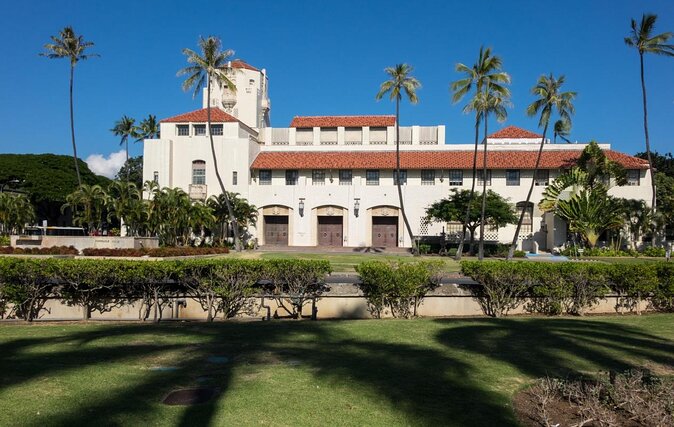
- Offline audio plus a live GPS map so you can stay oriented without burning data
- Auto-playing commentary at each landmark means fewer screen taps and less guesswork
- A dense downtown route that hits palaces, churches, a theater, and civic buildings in about 1–2 hours
- Stories behind the stone and bronze (why statues exist, why buildings look the way they do)
- Flexible pacing that lets you slow down at the stops you care about most
- Skip-friendly route flow so you can keep moving if one stop isn’t your thing
Why This Tour Works for First-Timers (and Busy Days)
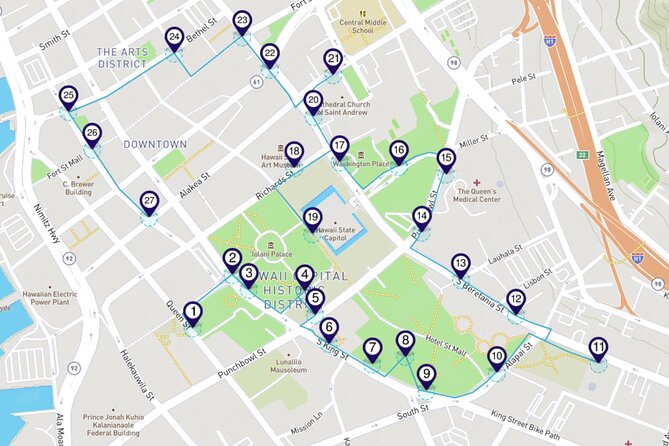
This tour is built for people who want history context but not a rigid schedule. You start at Aliʻiolani Hale and walk a loop through downtown Honolulu’s most recognizable landmarks, with audio that kicks in as you reach each point. There’s live GPS to show where you are, and you can pause or keep going at your own speed.
At $10.99 per person for roughly 1–2 hours, it’s good value if you’re sightseeing anyway and you want more meaning than a quick photo stop. You’re not paying for a driver or a guided group dynamic. You’re paying for a tight set of stories delivered right on the sidewalk.
You can also read our reviews of more walking tours in Oahu



Before You Go: Set Up for Offline Audio
Plan this like you would any offline map or playlist. Download the tour on WiFi first, because once you start walking, the experience is designed to run without needing signal or data. I like this approach in Honolulu because downtown can have dead zones and spotty connectivity.
You’ll also want to decide how you’ll listen. Headphones are optional, since the audio can play from your device speaker. That’s convenient, but if you’re near traffic or crowds, earbuds tend to make everything clearer, especially during quieter moments of narration.
Start at Aliʻiolani Hale: Where the Route Gets Its Meaning
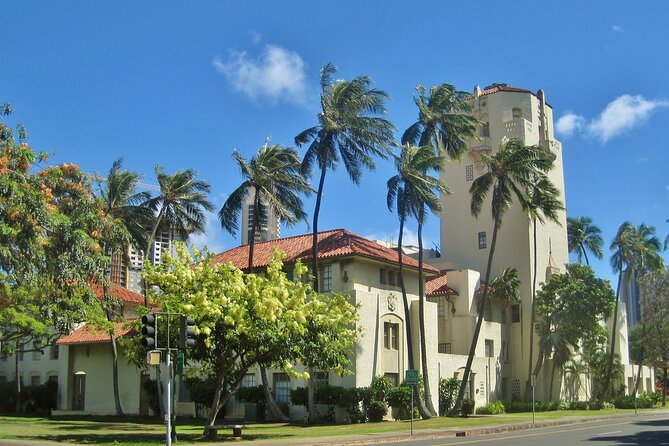
You begin at Aliʻiolani Hale on S King Street. The audio frames it as the House of the Heavenly Kings, and it sets the tone for what you’re really doing here: reading Honolulu’s identity in architecture and monuments, not just checking off sights.
Aliʻiolani Hale is also a great “anchor stop.” It’s near the center of downtown, so you’re not guessing how to start your day, and the rest of the walk feels like a guided stroll through the capital’s core.
King Kalakaua’s 1879 Legacy Comes Into Focus
Next, the tour zooms in on a key building story: it was built in 1879 for King Kalākaua, who ruled the Hawaiian Kingdom. This is the kind of detail that makes the street feel less random. When you understand that a structure is tied to a specific monarch and era, the shapes and placement around you start to make sense.
This is also a good moment to slow down. The audio doesn’t just name-drop. It helps you connect the dots between the monarchy, the city center, and the way later institutions reused or reshaped these spaces.
Kamehameha I Statue: Folklore in Bronze
Then you’ll hear the folklore tied to King Kamehameha I while you visit his statue. Statues can feel like decoration if you don’t know what they’re pointing to. Here, the narration helps you read the statue as a cultural marker, one that signals who Honolulu wanted to remember, and why.
If you like learning “what you’re looking at,” this stop is a highlight.
You can also read our reviews of more historical tours in Oahu





Victorian-Era Kanaina Building: A Different Style in Hawaii

The Kanaina Building is added to the National Register of Historic Places (listed in 1978). The tour calls it an important example of Victorian architecture in Hawaii, which is a neat contrast to the more expected styles you might associate with the islands.
Even if you’re not an architecture buff, this is the point where the tour starts to feel more like a guided observation mission. You start noticing details you would otherwise walk past.
Patsy and the Story Behind the Statue

You’ll learn about Patsy’s accomplishments and why a statue was created. This kind of stop matters because it puts real people into the downtown picture. It’s not only about kings and grand buildings. You get to see how local legacy can become public art.
This section also helps explain why Honolulu’s monuments aren’t all about the same theme. Different statues tell different kinds of stories.
The Reading Room That Kept Sailors Out of Mischief

One of the most memorable narration moments: a “haven for book lovers” that started as a reading room established in 1879. The reason? To keep unruly sailors out of mischief.
That detail is funny, but it’s also practical history. It shows how institutions formed around everyday behavior and community needs, not just royal ceremonies. If you like cultural anthropology disguised as sightseeing, you’ll appreciate this.
Hawaii’s Oldest Church: Faith That Predates the Downtown Views
The tour then points you toward Hawaii’s oldest church. The audio emphasizes what makes it historically significant, and the vibe here is different from the civic-and-royal stops.
You don’t need to be religious to enjoy this part. It’s about time depth, standing in a place that carries older layers of the city than the surrounding buildings might suggest.
King Lunalilo’s Choice and the Royal Mausoleum Question
Next up is a story about King Lunalilo, specifically his refusal to be interred in the Royal Mausoleum. Instead, the tour explains why he’s buried here.
This is one of those “small detail with big meaning” moments. Monuments and burial choices can reveal values and politics, not just personal wishes. It makes the grounds feel like a living document, not a static photo backdrop.
City Hall and the Engraved Years That Don’t Match
The tour covers how the city hall building was constructed, including impressive features you’ll see as you look around. Then comes the eyebrow-raise question: why are 1820 and 1915 engraved on the front when the building is 1921? The audio walks you through the story, tied to a natural phenomenon.
This is the kind of mystery that makes self-guided tours work best. You keep walking, but you’re also solving a clue as you go. If you enjoy learning “why,” this section will keep you listening.
Frank F Fasi Building: 2006 and a Very Specific Design
As of 2006, the tour introduces Honolulu’s new municipal building, the Frank F Fasi Building, and notes its unique design. The audio also gives you the “why” behind what you’re looking at.
This stop helps balance the route. You get older layers of the city, but you also see that downtown Honolulu continues evolving, so the story isn’t locked in the past.
Seagull Schools and the Stone Folks on the Grounds
You’ll also pass the relaxed stone figures associated with Seagull Schools, an early childhood education center. The narration explains what’s special about the grounds and how these features fit into the larger downtown story.
For families and anyone who likes playful details, this is a good decompression stop between bigger monuments.
Honolulu Police Department: Something Unique You’ll Hear On-Site
Then the tour brings you to a point about the Honolulu Police Department, specifically, a detail that’s unique with the department (you’ll hear what that is during the audio).
I appreciate stops like this because they remind you that civic institutions are part of history too. They aren’t just background scenery while you hunt for palaces.
Bell of Nagasaki: Peace and US-Japan Friendship
One of the more global symbols on the route is the Bell of Nagasaki, described as a symbol of peace and friendship between the United States and Japan.
Even if you only spend a minute here, it changes the feel of downtown. It’s a reminder that Honolulu has always been a hub tied to travel, shipping, and international relationships, not an isolated island bubble.
Queen’s Conference Center: Queen Emma and King Kamehameha IV
The tour then moves into the Queen’s Conference Center, explaining it as a historic and cultural landmark of Honolulu. The audio attributes the brainchild to Queen Emma and King Kamehameha IV, and it shares their vision.
This is one of those stops where architecture plus storytelling makes the difference. The narration helps you understand why this place matters, not just that it’s there.
Hawaii’s State Capitol Moment: 1969
Next, the audio explains that in 1969, this complex officially became the Hawaii State Capitol. That fact alone gives you a framework: the place you’re standing in isn’t only ceremonial. It’s administrative and political too.
If you like connecting time periods, you’ll enjoy seeing how a single site can shift roles while keeping cultural weight.
Regal Manor by a Clipper Ship Captain (1842)
You’ll also see a regal manor built in 1842 by a clipper ship captain for his wife and young son. The tour includes the tale behind it, which adds a more personal, family-centered angle to the route.
This is helpful when the earlier stops feel dominated by monarchy and institutions. You get a different type of “old story” based on people connected to trade and migration.
A Hawaii Art and Culture Museum Stop
The narration points out a museum dedicated to showcasing Hawaii’s art and culture, described as a must-see if you care about traditions of the islands.
The tour doesn’t promise entry here, so treat this as a storytelling pass-by unless you already plan tickets separately. Still, it works well as a “why this matters” moment while you’re outside.
Queen Emma’s Legacy: Last Surviving Kamehameha Dynasty Member
The audio includes a dramatic-sounding line credited to Queen Emma: I was the last surviving member of the Kamehameha dynasty. Even if you take it as narration rather than literal quote, it captures the emotional weight of the era.
This is another stop where downtown feels like a timeline. You’re not only walking through buildings; you’re walking through transitions.
The Dream of Kamehameha and Queen Emma for Worship
The tour then highlights a place of worship tied to a dream of King Kamehameha and Queen Emma for beloved Hawaii. The narration explains what the dream was aiming for and why it’s part of the story of downtown landmarks.
If you’re the type who enjoys how cultures show values through architecture, this section is worth your attention.
Queen Emma Area: Renamed in 2016
Next comes a smaller but meaningful place-name story. Originally named for Queen Emma, as of 2016 the area shares that honor with James and Abigail Campbell.
This is a reminder that even the map changes over time. A street corner can tell you how communities choose to remember different people.
Walk the Pedestrian Mall: Shopping Streets with History Underfoot
Then you move into the pedestrian-only street mall, established in the 1960s as part of a plan to revitalize downtown. The tour positions it as still popular for shopping, dining, and entertainment.
This part matters because it stops the tour from feeling too museum-like. It’s where you can grab a snack, cool off, or just let downtown life re-enter the day.
Hawaii Theatre Center: Vaudeville and Silent Film Roots
The Hawaii Theatre Center opened in 1922, and the tour frames it as a stage for vaudeville and silent film. If you’re into performance history, it’s a compelling change of pace from palace and civic stories.
This stop is also a good time to look closely at details and imagine what kind of crowds once packed the space for entertainment.
Kumu Kahua Theatre Company: New Works and Local Voices
The building was donated to the Kumu Kahua Theatre Company, formed to produce new works by Hawaii playwrights and productions reflecting the diverse cultures and experiences of people in Hawaii.
That’s a powerful concept: preservation plus creation. You’re seeing how a historic structure can stay alive by becoming a platform for new storytelling.
Materials Matter: How Brick Expectations Got Reworked
Near the theater area, the tour explains substitutions for bricks newcomers were used to back home, and what they decided on instead.
Even without the specific brand-new detail here, the theme is clear: Honolulu adapted. That kind of practical cultural adjustment is often missed when you only look at “pretty old buildings.”
Final Stops: How It Feels to Finish This Kind of Downtown Loop
By the time you reach the end, the route feels like a guided orientation. You’ve walked past monarchy-era sites, civic buildings, peace monuments, churches, and performance landmarks, all with audio explanations that make each one feel less random.
You also end back at the meeting point near Aliʻiolani Hale, which keeps the logistics simple. If you want to extend the day, you’re already in a spot where you can keep walking, hop to Chinatown, or grab dinner nearby.
Price and Value: $10.99 Gets You a Meaningful Walk
For $10.99, this tour is priced like a budget add-on, but it doesn’t feel cheap in practice if you use it as intended: download ahead, walk the route, and listen at each stop.
You’re paying for:
- a self-guided structure you can do anytime you want,
- offline-friendly audio plus live GPS,
- and a set of short stories that add meaning to downtown landmarks.
If you’re already walking downtown for a couple hours, it’s an efficient way to turn that time into something you’ll remember.
If you’re hoping for paid interior access, you’ll need to manage expectations. Attraction tickets aren’t included, so inside visits depend on those sites’ own rules and tickets.
Practical Tips That Make the Walk Better
- Bring earbuds. Even if the speaker works, they help you catch the narration clearly in street noise.
- Start earlier in the day if you can. Downtown heat and sun add up fast, and you’ll have a better experience moving at a steady pace.
- Be okay with skipping. If you see a stop and decide it’s not for you, you can keep your route flexible and focus on what you want most.
- Use the live GPS map. Let it keep you from second-guessing where you are, especially at intersections.
Who This Tour Suits Best
This tour fits you if you:
- want a self-guided way to understand downtown Honolulu,
- like audio storytelling at landmarks,
- and prefer pacing that matches your energy.
It also works well for couples and small groups since it’s a private activity where only your group participates. Solo travelers will appreciate the structure, and families may enjoy the stop-by-stop stories, especially if you keep sessions short and take breaks.
If you want a guide to manage logistics in real time or want entry to specific attractions, you may find you need additional tickets or a different type of tour.
Should You Book Honolulu Historic District Audio?
I’d book this if you plan to spend part of a morning or afternoon in downtown Honolulu anyway and you want the background story that makes the buildings click. The offline audio and live GPS are the deciding factors for me, plus the route covers enough major sights to feel worth your time at a low price.
Skip the idea only if your main goal is entering specific sites you pass. Since attraction tickets aren’t included, some stops will stay outside-view only. If that’s okay with you, this is a smart, low-pressure way to experience Honolulu’s downtown without paying for a formal group tour.
FAQ
How much does the Honolulu Historic District smartphone audio walking tour cost?
It costs $10.99 per person.
How long does the tour take?
Plan on about 1 to 2 hours (approx.).
What language is the audio available in?
The tour is offered in English.
Where do I start the tour?
The tour starts at Aliʻiolani Hale, 417 S King St, Honolulu, HI 96813, USA.
Do I need internet data during the walk?
No. The tour is designed for you to download on WiFi before you go, and no signal or data is used during the tour.
Are attraction tickets included for stops on the route?
No. Attraction tickets are not included.
Is this tour private?
Yes. It’s listed as a private tour/activity, so only your group will participate.