REVIEW · OAHU
Honolulu’s Waikiki Self-Guided Walking Audio Tour
Book on Viator →Operated by History with Action · Bookable on Viator
Waikiki on foot, without waiting for anyone. This self-guided audio tour turns common landmarks into a 45+ story walk full of Hawaiian figures and early-1900s drama, and you can pause, snack, and backtrack at your pace. I like that it’s designed to work with offline maps and location-triggered audio, so you’re not stuck hunting for directions every few minutes. One thing to plan for: it can run long (over 14 miles), so wear shoes that can take real walking and don’t schedule it as a quick 60-minute stroll.
The price is $9.99, and the value is in how much context you get while you’re already out doing Waikiki things. You’ll hear stories tied to specific spots, ancient healing sites, surfing legend Duke Kahanamoku, royal figures, and even the setting for famous mysteries, so the walk feels more like discovery than sightseeing. The main drawback is that you’re on your own: no guide meets you at the start, and you’ll need to download the tour on strong connectivity before you head out.
In This Review
- Key Highlights You’ll Actually Feel
- Price and Logistics: What You’re Really Paying For
- How the Audio Tour Works (So You Don’t Waste Time)
- The Walk From Taft’s Coastal Plan to Waikiki’s Icons
- Stop-by-Stop: What Each Spot Adds to the Story
- 0) A Concrete Clue Back to 1904
- 1) Kawehewehe: An Ancient Healing Site on the Water’s Edge
- 2) Bali Oceanfront: Ocean as Life Source
- 3) Princess Kaiulani Statue: Waikiki’s Beloved Last Heir
- 4) Duke Kahanamoku Lagoon: Surfing as a Hawaiian Legacy
- 5) Royal Hawaiian Hotel (1927): Celebrity and Presidential Waikiki
- 6) Moana Surfrider: Electric Elevators and a Famous Mystery
- 7) The Surfing Fever Story: When Most People Hadn’t Seen It
- 8) Kuhio Beach Hula Show: A Great Beach Stop for Families
- 9) Prince Jonah Kūhiō Kalaniana‘ole Connection
- 10) Waikiki Wall: Concrete That Became Part of the View
- 11) Kalākaua Avenue: Duke’s Medal Era, War Years, and Service
- 12) Makua and Kila Statue: A Surfer and a Monk Seal
- 13) Waikiki Walkway: Duke’s Spirit in the Present
- Timing: How Long It Really Takes
- Who This Tour Fits Best (And Who Might Be Less Happy)
- Practical Tips for a Smoother Waikiki Day
- Should You Book It?
- FAQ
- FAQ
- How long is Honolulu’s Waikiki self-guided walking audio tour?
- Where do I start and where does it end?
- Do I need cellular or wifi during the walk?
- What device do I need?
- Are tickets or attraction reservations included?
- Can I use it more than once?
- Can I cancel for free?
Key Highlights You’ll Actually Feel
- Offline-first audio with GPS cues: the stories play automatically based on your location, no cellular needed after download
- Lifetime access: new, no expiry, so you can use it on this trip or a future Waikiki return
- 45+ audio stories over a long route: you can go straight through or skip the parts that don’t grab you
- Hands-free walking: audio runs while you move, and you can pause anywhere for photos and breaks
- Stops are mostly free to enjoy: the tour notes mark several key points as ticket-free
- A focused route through Waikiki landmarks: from Brothers in Valor to Waikiki Walkway/Waikiki Wall
Price and Logistics: What You’re Really Paying For

At $9.99 per person for a self-guided experience, the cost is low enough that you can treat it like “audio insurance” against boredom. The real bargain is that you’re buying time-efficient storytelling while you’re already walking Waikiki’s shoreline and streets. You’re not paying for entry tickets included in the price, and that’s intentional: you’re expected to enjoy mostly outdoor stops that you can reach without reservations.
In practice, the logistics are simple but important. You download the Action’s Tour Guide app, enter the password sent by email/text, and make sure the tour is downloaded while you have strong wifi/cellular. After that, the tour works offline, and the audio plays as you walk. There’s also a set window of 6:00 AM to 9:00 PM for operation, but since it’s self-guided, you’re not locked into a group departure.
Two practical tips I’d follow:
- Bring headphones/earbuds for clear audio while walking.
- Plan for battery life. If your phone dies, the tour can’t do its location-based magic.
You can also read our reviews of more walking tours in Oahu



How the Audio Tour Works (So You Don’t Waste Time)
This tour is built around location-triggered listening. You don’t get a person greeting you at the start. Instead, you walk to the first story point at Brothers in Valor memorial, 2081 Kalākaua Ave (Honolulu), then open the app onsite. If there’s more than one tour version, you’ll want the one that matches your starting direction.
Once you’re rolling, the tour is pretty hands-off:
- Stories play automatically when you get near each stop.
- You can pause whenever you want to rest, take a longer look, or walk a side route.
- You can also skip what you don’t care about and move on.
One small reality check: the tour notes also mention an over 14-mile route with more than 45 audio stories, taking around 2–3 hours to complete. That’s longer than the quick “1–2 hours” label some visitors might expect, so I recommend you treat it as a half-walking-adventure, not a mere add-on. If you rush it, you’ll miss the points where the story actually matches what you’re seeing.
The Walk From Taft’s Coastal Plan to Waikiki’s Icons
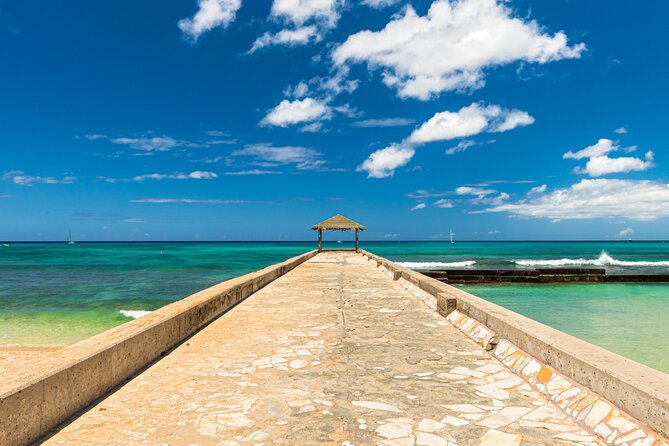
The route is basically a timeline on foot. Early on, you hear about coast protection planning back in 1904, when President Taft pushed for a Ring of Steel along Hawaii’s coast. It’s a reminder that Waikiki wasn’t only paradise brochures, it also sat within global politics and military planning. Then the tour shifts into living culture and famous characters: royalty, surfing, hula, and the oceanfront as the “life source” for Hawaiian people.
What I like about this structure is that it gives you two ways to enjoy the walk:
- You can listen for the people (Princess Kaiulani, Duke Kahanamoku, Prince Jonah Kūhiō Kalaniana‘ole).
- Or you can listen for the places and what they meant (healing sites, beaches, and even concrete structures turned into part of the scenery).
And because it’s self-paced, you can decide what kind of listening mood you want, quick snapshots or longer attention where a story really hooks you.
Stop-by-Stop: What Each Spot Adds to the Story
Below is the tour’s flow from start to finish, with what you’ll likely notice at each one and why it matters. The tour notes mark many stops as free to experience, so you’re not hunting for paid entry while trying to keep moving.
0) A Concrete Clue Back to 1904
At the start of the audio sequence, you’ll run into a chunk of concrete tied to the 1904 era, linked to Taft’s push for coastal defenses. It can feel out of place against Waikiki’s postcard look, but that mismatch is the point. Listen closely here because this is where the tour starts training you to see Waikiki as layers, not just scenery.
Consideration: if you hate “infrastructure stories,” you might want to treat this section as background and focus later on the people and beaches.
You can also read our reviews of more guided tours in Oahu





1) Kawehewehe: An Ancient Healing Site on the Water’s Edge
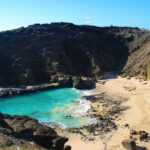
You’ll hear about deep blues and a strip of light blue, described as a clean-sand bottom, one of four ancient healing sites in Waikiki. Even if you can’t interpret the underwater visuals on your own, the audio helps you connect this area to a much older purpose than recreation.
This stop works best when you slow down for a minute and actually look at the ocean surface. The story gives you a reason to treat the water like something meaningful, not only something to photograph.
2) Bali Oceanfront: Ocean as Life Source
Next comes the Bali Oceanfront, framed as the life source for Hawaiian people since ancient Polynesians settled the region between 400 and 1100 CE. It’s one of those moments where the tour nudges you out of modern “tourist time” and into older rhythms.
Why it’s valuable: you’ll get context for why so many Waikiki stories point back to the ocean, food, travel, culture, and daily life.
3) Princess Kaiulani Statue: Waikiki’s Beloved Last Heir
Then you’ll meet Princess Kaiulani, described as Hawaii’s last heir to the throne and one of Waikiki’s beloved figures. The statue stop is short, but it’s the kind of landmark that becomes more than a pose point once you hear the story.
If you’re into political history and cultural memory, you’ll appreciate how the tour ties her presence to Waikiki’s identity.
4) Duke Kahanamoku Lagoon: Surfing as a Hawaiian Legacy
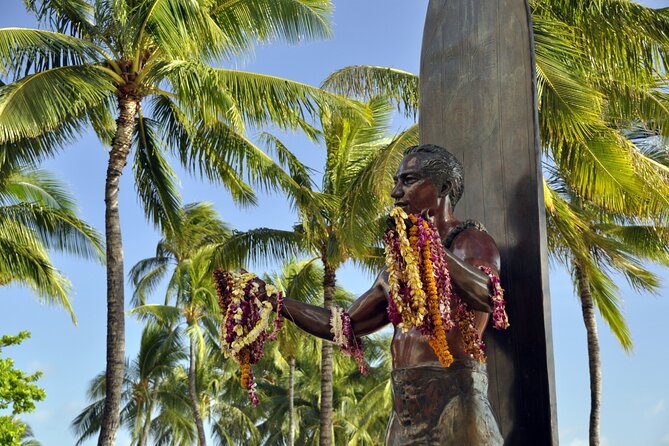
After Kaiulani’s story, the tour shifts to Duke Kahanamoku, presented as the surfing legend who rose after her era. You’ll hear the start of his story in the shadows of palm trees and on the crest of a breaker in the distance, nice poetic wording that helps you “set the scene” as you look toward the water.
This stop is where the walk starts feeling less like museum listening and more like you’re watching the ocean with purpose.
5) Royal Hawaiian Hotel (1927): Celebrity and Presidential Waikiki
You’ll then hear about an iconic hotel that debuted in 1927, known for hosting figures like Marilyn Monroe, Franklin Roosevelt, and Duke Kahanamoku. This is one of those stops where the audio adds punch to what you’d otherwise treat as just another historic building.
Practical note: the story is short, but if you like architecture and celebrity-era Waikiki, this is a good one to linger near.
6) Moana Surfrider: Electric Elevators and a Famous Mystery
Next is the Moana Surfrider, A Westin Resort & Spa, built in 1901. The tour highlights that it featured the first electric-powered elevator in Hawaii, still in use today. It also points to a major unsolved mystery tied to the property: the murder of Jane Stanford.
Even if mysteries aren’t your thing, the elevator detail alone makes the spot feel more specific than generic “historic hotel” talk. You’re learning why this place mattered when Waikiki was still evolving.
7) The Surfing Fever Story: When Most People Hadn’t Seen It
Right after the Moana portion, the tour’s narrative jumps to the early 1900s when most people hadn’t seen surfing. Duke Kahanamoku is presented as the person who helped ignite global interest, so nearly everyone who watched Duke surf wanted a piece.
This segment is one of the best examples of why audio tours work: it gives you the “why” behind what you see today. Surf culture in Waikiki isn’t random. It has a story.
8) Kuhio Beach Hula Show: A Great Beach Stop for Families
Approaching Kuhio Beach, you’ll get practical beach framing. The tour notes it as one of the best beaches in town, with good snorkeling and bodyboarding options. It also mentions both sides of the beach are enclosed by concrete walls stretching into the ocean, creating a calmer, wading-pool feel for families with children.
Even if you don’t plan to snorkel, this is a perfect spot for a breather. The ocean talk and the family-friendly context make it easier to choose: watch from the sidelines or step in (within your comfort level).
9) Prince Jonah Kūhiō Kalaniana‘ole Connection
This section links to Prince Jonah Kūhiō Kalaniana‘ole, described as the youngest son of a high Hawaiian priest. The audio says he lived in a home on this spot in Waikiki with his wife, Princess Elizabeth Kahanu.
Short stop. Strong impact if you care about Hawaiian leadership and how personal stories attach to place.
10) Waikiki Wall: Concrete That Became Part of the View
The Waikiki Wall is next. The tour points out the visual oddity first, concrete in a tropical paradise, then explains that it has been there so long it became part of the scenery.
This is a good moment to practice “seeing with the story.” Once you know you’re looking at an old structural presence, you stop thinking only in postcard images.
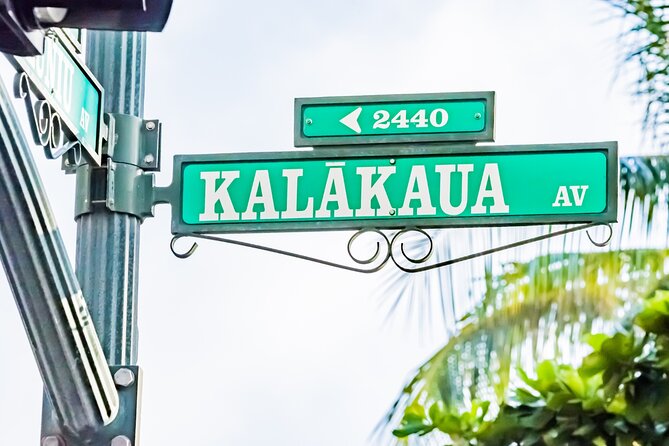
11) Kalākaua Avenue: Duke’s Medal Era, War Years, and Service
On Kalākaua Avenue, the tour connects Duke Kahanamoku to a longer career than surfing. It mentions he retired from the Olympics in 1932 with three gold and two silver medals, later fought in World War II, and served multiple terms as Sheriff of Honolulu.
If you only know Duke as a surf icon, this is the section that broadens him. It also reinforces why the tour keeps using Waikiki landmarks as anchors for larger life stories.
12) Makua and Kila Statue: A Surfer and a Monk Seal
At the Makua and Kila statue, the audio frames it as a young surfer and his unlikely friend: a Hawaiian monk seal. You’ll also get a friendly aloha greeting theme.
This is a nice palate cleanser after the heavier history. It’s also a good “photo break” spot that doesn’t feel like a random statue stop.
13) Waikiki Walkway: Duke’s Spirit in the Present
The final stop is Waikiki Walkway at the Waikiki Wall area. The story ties together the spirit of Duke and everything he stood for: people surfing, swimming, laughing, and loving. It also mentions that until his death in 1968, all Duke hoped was that these things would live on.
This ending works because it brings the walk full circle, from old coastal defense and ancient healing sites to modern ocean culture, without ending on a lecture note.
Timing: How Long It Really Takes
The tour can be listed as about 1 to 2 hours, but the notes also say the route is over 14 miles and takes about 2 to 3 hours to complete. For planning, I’d trust the longer estimate, especially if you stop for photos or want to listen carefully at each cue.
If you’re trying to squeeze this between other Waikiki plans, I’d give yourself a wide window and a simple goal:
- Finish the full loop if you have the time.
- Or treat it like a “pick-and-choose” listening walk where you do fewer stops at a slower pace.
Remember: you can pause and you can skip. It’s built for flexibility, which is the whole point of self-guided.
Who This Tour Fits Best (And Who Might Be Less Happy)
This works well for you if:
- You like learning about people and place in short, story-sized chunks.
- You’d rather walk on your own schedule than match a group itinerary.
- You want something you can repeat because of lifetime access.
It might be less ideal if:
- You want a tight, short, fully guided tour with someone in charge.
- You’re uncomfortable using a phone for navigation and GPS-based triggers.
- You’re expecting a casual stroll. This route can be long on foot.
Practical Tips for a Smoother Waikiki Day
A few “save you hassle” moves:
- Download in strong connectivity before you leave to walk. After download, you’re offline-ready.
- Use headphones. The tour is location-triggered and it’s easier to hear cleanly while moving.
- Bring water and plan breaks. Waikiki walking can feel longer than it looks on a map.
- If you want to keep things easy on yourself, aim for early morning or late afternoon so the walk feels less like a punishment test.
Should You Book It?
I think you should book this tour if you want Waikiki to feel more meaningful in the time you already plan to spend outdoors. The low price, offline audio, and the heavy emphasis on Hawaiian figures like Princess Kaiulani, Duke Kahanamoku, and Prince Jonah Kūhiō Kalaniana‘ole make it a strong value. You also get a route that moves through major landmarks without forcing you to buy tickets.
Don’t book it if you only want a quick highlight loop and you dislike longer walking distances. Also skip it if your phone battery or connectivity situation is uncertain, because the tour setup depends on downloading while you have strong wifi/cellular.
FAQ
FAQ
How long is Honolulu’s Waikiki self-guided walking audio tour?
It’s designed for about 1 to 2 hours in typical listings, but the route notes also say it’s over 14 miles and takes about 2 to 3 hours to complete.
Where do I start and where does it end?
You start at Brothers in Valor memorial, 2081 Kalākaua Ave, Honolulu, HI 96815 and it ends at Waikiki Walkway / Waikiki Wall, Honolulu, HI 96815.
Do I need cellular or wifi during the walk?
After you download the tour while you have strong wifi/cellular, it works offline. No signal should be a non-issue once downloaded.
What device do I need?
The tour recommends an iPhone running iOS 15 or later, an Android device running version 9 or later, or an iPad/tablet with GPS and cellular connectivity for navigation.
Are tickets or attraction reservations included?
No. The tour does not include attraction passes, entry tickets, or reservations. The tour notes mark several stops as ticket-free for those locations.
Can I use it more than once?
Yes. It includes new, lifetime access with no expiry, so you can use it anytime on any trip as many times as you want.
Can I cancel for free?
Yes. You can cancel for a full refund up to 24 hours before the experience start time.
If you want, tell me what day/time you’re in Waikiki and your walking comfort level, and I’ll suggest a pacing plan so this fits your schedule without turning into a footrace.