REVIEW · OAHU
Historical Honolulu Bike Tour
Book on Viator →Operated by Bike Tour Hawaii · Bookable on Viator
Honolulu moves fast, but a bike makes it feel personal. This 4 to 5 hour Historical Honolulu Bike Tour strings together Waikiki, downtown royalty, Chinatown, and standout views in a single mostly-flat ride. I like the small group size (10 max) and the fact that you get help staying fueled and safe with helmets, water, and snacks.
The best part is the storytelling pace: the guide points out what to watch for, stops for photos, and keeps you rolling without making it a grind. One possible drawback to plan for: it’s an early-morning ride, and you’ll want to be ready for some rain or damp pavement since the tour runs in all weather and dresses accordingly.
In This Review
- Key things that make this ride worth your morning
- Why a 7:00 am bike tour works in Waikiki
- Getting set up: bikes, helmets, and a ride pace that doesn’t tire you out
- Waikiki to the canals: beaches, zoo critters, and why Ala Wai matters
- Honolulu’s “big attractions” feel easier from two wheels
- Aloha Tower Marketplace: the view you earn by elevator
- Kaka’ako’s murals and Magic Island’s reclaimed story
- Downtown history: royalty, coral-stone churches, and the State Capitol
- The Elvis connection at Blaisdell Center and the fruit stop in Chinatown
- How much value is $149 for a 13.5-mile history ride?
- The guide experience: a calm pace and serious photo help
- Who should book this Honolulu bike tour, and who should skip
- Should you book this Historical Honolulu Bike Tour?
- FAQ
- Where is the meeting point?
- What time does the tour start?
- How long is the tour?
- What’s included in the price?
- Is the ride difficult?
- What should I do if weather is bad?
Key things that make this ride worth your morning
- Small-group feel (10 max): easier conversation and less weaving around other cyclists
- Safety basics included: bike + helmet provided, plus regular stops for photos and breaks
- Aloha Tower by elevator: quick climb, big views over the harbor and coral area
- Street art focus in Kaka’ako: murals meant for photos, not just passing glances
- Downtown landmarks without the traffic headache: State Capitol, Iolani Palace, Kamehameha statue, and churches
- Chinatown fruit sampling: a simple local-food moment that makes the route feel grounded
Why a 7:00 am bike tour works in Waikiki
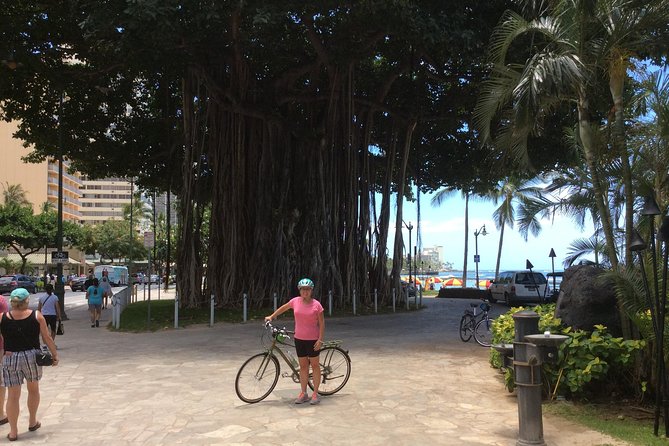
Meeting at Kuhio Beach Hula Mound (2453 Kalākaua Ave) at 7:00 am is smart. Waikiki wakes up early, and that means you can beat the worst crowds and heat. You also start with the kind of stop that sets the tone: the area around the historic banyan tree and the Free Hula shows context.
I also like that the morning start helps you keep the whole day flexible afterward. After a 13.5-mile ride, you’re not forced into “tour-only” mode for the rest of your trip. You can still wander, eat, and shop with fresh energy.
One thing to keep in mind: even with a mostly-flat route, mornings can feel cooler than the afternoon, then warm up fast. Pack light layers and expect sun.
You can also read our reviews of more cycling tours in Oahu

Getting set up: bikes, helmets, and a ride pace that doesn’t tire you out
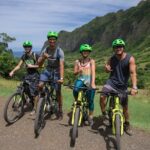
This tour is set up for real riding, not just a quick cruise. You’ll be given a bike and helmet, plus bottled water and snacks. That matters because the route is about 13.5 miles and lasts roughly 4 to 5 hours. Without fuel, long rides in Honolulu can go sideways.
You’ll also find the pace is built around stops: photo breaks, rest stops, and moments where the guide slows things down for the story and the scenery. The route is described as mostly flat, and that’s the right match for travelers who want history without paying for it in steep climbs.
Practical tip: when you get your bike, do a quick check, brakes feel right, seat height feels comfortable, chain runs smoothly. One past rider noted a mechanical issue on their bike, so it’s worth doing this simple safety check before you roll.
Waikiki to the canals: beaches, zoo critters, and why Ala Wai matters
The ride begins with Waikiki’s beach scene and that meeting-area context: Free Hula history, surfing and sunning energy, and the banyan tree that canopy-homes the whole area. It’s a gentle way to get your legs moving while the guide frames the day.
From there, the route swings past the Honolulu Zoo, which has over 1,000 critters. You’re not there to do a full zoo visit, but that stop adds texture: Honolulu isn’t just postcard views, it’s also a city with major institutions and everyday life.
Then you’ll roll along the Ala Wai Canals, a waterway developed in 1929. This is one of those “only locals seem to know” landmarks. The value here is that you learn the past, what it looks like today, and where it’s heading. Even if you’ve seen the canal from a car, you get a different sense of scale on a bike, with water close by and the city stretching around it.
As you pass the promenade and the convention area, you’ll feel the rhythm of Honolulu: beach frontage, big-city infrastructure, then a gradual push toward downtown.
Honolulu’s “big attractions” feel easier from two wheels
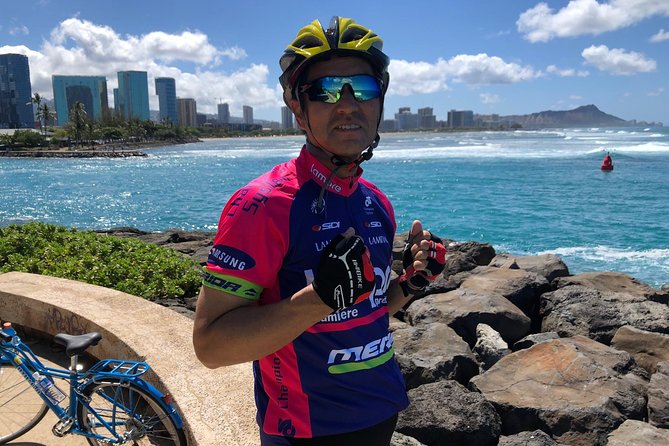
A bike tour works because it cuts through areas that are annoying to park and hard to view efficiently on foot. You get to slide past landmarks in sequence, and the guide turns that into a guided history walk, just with pedals.
A good example is the portion near the Honolulu Zoo and the golf area. The route runs along a famous golf course edge, and you get narration that helps you understand why this spot matters beyond the green. There’s also mention of future change: a Topgolf facility is expected to be outfitted there. Even if you’re not a golfer, you’ll see how Honolulu is constantly adjusting.
This segment also includes beaches, parks, Hawaiian canoe clubs, and shops along the way. You’re not stuck looking at only one type of scenery. Instead, you’re getting a cross-section: water, city life, and community spaces all in the same ride.
Aloha Tower Marketplace: the view you earn by elevator
One of the standout moments is the stop at Aloha Tower Marketplace, where you’ll ride up via an elevator. It’s the kind of quick win Honolulu does well: a short ride with a big payoff in perspective.
From up top, you get sweeping views over Honolulu and the harbor. The narration also points out what’s going on beneath the surface, fish stock and healthy coral life that frequent the harbor. It’s not just sightseeing; it’s a reminder that the ocean is part of the city’s story, not an optional background.
You’ll also get time here, about 20 minutes, which is long enough to take photos without feeling rushed. If you’re the type who hates “stop, snap, move on,” this is a nice balance.
You can also read our reviews of more historical tours in Oahu

Kaka’ako’s murals and Magic Island’s reclaimed story
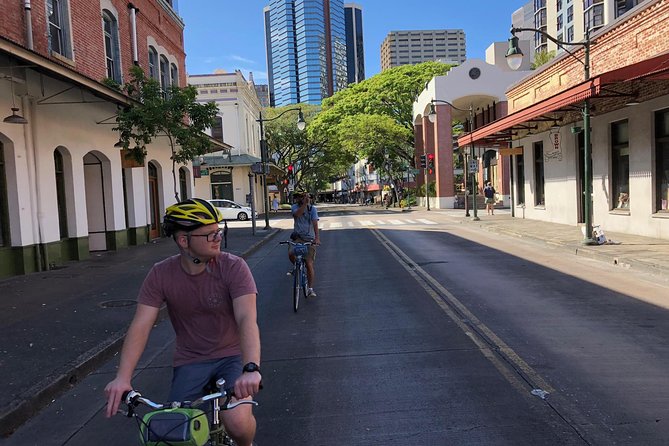
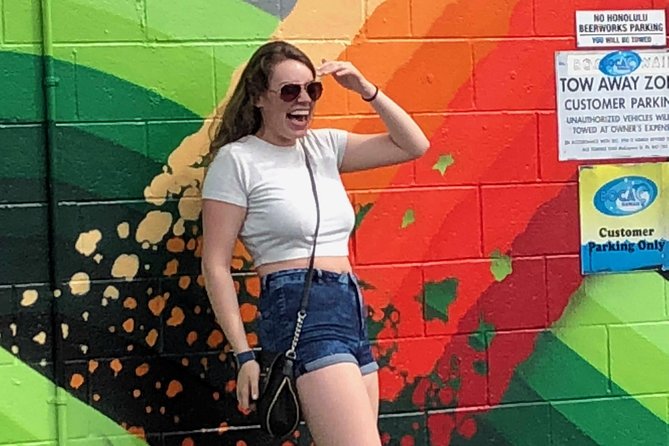
After the tower views, the ride heads into Kaka’ako, a district known for murals and street art. You’ll stop for photos with the mural walls and dozens of artists’ work around you. This is a practical photography stop, but it also adds meaning: it shows how Honolulu’s creative scene lives on regular streets, not just galleries.
Then comes Magic Island, part of Ala Moana Park (The People’s Park). This is one of those spots where the scenery can fool you, because it looks natural, but it’s actually a reclaimed land-mass. The tour framing includes its backstory: created in 1947 to turn an unsightly landfill into a park people actually use.
That contrast is why this stop works. On a bike, you can connect the dots between place and purpose. You’re not just checking off another viewpoint; you’re learning how Honolulu reshaped itself.
You’ll also pass the Hawaii Convention Center area at the end stretch, including a path lined with fig trees behind the building. It’s a short stop, but it’s the kind of quiet detail that makes the route feel carefully chosen.
Downtown history: royalty, coral-stone churches, and the State Capitol
This is the heart of the tour if you like landmarks with real names and eras behind them. You’ll roll through a string of iconic sites, with brief stops where the guide connects the dots and explains what you’re seeing.
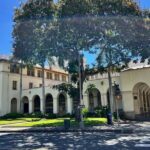
You’ll start with the Hawaiian Mission Houses Historic Site and Archives. The big detail here is the story of Hawaii’s first western-style home, brought in by ship and constructed by the Hall Missionary family. The other standout fact is the presence of a printing press that printed the first bible in the Hawaiian language. It’s not abstract history; it’s a specific “this happened here” moment.
Next is Kawaiaha’o Church, where construction used over 14,000 coral stones. The tour notes it welcomes visitors every Sunday for an 8:30 am service. Even if your bike stop doesn’t line up with Sunday morning worship, it adds a layer: this is a living place, not only a photo stop.
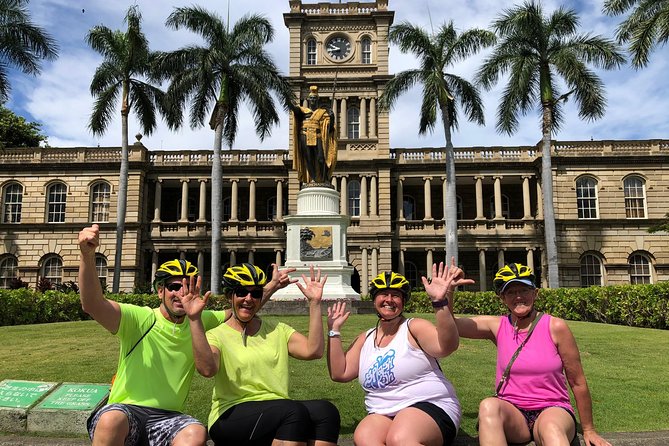
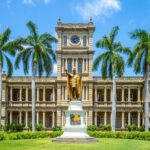
Then you’ll hit the King Kamehameha Statue. The guide points out that the statue has been recently refurbished with real gold paint. There’s also mention of it appearing in popular TV opening scenes (Hawaii Five-0), which helps you recognize it faster when you’re on foot later.
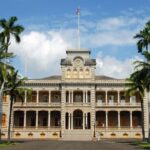
After that: Iolani Palace. You’re told it was the royal residence of the rulers of the Kingdom of Hawaii and that it’s the only royal palace on U.S. soil, listed as a National Historic Landmark. Being on a bike makes it easier to move between sites in a sensible order, instead of trying to stitch together downtown history on your own.
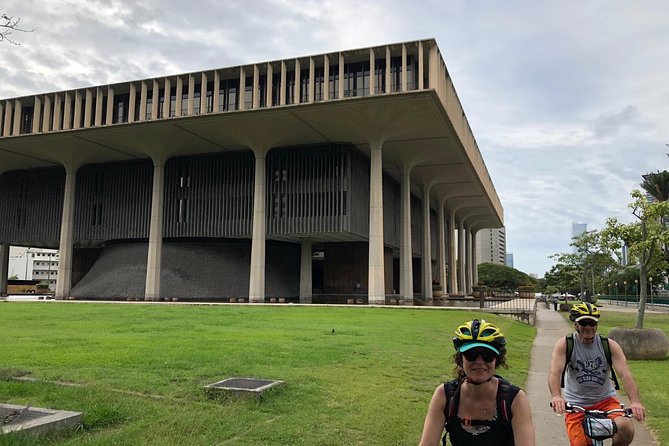
Finally, the ride goes by the Hawaii State Capitol, constructed in 1969. The tour notes it’s the only open-air capitol in the entire USA. The narration also uses Hawaii’s spiritual framing, mentioning manna, or super natural powers. Even if you don’t lean spiritual, the context changes how you interpret the building and its place in the islands’ identity.
The Elvis connection at Blaisdell Center and the fruit stop in Chinatown
If you’re a music fan, the route keeps a clear storyline. You’ll stop at the Neal S. Blaisdell Center area, where Elvis Presley’s last concert in 1973 is tied to the site. The narration highlights the Elvis statue there, and it also connects the venue’s wider music footprint, mentions include Prince, Sting, Jack Johnson, Janet Jackson, and others.
Then you’ll work your way toward Chinatown and downtown, where you’ll stop to sample exotic fruits. This isn’t a gourmet detour, it’s a small, high-reward pause that makes the city taste like itself. And it fits the tour’s theme: Honolulu as a mix of cultures you can see and feel, not just read about later.
One value-add I really appreciate: you also hear where to find great eats and beaches afterward. A bike tour is great for getting your bearings, but it gets even better when the guide translates that into practical local recommendations you can use the same day.
How much value is $149 for a 13.5-mile history ride?
Let’s put the cost in context. At $149 per person for roughly 4 to 5 hours, you’re paying for more than the bike. You’re getting:
- Bike and helmet provided
- Bottled water and snacks included
- Regular guide-led stops that turn driving-distance landmarks into an organized route
- Admission fees listed as included for National Park fees
That’s why the price can make sense for many people: you’re not just buying transport, you’re buying time, pacing, and interpretation. On a self-guided route, you’d still need to find parking, navigate unfamiliar roads, and figure out how to fit all these downtown sites together efficiently.
Small-group size also matters here. With 10 max, you’re less likely to feel like you’re sprinting to keep up or waiting too long for the next regroup. That’s part of what pushes this ride into good value territory.
The guide experience: a calm pace and serious photo help
A big theme from recent experiences is the way the guide handles the ride. Many riders point to a pace that stays fun, not slow enough to feel boring, not fast enough to feel like a workout you didn’t sign up for. Safety awareness is also a consistent note, including the way the guide keeps everyone organized.
There’s also a photo component that can make the tour feel like more than a sightseeing loop. Riders mention lots of photos taken during the ride, plus downloadable sharing (and some mention of a movie/video collage). Even if you travel with a phone, it’s different when someone else is thinking about angles while you’re biking.
Another detail that helps: a speaker system setup means you can hear the narration while you ride. That sounds minor until you realize how much information you’d miss otherwise.
Who should book this Honolulu bike tour, and who should skip
I’d recommend this tour if you:
- Want to see a lot of Honolulu in one morning without dealing with parking stress
- Like history tied to real places, royal sites, churches, capitol, and music history
- Feel comfortable riding a bike for about 13.5 miles at a mostly-flat pace
- Prefer a small group over a big bus-style tour
You might think twice if:
- You get cranky about early starts (it’s 7:00 am)
- You’re extremely sensitive to minor bike-condition issues, do that pre-ride brake and comfort check
- You’re expecting a ride that’s 100% quiet and uninterrupted. You’ll stop often, talk often, and be around city movement
Should you book this Historical Honolulu Bike Tour?
Yes, if you want a smart mix of Waikiki-to-downtown sightseeing without wasting hours figuring out logistics. The included bike, helmet, water, and snacks take away the annoying planning chores. The route itself hits the things people actually want to remember: Aloha Tower views, Kaka’ako murals, Chinatown fruit, and downtown landmarks like Iolani Palace and Kawaiaha’o Church.
Book it especially if you enjoy guides who build a story as you ride and help you leave with photos that look like you were paying attention. Just come prepared for the morning and bring rain-ready gear.
FAQ
Where is the meeting point?
You meet at Kuhio Beach Hula Mound, 2453 Kalākaua Ave, Honolulu, HI 96815.
What time does the tour start?
The start time is 7:00 am.
How long is the tour?
It runs about 4 to 5 hours.
What’s included in the price?
Included items are bottled water, snacks, use of a helmet, use of a bicycle, and National Park fees.
Is the ride difficult?
The terrain is described as mostly flat, with a distance of about 13.5 miles, and it recommends moderate physical fitness.
What should I do if weather is bad?
It operates in all weather conditions, and the experience requires good weather; if it’s canceled due to poor weather, you’ll be offered a different date or a full refund.