REVIEW · OAHU
Downtown Honolulu Self Guided Walking Audio Tour
Book on Viator →Operated by History with Action · Bookable on Viator
Downtown Honolulu has a way of feeling layered fast. This self-guided audio walking tour turns a 1.6-mile stroll into a guided-feeling loop, with 23+ location-triggered stories from monarchs and missionaries to modern Hawaii.
I like the hands-free setup: once you start the app at the first landmark, the audio moves along with you. I also like that most stops are listed as admission ticket free, so your money goes to the storytelling, not extra entry fees. One caution: if you hate phone setup, you may find the onboarding a bit fussy the first time.
In This Review
- Key Things You’ll Notice on This Walk
- Price and Time: $9.99 for 1 to 2 Hours of Serious Story Density
- Starting at Aloha Tower Marketplace: Get Your Phone Ready Before You Walk
- Walking Route Reality: Busy Sidewalks, Short Stops, and Heat
- King Kamehameha Statue to Kawaiahaʻo Church: Warriors and Royal Faith
- The Missionary-Era Museum Stop: A Closer Look at That Period
- Aliʻiolani Hale and Honolulu Hale: How Government Became the Main Plot
- Patsy Takemoto Mink and Sky Gate: Modern Justice Meets Modern Art
- Hawaii State Capitol and the Eternal Flame: Government and WWII Memory
- Washington Place, ʻIolani Barracks, and ʻIolani Palace: Where the Kingdom Story Ends
- What This Tour Feels Like in Real Use
- Small Practical Tips That Make the Walk Better
- Should You Book This Downtown Honolulu Audio Walk?
- FAQ
- How long is the Downtown Honolulu self-guided walking audio tour?
- How much does it cost?
- Do I need an internet connection during the tour?
- Where does the tour start and end?
- What do I need to start the tour on my phone?
- Are tickets or reservations included for attractions?
- Do I need to listen with headphones?
Key Things You’ll Notice on This Walk

- Autoplay by location, so you do less tapping and more walking
- Offline maps and offline playback after you download on strong Wi-Fi or cellular
- A tight route (about 1 to 2 hours) with lots of story stops packed into downtown
- Major landmarks tied to the Hawaiian Kingdom, U.S. government history, and WWII memorials
- Modern voices and modern art (including a memorial for Patsy Takemoto Mink and Isamu Noguchi’s Sky Gate)
- Heat management matters, especially if you start late in the day
Price and Time: $9.99 for 1 to 2 Hours of Serious Story Density
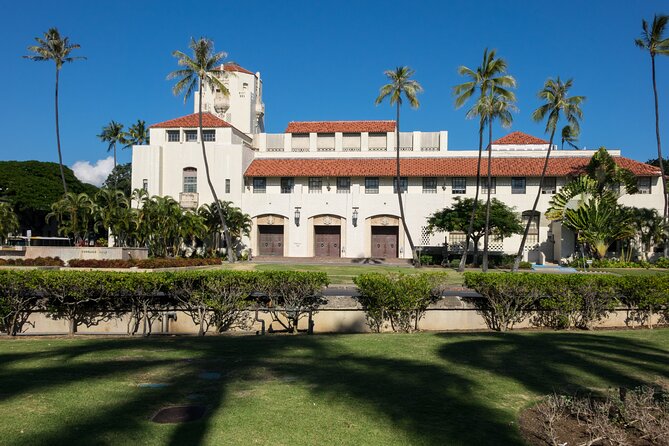
At $9.99 per person, this is priced like a practical add-on to your Honolulu plans. You are not paying for a bus. You are paying for a narrating brain that keeps you oriented as you walk.
The tour is about 1 to 2 hours and totals roughly 1.6 miles. That timing is ideal if you want downtown context without committing to a long guided tour or a full-day “big schedule.” It also fits well between meals, beach time, or a relaxed morning.
My take on value: you get a lot of “stop-and-go” moments, 23+ audio stories, and the app is designed for pausing whenever you want. That means you can linger near a statue, duck into a building for shade, or take photos without feeling like you’re falling behind.
You can also read our reviews of more walking tours in Oahu



Starting at Aloha Tower Marketplace: Get Your Phone Ready Before You Walk
The tour starts at Aloha Tower Marketplace (1 Aloha Tower Dr) and ends at the Queen Liliʻuokalani Statue area near the historic-government complex.
There’s no staff member meeting you at the start. So the tour works best when you do two things before you begin:
1) Download everything while you have strong Wi‑Fi/cellular
2) Bring headphones/earbuds (recommended) so the stories are clear
The app setup is based on an access password sent by email/text. After booking, you’re told to download Action’s Tour Guide App, enter the password, then open the tour while onsite. Since it uses GPS and location cues, you’ll want your phone charged and your screen brightness set so you can see directions when needed.
One small but real consideration: some people found the process confusing. If you are the type who likes frictionless travel tech, give yourself a little buffer time at the start to get the app working.
Walking Route Reality: Busy Sidewalks, Short Stops, and Heat

This is a city walk through downtown. The good news is the landmarks are close enough that you won’t feel trapped in transit. The tradeoff is sidewalks can be crowded and you’ll be outside for long stretches.
Also: Honolulu can get hot quickly. Even though the stops are short (often around 10 minutes each), the walk itself adds up when the sun is high. If your schedule allows, you’ll likely enjoy the tour more earlier in the day, when you’re less tempted to bail out for shade.
If you hit audio issues, the tour description says to contact support. Since it’s self-guided, you should treat the tour like a tech-and-walking combo: if something seems off, pause, check your phone settings, then continue when the audio cues line up again.
King Kamehameha Statue to Kawaiahaʻo Church: Warriors and Royal Faith
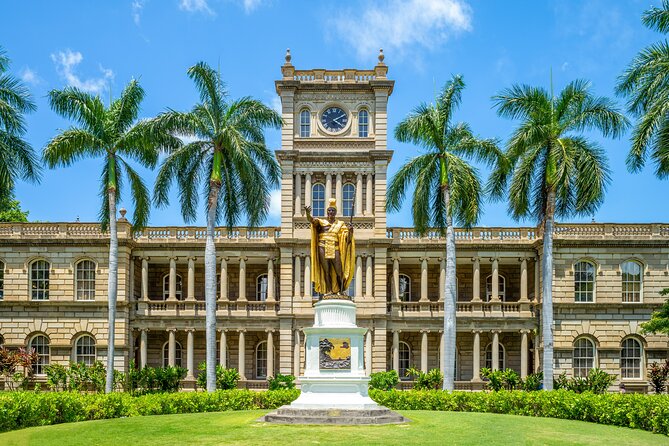
Your first story stop is the King Kamehameha Statue. It sets the tone with the image of Kamehameha as an intimidating warrior figure, an introduction to the era when Hawaiian chiefs fought for control of the islands. Starting with Kamehameha is smart. It gives you a framework for everything that follows: power, legitimacy, and change.
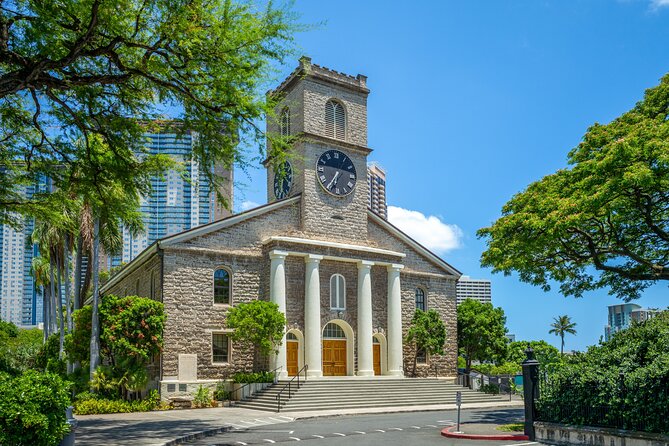
From there, you head to Kawaiahaʻo Church, described as once the national church of the Hawaiian Kingdom. This stop matters because it shows how religion moved from sacred tradition into state identity. You’re not just looking at a building; you’re hearing how the kingdom era shaped what people believed and how communities organized.
What I’d watch for here:
- These are places where you’ll likely want a respectful pace.
- If you’re short on time, stay close to the key facts in the audio rather than trying to “museum-perfect” every detail.
The Missionary-Era Museum Stop: A Closer Look at That Period

Next you’ll come to a museum showcasing items from Hawaii’s missionary period. Since the tour doesn’t name a specific exhibit in the provided details, the best way to think about this stop is as a transition. After the kingdom-and-church conversation, the stories shift to what missionaries brought, how artifacts can reflect cultural change, and how that era is remembered.
Museums are also where timing can vary. Your audio schedule keeps you moving, but if the museum space is crowded or you want to read signs longer, the stop can stretch. That’s not a problem with this tour’s design, you can pause and take your time.
If you prefer history that’s tied to objects, rather than just speeches and dates, this is the kind of stop you’ll likely enjoy.
You can also read our reviews of more guided tours in Oahu






Aliʻiolani Hale and Honolulu Hale: How Government Became the Main Plot
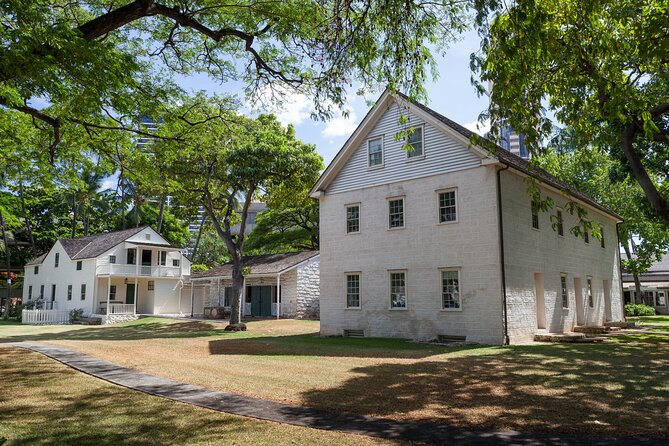
The tour then focuses on government buildings that show up again and again in downtown Honolulu.
At Aliʻiolani Hale, the story explains that Kamehameha V originally built it as a palace for Hawaiian monarchs, then King Kalākaua later converted it to government offices. That’s a big idea in plain terms: even the architecture tells you the island story is about who rules and how they rule.
Next is Honolulu Hale (City Hall). The audio connects it to Kalākaua’s return from his world tour and the celebrations that followed, then flips to the political tension behind the scenes. You’ll also hear about the Reform Party, described as mostly American in influence, gaining control of Hawaiian politics after the 1875 Reciprocity Treaty.
This portion of the walk is valuable because it doesn’t treat history as separate chapters. It ties the monarchy era to the political process that eventually changed the islands’ direction. You’re also getting a sense of how modern Honolulu still sits on top of those turning points.
If you like political history, don’t rush these stops. Your ears will do the heavy lifting, but your eyes will help you connect the stories to the buildings in front of you.
Patsy Takemoto Mink and Sky Gate: Modern Justice Meets Modern Art
One of the most interesting pivots in the tour is toward more modern Hawaii.
You’ll visit the Patsy Takemoto Mink Statue and Memorial, honoring U.S. Representative Mink. The audio highlights that she was a third-generation Japanese-American who grew up in Hawaii. That detail matters because it roots a national figure back into island life, history that isn’t only about the past, but about who shaped Hawaii’s political voice in the 1900s.
Then comes Sky Gate by Isamu Noguchi. If you look at it first as a sculpture, it can feel abstract: bent black tubes, like a spider web, a three-legged form, or an animal-like shape. The audio frames it with Noguchi’s own description, calling it an evocation to the skies of Hawaii. That’s a great reminder for how to view public art: don’t force a single interpretation. Let it do what it does, suggest, hint, and shift as your angle changes.
I like this pairing because it breaks the “only monuments about royalty and war” feeling. It adds modern identity, creativity, and civic memory to the same walk.
Hawaii State Capitol and the Eternal Flame: Government and WWII Memory
The tour takes you to the Hawaii State Capitol. The story note here is that before the Capitol was built, Hawaiians used the ʻIolani Palace as their seat of government, so you get that cause-and-effect sense again.
Then you’ll reach the Eternal Flame Memorial, honoring those who died in the December 7, 1941 Pearl Harbor attack. That framing matters, especially in a city walk. It ties global WWII history back to place, and it brings a solemn tone right into the middle of civic architecture.
This is where I’d slow down. The memorial is short on time in the itinerary, but you don’t want your audio pace to rush a place like this.
Washington Place, ʻIolani Barracks, and ʻIolani Palace: Where the Kingdom Story Ends
Next, you’ll see Washington Place, described as the home of Queen Liliʻuokalani. The story focuses on how she lived there later, with Native Hawaiians visiting her constantly, presenting her not as distant royalty, but as a figure connected to her people.
Before you reach the palace itself, you’ll also stand at the ʻIolani Barracks. The audio explains that before Dole and the Annexation Club completed their coup against Queen Liliʻuokalani, the barracks housed the Queen’s Royal Guard. This is the kind of stop that makes you rethink what you’re looking at. It’s not just a building; it’s the geography of a political shift.
Finally, you get to ʻIolani Palace, dated to 1879. The tour highlights that it’s the only royal palace in the United States. That’s a strong hook and a useful mental anchor for the entire ending of the tour.
The last story stop is the Queen Liliʻuokalani Statue, with audio that emphasizes her retreat from public life, her residence at Washington Place, and her relationship to Native Hawaiians who still regarded her as queen. The audio also summarizes her memoir sentiment: she would give the last drop of her blood for her people, spending everything she had for them.
What This Tour Feels Like in Real Use
This tour is designed around a simple promise: you control the pace. Audio plays on its own based on location cues. You can pause. You can start and stop when you want, which is great if you’re hopping in and out for coffee, water, or quick photo stops.
Offline maps help too. That’s a big deal for downtown areas where signal can be inconsistent, especially if you’re busy taking photos and your data connection is being tested. The one requirement is timing: download the tour while you have strong Wi‑Fi/cellular, then you’re good.
The other “real use” piece is clarity. The walking directions are described as explicit and precise, which is exactly what you want when you’re navigating a self-guided route without anyone physically waiting for you.
The tradeoff is tech dependence. If you’re not comfortable with app permissions, downloading, GPS, and a password flow, you may feel annoyed at the start. This comes up often with audio tours, and this one is no exception.
Small Practical Tips That Make the Walk Better
- Bring headphones so the narrator stays clear as street noise rises
- Start earlier if heat is a factor; Honolulu sun can change your mood fast
- Give yourself time at Aloha Tower to confirm the app is playing the first story
- Keep your phone charged; GPS eats battery
- If there’s a weather or emergency advisory, follow official guidance. The tour info includes a tsunami-warning reminder to check tsunami.gov
Should You Book This Downtown Honolulu Audio Walk?
Book it if you want a guided-feeling downtown history walk without paying for a formal tour. The best match is when you like structure, you enjoy story-based history, and you want a lot of landmarks in about an hour or two, from Kamehameha and the kingdom era to Patsy Mink, civic art, Pearl Harbor memory, and ʻIolani Palace.
Skip it, or at least think twice, if you hate phone setup or you know your group struggles with downloading apps and getting GPS to behave. A few people felt the onboarding was hard and ended up not using the tour at all.
If you’re comfortable using a phone for navigation and audio, this is a strong way to get downtown Honolulu context fast, without buying extra tickets and without waiting for anyone else’s schedule.
FAQ
How long is the Downtown Honolulu self-guided walking audio tour?
It’s approximately 1 to 2 hours. The route is about 1.6 miles long.
How much does it cost?
The price is $9.99 per person.
Do I need an internet connection during the tour?
You’ll want to download the tour while you have strong Wi‑Fi/cellular. After that, it works offline, with offline maps and no need for cellular or Wi‑Fi during the walk.
Where does the tour start and end?
It starts at Aloha Tower Marketplace, 1 Aloha Tower Dr, Honolulu and ends at the Queen Liliʻuokalani Statue, 21024001, Honolulu.
What do I need to start the tour on my phone?
After booking, you’ll receive instructions with a password. Download Action’s Tour Guide App, enter the password, then open the tour onsite and start at the correct starting point.
Are tickets or reservations included for attractions?
The tour does not include attraction passes, entry tickets, or reservations. Many stops are marked as admission ticket free in the tour details, but the tour itself does not provide entry tickets.
Do I need to listen with headphones?
Headphones/earbuds are recommended for the best experience. If you’re a couple, you can share one tour by splitting headphones.