REVIEW · OAHU
Honolulu Downtown Walking Tour
Book on Viator →Operated by Hawaii Free Tours · Bookable on Viator
A $5 walk that explains Hawaii’s turning points. This Honolulu downtown walking tour is a focused way to learn how the islands’ monarchy story became modern Hawaii, with a local guide leading you between major landmarks in roughly 1 hour 10 minutes. I love the guided storytelling that connects what you’re seeing to the bigger picture, instead of just pointing at buildings.
I also like the tight route and clear sequence of stops, which makes it ideal when you have limited time but still want the who-and-why behind the city. One consideration: the pace can feel more standing-and-talking than walking, so if you want lots of movement and long distances, this may not match your style.
In This Review
- Key points that make this tour work
- Downtown Honolulu, told like a timeline (not a pile of facts)
- Timing, meeting point, and what the 1 hour 10 minutes feels like
- King Kamehameha Statue: where the story begins
- Aliiolani Hale and Iolani Palace: monarchs, power, and outside influence
- Hawaii State Capitol: from territory to statehood
- Kawaiaha’o Church and the surrounding city landmarks
- King Lunalilo Mausoleum: an ending with garden calm
- The guide makes the difference (especially on the narrative-heavy stops)
- Who this tour suits best (and who should skip it)
- Practical value: why this $5 morning can be a bargain
- Weather and comfort notes for a downtown morning
- Should you book the Honolulu Downtown Walking Tour?
- FAQ
- What is the price for the Honolulu Downtown Walking Tour?
- How long is the walking tour?
- Where does the tour start?
- What time does the tour begin?
- Is the tour in English?
- Do I need to bring a ticket?
- Is it in Waikiki?
- What sites are included on the route?
- Is admission required for the stops?
- What happens if the weather is poor?
- What is the cancellation policy?
Key points that make this tour work
- $5 price for a guided, history-led route through central Honolulu
- Local guide narration with plain-language explanations and Q&A
- Short downtown loop around government and royal-era sites, mostly walk-and-stand
- Monarchy to U.S. timeline explained through key buildings
- Free admission at the stops listed on the route
- Small group size capped at 30 travelers
Downtown Honolulu, told like a timeline (not a pile of facts)
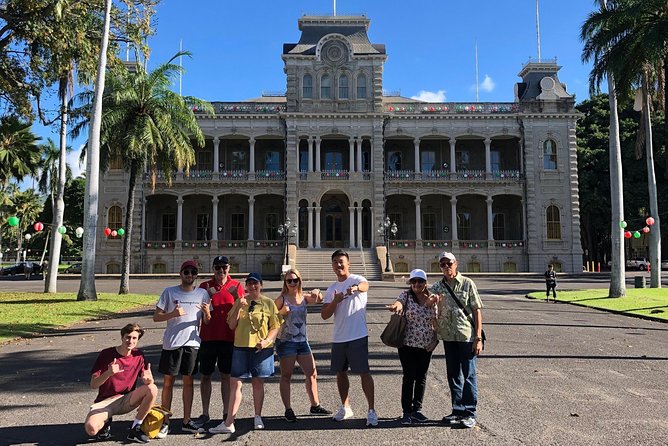
If Honolulu is your first stop on Oahu, it helps to get your bearings fast. This tour is built for exactly that moment: you start near the King Kamehameha Statue and then move through the core of downtown where Hawaii’s leadership, government, and cultural landmarks sit close together.
The big value is how the route ties history to real places. You’re not just learning dates. You’re learning why the island kingdom mattered, how monarchs shaped society, and how outside power influenced what Hawaii became.
And at $5 per person, you’re paying for guidance more than for access. That makes it one of the best deals in town if you want structure and a local voice for your morning.
You can also read our reviews of more walking tours in Oahu



Timing, meeting point, and what the 1 hour 10 minutes feels like

The tour starts at 9:00 am at the King Kamehameha Statue location: 447 S. King St, Honolulu, HI 96813. It ends back at the meeting point, so you don’t have to hunt for a second drop-off.
A practical heads-up: this is outside Waikiki, near downtown Honolulu. If you’re staying in Waikiki, leave yourself extra time so you’re not rushing across traffic and sidewalks.
Also, expect a moderate pace. The walk is short, think short transfers between nearby landmarks, with a lot of time spent stopping and listening. One key theme from the experience is that some people wished for more walking and fewer talks. If that’s you, treat this as a storytelling tour first, movement second.
King Kamehameha Statue: where the story begins
Your first stop is the King Kamehameha Statue, and the emphasis here is origin and identity, how the islands’ peoples, including Polynesians, Austronesians, and Hawaiians, connect to the formation of the first and only nation of Hawaii.
It’s a smart opening because it reframes everything you’ll see later. Instead of jumping straight into palace architecture or U.S. politics, you start with the deeper idea of nationhood and leadership, then the later sites make more sense when you reach them.
Plan to spend about 15 minutes here. It’s the kind of stop where you’ll likely look around, but the real payoff is the narration and the way the guide builds the timeline in plain language.
Aliiolani Hale and Iolani Palace: monarchs, power, and outside influence
The route then moves toward Aliiolani Hale and follows with the major stop: Iolani Palace. At Iolani Palace, you’ll hear about different monarchs and how U.S. mainlanders and Europeans played a vital role in shaping Hawaii’s history.
This is one of the tour’s strongest moments because it turns the palace from a pretty building into a political stage. You learn how leadership changed over time, and how external pressure and interest affected the kingdom’s direction.
This stop is also about understanding people, not just events. The guiding style shows up here: clear explanations, chronology, and answers when you ask follow-up questions.
Hawaii State Capitol: from territory to statehood
Next up is the Hawaii State Capitol, where the story shifts to how Hawaii became a U.S. territory and later a U.S. state. This is the part of the tour that helps modern visitors link what happened long ago to the political reality you see today.
The setting matters. You’re standing in the center of government, so the explanation feels grounded. Instead of learning about governance in the abstract, you’re learning it right where it operates.
Budget about 15 minutes for this stop. It’s enough time to grasp the arc without turning the morning into a lecture marathon.






Kawaiaha’o Church and the surrounding city landmarks
After the Capitol, you’ll head to Kawaiaha’o Church for about 10 minutes. While the tour information doesn’t spell out one single theme here, the church works well as a contrast point: a different kind of institution inside a city that also houses palaces and government buildings.
From there, the route includes additional downtown stops like Honolulu City Hall and the Hawaii State Library. Even when these breaks feel shorter, they keep the tour grounded in everyday civic space, so you’re not only seeing sites tied to royalty or major political change.
This section is also where the walking reality becomes clear. You’ll move between landmarks, but the experience leans heavily on stops and narration. If you like to ask questions or want extra context, this is the section where the guide’s storytelling style can make the route feel longer than the clock says.
King Lunalilo Mausoleum: an ending with garden calm
The final main stop is the King Lunalilo Mausoleum, including the garden and burial. This choice for an ending is thoughtful. It gives you a quieter mood after government and palace history and offers a different way to connect to monarchy, through remembrance and place.
You’ll spend around 15 minutes here, and it’s a natural time to reflect on the whole arc you’ve been hearing since the statue at the start. The guide’s storytelling ties back to themes from the beginning, so the ending doesn’t feel tacked on.
If you like history with atmosphere, this is the stop you’ll likely remember most.
The guide makes the difference (especially on the narrative-heavy stops)
A repeated theme in the experience is how much the guide’s approach matters. Guides named Susan and Susan Hogan show up in the feedback, and the pattern is consistent: warm delivery, easy-to-follow explanations, and a talent for connecting facts into a story you can hold onto.
What I like about that style is that it supports different comfort levels. Some people want a quick introduction. Others want details and room to ask questions. The tour format lets the guide handle both, at least within the short timeframe.
One more note: several people specifically mentioned that the guide keeps things in plain language, not academic-sounding. If you don’t want to feel tested on your ability to memorize dates, this is a good fit.
Who this tour suits best (and who should skip it)
This walking tour is a smart pick if you’re:
- Visiting Honolulu for the first time and want an easy way to get a story-based overview
- Interested in monarchy and the shift into modern U.S. history
- Short on time and want key landmarks inside a small radius
- Someone who enjoys hearing context while you look at buildings
You might want to choose something else if you:
- Prefer longer walks and more time on the move
- Get impatient when a group spends a lot of the morning standing and listening
- Came expecting a lot of site-hopping in long stretches
A simple way to decide: if you want a guided history lesson outside the classroom, book it. If you want exercise-first sightseeing, you’ll probably be happier with a route that covers more distance.
Practical value: why this $5 morning can be a bargain
The headline is easy, $5 per person, but the real value is what you get for that low cost: guidance, context, and structure across multiple major civic and historic locations.
Also, the route lists free admission for the stops. That matters because it turns the tour into a low-cost way to access iconic places without extra ticket planning. You still enjoy the landmarks, but you’re not paying to enter each stop beyond the tour itself.
Then there’s the group size limit of 30 travelers. That’s big enough to feel lively but small enough that the guide can handle questions while keeping the group moving.
Weather and comfort notes for a downtown morning
This experience requires good weather. That doesn’t mean you’ll always get perfect skies, but it does mean you should plan for possible schedule changes if conditions aren’t right.
Downtown also means sidewalk time. Wear comfortable shoes and dress for Honolulu mornings. If you’re sensitive to heat or sun, bring simple protection like a hat or sunglasses, and keep water in your bag if you’ll be out exploring afterward.
If it’s raining or humid, keep expectations realistic: the tour emphasizes storytelling at stops, so conditions can affect how enjoyable the standing-and-listening part feels.
Should you book the Honolulu Downtown Walking Tour?
I’d book it if you want a short, organized morning that connects royal Hawaii to modern government through real downtown locations. The story-led guide format is exactly what helps first-timers understand the islands without needing a separate museum day.
I wouldn’t book it if you’re hoping for lots of walking time. The experience is built around stopping at key places and hearing the explanation, and a portion of the group may find that trade-off frustrating.
If you’re deciding between this and a self-guided stroll, this tour wins on context. If you’re deciding between this and a long hike or big walking loop, choose the tour only if you’re comfortable with a slower pace.
Overall: for $5, it’s an unusually efficient way to understand Honolulu’s downtown, and leave with a clearer sense of how Hawaii’s story became what you see today.
FAQ
What is the price for the Honolulu Downtown Walking Tour?
The tour costs $5.00 per person.
How long is the walking tour?
It’s listed as about 1 hour 10 minutes.
Where does the tour start?
It starts in front of the King Kamehameha Statue at 447 S. King St, Honolulu, HI 96813.
What time does the tour begin?
The start time is 9:00 am.
Is the tour in English?
Yes, it’s offered in English.
Do I need to bring a ticket?
You’ll receive a mobile ticket.
Is it in Waikiki?
No. The tour is outside Waikiki and near Honolulu’s downtown area.
What sites are included on the route?
The tour includes stops at the King Kamehameha Statue, Aliiolani Hale, Iolani Palace, the Hawaii State Capitol, Kawaiaha’o Church, Honolulu City Hall, the Hawaii State Library, and the King Lunalilo Mausoleum.
Is admission required for the stops?
The listed admission for the stops on the route is free.
What happens if the weather is poor?
This experience requires good weather. If it’s canceled due to poor weather, you’ll be offered a different date or a full refund.
What is the cancellation policy?
You can cancel for free up to 24 hours in advance for a full refund. If you cancel less than 24 hours before the start time, the amount paid is not refunded.