REVIEW · OAHU
Waikiki 2 Tank World Class Wreck SCUBA Diving – Certified Only
Book on Viator →Operated by WAIKIKI DIVE CENTER · Bookable on Viator
This is a certified-only Waikiki scuba outing with two different underwater stops, so your day has variety built in. I like that you get a wreck-to-reef plan in one trip, and that the shop supplies all the gear plus snacks and bottled water. The main thing to think about: you’re expected to be comfortable with deeper water and you’ll carry heavy tanks as part of the routine.
What makes this one work is the way the schedule forces structure: you start early at 424 Nāhua St and you’re back at the same spot afterward. Also, I keep hearing the same theme from the guide names that show up on past runs, people like Ron and April, or Dylan and Yoshi, meaning you’re not stuck figuring things out alone.
One possible drawback is also the reason this outing feels safer: the shipwreck and night scuba sessions require certification with no exceptions, and they won’t let you join that part without proof.
In This Review
- Key highlights
- Why Waikiki’s wreck-and-reef setup makes sense for experienced divers
- The first tank: shipwreck targets like Sea Tiger and YO-257
- The second tank along Waikiki reef: turtles, eels, and more
- Equipment, snacks, and the rhythm of a two-tank morning
- Guides, safety rules, and what certified-only really protects
- Price and value: what $269 buys you (and what it doesn’t)
- Timing, location, and small logistics that decide your stress level
- Who this fits best (and who should skip it)
- Should you book Waikiki’s two-tank wreck-and-reef outing?
- FAQ
- What do I do if I’m not certified for the wreck portion?
- What certification level is expected for the deep-water component?
- How many scuba tanks are included?
- What locations might the wreck portion use?
- Is lunch included in the price?
- Where do I meet, and when should I arrive?
- Do I need to bring scuba equipment?
- How large is the group?
- Can I scuba and fly on the same day?
- Is a private instructor option available?
- FAQ
- What’s the cancellation policy if weather changes?
- What if I cancel within 24 hours?
Key highlights
- Two-tank plan: first tank over a shipwreck, second tank along a reef area off Waikiki
- Sea Tiger and other wreck choices: you may visit sites like the Sea Tiger, YO-257, or San Pedro
- Gear included: all required scuba equipment is provided, plus snacks and bottled water
- Early start, tight check-in: arrive by 6:30am (grace to 6:45am) to avoid being marked no-show
- Smaller operator cap: maximum 16 travelers, with separate grouping for non-certified/new students
Why Waikiki’s wreck-and-reef setup makes sense for experienced divers
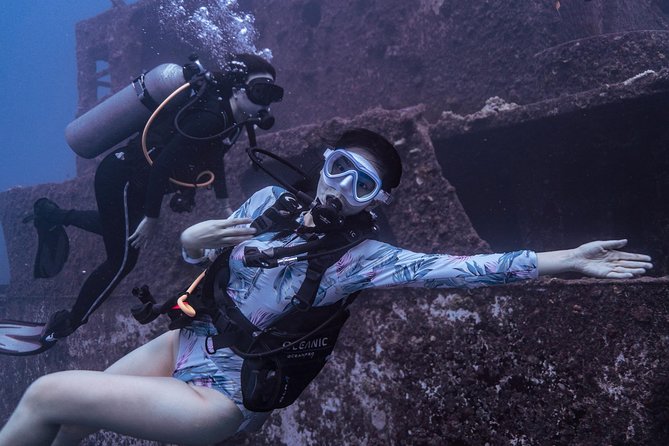
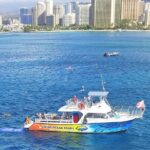
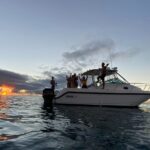
This is one of those days where the logistics are basically done for you. You’re paying for a guided morning that takes you from harbor to open water, gives you two different underwater environments, and keeps you inside the safety and conservation rules.
The wreck-first, reef-second pattern matters. A wreck stop tends to be about structure, reading lines, staying aware of buoyancy, and moving carefully around a fixed environment. Then the reef tank shifts the focus to marine life along a living shoreline. That mix is great if you’re certified and you want a fuller day than one simple stop.
It also helps that this operator runs as a smaller group by design. The trip caps at 16 travelers, so you’re not dealing with a long chain of random skill levels. And even though you’re in a shared boat, the operator groups non-certified/new students separately (at a 4:1 instructor ratio) so the experienced divers can run their own rhythm.
You can also read our reviews of more scuba diving tours in Oahu
The first tank: shipwreck targets like Sea Tiger and YO-257
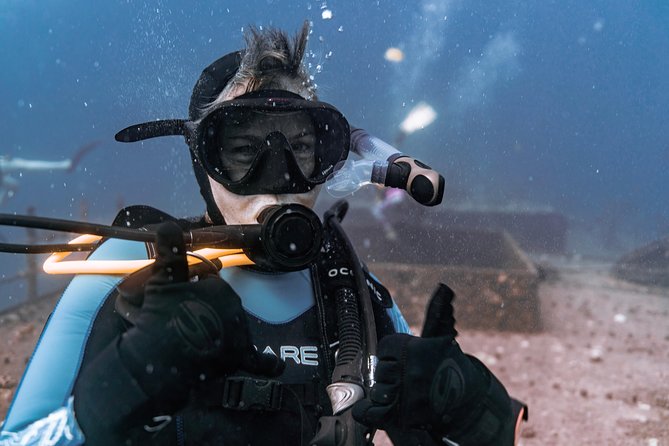
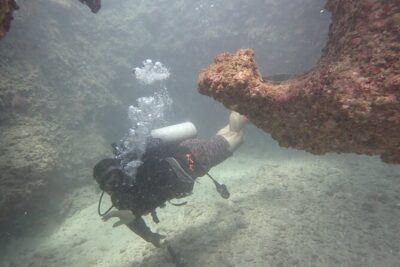
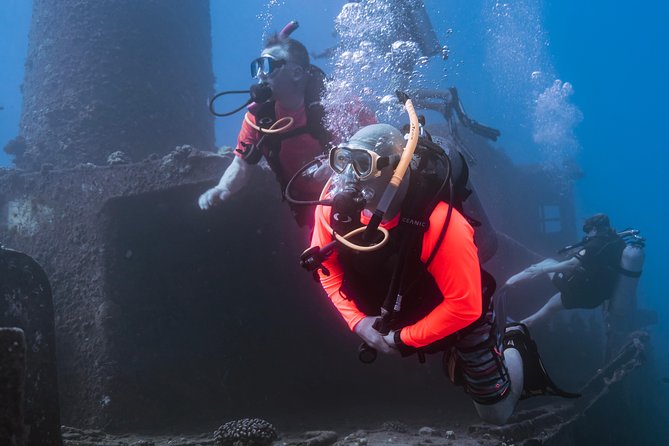
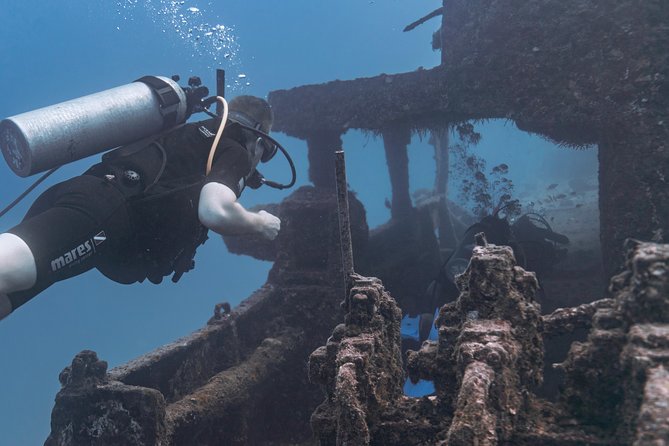
Your morning starts with a shipwreck visit. Depending on the day’s conditions and what’s available, you might see wrecks such as the Sea Tiger, YO-257, or the San Pedro wreck.
Why a wreck stop is worth it here: Waikiki’s coastline is busy above water, but underwater it’s a totally different story. A wreck gives you built-in points of interest. Fish often use the structure for shelter, and the wreck itself creates that “this is real” feeling that you just don’t get from generic coral heads.
There are also a couple practical reasons this wreck portion is tied to certification. This outing is aimed at divers comfortable with deeper profiles. The shop notes that certified participants should be Advanced Open Water or equivalent for the deep-water component (about 100 ft). That’s not just a box-check. It’s also how you keep the day smooth for everyone, because the team can focus on the site and the plan instead of spending extra time on basics.
From past trips, the wreck structure has been described as something you can really work through, getting in and out successfully and seeing plenty of marine life around the Sea Tiger. And if you haven’t done a wreck before, you’ll want to be extra ready for careful movement and buoyancy control.
The second tank along Waikiki reef: turtles, eels, and more
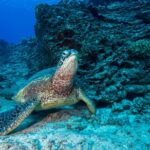
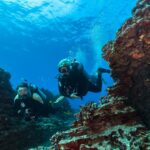
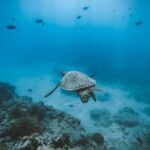
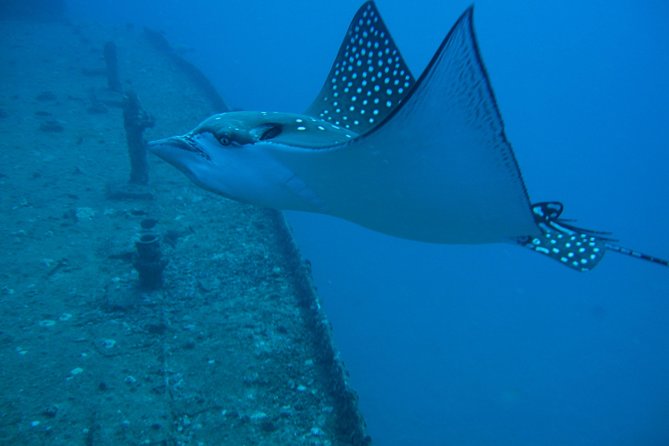
After the wreck tank, you’ll head to a local reef area off Waikiki for your second tank. One past run included a reef stop at Horseshoe reef, and the common takeaway is that this portion leans hard into wildlife spotting, turtles, plenty of tropical fish, and the kind of underwater critters that reward you for slowing down and looking.
Here’s the value of doing the reef tank right after the wreck: you get a natural contrast in your body and your mind. Wreck work tends to be more “technical-feeling” because you’re navigating around a structure. Reef time is more about scanning and enjoying what’s around you.
Also, this is where a good guide earns their paycheck. Past outings highlight instructors pointing out animals and helping people notice things they might miss on their own, things like sea turtles, eels, and other reef dwellers.
Equipment, snacks, and the rhythm of a two-tank morning
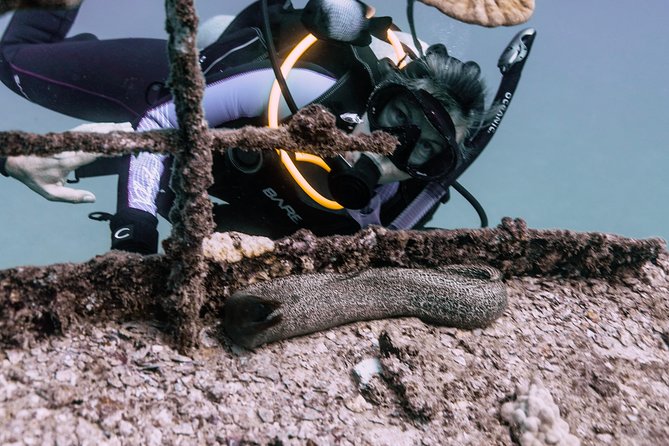
All required scuba equipment is included, which is a huge practical win if you’re traveling. You won’t have to hunt down a rental shop, manage different brand compatibility, or waste your vacation time doing admin.
The rest of the day is built around a steady rhythm:
- Early meet and check-in
- Time out to the first underwater site
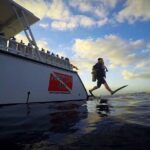
- Equipment setup and entering the water (you may use a giant-step style entry, depending on conditions and what the crew runs)
- Tank swap and transition to the second stop
- Wrap up and return to the same meeting point
You should know one physical expectation upfront: you need to be able to carry 30 lb tanks. That doesn’t mean you need to be an athlete, but it does mean you should be comfortable with basic lifting and handling gear without needing someone to do it for you.
Snacks and bottled water are included, but lunch is not. That means you’ll want to plan what you eat before check-in so you’re not starting the day starving. If you’re the type who gets cranky without food, bring a little extra strategy: something simple and steady earlier in the morning.
Guides, safety rules, and what certified-only really protects
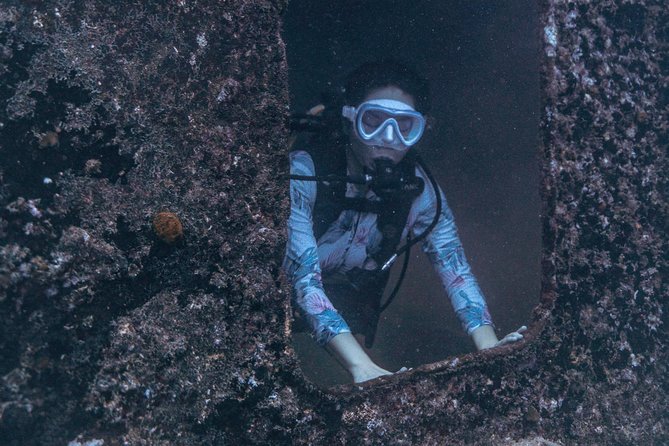
The biggest thing you should understand is the certification rule. You must be a certified diver to book the shipwreck and night scuba sessions, no exceptions. You’ll also need to show proof of certification at check-in. If you don’t present the documentation, the operator will deny you from the shipwreck/night portions.
This “hard rule” can feel strict, but it’s also part of why the experience works so well for experienced divers. When everyone on the boat meets the baseline, the guides can focus on site skills, buoyancy awareness, and local conservation practices rather than basic instruction.
Hawaii rules also matter here. The operator notes that by Hawaii law divers must follow and stay close with the local dive guide during the entire tour for conservation regulations. Translation: don’t plan to drift off on your own. It’s not just a safety thing, it’s how they keep the marine environment protected.
You can also expect a professional standard from the team. The shop states that only PADI certified, licensed, and insured scuba pros run these outings. Past experiences also put a spotlight on guide teams and their interpersonal style, people like Ron and April, Dylan and Yoshi, and Alex showing up as names connected to smooth, confidence-building days. The common thread is preparation before getting in, and then real-world site guidance once you’re underwater.
One more rule to take seriously: don’t drink alcohol or anything that causes drowsiness before the activity. The crew can refuse participation for any reason if they think you’re not fit to go.
You can also read our reviews of more tours and experiences in Oahu
Price and value: what $269 buys you (and what it doesn’t)
At $269 per person for roughly 5 hours, this can be good value if you’re traveling light and want a two-stop day without adding separate rental and guide costs.
You’re paying for:
- Two tank experiences (wreck then reef)
- All required equipment
- A professional guide team
- Snacks and bottled water
You’re not paying for lunch, and you’re expected to arrive on time and be physically ready to handle gear.
Is it pricey? Compared to one shorter snorkeling trip, yes. But compared to doing two separate guided scuba outings, or paying for equipment plus a guide plus transportation, it can pencil out well for experienced divers who want a structured day.
There’s also an upgrade path: private instructor time is available at an additional cost. The operator lists it as $180 per each four-diver group increment, which can be useful if you want more comfort with timing, extra bottom time, or more direct attention for your group.
Timing, location, and small logistics that decide your stress level
This outing runs early. You should plan to arrive by 6:30am, with a grace period to 6:45am. After that, the booking can be marked no-show and canceled automatically with full charge.
The meet-up is at 424 Nāhua St, Honolulu, HI 96815, and the outing ends back at the meeting point. It’s also noted as near public transportation, which helps if you don’t want to depend on parking at that hour.
Also, don’t ignore the flying rule. The operator states scuba sessions within 18 hours of flying aren’t allowed, and they specifically remind you not to scuba and fly the same day. If your schedule is tight, you’ll want to plan early so you have wiggle room on return travel.
Finally, do your health prep before the day arrives. You’ll need to complete a health questionnaire. Some conditions (example listed: asthma, heart conditions) may prevent you from diving, so talk to your doctor in advance. Doctor clearance is generally required for pre-existing medical conditions, and medical clearance failures aren’t refundable.
Who this fits best (and who should skip it)
This is a strong match if:
- You’re a certified diver looking for a wreck + reef day off Waikiki
- You’re comfortable with deeper profiles, since it references deep dives around 100 ft and calls for Advanced Open Water or equivalent
- You want a smaller-group experience (max 16 travelers) with consistent guide structure
- You don’t want to deal with renting gear or planning a complex day
It’s not the best fit if:
- You aren’t certified for the shipwreck portion (there are no exceptions)
- You’re uncomfortable carrying 30 lb tanks
- You have a medical condition that could prevent clearance without extra planning
- Your travel schedule doesn’t allow the 18-hour window before flying
If you’re traveling with someone who is non-certified or brand new, they can be grouped separately (4:1 instructor ratio). But they still won’t be joining the shipwreck/night scuba sessions unless they meet the certification requirements.
Should you book Waikiki’s two-tank wreck-and-reef outing?
If you’re already certified and you want a structured, high-success day, wreck first, then reef, it’s an easy yes. The combination of equipment included, two different underwater environments, and a guide team that’s shown up repeatedly with names like Ron and April, or Dylan and Yoshi, points to an operator that knows how to run a smooth morning.
Book it if your schedule allows an early start and you can meet the certification and health expectations. Skip it if your plan depends on last-minute changes, if you’re not ready for the deeper-water requirement, or if flying timing makes the 18-hour rule hard to follow.
FAQ
What do I do if I’m not certified for the wreck portion?
You must be a certified diver to book the shipwreck (and night scuba sessions). The operator requires proof of certification at check-in, and there are no exceptions for those portions.
What certification level is expected for the deep-water component?
The trip notes that a certified diver needs to be Advanced Open Water or have equivalent diving experience doing deep dives around 100 ft.
How many scuba tanks are included?
This experience includes two tanks: one over the shipwreck and a second reef dive.
What locations might the wreck portion use?
The wreck sites mentioned include the Sea Tiger, YO-257, or San Pedro wreck.
Is lunch included in the price?
No. Snacks and bottled water are included, but lunch is not included.
Where do I meet, and when should I arrive?
Meet at 424 Nāhua St, Honolulu, HI 96815. Arrive by 6:30am, with check-in extending to 6:45am.
Do I need to bring scuba equipment?
No. All required scuba equipment is provided.
How large is the group?
This activity has a maximum of 16 travelers.
Can I scuba and fly on the same day?
No. The operator says scuba sessions within 18 hours of flying are not allowed.
Is a private instructor option available?
Yes. A private instructor is available at additional cost, listed as $180 per each four-diver group increment.
FAQ
What’s the cancellation policy if weather changes?
If the experience is canceled due to poor weather, you’ll be offered a different date or a full refund.
What if I cancel within 24 hours?
The operator lists a full refund if you cancel at least 24 hours before the experience start time. If you cancel less than 24 hours before, the amount paid is not refunded.