REVIEW · OAHU
Open Group Surfing Lesson in Waikiki, Hawaii
Book on Viator →Operated by Hans Hedemann Surf Inc · Bookable on Viator
Learning to surf in Waikiki starts with confidence.
This 2-hour beginner surf lesson in Honolulu breaks things down fast: a quick safety chat and etiquette talk, then you get on the board and into the water with your instructor right there. I especially liked how the coaches set you up with real technique and immediate feedback, names that stood out from the experience include Ella with Sergio, plus Niko, Charlie, Willy, and Lewis, so you’re not just trying random moves.
Two things I really loved: you get all the equipment you need (board, rash shirt, and reef shoes) plus safe locker storage, and the structure gives you enough ocean time to actually feel progress. One possible drawback: it’s not recommended if you can’t swim, because the water time is the whole point and you’ll be paddling and turning in the waves right away.
In This Review
- Key Things I’d Target Before You Go
- Getting Oriented at Waikiki Beach (and why that matters)
- What Happens Before You Hit the Water
- Board Practice: The Short Warmup That Makes the Waves Easier
- The Ocean Session: Paddling, Turning, and Your First Real Stand
- How Much Time You Actually Spend Surfing
- Included Gear and Small Comforts That Make Beginners Relax
- Pricing and Value: What $112.31 Really Buys You
- Group Size: The Best Kind of Crowded
- Where You’ll Meet, What Language to Expect, and Practical Details
- The Instructor Factor: Real Names, Real Coaching
- Should You Book This Waikiki Surf Lesson?
- FAQ
- What’s the duration of the Waikiki surf lesson?
- What’s included in the lesson fee?
- Do I need any prior surfing experience?
- Where do I meet for the lesson?
- Is hotel pickup or drop-off included?
- What’s the cancellation policy if plans change?
Key Things I’d Target Before You Go
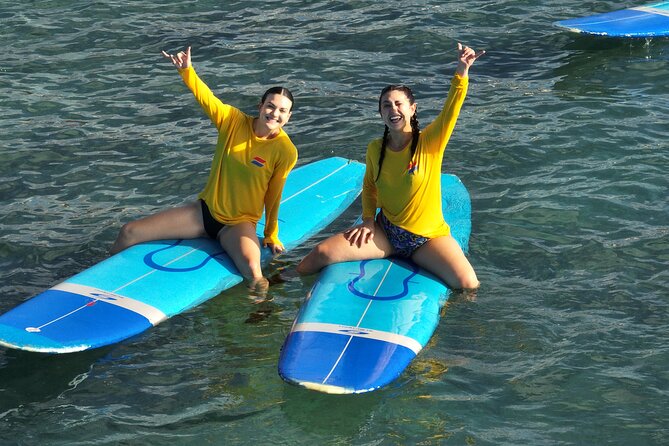
- Small groups and close coaching: you’re split into smaller sets so you can get hands-on corrections, not just a pep talk
- Waikiki convenience: the meeting point is easy to reach and the lesson runs at set times (morning or afternoon)
- Gear included end-to-end: surfboard, rash shirt, reef shoes, and locker rental are part of the price
- You practice before going out: you do board basics before heading to the surf break
- Photo upsell later: there’s souvenir photo availability, but you’ll pay for that separately
Getting Oriented at Waikiki Beach (and why that matters)
Your lesson starts at a specific time, and you’ll make your own way to the meeting point: 150 Kapahulu Ave, Honolulu, HI 96815. From there, you’ll check in, meet your instructor, and get sized up for the board and safety gear. This matters because surfing is physical and fast-moving; the smoother your start, the more useful your time in the water becomes.
You’ll have two lesson options to choose from: morning or afternoon. That’s a small detail, but it can change how your beach experience feels, timing can affect crowds and water conditions, and it gives you a better shot at planning your day around the rest of your Oahu stops.
You can also read our reviews of more tours and experiences in Oahu



What Happens Before You Hit the Water
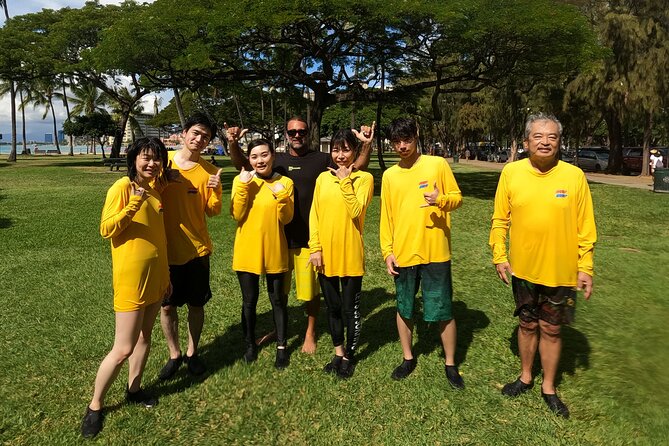
Once you meet your instructor, the first phase is all about getting you comfortable and safe. You’ll get basic sizing for a surfboard and rash shirt, and you’ll also be provided reef shoes. You should expect a short safety overview and a discussion of surfing etiquette, the unglamorous rules that keep everyone from getting in each other’s way.
Then comes a dry-land and near-board warmup where you practice the foundation: paddling basics, how to turn, and how to stand. In real beginner terms, this is where you learn the move sequence so you’re not just scrambling when a wave offers itself.
One smart detail is that your instructor stays close during instruction and while you’re working on skills. Surfing rewards people who adjust quickly, and having coaching nearby helps you correct posture and timing before bad habits harden.
Board Practice: The Short Warmup That Makes the Waves Easier
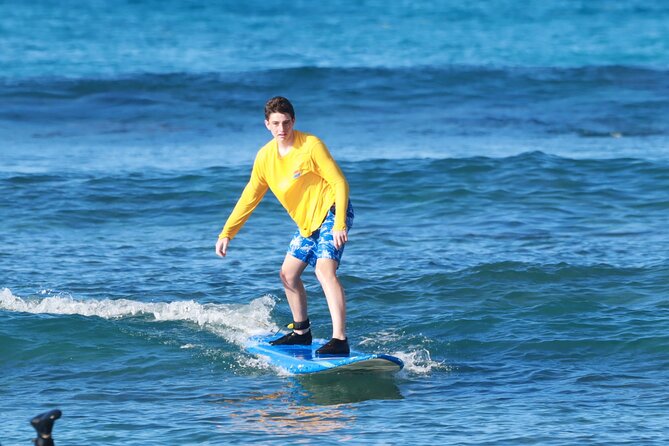
Before you go out to the surf break, you do practice on your board for about 10 minutes. That may sound short, but it’s long enough to learn how the board feels under you and to practice the basic sequence: paddle, position, stand. If you’re nervous, this part can calm you down because you’re not immediately thrown into the most confusing moments of surfing.
You’ll learn how to maneuver around waves, which is less about balance and more about placement. In Waikiki, waves are part of the scenery, but knowing where you should be, and when you should move, is a beginner superpower.
Some instructors also tailor their coaching to the learner. I’ve seen examples of the group being split into very small sets, like 1–3 people per instructor, which is the difference between feeling lost and actually getting to try.
The Ocean Session: Paddling, Turning, and Your First Real Stand
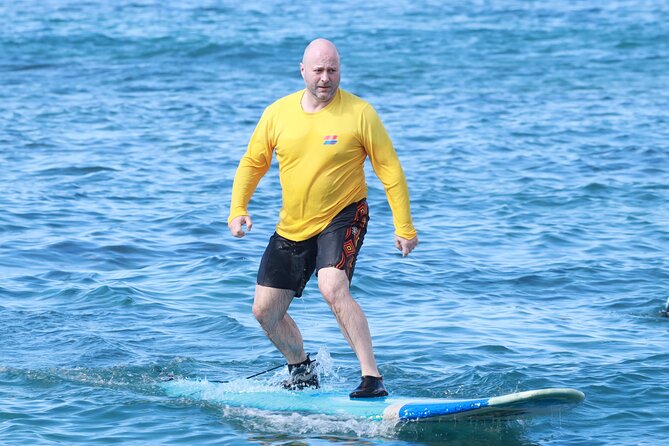
After the prep, you head to the water. This is where your lesson becomes a workout and a confidence builder at the same time. You’re practicing paddling techniques first, then working on turning and standing up. Your instructor is nearby the whole time to guide you and keep you from drifting into unsafe spots.
The goal here isn’t perfection. It’s learning what to do the moment you feel the wave lift under you. Beginners usually improve fastest when they get repeated tries, and this lesson is built to keep you moving through the cycle: attempt, reset, try again.
Also keep an eye on what’s happening outside your board. One standout memory from the experience included spotting a sea turtle during the lesson. That’s not something you should count on, but it shows how special Waikiki can feel when you’re paying attention, not just staring at your own feet.
How Much Time You Actually Spend Surfing
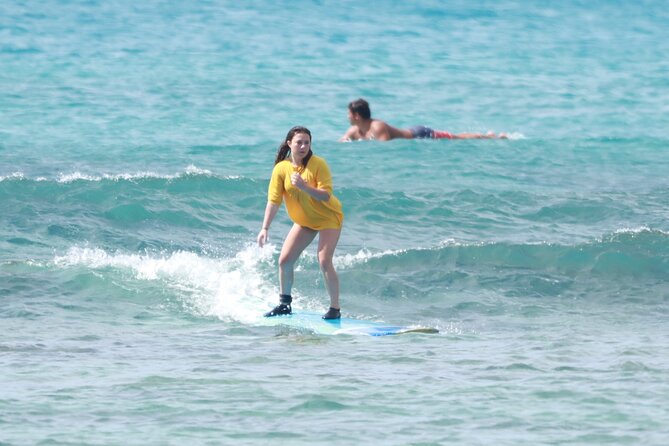
The total lesson runs about 2 hours. The schedule includes time for the safety discussion and practice before you head out, so your pure time riding is naturally less than 2 hours. Still, you should expect enough water time to feel like you did more than the bare minimum.
There are examples of people being in the water for a chunk of the session, and even first-timers reporting they were standing by the end. Realistic expectation: your progress will depend on wave conditions and how many successful attempts you get, but the structure is designed so you’re not just watching from shore.






Included Gear and Small Comforts That Make Beginners Relax
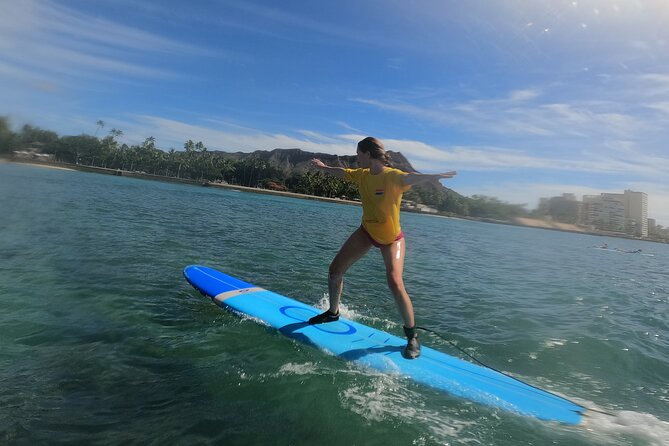
This is one of the most practical parts of the deal. The price includes the surfboard, rash shirt, and reef shoes, plus locker rental for storing your belongings. That means you don’t have to budget time for renting gear separately or worry about bringing the wrong items.
Locker storage is also huge. Surf lessons can make you feel rushed, having a simple place for your stuff helps. One other comfort: you’ll be properly equipped before you get in the water, so you’re focused on the technique instead of the gear.
If you already own your own rash guard or reef shoes, you might still prefer to use what’s provided for the fit. But the lesson is set up so you can show up with minimal planning and still be ready.
Pricing and Value: What $112.31 Really Buys You
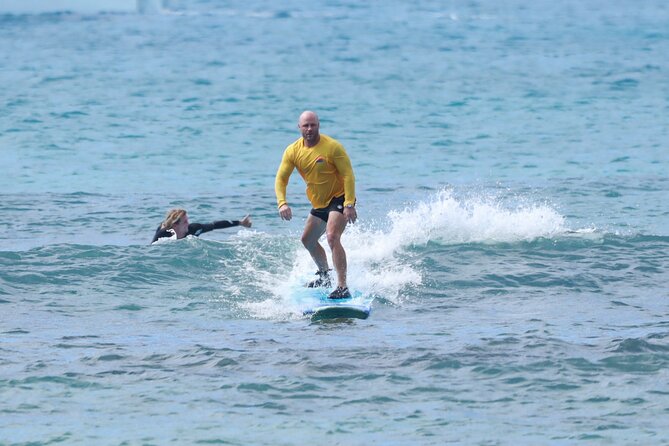
At $112.31 per person for about 2 hours, this isn’t the cheapest way to try surfing in Oahu, but it’s not just marketing fluff either. You’re paying for professional instruction, surf-specific safety guidance, and the full equipment package, with taxes and fees included.
The missing piece is the souvenir photos. You can purchase photos after the lesson, but they’re not included in your base price. So if you think you’ll want them, plan for an extra spend after the fact.
Where the value really shows up for beginners is the coaching time. When instructors can keep an eye on posture and timing while you’re out there, your learning curve improves. That’s the kind of value that’s hard to measure but easy to feel when you stand up sooner than you expected.
Group Size: The Best Kind of Crowded
This activity has a maximum of 40 travelers, which tells you it’s a real operation, not a private beach hangout. But the way the groups work is what matters. In practice, smaller coaching pods are used so you’re not left floating without feedback.
If you’re going solo, this can be a plus. You get to meet people and share the beginner learning curve, and you still receive instruction. If you’re a family group, it’s also a good sign that coaches can be patient and adjust to different ages and comfort levels.
If you prefer total privacy, you might want a different format. This is group instruction by design, even though the coaching feels more personal when you get split into smaller sets.
Where You’ll Meet, What Language to Expect, and Practical Details
Your lesson is offered in English, and you’ll receive confirmation at booking. You’ll also get a mobile ticket, which is handy if you’re already juggling other Oahu plans on your phone.
Service animals are allowed, and the meeting area is near public transportation. That’s useful if you don’t have a car or you want to keep your day simple.
A key note: most travelers can participate, but it’s not recommended for non swimmers. If you’re unsure about your swimming comfort in open water, be honest with yourself before signing up. Surfing lessons include paddling and wave interaction, so the safety rules assume you can handle that environment.
The Instructor Factor: Real Names, Real Coaching
One reason this lesson earns consistently high ratings is the coaching style. People mention instructors like Ella and Sergio for friendliness and teaching clarity. Others highlight Niko and Lewis for being patient and tailored, and Charles for making first-time surfers feel comfortable.
There are also examples of younger surfers and kids getting encouragement. One parent-style highlight involved an instructor helping a child feel supported and safe, leading to real progress on the first try.
For you, that means the lesson isn’t just structure and equipment. The human part matters: good instructors help you fix your stance and timing quickly, and they keep you from feeling embarrassed when you fall. In surfing, falling is part of learning. A supportive coach helps you treat it like practice.
Should You Book This Waikiki Surf Lesson?
I think you should book this if you want a first surfing experience that is structured, gear-included, and coached closely enough to make progress. It’s especially good if you’re planning to spend time around Waikiki and want an activity that feels like real Oahu, not a generic tourist show.
Book it even if you’re nervous. The lesson format is built around basics, safety, and short practice cycles before you head into the surf. And if you care about value, you’ll like that the price covers equipment, locker storage, and taxes and fees.
Skip it if you can’t swim or if you’re looking for a private, no-people, tailor-made session. This is group surfing instruction, and it works best when you’re ready to learn in a shared setting.
If you want your first day on the waves to feel smooth, this is a strong bet. Waikiki sets the stage, and a good beginner lesson gives you the tools to actually use it.
FAQ
What’s the duration of the Waikiki surf lesson?
The lesson lasts about 2 hours.
What’s included in the lesson fee?
It includes professional instruction, a surfboard, a rash guard (rash shirt), reef shoes, safe storage lockers, and all taxes and fees.
Do I need any prior surfing experience?
No experience is necessary. The lesson includes a basic safety overview and surf technique practice geared toward beginners.
Where do I meet for the lesson?
You’ll meet at 150 Kapahulu Ave, Honolulu, HI 96815, USA, and the activity ends back at the meeting point.
Is hotel pickup or drop-off included?
No. Hotel pickup and drop-off are not included.
What’s the cancellation policy if plans change?
You can cancel for a full refund if you cancel at least 24 hours in advance. If you cancel less than 24 hours before the start time, the amount paid is not refunded.