REVIEW · OAHU
Surfing Lessons On Waikiki Beach
Book on Viator →Operated by Big Wave Dave Surf & Coffee · Bookable on Viator
You can stand up sooner than you think. This Waikiki lesson focuses on real beginner progress, with a small class size and instructors guiding you through Hawaii’s surf culture as you learn.
I like the structure: a short on-land start, then hands-on coaching where you’re not left to figure things out alone. Small details matter, like locker access so you’re not juggling bags. One thing to consider is that Waikiki can be busy, and you’ll want to listen hard when the ocean is loud.
In This Review
- What Makes This Waikiki Surf Lesson Worth Your Time
- A Realistic Heads-Up Before You Go
- Key Points to Know Before Your Lesson
- Waikiki Surf Lesson: The Big Picture
- Check-In and Meeting Point: Where Your Lesson Actually Starts
- The On-Land Phase: Safety, Paddling, and How to Stand
- In the Water at Waikiki: What “Beginner-Friendly” Means Here
- Group Size and Attention: Small Class, Big Difference
- Waves, Tides, and Timing: How to Pick Your Best Session
- Equipment and Extra Costs: What’s Included vs. What You Might Pay For
- Where Value Really Comes From: Price vs. Time on the Water
- Who This Works Best For
- Practical Tips You’ll Be Glad You Knew
- Big Wave Dave Surf & Coffee: The Local Base
- Should You Book It? My Decision Guide
- FAQ
- Do I need to bring a surfboard or leash?
- Where do I meet for the surfing lesson?
- How early should I arrive?
- How long is the experience?
- What language is the lesson taught in?
- How many people are in the group?
- Do I need to be able to swim?
- What extra costs might I pay on the day?
- Is there free cancellation?
What Makes This Waikiki Surf Lesson Worth Your Time
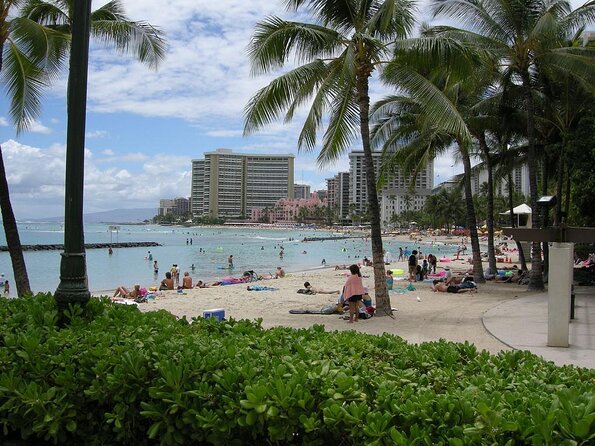
I like that you get on-land instruction first, about 20 minutes, before you ever push out into the waves. You learn the basics of water safety, paddling, board control, and wave handling, so when you get in the water, you know what you’re trying to do.
I also like the in-water coaching close by. The experience is designed as a small group (maximum five), with your instructor positioned to help you stand up and catch waves. And the names you’ll see in recent sessions, Derek, Josh, Joshua, Tanner, Mouse, Alex, and Cody, show a consistent pattern: patient, encouraging teaching that builds confidence fast.
A Realistic Heads-Up Before You Go
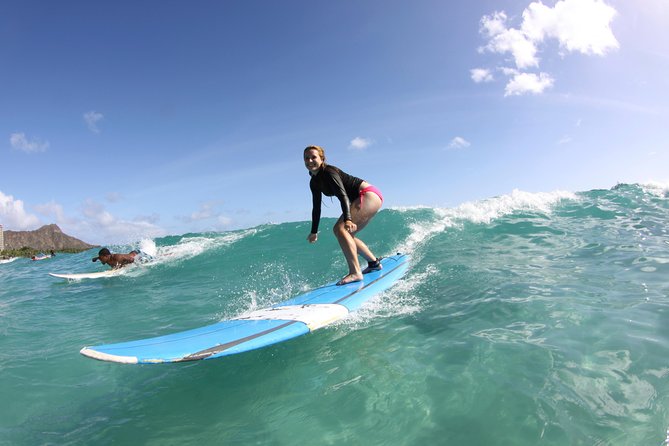
The biggest drawback is not the idea of the lesson, it’s the reality of Waikiki conditions. The beach and launch area can be crowded, and wave noise can make instructions harder to hear on the water. If you’re easily overwhelmed by busy logistics or loud surf, plan to arrive early, pay attention during check-in, and ask questions before you get wet.
You can also read our reviews of more tours and experiences in Oahu
Key Points to Know Before Your Lesson
- Small-group format (max five) helps you get individual attention instead of waiting your turn forever
- Included surfboard and leash means you can travel light and focus on learning
- A ~20-minute on-land safety and technique session helps you understand what to do before you paddle
- South-facing Waikiki water is set up for beginners, with softer, shallower conditions
- Rash guard and locker options cost extra if you don’t bring your own
- Tide timing changes the feel of the surf; morning can offer higher tides, afternoon often starts smaller
Waikiki Surf Lesson: The Big Picture
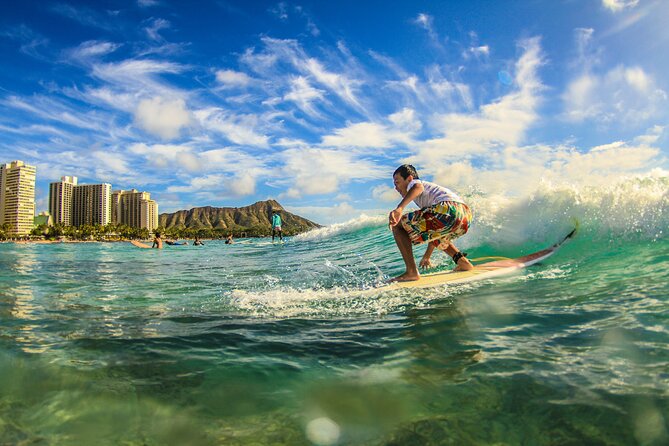
This is a beginner-friendly surf lesson built for people who want their first real rides in a low-stress way. You’re in Waikiki on Oahu, where the south-facing coast is often the go-to teaching zone. The idea is simple: learn the basics on shore, then get enough time in the water to try standing up with guidance right next to you.
The price is $129 per person for about 1 hour 30 minutes. That includes the instructor, the surfboard and leash, and locker use for your stuff. What you don’t get is the optional comfort stuff, rash guard rental is $5, and photography requires advance reservation. The lesson is also in English, and it’s a solid choice for solo travelers and families, not just couples.
If you’re the type who likes clear steps (what to do, where to go, how to paddle), this format works well. If you’re expecting a slow, scenic stroll, it’s more physical than that, surf lessons are vigorous.
Check-In and Meeting Point: Where Your Lesson Actually Starts
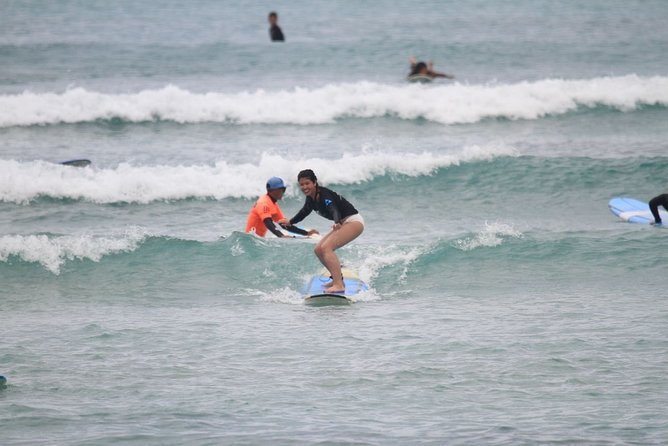
Your session begins at Big Wave Dave Surf & Coffee at 226 Lewers St #154, Honolulu, HI 96815. Plan to check in around 20 minutes early near Waikiki Beach Walk. Arriving early helps you:
- get organized before gear time
- ask any last questions about what to expect
- avoid rushing when the crowd is already building
You’re given access to a locker to store your belongings. That’s a big quality-of-life detail. Waikiki lessons are right by the action, so having a secure place for your phone, wallet, and keys keeps stress low. Your board and leash are included, so you don’t have to borrow equipment plans or drag your own setup from home.
One more practical point: the meeting spot is near public transportation. If you’re mixing Waikiki activities, that convenience matters more than it sounds.
The On-Land Phase: Safety, Paddling, and How to Stand
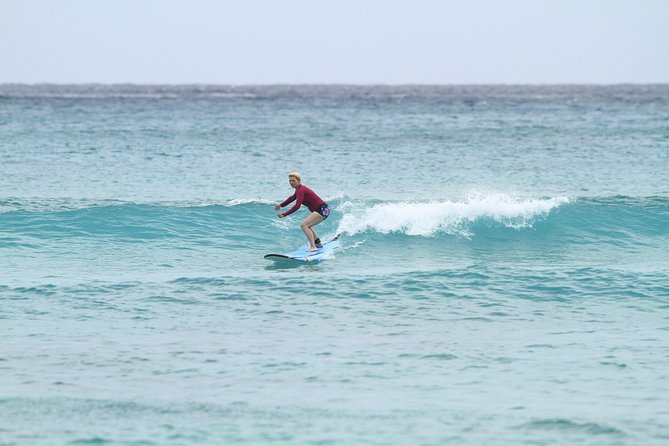
Before you hit the water, you’ll do a short on-land lesson, about 20 minutes. This part is there for a reason. Most first-timers fail not because they’re clumsy, but because they don’t know what the next step is supposed to feel like.
You’ll cover:
- water safety etiquette (how to behave around other surfers and in moving conditions)
- paddling techniques (so you can get into position)
- surfboard maneuvering (basic control)
- wave handling practices
Then you’ll move into the real work: standing up and catching waves. The on-land session is also where you learn the language of surfing your instructor uses out on the water. If you’ve ever felt lost in a class, this is the fix.




In the Water at Waikiki: What “Beginner-Friendly” Means Here
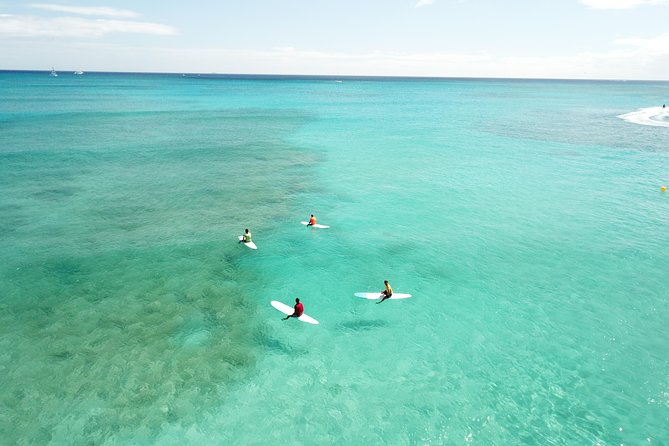
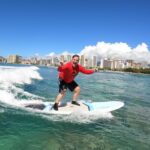
Waikiki’s south-facing coast is ideal for beginners because the water is often shallow and sandy. That softer bottom can reduce the fear factor when you’re learning to fall, wipe out, and reset your board.
Your instructor stays actively involved as you practice in the ocean. The goal isn’t just to float on the board. It’s to get you:
- paddling with purpose
- timing your movement
- standing up with better balance
- riding your first Waikiki waves safely
Recent teaching styles you’ll likely recognize from the guide names tied to this activity: instructors such as Derek and Joshua are described as patient and encouraging, and people highlight that they got more attempts and better wave timing after the instructor explained what to do.
A key detail: this lesson requires you to be able to swim. If swimming is a weak spot for you, don’t “tough it out.” Choose a lesson that meets your comfort level, or do some basic water confidence work first.
Group Size and Attention: Small Class, Big Difference
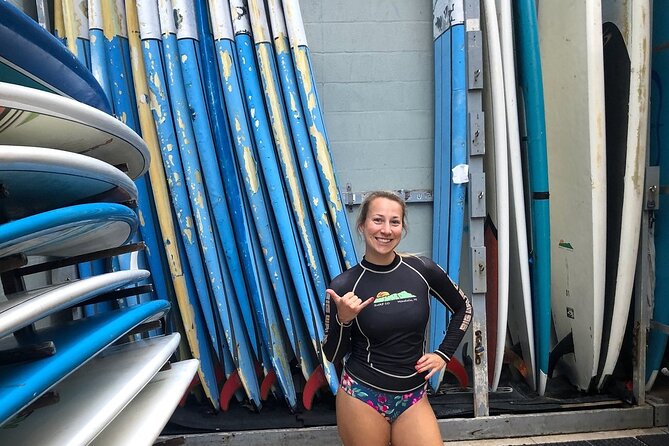
The stated group size is small, maximum five travelers. That matters because learning surfing is mostly about repetition. With too many people, you end up watching while others ride, or you get brief instructions and lots of guesswork.
A benefit of a smaller group is that your instructor can:
- position you safely relative to the others in your session
- coach your standing attempts without rushing
- adjust technique as you go, instead of only correcting after the fact
Even with a small format, Waikiki is busy. You may still feel the “everyone’s doing this right now” energy. Your best move is mental: arrive early, listen on shore, and commit to what your instructor says when you’re in the water.
Waves, Tides, and Timing: How to Pick Your Best Session
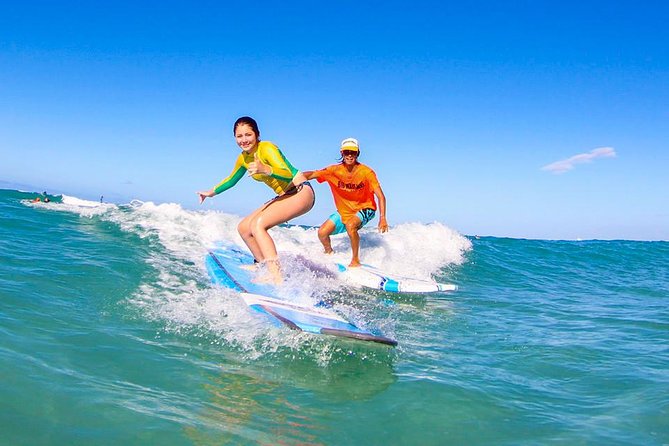
One of the most useful practical tips from people who did this lesson is timing based on tides. If you want higher tides, book the morning. If you want smaller, gentler waves to start, afternoons can work well.
Why this matters: wave height and energy affect how quickly you can catch one, and whether you can stand comfortably without feeling like you’re being rushed. You don’t need “big waves” to learn. You need waves that let you practice getting up.
Weather also matters here. The experience is weather-dependent. If conditions aren’t good for lessons, you should expect a rescheduled date or a full refund.
Equipment and Extra Costs: What’s Included vs. What You Might Pay For
Included in your $129 price:
- surfboard and leash
- professional instructor
- locker use
Not included:
- photography (available only with advance reservations)
- rash guard rental: $5
- optional lock rental: $5, or you can bring your own
If you want the least friction, bring a rash guard if you already own one. If not, paying $5 is usually the easier choice than worrying about skin comfort after the first session. Either way, you’ll have everything you need to ride, gear and instruction are covered.
Where Value Really Comes From: Price vs. Time on the Water
At $129 for about 90 minutes, this lesson is priced like a serious activity, not a quick demo. The value depends on one thing: how many real attempts you get to stand up and ride.
The best sessions hit a sweet spot: clear coaching, strong wave timing, and an instructor who reads the water and sets you up for better tries. People give this kind of praise consistently, including remarks that instructors helped them catch countless waves and built confidence quickly.
The weaker sessions tend to involve:
- harder-to-hear instructions because of surf noise
- less-than-ideal launch conditions if the area is crowded
- fewer high-quality wave opportunities in a given window
So how do you protect your value? Arrive early, pick your tide timing (morning for higher tides, afternoon for smaller), and go into it expecting a physical lesson where you actively work for your waves.
Who This Works Best For
This is a great fit if you:
- are a first-time surfer or returning to the sport
- want focused guidance in a small group
- like structured learning: safety first, then practice
- want a Waikiki experience that connects you to the culture of surfing
It also seems well-suited for families with teens. Multiple instructors are praised for working patiently with younger riders, including teen groups where confidence was a big outcome.
It’s not ideal if:
- you can’t swim
- you dislike physical activities that involve paddling, balance practice, and repeated attempts
- crowded beach logistics stress you out (it can get busy)
Practical Tips You’ll Be Glad You Knew
Here are a few small moves that can change your lesson experience a lot:
- Wear swim-ready clothes and consider a rash guard if you want extra comfort (it’s $5 to rent)
- Use the locker so you’re not holding onto gear while you’re trying to learn
- Pick your time wisely: morning often means higher tides; afternoon can mean smaller waves
- Listen before you go in: the on-land segment is short, but it sets up your success
- Don’t panic if you fall: beginners fall here, what matters is reset and try again with the instructor’s next cue
Big Wave Dave Surf & Coffee: The Local Base
This lesson’s home base is Big Wave Dave Surf & Coffee. The shop setup is part of the appeal because you’re close to where you need to be without having to plan complicated equipment drop-offs. People also note that the shop serves food and coffee, which helps if you’re pairing your surf lesson with a Waikiki morning or afternoon plan.
That said, the surf lesson experience is about the water time and instruction. The shop is a good starting point, not the main show.
Should You Book It? My Decision Guide
Book this Waikiki surf lesson if you want:
- a beginner-focused path to your first rides
- small-group teaching (max five) with included board and leash
- structured safety and technique before you paddle out
- instructors who are described as patient and encouraging, including names like Derek, Joshua, Tanner, Mouse, Alex, and Cody
Consider another option if:
- you need a super quiet, low-stress setup and worry about crowds at Waikiki
- you’re sensitive to hearing instructions in noisy ocean conditions
- you want a lot of professional photo coverage included in the price (photos cost extra and require reservations)
If you go in prepared, able to swim, ready to work, and choosing the right time for tides, you should feel like the money is buying something real: coaching that helps you progress, not just a board and a chance to flail in the waves.
FAQ
Do I need to bring a surfboard or leash?
No. The lesson includes the required surfboard and leash.
Where do I meet for the surfing lesson?
You meet at Big Wave Dave Surf & Coffee, 226 Lewers St #154, Honolulu, HI 96815. The activity ends back at the meeting point.
How early should I arrive?
Check in about 20 minutes early near Waikiki Beach Walk to get ready for the lesson.
How long is the experience?
It runs about 1 hour 30 minutes (approx.).
What language is the lesson taught in?
The lesson is offered in English.
How many people are in the group?
The maximum group size is five travelers.
Do I need to be able to swim?
Yes. You must be able to swim.
What extra costs might I pay on the day?
Photography is not included and needs advance reservations. A rash guard rental costs $5, and an optional lock rental costs $5 (or you can bring your own).
Is there free cancellation?
Yes. You can cancel up to 24 hours in advance for a full refund. Weather-related cancellations offer a different date or a full refund.