REVIEW · OAHU
1.5-Hour Semi Private Surfing Lesson in Honolulu
Book on Viator →Operated by Gone Surfing Hawaii · Bookable on Viator
Learning to surf feels doable here. Waikīkī’s beginner-friendly conditions and hands-on coaching turn first-timers into wave-riders fast. I love the sand-to-water structure, ocean awareness and safety first, then you’re actually trying, and I also love that you can do this with up to five friends for a shared, low-stress lesson. One thing to consider: you must be a confident swimmer, and surf sessions depend on ocean conditions, so high tides or poor weather can affect whether you get in.
You’ll start on Waikīkī beach with a quick, practical teaching session, then your group heads into the water with the instructor matched to your size and needs. The big win for me is the attention to surf basics that matter right away, wave reading, positioning, takeoff timing, and basic etiquette, so you’re not just thrashing around. The only drawback I’d flag is that the minimum age is 13, so this isn’t a fit for younger kids unless they’re booked correctly for a private lesson.
In This Review
- Key Things You’ll Notice Right Away
- Waikīkī Beach Start: How They Set You Up to Actually Surf
- Paddle Out and Getting Position: The Workout Part (And How They Help)
- Surf Lesson in the Water: Reading Waves and Taking Off
- Gear, Comfort, and Why Rash Guards Matter
- Who This Is Best For (And Who Might Want a Different Plan)
- Waikīkī as a Surf Setting: Why This Spot Works for Beginners
- The Lesson Team: What You’ll Get From Real Coaching
- Photos and Souvenirs: Getting the Moment Without the Hassle
- Practical Timing and What to Expect During the 1.5 Hours
- Value Check: Why This Usually Feels Worth It
- How to Prepare So You Get the Most Waves
- Should You Book This Honolulu Surf Lesson?
Key Things You’ll Notice Right Away

- Begins on the sand in Waikīkī for ocean awareness and safety before you go out
- Semi-private group up to five friends so you get coaching without total chaos
- Surfboard + rash guard included, which removes a lot of hassle for first-timers
- Safety-first instructors trained in first aid and lifeguard-level CPR
- Coaching aimed at all abilities and ages (13+), not just athletic beginners
- Optional souvenir photos you can buy after the session
Waikīkī Beach Start: How They Set You Up to Actually Surf
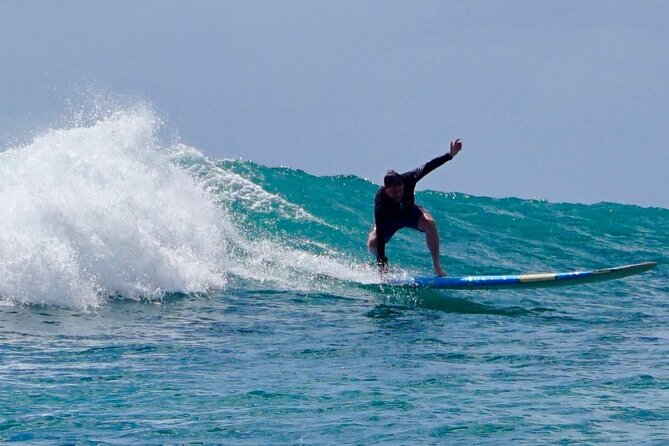
This lesson starts where it should: on the sand at Waikīkī Beach. The instructors don’t throw you into the ocean and hope for the best. They teach you how to think about the water first, how waves form, what conditions mean for your chances, and what safety rules keep things under control.
Then they move quickly into the stuff you need on your board. You’ll practice basics before you paddle out, including where you should be on the wave and how to set yourself up for takeoff. That matters because the most common beginner problem isn’t a lack of effort, it’s doing the right actions at the wrong time.
If you’ve got a nervous group, you’ll probably appreciate how patient the instructors are. In past lessons I’ve seen families mention coaches like Mick, Trevor, and Jojo for being encouraging and thorough before going into the water. That style shows up in the way the lesson flows: calm instruction, then real attempts.
You can also read our reviews of more private tours in Oahu



Paddle Out and Getting Position: The Workout Part (And How They Help)
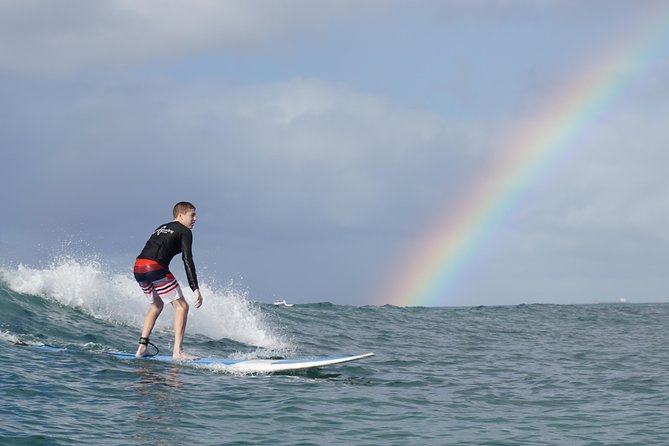
Once you’re ready, your group heads into the water. For a lot of beginners, the swim-out is the hardest part, paddling against currents and holding position takes strength and focus. The good news is that instruction is built around reducing wasted energy. You’re coached on where to go and how to position yourself, so you’re not just fighting the ocean.
In the reviews, instructors repeatedly get credit for making the ocean part less overwhelming. People mention the coach paddling them out to the surf zone to save energy, and in some cases even towing assistance when needed. You’ll still work hard, but you should feel like you’re being guided to the right spot rather than dropped off.
Two practical notes for you:
- You should show up ready to swim and paddle. This is listed for moderate physical fitness, and you’ll feel it in your arms.
- If tides are high or conditions aren’t producing rideable waves, the instructor may adjust plans. That’s not a “fail”; it’s safety and reality checking, and it’s a theme in the experience feedback.
Surf Lesson in the Water: Reading Waves and Taking Off
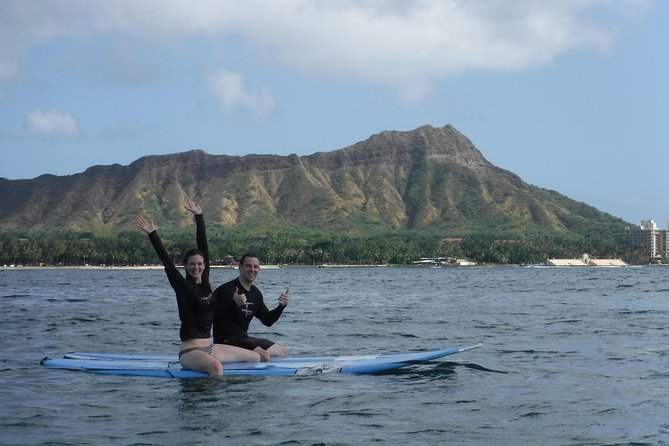
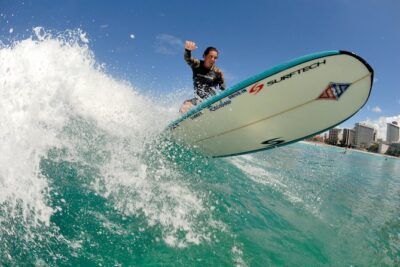
In the water, the lesson turns into a cycle: you try, you adjust, you try again. Your instructor teaches you how to read waves, spotting which ones have the shape and timing you can actually use. Then you practice your position for takeoff, which is the difference between standing after the wave is already gone and standing while it still has push.
You’ll also get guidance on basic surf etiquette. That’s not just rules for politeness, it helps keep everyone safer when multiple people are in the lineup. Knowing how to avoid interfering with other surfers means you can focus on your own ride instead of constantly worrying about what’s around you.
What’s especially valuable here is the “small group” size. Up to five friends means your instructor can keep an eye on everyone’s paddling, posture, and timing. In several accounts, beginners describe getting up quickly, sometimes on the first few attempts, because the coach gives tips after each try.
Gear, Comfort, and Why Rash Guards Matter

This is one of those experiences where included gear is a big deal, especially for first-time surfers. You get a surfboard and a rash guard. That’s not fancy, but it’s smart: it helps you move comfortably and reduces friction and irritation during the session.
A rash guard also gives you peace of mind in the “new to the ocean” stage. You’ll be focusing on balance and timing, not skin discomfort. The lesson is short (about 1.5 hours), so you want comfort that lets you keep learning without getting distracted.
You’ll also want to think about what you bring. The experience includes the surfing tools, but you should plan to bring only what you need and follow the team’s instructions for handling belongings. Some people mention help storing items securely during the session, which is a nice extra if you don’t want to carry everything in and out.
Who This Is Best For (And Who Might Want a Different Plan)
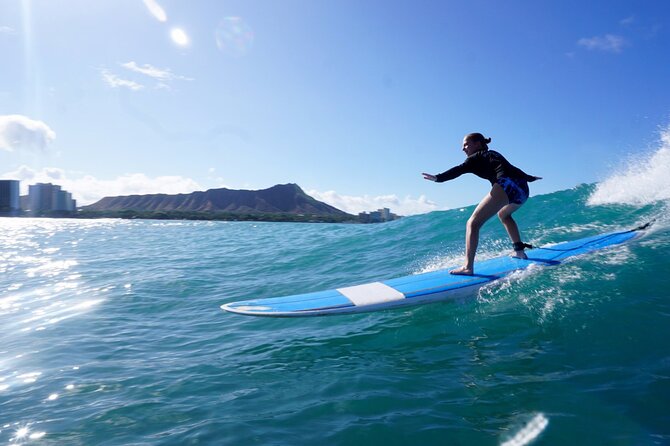
This is a great fit if you want an easy-to-manage surf lesson in Waikīkī with real instruction. It’s designed for families, friends, and small groups, with coaching tailored to different ages and abilities.
You’ll likely enjoy it most if:
- You’re a confident swimmer
- You’re 13 or older
- You want a guided surf experience in a beginner-friendly area
- You like group energy but still want attention from the instructor
It’s not a fit if you can’t swim. And for younger kids, the minimum age is 13 for this type of setup, with guidance to book younger participants on a private lesson option.
If you’re looking for a “spectator” experience where you stand on the beach while others surf, this isn’t that. The session is built around getting you into the water and trying, multiple times.
You can also read our reviews of more tours and experiences in Oahu






Waikīkī as a Surf Setting: Why This Spot Works for Beginners
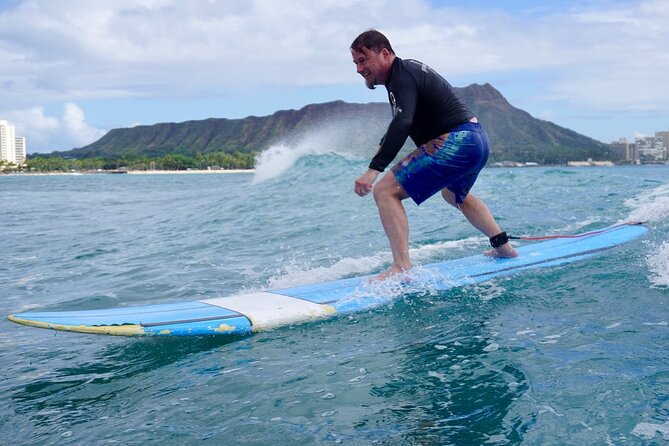
Waikīkī is popular for a reason. The waves tend to be more approachable for beginners than you’d see on rougher coastlines, and the beach setting makes the learning process smoother.
That doesn’t mean the ocean is easy, though. It’s still water, currents still exist, and paddling still takes effort. The lesson’s value is that it teaches you how to interpret what you’re seeing and doing, so you can surf what’s in front of you, not just what you imagined.
One thing that keeps coming up in the feedback: instructors emphasize safety and wave conditions up front, then time their moments in the water. If there aren’t good waves, they’ll be honest. You might not get the full “surf parade” you hoped for on every day, but you should feel like the team is protecting you and not forcing bad conditions.
The Lesson Team: What You’ll Get From Real Coaching
A lot of surf lessons promise improvement. This one leans hard on coaching style: hands-on assistance, plenty of individual attention, and instructors trained in first aid and lifeguard-level CPR.
That safety credential matters because it changes the tone. Instead of “good luck,” you get “here’s what to do, and here’s how to do it safely.” In multiple accounts, instructors are described as patient and encouraging, people talk about overcoming nerves and learning confidence step by step.
You’ll also notice instructors get praised by name in feedback, Trevor, Mick, Owen, Austin, Tommy, Jason, Nate, Jojo, Jarret, and Shawn show up. While you can’t pick a specific coach from the information provided, the consistent theme is clear: the coaching is friendly, direct, and focused on getting you surfing, not just watching.
Photos and Souvenirs: Getting the Moment Without the Hassle
The lesson includes the surfing, but souvenir photos are an extra purchase. In reviews, people mention photographers capturing strong action shots and end-of-session images, sometimes with multiple waves ridden.
That’s useful because surfing moves fast. Without photos, a great lesson can blur into a lot of splashing. With photos, you’ll have something to remember the exact moment you finally got it, especially if you’re a first-timer who thinks it might never happen.
If you’re budget-conscious, treat it like optional value: buy only what you actually want to keep.
Practical Timing and What to Expect During the 1.5 Hours
The session runs about 1 hour 30 minutes. It’s long enough to teach, practice, paddle, ride, and reset. But it’s not so long that you’re wiped out before you get wave time.
Because classes happen throughout the day, you can usually pick a time that fits your schedule in Honolulu. Still, keep your mindset flexible. Ocean conditions and tide can change the day’s outcome, and the team will adjust for safety and ride quality.
If you’re planning this during your tightest sightseeing day, don’t. Pick a time where you can handle possible changes, like a day with fewer waves.
Value Check: Why This Usually Feels Worth It
You’re paying for more than “renting a board.” You’re paying for:
- Gear included (board + rash guard)
- Instruction on technique you can use immediately
- Safety-trained staff
- Semi-private group time so you’re not lost in a huge crowd
- Real coaching across multiple attempts, not just one go-and-hope cycle
For many first-timers, the biggest value is getting the right basics fast, paddling into position, standing correctly, and understanding what wave features matter. That can turn a scary new activity into a “I can’t believe I did that” afternoon.
And if conditions don’t cooperate, like tide being too high to produce waves, there’s an added layer of value in the honesty and the willingness to refund rather than force a disappointing session.
How to Prepare So You Get the Most Waves
To set yourself up for a good outcome, focus on the simple things you control:
- Wear swimwear you’re comfortable surfing in
- Bring sunscreen and reapply as needed (your skin will be busy out there)
- Eat something light beforehand so you have energy for paddling
- Don’t overthink it. The instructor will have you repeat the key motions until it clicks
- If you’re nervous, tell the coach early. Multiple instructors get praised specifically for putting beginners at ease
Also: expect to work. Even if you catch a few rides, the swim and paddling are real exercise.
Should You Book This Honolulu Surf Lesson?
If you’re 13+, you can swim, and you want an instructor-led surf experience in Waikīkī, I’d book it. The combo of small-group attention, solid safety coaching, and a sand-to-water lesson flow is exactly what helps beginners succeed quickly.
I’d also choose this if you’re traveling with friends or family and want everyone included, not split up into different skill tracks. Coaches like Trevor, Mick, Jojo, and others show up in feedback for being patient and confidence-building, and that style matters when you’re learning something physical and new.
Skip it only if you’re looking for a hands-off experience, you can’t swim, or your schedule is too tight to handle possible changes due to surf conditions. Surf days can be fluid. This company’s strength is teaching you to read the ocean and keeping safety at the center.