REVIEW · OAHU
North Shore Beginner Surf Lesson, Hawaii
Book on Viator →Operated by Surf N Sea · Bookable on Viator
Two hours from zero to waves? That is the promise here, on Oahu’s North Shore, where surf culture is real and the lesson format is built for beginners. You start on land, then go into the water with coaching focused on safety, ocean etiquette, and actually getting onto the board.
I like how the instruction is structured: falling safely, how to paddle out, and how to go from laying to standing. I also like the value of surfboard + full equipment being included, so you do not burn time hunting gear. The big catch is simple: no transportation is provided, so you need to drive to the meeting point in Haleiwa and be ready for a quick start.
In This Review
- North Shore beginner lesson: what makes it work
- Key points before you go
- Why the North Shore is a great place to learn
- Price and value: what $104 buys you
- Meeting in Haleiwa: drive logistics that affect your day
- The lesson flow: what happens before you hit the water
- Waialua Bay: your first real attempts at surfing
- Haleiwa: wrapping up and keeping the day smooth
- Gear included: foam boards, comfort, and smart prep
- What the instructors do that makes beginners succeed
- Safety and fitness reality check
- Is it worth it for your travel style?
- Should you book this North Shore beginner surf lesson?
- FAQ
- How long is the North Shore beginner surf lesson?
- Do I need to know how to swim?
- Is transportation included to the surf spot?
- What’s included in the price?
- Where do I meet for the lesson?
- How big is the group?
- Are there age restrictions?
- Is the lesson offered in the morning and afternoon?
- What if the weather is poor?
North Shore beginner lesson: what makes it work
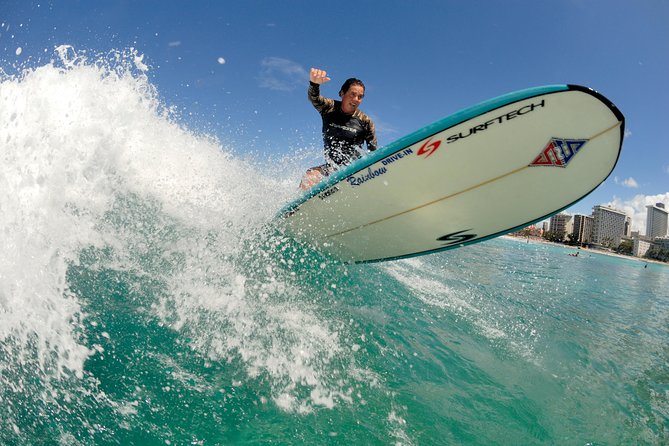
If you have never surfed, the North Shore can feel intimidating. That is why I like this format: it spends real time teaching you how to handle the ocean before you try to catch anything big.
Two things I’d call out right away: you get a small group (max 4), and the coaches focus on safe habits like ocean etiquette and falling correctly. That setup is what turns a first attempt into a fun win, not a stressful swim-and-regret day.
One drawback to think about up front: you must be able to swim, and there are health limitations like back or knee problems or recent surgeries. Also, if weather turns, the lesson can be rescheduled or refunded, depending on conditions.
Key points before you go
- Small group size (up to 4 travelers): more eyes on you in the water.
- Land training first: falling safely and etiquette come before paddling out.
- Equipment is included: board plus everything else you need.
- Waialua Bay practice: a beginner-friendly start in the action zone.
- Drive yourself: no transportation means you control timing and parking.
You can also read our reviews of more tours and experiences in Oahu
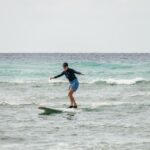
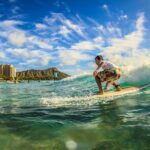
Why the North Shore is a great place to learn
Oahu’s North Shore has a reputation that makes people think you need to be fearless to start. The truth is more practical: you need the right basics, and you need them taught clearly.
This lesson is built around that. You get coaching that covers the rules of ocean etiquette and the techniques that help you succeed in real waves, not ideal waves. The best part is that the instructors are there to guide you through the parts that usually trip up first-timers: paddling, timing, and staying calm when things feel chaotic.
And yes, the location matters. Even when the conditions are not perfect, the North Shore is still exciting. It is hard not to feel energized standing there with the ocean doing its thing, knowing you are about to try it for real.
Price and value: what $104 buys you
At $104 per person for about 2 hours, this is not a budget activity. But it is also not overpriced, because the big costs are covered for you.
You pay for:
- guided instruction
- a surfboard
- all the equipment you would need
That matters. When gear is included, you avoid the common travel headache of finding rentals, sizing problems, and last-minute last-day mistakes. You also avoid paying extra for an activity that is already short. Two hours is enough time to learn the basics, try standing, and feel like you made progress instead of just observing.
The other value piece is the small group. With up to 4 people, you typically get faster feedback and more chances to try. Some lessons feel like a waiting game; this one is designed so you get more time doing, not just watching.
One more practical note: this experience is commonly booked around 17 days in advance on average. If you are traveling in a busy season or have a tight schedule, booking earlier is smart.
Meeting in Haleiwa: drive logistics that affect your day
This experience starts at 62-595 Kamehameha Hwy, Haleiwa, HI 96712. It ends back at the same meeting point.
No transportation is provided, which is the one part that can ruin a surf day if you ignore it. You are driving from Surf N Sea to the surf spot location, so plan like a local: give yourself extra buffer time, and do not wait until the last minute to find parking.
The lesson itself gives you a choice between a morning or afternoon session. That helps if you want to align with your body’s energy levels. But it also means you should treat timing seriously. The schedule is short, so being late can cut into practice time.
The lesson flow: what happens before you hit the water
The first chunk happens on land, and it is not filler. It sets you up so the ocean feels more predictable when you finally paddle out.
You start with an introduction to surfing and how to do it the right way. Then you cover safety stuff that beginner surfers need immediately:
- how to fall safely
- ocean etiquette
- how waves break and how to think about where you fit in the lineup
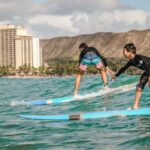
From there, the coaches get practical about what you will do in the water. You practice getting from laying down to standing, using the easiest path possible. You also get guidance on:
- how to catch waves as a beginner
- what type of board to use when you are starting
- where beginner surf spots are likely to feel more manageable
This land training is one reason people walk away feeling confident. If you already know what you’re trying to do, you spend less energy panicking and more energy learning.



Waialua Bay: your first real attempts at surfing
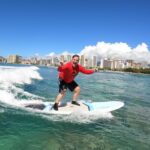
Stop one is Waialua Bay, and this is where the lesson becomes physical. You will paddle out, try to catch waves, and work on standing up.
The coaching approach matters here. In the recent instruction style I saw highlighted, the best instructors focus on small, repeatable corrections. That shows up in the way guides helped people paddle out, spotted waves to try, and adjusted your timing so you were not guessing.
In real-world first-timer terms, that means you are more likely to get on the board repeatedly instead of just one lucky ride. Several first-time surfers mentioned getting up multiple times, which is a big deal when you are learning balance and pop-up timing.
If conditions are not perfect, do not assume the lesson is pointless. One of the lessons I’d treat as a useful reality check is that conditions can be variable, yet the coaching still aims at progress. Even when waves are weaker, you can still learn the motion and the rhythm.
Haleiwa: wrapping up and keeping the day smooth
Stop two is Haleiwa, and it usually functions like the anchor point of the experience. You start at the meeting spot in Haleiwa, then go out to Waialua Bay for the main surf time, then you return to the same place at the end.
Why this is good for you: after a workout in the ocean, you want a clear end point. A return to the start keeps things simple when you are hungry, tired, or ready to dry off.
It also helps with logistics. If you are making a bigger North Shore day out of it, you can plan meals and other stops around a known window, rather than guessing when you will be done.
Gear included: foam boards, comfort, and smart prep
You get a surfboard plus all the equipment you need. That is a relief, especially for first-timers who are not sure what they should rent.
A practical comfort tip: beginner boards are often foam and designed for stability. That is great for learning, but you might still want to think about skin comfort. One useful suggestion from past participants was to wear a wet shirt, since foam boards can be hard on bare skin.
I also strongly recommend you treat this like an ocean workout, not a casual swim. Bring whatever you need to stay comfortable in the sun and wind before and after. The lesson is only about 2 hours, but the ocean time can still feel long when you’re paddling.
What the instructors do that makes beginners succeed
The best part of this kind of lesson is not the equipment. It is the human feedback.
Across the instructors mentioned, the themes are consistent:
- patient instruction that breaks surfing into steps
- coaching that focuses on safety and etiquette
- hands-on help once you’re tired in the water
- wave spotting, so you try the right opportunities
Names that have come up include Travis, Henry, Eric, Tanner, Mark, and Terrance (helping in the water). Even with different personalities, the common thread is that the instructors help beginners get past the two big hurdles: knowing what to do next and feeling safe enough to try again.
There is also a confidence factor. Several beginners walked away feeling ready to surf on their own someday because they understood the rules and the basic techniques. That is the kind of value that lasts longer than one session.
Safety and fitness reality check
This is a water sport. That means there are clear rules.
You must be able to swim. The lesson is not set up as a flotation event. It assumes you can handle being in the water and following the safety direction.
Also, the activity is not recommended for people with back or knee problems, and it’s not a fit after recent surgeries. If any of that applies to you, this is the time to be honest with yourself before you book.
Children matter too. The group surf lesson is for 13 and above. Kids under 13 must book a private lesson instead. If you are bringing a younger child, plan that change early so you do not lose time.
Is it worth it for your travel style?
This lesson is best if you want a guided start with structure. It fits:
- first-time surfers who want step-by-step instruction
- couples or small groups who prefer attention over crowds
- travelers who like active days and want to learn something real, not just watch
It is less ideal if you:
- hate driving in a new area
- have limited mobility or health concerns related to surfing motions
- are not comfortable swimming in open water
- need a totally low-effort activity (paddling is work)
The biggest reason I’d recommend it is that the coaching is aimed at getting you on the board. If you book this expecting a magical ride with no effort, you may feel frustrated. If you book it expecting learning + practice, you’re in the right zone.
Should you book this North Shore beginner surf lesson?
If you can swim, you have no major back or knee limitations, and you are comfortable driving to Haleiwa, this is an easy yes for most first-timers. The mix of included gear, a small group size (max 4), and instruction that targets safety plus standing up is exactly what helps beginners move forward fast.
I would say think twice if transportation is a pain point for you, because no rides are provided. Also, keep weather in mind. This experience needs good conditions, and when it does not happen, you should be ready to switch dates.
Overall, with a strong rating of 4.7 and 93% of people recommending it, this is the kind of activity that tends to earn its place on an Oahu itinerary.
FAQ
How long is the North Shore beginner surf lesson?
The lesson runs for about 2 hours.
Do I need to know how to swim?
Yes. You must be able to swim.
Is transportation included to the surf spot?
No. You’ll drive from Surf N Sea to the surf spot location, and the tour includes no transportation.
What’s included in the price?
The price includes a surf board and all the equipment you would need.
Where do I meet for the lesson?
You start at 62-595 Kamehameha Hwy, Haleiwa, HI 96712, and the lesson ends back at the meeting point.
How big is the group?
This experience has a maximum of 4 travelers.
Are there age restrictions?
Yes. Group surf lessons are for children 13 years old and above. Children under 13 require a private lesson.
Is the lesson offered in the morning and afternoon?
Yes. You can choose from a morning or afternoon lesson.
What if the weather is poor?
This activity requires good weather. If it’s canceled due to poor weather, you’ll be offered a different date or a full refund.