REVIEW · OAHU
Waikiki Surf Lesson (Hawaiian Boy Surf School)
Book on Viator →Operated by Hawaiian Boy Surf School · Bookable on Viator
Your first Waikiki wave starts on sand. I like the south-facing beginner water and I like the one-on-one coaching that helps you get moving fast. One caution: permit issues can affect operations, so it’s smart to confirm and have a backup plan.
You’ll meet at Kuhio Beach near the Duke statue area, then start with an on-land safety and surf skills session before going into the water with your licensed guide. The school says you’ll be surfing by the end of the lesson, and the experience is private for your group in English.
In This Review
- Key highlights
- Why Waikiki’s south-facing coast helps beginners move fast
- Kuhio Beach and the Duke statue: start where the day happens
- The on-land warmup: safety, paddling, and board control
- One-on-one in the water: standing up with your instructor close
- Surfboard sizing and patient coaching: how first-wave success happens
- What’s included in your $100, and where the value comes from
- A realistic heads-up: permits, no-shows, and what to do
- Who should book this lesson, and when to consider more time
- Quick decision guide: should you book Hawaiian Boy Surf School?
- FAQ
- Where is the meeting point for the Waikiki surf lesson?
- How long is the lesson?
- Is this a private activity or a group class?
- What’s included in the price?
- Is bottled water included?
- What language is the lesson offered in?
- Who can participate?
- What is the cancellation policy?
Key highlights
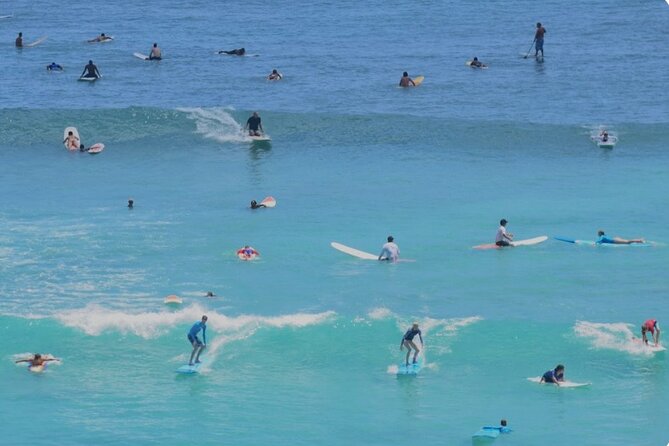
- Beginner-friendly shoreline: Waikiki’s south-facing coast offers gentler conditions with shallow, sandy bottoms.
- Start on land, then go in: safety, paddling, surfboard control, and wave riding setup before you ever stand.
- Real one-on-one time: an instructor stays close as you learn to stand and ride.
- Board sizing can be adjusted: at least one instructor (Preston) chooses smaller boards based on your history to speed up success.
- Private group format: only your group participates, so you’re not sharing attention.
- Bring water: bottled water is not included.
Why Waikiki’s south-facing coast helps beginners move fast
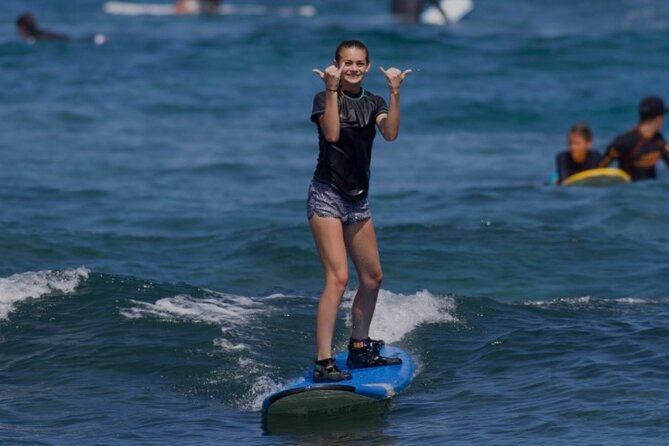
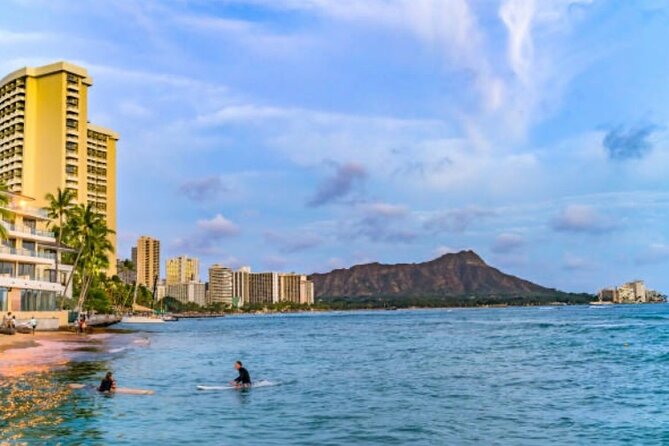
Waikiki surf lessons can feel intimidating, until you’re in the right place. This lesson is built around Waikiki’s south-facing coastline, which tends to be more forgiving for beginners than rougher open-water spots.
That matters because early progress is mostly about confidence. With shallow, sandy bottoms and gentler waves, you can focus on the basics: getting your body into position, paddling effectively, and controlling the board without constantly fighting the ocean.
You also get an early focus on water safety. Even though the goal is fun (and it should be), the lesson starts by setting rules and boundaries so you know what to do before you chase your first wave.
You can also read our reviews of more tours and experiences in Oahu
Kuhio Beach and the Duke statue: start where the day happens
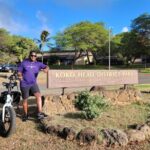
Your meeting point is at Kuhio Beach, 2453 Kalākaua Ave, Honolulu, HI 96815. The spot is easy to recognize because you’re near the famous Duke statue area, and that’s a handy landmark when you’re figuring out Waikiki on the fly.
The experience uses a mobile ticket, so have it ready on your phone when you arrive. The meeting location is also described as near public transportation, which is helpful if you don’t want to rely entirely on rideshare.
One more practical note: it’s a private activity, meaning you’re not blending into a big crowd. That usually makes the start calmer, especially if you’re bringing a kid or you’re the kind of person who learns better when you’re not listening over noise.
And if you have an animal companion, service animals are allowed.
The on-land warmup: safety, paddling, and board control
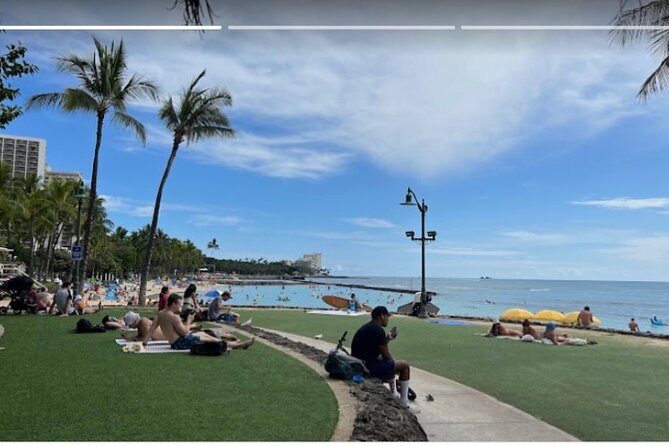
The lesson begins on the beach with an experienced instructor. This on-land session is where you get the foundation you’ll rely on in the water: water safety rules, paddling technique, and surfboard control.
Why this stage matters: surfing isn’t one single skill. It’s a stack. If your paddling is off, you won’t get into position. If you can’t manage the board, standing becomes random. And if you don’t understand the basics of safety and wave behavior, you’ll spend your energy worrying instead of learning.
The lesson is clearly structured for beginners, with the on-land time used to make the water portion feel doable. You’re not just watching instructions from the sidelines, you’re being set up to use them.
One-on-one in the water: standing up with your instructor close
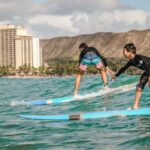
After the beach session, you transition into the ocean for personalized instruction. The goal here is straightforward: standing up and riding waves with your instructor guiding you while you try.
In a private setup, you’re more likely to get feedback that matches your exact attempts. That’s important because beginners often stall for different reasons, some can paddle but can’t time the pop-up, while others pop up but don’t keep balance.
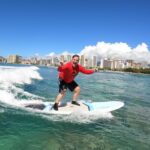
The school also claims a guarantee that you’ll be surfing by the end of the lesson. Nobody controls how the ocean behaves, but the teaching approach is designed to move you through the most learnable steps quickly, especially because the coaching is one-on-one and the lesson is tuned for beginners.
When it’s going well, it feels like the instructor is translating the ocean into something you can do. One of the standout themes from the instructor feedback is that students were catching wave after wave with calm, patient guidance and close safety focus.
Surfboard sizing and patient coaching: how first-wave success happens
Surfboard choice is a big deal for first-timers. If the board is too small or too advanced for you, the lesson can turn into a wrestling match. If the board fits, you can spend the hour learning instead of struggling.
One named instructor, Preston, is specifically mentioned for taking a personal approach, asking about a student’s background and then selecting smaller boards to match needs. That doesn’t sound dramatic, but it can completely change how quickly you start standing.
Another theme is patience. Multiple people highlight that the instructor stayed calm, taught the basics clearly, and then guided them through the first successful rides. In one case, a parent reported both a son and a younger student getting up on their first try after that coaching.
You’ll also get guidance that’s not just about standing. The coaching covers how to ride in a way that feels safe and controlled. Safety shows up in how instructors position themselves and how they talk you through what to do next, especially when you’re learning in shallow, beginner-friendly conditions.




What’s included in your $100, and where the value comes from
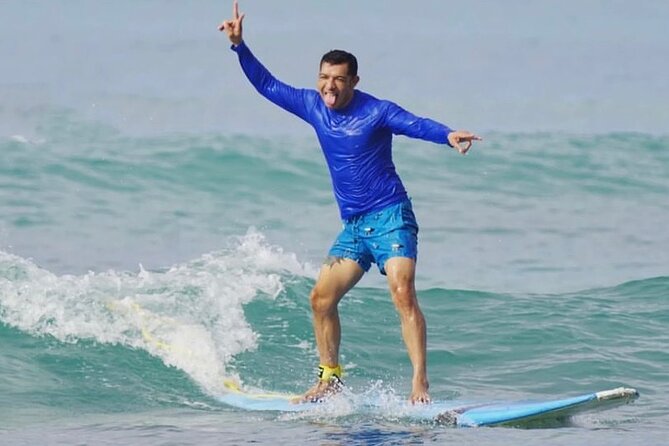
At $100 per person for about 1 hour, you’re paying for several things that matter for first-time surfing: surfboards, a licensed guide, and a lesson structure aimed at real progress.
Here’s what you do get:
- Surfboards
- Licensed guide
- A beginner-focused format that starts on land and ends with you riding
Here’s what you don’t get:
- Bottled water (so plan on bringing your own)
Now for the value angle. In Waikiki, the main question isn’t just whether you can take a lesson, it’s whether you’ll actually get usable time in the water and instruction that clicks. A private format helps here because your instructor can adapt in real time instead of running a fixed script for a group.
Also, timing matters. The lesson is typically booked about 29 days in advance on average, which is a signal that good slots go fast. If your schedule is tight, I’d rather lock it in early than gamble on availability later.
And yes, it’s a short commitment. If you only have a small window in Waikiki, this kind of lesson can be a high-energy way to check something off your list without eating your whole day.
A realistic heads-up: permits, no-shows, and what to do
Surfing in Waikiki is popular, but it’s also tied to local rules. The one real drawback worth noting is a reported issue where an instructor didn’t show up at the meeting point, and the operator response tied it to securing required beach permits for legal operation.
That doesn’t mean it’s common. It does mean you should treat your lesson like a real plan, not a casual “show up and hope” event.
What I recommend:
- Confirm your timing close to departure day.
- Keep your phone charged so you can reach out quickly.
- Save the provider contact number: (808) 970-2046.
If anything feels off, no one is there at the meeting spot, contact right away. The faster you flag an issue, the better your odds of getting a fix.
Who should book this lesson, and when to consider more time
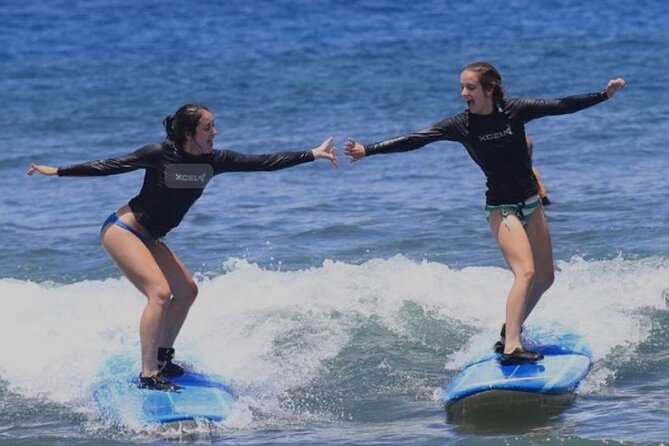
This lesson is positioned for beginners, and the described conditions back that up: gentle waves, shallow sandy bottoms, and an instructor-led progression from beach skills to riding.
It’s also a smart pick if you want a calmer learning environment. The tour is private for your group, so you’re not competing for attention. That’s especially useful if you’re learning with a child, or if you’re the sort of person who benefits from clear, direct coaching rather than group corrections.
You might also consider returning for an additional session if you’re hungry for more. One feedback example mentions someone doing three sessions across two days for about 5 hours total, suggesting that the first win can turn into steady improvement quickly once you know what to do.
If you’re already an experienced surfer, this specific lesson may feel short. But if your goal is getting your first stand and first ride (and feeling proud about it), this format targets that outcome.
Quick decision guide: should you book Hawaiian Boy Surf School?
Book it if:
- You’re a beginner who wants a lesson designed for easy first-wave progress.
- You prefer private, one-on-one coaching over crowded group instruction.
- You want Waikiki’s beginner-friendly setup at Kuhio Beach with a licensed guide.
Think twice if:
- Your trip is very rigid and you can’t handle a scheduling snag. There’s at least one documented case tied to permit timing.
- You’re relying on bottled water you don’t have a plan for, since it’s not included.
If you show up ready to listen, follow safety guidance, and commit to trying the steps in order, the lesson’s whole structure is built around helping you stand and ride by the end of the hour.
FAQ
Where is the meeting point for the Waikiki surf lesson?
The start point is Kuhio Beach, 2453 Kalākaua Ave, Honolulu, HI 96815, USA.
How long is the lesson?
The lesson is about 1 hour.
Is this a private activity or a group class?
It’s a private tour/activity, and only your group will participate.
What’s included in the price?
You get a surfboard and a licensed guide.
Is bottled water included?
No. Bottled water is not included.
What language is the lesson offered in?
The lesson is offered in English.
Who can participate?
The activity lists that most travelers can participate.
What is the cancellation policy?
You can cancel for a full refund up to 24 hours before the experience starts. Canceling within 24 hours does not provide a refund.