REVIEW · HONOLULU
Hawaii Volcanoes National Park Experience from Kauai
Book on Viator →Operated by Aloha Sunshine Tours · Bookable on Viator
Volcano power in one long day. This Kauai-to-Big-Island tour strings together Hawaii Volcanoes National Park highlights with coffee farm stops and beach time, all while keeping things structured with pickup and narration in English. I like that it’s built for first-timers who want the big hits, Halemaʻumaʻu Crater, Kīlauea Iki views, and Thurston Lava Tube, without you having to plan the logistics yourself.
Two things I really like: the included round-trip flights (so you’re not stuck driving a whole other island), and the way the day keeps moving but still gives you moments to look around on your own. One caution: at least part of the experience is in a real volcanic environment, so if you’re sensitive to sulfur dioxide or you hate cold/wet weather, you’ll want to plan carefully with layers and respiratory precautions.
In This Review
- Quick Hits: What Makes This Day Trip Work
- The Value Play: Why You’re Paying $589.99 for a Day
- Getting Started in Kona: Pickup, Time, and First-Minute Reality
- Hawaii Volcanoes National Park: The Stops That Matter (and How to Enjoy Them)
- Visitor Center to Halemaʻumaʻu Crater
- Kīlauea Iki Rainforest Lookout
- Thurston Lava Tube: Walk Through What Flowed
- Active Steam Vents: Heat From Beneath Your Feet
- Greenwell Farms Coffee Stop: Kona Flavor Without the Hype
- Manuka State Wayside Park: A Calm 2-Mile Nature Break
- Punaluʻu Black Sand Beach: The Beach You Visit to Look, Not Swim
- Punaluʻu Bake Shop: Lunch With Local Fuel
- Mauna Kea Access Road and Kohala Coast: When Your Day Adds Height and Variety
- Mauna Kea Access Road: Big Altitude, Big Temperature Change
- Kohala Coast: Dry, Scenic, and Resort-Adjacent
- Hilo: Cultural Anchors and a Food-Live Town Stop
- The Guide Factor: Narration, Respect, and a Name to Remember
- What to Pack for This One-Day Volcano Tour (So You Don’t Get Miserable)
- Who This Tour Fits Best (and Who Might Want a Different Plan)
- Should You Book This Hawaii Volcanoes Day Trip From Kauai?
- FAQ
- How long is the Hawaii Volcanoes National Park day trip from Kauai?
- What’s the price per person?
- What’s included in the tour price?
- Are meals included?
- Do I need to pay for admission at the other stops?
- Where do I meet the tour on the Big Island?
- What should I wear and bring?
- Is there cell service in Hawaii Volcanoes National Park?
- What if the weather is bad?
Quick Hits: What Makes This Day Trip Work
- Round-trip flights between Kauai (Lihue) and the Big Island (Kona) for a true one-day jump
- Volcanoes National Park stops that cover active craters, steam vents, and lava-tube terrain
- Free admission stops like Greenwell Farms, Manuka State Wayside Park, Punaluʻu Black Sand Beach, and the nature trail
- Punaluʻu Bake Shop lunch break with multiple local-style lunch choices
- Small-group feel (up to 22 travelers) with a guide sharing stories in English
- A route that can also include Mauna Kea Access Road, Kohala Coast, and Hilo views/culture
The Value Play: Why You’re Paying $589.99 for a Day
At $589.99 per person, this isn’t a cheap sightseeing bus. You’re paying for the hard part: the time and logistics of getting from Kauai to the Big Island and back, plus guided transport on Hawaiʻi Island. The included flight to Kona and back from Lihue is the biggest value piece, especially if you’re starting on Kauai.
You’re also paying for a day plan that doesn’t waste your daylight. Instead of “maybe we’ll see volcanoes,” you get a sequence of named Volcanoes NP highlights, plus stops that add variety: coffee, a nature trail, a black-sand beach, and a well-known local bakery. If your goal is to pack in the signature sights with less stress, the price makes more sense.
Where the math can feel less friendly is meals. Lunch and any snacks beyond included stops are at your own expense, so budget for food and cash purchases along the route.
You can also read our reviews of more tours and experiences in Honolulu.



Getting Started in Kona: Pickup, Time, and First-Minute Reality
The tour starts in Kona (Kailua-Kona), with meeting at the lot behind Alaska Baggage claim, B-2, at 8:00 am. If you’re flying into Kona International Airport, pickup is part of the plan. That matters because Kona can be confusing when you’re hungry, jet-lagged, and trying to find the right van.
The vehicle is air-conditioned, which I love in Hawaiʻi when the day starts warm and you might still end up in cooler, higher-elevation spots. Expect the day to run like a schedule: there’s an early start, multiple stops, and limited time to linger at any one place.
One practical note: the park and some rural stretches can have limited or no cell service, so save what you need before you go. I’d download maps and anything you’ll use for quick orientation.
Hawaii Volcanoes National Park: The Stops That Matter (and How to Enjoy Them)
This is the core of your trip, and it’s why the whole day works. Volcanoes NP is not just “pretty rocks.” It’s a working system where heat, steam, and dramatic geology do the talking.
Visitor Center to Halemaʻumaʻu Crater
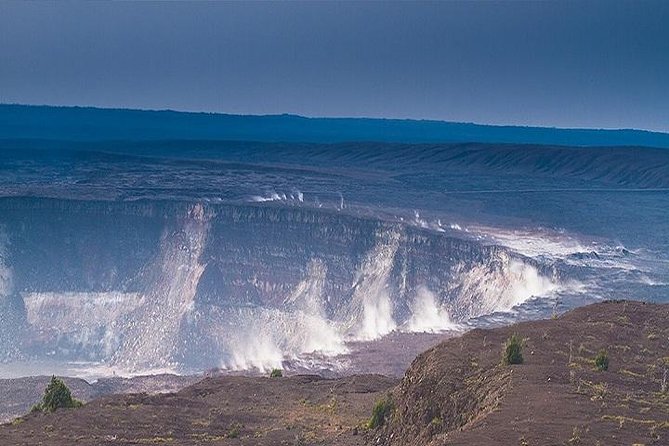
You start at the visitor center, where you can get your bearings and learn the basics of what you’re about to see. Then the tour heads to Halemaʻumaʻu Crater, where you may see the glow of molten lava. That kind of sight is why people travel halfway across the Pacific.
Tip for your comfort: wear layers. The air around crater areas and higher viewpoints can feel cooler than you expect, and weather shifts fast.
Kīlauea Iki Rainforest Lookout
Next comes Kīlauea Iki Rainforest Lookout, a strong contrast to the more fiery imagery. Instead of heat-first drama, you get a view of a lush rainforest setting around a crater area. It’s a reminder that life moves into places shaped by eruption.
This stop is worth slowing down at. Even if the schedule is tight, take a minute to look long enough to notice how different vegetation sits in a terrain born from eruption.


Thurston Lava Tube: Walk Through What Flowed
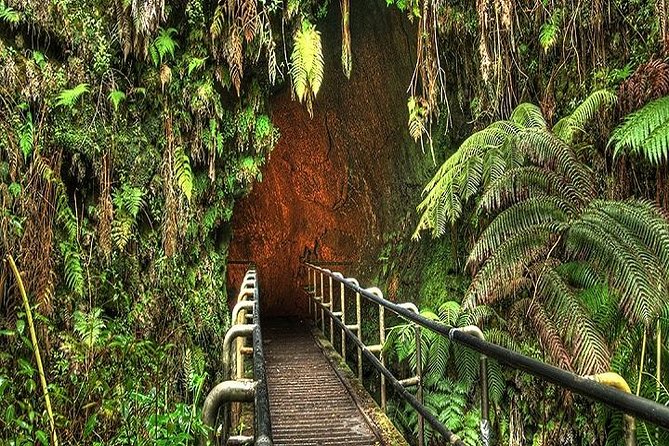
Thurston Lava Tube is a walk through a natural tunnel formed by flowing lava. It’s a different kind of experience than viewpoints: you’re physically under volcanic history.
Good footwear is essential here. Lava-rock terrain can be uneven, and the tour info explicitly recommends sturdy, closed-toe shoes (not flip-flops).
Active Steam Vents: Heat From Beneath Your Feet
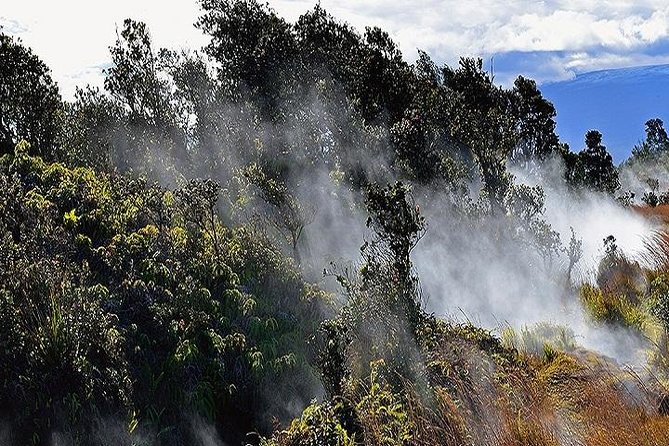
Finally, the day includes active steam vents, where you feel heat rising from geothermal activity below. It’s intense in a way photos can’t fully capture, but you should also respect that it’s not just a photo stop.
If you have respiratory issues, take the volcanic gases seriously. The tour guidance calls out that sulfur dioxide can exacerbate asthma or other breathing conditions. If that’s you, consider checking with your doctor first and keep your time at vents short.
Greenwell Farms Coffee Stop: Kona Flavor Without the Hype
Greenwell Farms is in the Kona region on the slopes of Mauna Loa, established by Henry Nicholas Greenwell in 1850. The point of this stop isn’t just buying coffee. It’s understanding why Kona coffee can taste different: volcanic soil, sunny mornings, cloud-covered afternoons, and consistent rainfall.
The tour gives you about 30 minutes, and admission is free. I’d use that time for two things: ask questions about how they grow and process, and sample if options are offered. If you’re buying coffee, bring a plan for packing it home (and be aware that it may be a heavy souvenir).
Manuka State Wayside Park: A Calm 2-Mile Nature Break
After the coffee, the day shifts into quieter territory at Manuka State Wayside Park, a 13-acre spot along Highway 11 (the Hawaii Belt Road). It’s known for wet and dry forest ecosystems and a 2-mile Manuka Nature Trail.
What I like about this stop is the pace. Volcanoes NP can feel like full-on spectacle. Here you get native plants, volcanic features, and interpretive signs without the same intensity.
This is also where you may spot endemic wildlife like Hawaiian hawk or honeycreeper (the info lists these as possible sightings). Admission is free, and you get around 30 minutes, so it’s good for stretching your legs before the next drive.
Punaluʻu Black Sand Beach: The Beach You Visit to Look, Not Swim
Punaluʻu Black Sand Beach is famous for volcanic basalt sand. You’ll see coconut palms around the shore, and it’s a common place to view Hawaiian green sea turtles as they bask near the water.
One key consideration: the tour info notes the water can be rough, so don’t plan this as a swimming stop. Treat it as a scenic and wildlife-viewing stop where you stay alert and respect the animals’ space.
Also, plan for “windy-beach” weather. Bring a hat and sunscreen, this is Hawaiʻi, even when the air feels cool elsewhere.
Punaluʻu Bake Shop: Lunch With Local Fuel
Lunch is built into the schedule at Punaluʻu Bake Shop in Naʻālehu, described as the southernmost bakery in the U.S. It’s known for traditional Hawaiian sweet bread in flavors like taro, guava, and mango. Established in 1991, it’s a popular stop with a gift shop and a garden area.
The tour guidance also says you can stop for lunch there with options such as sourdough sandwiches, Kalbi beef, and Hawaiian plate lunches, plus baked goods and local treats. If you’re the kind of traveler who likes a real meal rather than chasing snacks on the road, this is a good setup.
One practical tip: bring cash. The tour info explicitly recommends it for roadside stands and local shops, and that matches how places like this often operate.
Mauna Kea Access Road and Kohala Coast: When Your Day Adds Height and Variety
Beyond Volcanoes NP, the route can include Mauna Kea Access Road, plus viewpoints tied to the Kohala Coast and then onward to Hilo.
Mauna Kea Access Road: Big Altitude, Big Temperature Change
Mauna Kea Access Road is described as a steep, winding route to the summit area, starting from Saddle Road (Route 200). As you climb, the environments change, grassy plains to barren volcanic terrain, and temperatures drop as air gets thinner.
This is where your layers matter most. The tour info specifically says bring layers and a rain jacket, because weather can change quickly at higher elevations. Even on a sunny day, it can feel cold.
Kohala Coast: Dry, Scenic, and Resort-Adjacent
The Kohala Coast is described as having beautiful beaches, luxury resorts, and scenic views, with a drier climate compared to other parts of the island. In plain terms: it’s a scenic “reset” after the volcanic intensity, and it can make the day feel like more than just crater-and-tube.
Hilo: Cultural Anchors and a Food-Live Town Stop
The tour also lists Hilo with stops or sights like the Lyman Museum, the Hilo Historic District, the Pacific Tsunami Museum, and Liliuokalani Gardens. It also references the Hilo Farmers Market as a lively hub that reflects local culture through goods and produce.
This part is valuable if you want the Big Island beyond geology. Volcanoes NP is the main event, but Hilo helps balance it with stories of people, natural history, and place. If you’re the type who likes to connect dots, how communities respond to island forces, this set of stops supports that.
The Guide Factor: Narration, Respect, and a Name to Remember
The tour includes engaging narration from a local guide throughout. That’s one of the clearest positives in the feedback you provided: the experience can feel both fun and informative, and you get some independence time to explore on your own.
At the same time, there’s one real caution to keep in mind. One review raised a concern about a guide named Kevin, who was criticized for taking lava rock/tephra from the park and for what the reviewer felt was loose factual info and disrespect toward cultural food. That’s not the kind of behavior I’d ignore.
My advice is simple: when you meet your guide, pay attention to how they talk about rules like leaving no trace and how they frame cultural sites. If you feel uncomfortable with disrespect or factual sloppy talk, you should address it with the operator on the spot if possible. Hawaiʻi deserves better than shortcuts.
What to Pack for This One-Day Volcano Tour (So You Don’t Get Miserable)
This is a long day, and the tour itself calls out several essentials. I agree with all of them.
- Layers + a rain jacket: weather changes fast, especially with elevation.
- Sturdy, closed-toe shoes: volcanic terrain can be uneven.
- Water, snacks, sunscreen, hat: services inside the park can be limited.
- Cash: useful for local food and small purchases.
- If you have respiratory issues, take the volcanic gas warning seriously (sulfur dioxide can aggravate symptoms).
Also, plan for low connectivity. Download anything you need before you go, because cell service can be limited or nonexistent.
Who This Tour Fits Best (and Who Might Want a Different Plan)
This tour is a strong fit if you:
- Want to see Volcanoes National Park highlights without building your own day from scratch
- Are on Kauai and want the Big Island without losing two full days to travel
- Like guided narration but also want some time to look around independently
- Are comfortable with a packed day (8–10 hours)
It might be a weaker match if you:
- Have breathing sensitivities and aren’t sure how you’ll react to volcanic gases
- Prefer slow travel and lots of downtime
- Hate cold weather or being out in changing conditions near high elevations
- Want meals included in the price (meals are at your own expense)
Should You Book This Hawaii Volcanoes Day Trip From Kauai?
If your priority is the signature Volcanoes NP experience plus a smart sampler of Kona coffee, black sand beach, and a local lunch stop, I think it’s an efficient way to do it. The included flight is the main reason the day feels possible, and the named stops inside the park give you a strong hit list without you having to figure everything out.
I’d book it with two cautions: go in prepared for the weather and volcanic conditions, and be mindful of respectful behavior around natural and cultural sites. If you can tolerate a structured, long day and you pack smart, this is a solid one-day way to get a Big Island story you’ll remember.
FAQ
How long is the Hawaii Volcanoes National Park day trip from Kauai?
The tour runs about 8 to 10 hours.
What’s the price per person?
It’s $589.99 per person.
What’s included in the tour price?
You get an air-conditioned vehicle, round-trip airfare between Kauai (Lihue) and the Big Island (Kona), Volcanoes National Park admission, and English narration from a local guide.
Are meals included?
No. Meals are at your own expense, though lunch is stopped at Punaluʻu Bake Shop where you can buy food.
Do I need to pay for admission at the other stops?
The tour info lists admission as free for stops like Greenwell Farms, Manuka State Wayside Park, Punaluʻu Black Sand Beach, and Punaluʻu Bake Shop.
Where do I meet the tour on the Big Island?
Meet at Kona International Airport at 73-200 Kupipi St, Kailua-Kona, at the lot behind Alaska Baggage claim (B-2).
What should I wear and bring?
Bring layers and a rain jacket, plus sturdy closed-toe shoes for uneven volcanic terrain. Also bring water, snacks, sunscreen, and a hat.
Is there cell service in Hawaii Volcanoes National Park?
Cell phone service is limited or nonexistent in many parts of the park.
What if the weather is bad?
The tour requires good weather. If it’s canceled due to poor weather, you’ll be offered a different date or a full refund.