REVIEW · OAHU
Surf HNL: Small-Group or Private Surfing Lesson (Ko’olina)
Book on Viator →Operated by Surf HNL · Bookable on Viator
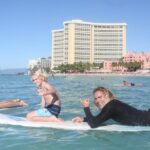
Surfing lessons move fast, and that’s the point. This Ko’olina-area experience turns into a guided session where you learn paddling and popping up on the board, right on the beaches tied to surfing’s Hawaiian roots. I love that you get reef shoes, rash guard, board, and leash so you don’t need to shop for gear. I also love the instructor focus on fundamentals so your first tries aren’t random. The main catch: the standard lesson is about one hour, so it’s built for learning basics, not becoming an expert.
For families and first-timers, the small-group option keeps things calmer, and you can also choose private instruction for extra attention, especially helpful if you’re traveling with kids (age 5+) or someone who needs more one-on-one guidance. You’ll just want to be ready to swim well and handle a moderate physical effort in the water.
In This Review
- Key Things I’d Look For Before You Go
- Oahu Surf Lessons in Ko’olina: What You’re Really Paying For
- Where It Happens and Why the Meeting Point Matters
- The Real Lesson Plan: Paddle, Pop Up, Then Learn Through Reps
- Step One: Paddle Technique (So You Don’t Exhaust Yourself)
- Step Two: The Pop-Up Move (Timing Over Strength)
- Step Three: Riding Attempts (With Safety and Corrections)
- Pick Your Style: Private vs Small Group vs Flat-Water Option
- Private Surfing or Paddleboarding
- Small-Group Surfing (Up to Four Students)
- One-Hour Group Option
- Stand-Up Paddleboarding Instead of Waves
- The Gear Setup: Less Shopping, More Time on the Water
- Instructors You’ll Actually Understand: Ian and Evan
- Photo and Video Expectations: Fun Add-On, Manage Your Assumptions
- Time on the Clock: How the Lesson Length Affects Your Chances
- Safety and Water Fitness: The Part You Should Not Skip
- Who This Surf Lesson Is Best For
- Should You Book Surf HNL? My Straight Answer
- FAQ
- How long is the surf lesson?
- What does the lesson include?
- Do I need to bring my own surfboard or wetsuit?
- Is a stand-up paddleboarding option available?
- What are the minimum ages?
- Do I need to know how to swim?
- How many people are in the group?
- Is there private instruction?
- Where do I meet for the activity?
- What happens if my cruise ship is delayed?
Key Things I’d Look For Before You Go
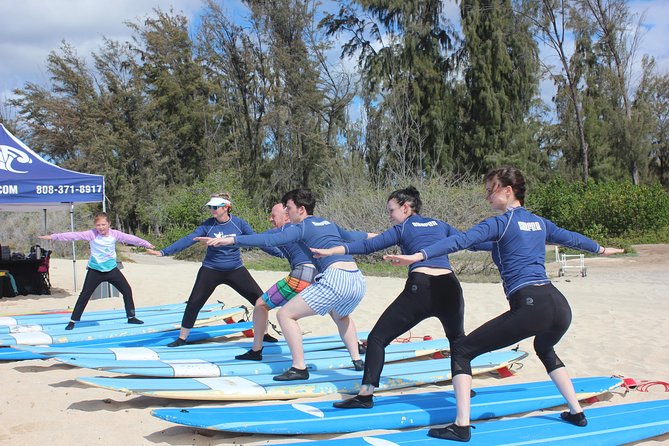
- All gear included: reef shoes, rash guard, surfboard, leash, plus an instructor-led lesson plan
- Clear beginner coaching: paddling technique and the pop-up move are the focus
- Small-group or private options: small groups max out at four, and there’s also a private lesson option
- You can choose your water time: surf waves or flat-water stand-up paddleboarding (with age minimums)
- Media follow-up is part of the process: instructors like Ian and Evan help with the surf session, and you’ll want to ask how photo/video files are delivered
Oahu Surf Lessons in Ko’olina: What You’re Really Paying For
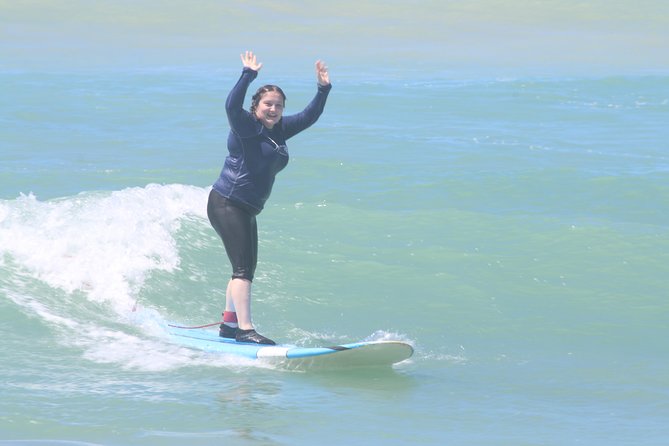
At $169 per person, this isn’t a “show up and hope” kind of activity. You’re paying for coaching that compresses the hardest part of surfing, timing, balance, and wave selection, into a short, structured experience.
The big value here is that you don’t need to bring the stuff. You’re provided the surf gear, including reef shoes and a rash guard, plus the board and leash. That lowers the friction for first-timers. It also helps you avoid a common first-trip mistake: arriving in the wrong footwear or without proper rash protection.
The other value is the lesson format. You’re not just tossed into the water. You’ll get instruction from a qualified instructor, and there’s also an experienced lifeguard and CPR-certified instructors involved, which matters when conditions and nerves collide.
And yes, it’s tied to surfing’s Hawaiian roots. The experience is set on Oahu’s shoreline where surfing began, with an emphasis on learning the basics like surfers did long ago. Even if you’re there for the thrill, you’ll leave with a better understanding of what the sport actually asks of your body.
You can also read our reviews of more private tours in Oahu

Where It Happens and Why the Meeting Point Matters
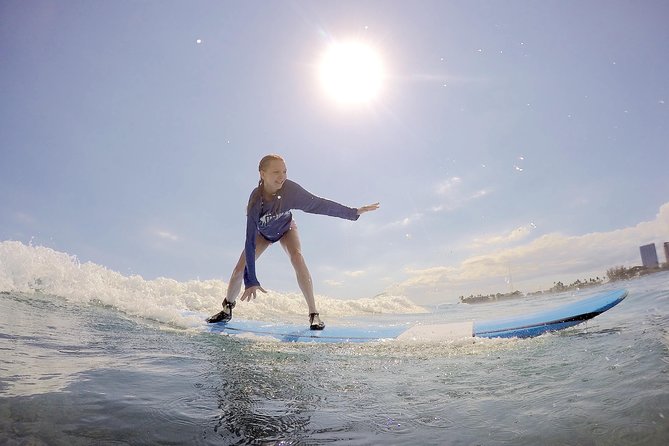
Your start point is at Barbers Point Housing (the listed meeting location is at 8W2R+7W Barbers Point Housing). The activity ends back at the meeting point, which keeps things simple when you’re working around a port schedule.
This matters because time on Oahu can slip away. If you’re touring near Honolulu, you want a session that doesn’t turn into a transportation headache. This one is set up like a typical shore excursion: they’ll aim to get you back in time for your ship, and if there’s a delay they’ll handle next-port transportation or refund in the rare case you can’t attend.
If you hate being rushed, show up early anyway. A few minutes before start lets you get checked in, fit gear, and mentally switch from tourist mode to lesson mode.
The Real Lesson Plan: Paddle, Pop Up, Then Learn Through Reps
The heart of this class is straightforward: you’re taught the mechanics that make surfing possible. Expect a progression that goes from basics to actual wave riding (or, if you pick the flatter-water option, paddleboarding practice).
Step One: Paddle Technique (So You Don’t Exhaust Yourself)
Most first-timers think surfing is about standing. It’s not. It’s about getting into position without burning out. The instruction begins with how to paddle correctly for your board and how to work your way into the right spot.
If you’ve ever tried paddling a long board without much technique, you know how quickly your arms can turn into noodles. This class is designed to keep you from guessing.
Step Two: The Pop-Up Move (Timing Over Strength)
Next comes the move you hear about in every surfing story: popping up to your feet. You’ll learn the proper way to go from lying or kneeling to standing, and you’ll practice enough times to start building muscle memory.
This is where instructor guidance makes the biggest difference. If you’re doing the pop-up wrong, you’ll keep getting pitched off before the wave even shows you what it looks like.
You can also read our reviews of more tours and experiences in Oahu

Step Three: Riding Attempts (With Safety and Corrections)
Once you can paddle and pop up, your instructor can correct your timing and stance. This is also where having the right gear helps. A leash keeps the board attached, and the reef shoes protect your feet when you’re moving around in the water.
Even if you don’t “own” every wave, you should be leaving with a clear sense of what you did right and what you need to fix next.
Pick Your Style: Private vs Small Group vs Flat-Water Option
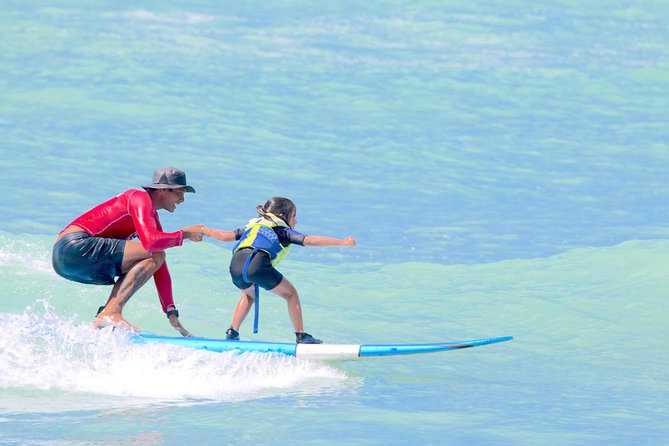
This experience gives you several lesson formats, and that flexibility is a big part of the value. Here’s how to think about the choices.
Private Surfing or Paddleboarding
If you want the most focused attention, choose the private lesson. It’s recommended when you’re traveling with kids (especially age 5+) or when you need extra support for someone with special needs.
Private instruction is also a smart move if you’re the type who freezes when there are multiple people watching. You’ll likely move at a calmer pace with fewer interruptions.
Small-Group Surfing (Up to Four Students)
If you want to keep costs reasonable but still get hands-on teaching, the small-group option works well. A group of four stays small enough that the instructor can correct individuals rather than doing a “one lesson fits all” approach.
This is also a good choice if you want a little social energy without a crowded beach-water setup.
One-Hour Group Option
There’s also a 1-hour lesson in a group of five. This is efficient and perfect when you’re short on time. The trade-off is the one you already picked up in the basics: a shorter session means fewer reps and less time to refine.
If you’re serious about learning to surf, I’d treat the one-hour format as a strong starting point. If you’re just trying the experience for fun, it’s probably enough.
Stand-Up Paddleboarding Instead of Waves
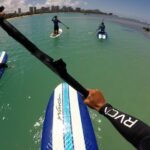
If you’d rather paddle in flatter water, stand-up paddleboarding is available as an option. The minimum age for stand-up paddleboarding is 12 years, so it’s not the best fit for younger kids.
This option still gets you on the water with instruction, but it leans into control and balance rather than wave timing.
The Gear Setup: Less Shopping, More Time on the Water
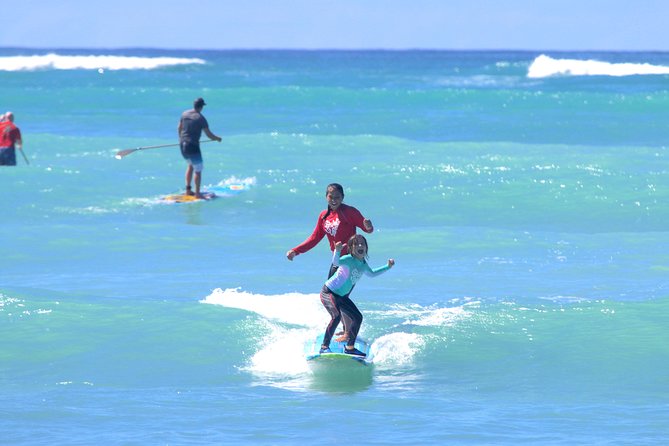
The lesson includes surf gear that you’d normally have to hunt down. You’ll get:
- A surfboard
- A leash
- Reef shoes
- Rash guards
The lesson also provides equipment you need for the activity, with an emphasis on being properly protected. That matters because Oahu water time can turn uncomfortable fast if your skin isn’t covered and your feet aren’t protected.
What’s not included: towels, swimsuits, and sunblock. Food and drinks aren’t included either. So I’d plan like this:
- wear your swimwear underneath clothes that are easy to remove
- bring sunblock and a towel you don’t mind using
- have water covered, since it won’t be provided
Also, bring a small dry bag or at least a way to protect your phone. The water is part of the experience. Your belongings should stay on the safer side of the beach line.
Instructors You’ll Actually Understand: Ian and Evan
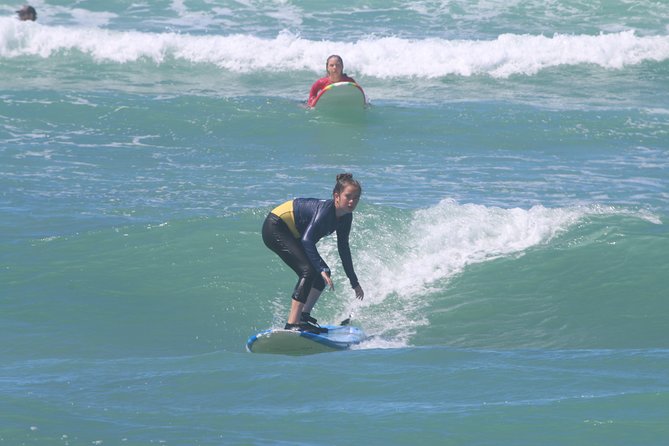
In your class, you’ll be coached by a qualified instructor, and the experience includes an experienced lifeguard with CPR-certified staff. That kind of staffing is reassuring.
From what’s been shared by participants, instructors named Ian and Evan have a track record of being effective and helpful, including for first-timers and teens. If you care about whether someone can explain surfing in a way that clicks, this is the kind of outfit to look for.
One extra tip: if you’re picky about photos and video, ask early how the media is handled. There are reports of short GoPro clips and file delivery via CD, and if you prefer USB/SD access on your devices, it’s worth clarifying before you go.
Photo and Video Expectations: Fun Add-On, Manage Your Assumptions
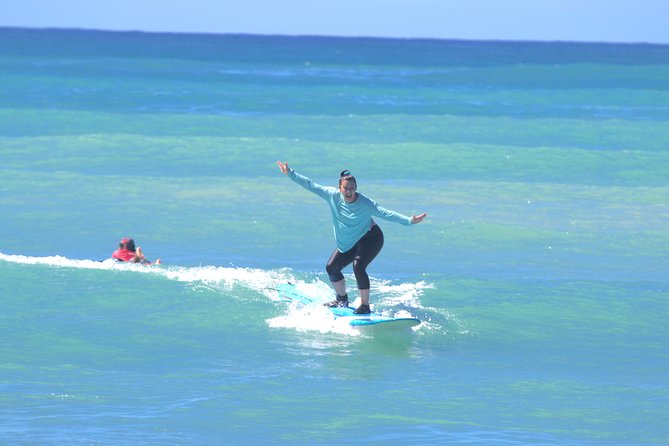
Some surf lessons include capture services, and this one appears to have GoPro-style photo/video follow-through as part of the experience process. The reality of that is simple: you might get a limited selection, and file formats can vary.
So here’s the practical move: check how they deliver the content. If you’re planning to watch on a tablet or want quick sharing, confirm whether you’ll receive files in a format you can easily open.
For most people, it’s still a great souvenir. Just don’t count on a long, uninterrupted highlight reel.
Time on the Clock: How the Lesson Length Affects Your Chances
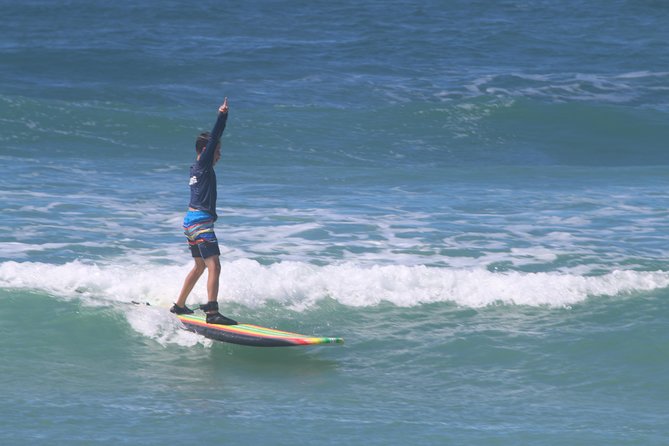
Because the standard slot is about one hour, you’ll want to manage expectations. In that time, the goal is learning the basics and getting enough water reps to build confidence.
If your top priority is getting more wave riding time, consider the longer private or small-group formats. The longer duration gives you more chances to correct technique and try again with better timing.
Also remember: surfing on Oahu can come with variable conditions. Some sessions feel easier than others. The short format keeps the lesson focused, but it also means you won’t always get as many attempts as you’d like.
This is one reason I like the private option for nervous first-timers and for anyone who benefits from extra instruction time.
Safety and Water Fitness: The Part You Should Not Skip
Every participant must know how to swim. That’s not optional. Also, the physical fitness level is described as moderate, so come ready to paddle, balance, and stand up repeatedly in the water.
If you’re a strong swimmer, you’ll likely feel better about the session. If you’re working on your confidence in the water, don’t treat surfing day as your first lesson plan.
Your body also needs quick recovery. Even if conditions are manageable, paddling and popping up on a board is work. Bring that mindset and you’ll enjoy it more.
Who This Surf Lesson Is Best For
This is a great fit if you want a real lesson, not just entertainment.
You’ll likely be happiest if:
- you’re a first-timer who wants the fundamentals taught in a practical order
- you want small-group or private instruction
- you prefer having gear provided so you can travel light
- you’re visiting Oahu on a schedule with limited time
It’s also a strong choice for teens and families when you choose the right option. The minimum age for surfing is 5 years, but younger kids (and kids with added needs) may do better with private instruction so attention stays tight.
If you’re bringing a group, keep in mind the experience has a maximum of 10 travelers, which helps keep instruction more personal than bigger operations.
Should You Book Surf HNL? My Straight Answer
Book it if you want an efficient, guided way to learn Oahu surfing with all the key gear included and an instructor-led focus on the skills that matter. The $169 price makes more sense when you treat it as paid coaching, not just a board rental.
Skip or adjust your expectations if you want a long training session. The one-hour format is ideal for first contact with surfing. For deeper learning and more time on reps, consider private or longer options.
If you care about how media (photos/video) is delivered, ask ahead about format and length so you’re not disappointed later. And if you don’t swim confidently, plan around that requirement first.
In short: if you’re ready to paddle, you’ll leave with real technique, not just a blurry beach memory.
FAQ
How long is the surf lesson?
It’s listed as about 1 hour for the standard lesson option.
What does the lesson include?
You get a 1-hour surf lesson with a qualified instructor, use of the board and necessary equipment, and surf gear such as reef shoes, surfboard, leash, and rash guards.
Do I need to bring my own surfboard or wetsuit?
No. The lesson includes the board and other necessary equipment. Towels, swimsuits, and sunblock are not included.
Is a stand-up paddleboarding option available?
Yes. Stand-up paddleboarding is offered as an option for flatter-water time.
What are the minimum ages?
Minimum age is 5 years for the surfing lesson. Minimum age is 12 years for the stand-up paddleboarding lesson.
Do I need to know how to swim?
Yes. All participants must know how to swim.
How many people are in the group?
There are multiple options. The small-group surfing option is no larger than four students, and there is also a group option with five students. The overall experience has a maximum of 10 travelers.
Is there private instruction?
Yes. Private instruction is available, including private 2-hour paddleboarding or surfing options.
Where do I meet for the activity?
The meeting point is listed at Barbers Point Housing (8W2R+7W).
What happens if my cruise ship is delayed?
The experience is described as worry-free: they ensure timely return to the Honolulu port. If your ship has departed, they arrange transportation to the next port-of-call. If you can’t attend due to delay, you’ll be refunded.