REVIEW · OAHU
Oahu: Waikiki 2-Hour Semi-Private Surfing Lesson
Book on GetYourGuide →Operated by Kai Sallas' Pro Surf School Hawaii · Bookable on GetYourGuide
First meters are the hardest to get right. This 2-hour Waikiki surf lesson runs at a secluded beach near Waikiki, so you can focus on paddling and pop-ups without the usual crush. I love that the pro instructor begins with a 20-minute land session on waves, currents, wind, tides, positioning, and surf etiquette, then coaches you step-by-step once you’re in the water. One drawback to plan around: the instruction is in English, and there’s at least one documented case where a non-English request didn’t change the language.
If you’re brand-new, this format helps you learn the moves in order instead of guessing. If you already surf, you’ll still get value by drilling the local conditions and water safety basics before you try to read what the ocean is doing.
In This Review
- Key Things That Make This Surf Lesson Worth Your Time
- Why This Waikiki Surf Lesson Feels Less Crowded Than You’d Expect
- What Happens in the First 20 Minutes on Land
- Getting Your Gear Right: Board, Leash, Rash Guard, Reef, and Booties
- In the Water: Paddling, Turning, and Catching Waves with Control
- Surf Culture and Etiquette You’ll Actually Use
- Price and Value for a 2-Hour Pro Session on Oahu
- Who This Lesson Suits (and Who Should Skip It)
- Quick Planning Tips So Your Session Goes Smoothly
- Should You Book This Waikiki 2-Hour Surf Lesson?
- FAQ
- How long is the Waikiki surfing lesson?
- What does the lesson cost?
- Is this a private group or shared lesson?
- What language is the instructor?
- What’s included with the lesson?
- What should I bring?
- Is there a cancellation option with a refund?
- Is this lesson suitable for pregnant women?
- What if I’m traveling with a young child or a weak swimmer?
Key Things That Make This Surf Lesson Worth Your Time
- A secluded beach near Waikiki helps you focus while you learn your first rides
- 20 minutes on land first teaches waves, currents, tides, positioning, and etiquette before you paddle out
- Instructor coaching in the water covers paddling, turning, maneuvering over crashing waves, then standing and riding
- Surf gear is included (board, leash, rash-guard, reef, and booties) so you can travel lighter
- Works for beginners and more experienced surfers who want help with local conditions
Why This Waikiki Surf Lesson Feels Less Crowded Than You’d Expect
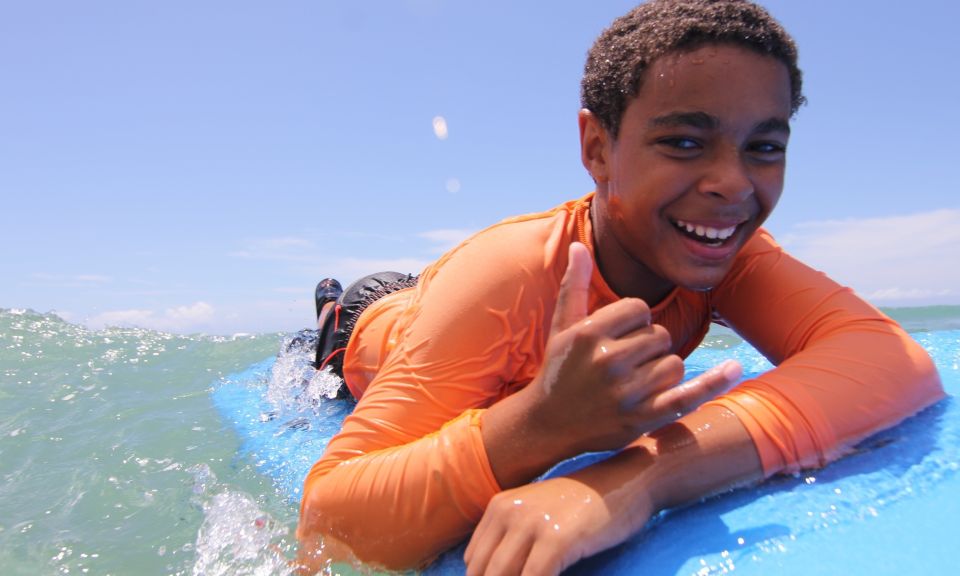
Waikiki is famous for surfing, but the busy beach vibe can make a first lesson stressful. The big selling point here is that you train at a secluded beach near Waikiki, which gives you more space to learn the fundamentals without constant interruptions. That matters because surfing is mostly about timing, body position, and calm decisions in moving water.
This is also a small-group setup (listed as semi-private/private group). Smaller groups usually mean your instructor can keep an eye on what you’re doing and correct your paddling or stance sooner, not after you’ve repeated the same mistake all morning.
The lesson runs for 2 hours, which is long enough to learn, get a real feel for the water, and still leave time for rest between attempts. For most people, that’s the sweet spot: enough instruction to matter, without turning it into a full-day ordeal.
You can also read our reviews of more private tours in Oahu


What Happens in the First 20 Minutes on Land

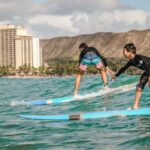
The lesson starts with a quick 20-minute land session, and I like it because it prevents the classic beginner problem: wasting energy in the water when you didn’t understand the ocean yet. You’ll learn how to read basic conditions like waves, currents, winds, and tides, and then connect that information to what you’re about to do with your body.
You also cover practical technique cues. The land part includes proper positioning to stand up, plus surf etiquette and water safety. Those topics don’t sound exciting on paper, but they’re what keep your session smooth, and they’re part of respecting Hawaiian surf culture.
You’ll also get a gear briefing before you go in. Expect a short rundown on using your board, leash, and fins. That’s more important than it sounds. Leash mistakes, fin confusion, and board-handling errors can cost you time and make your first paddles feel harder than they need to.
Getting Your Gear Right: Board, Leash, Rash Guard, Reef, and Booties
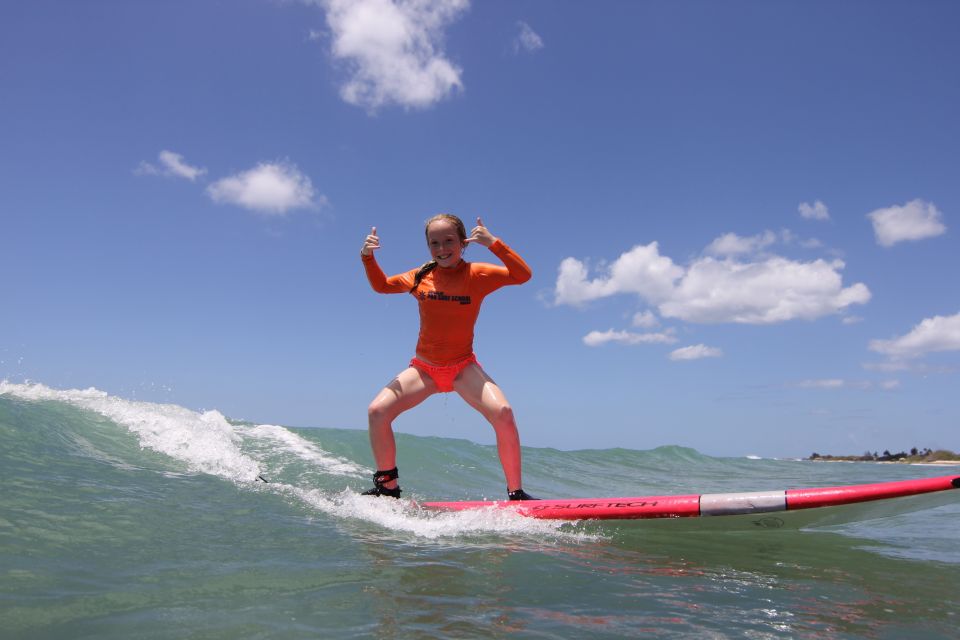
One of the easiest value wins in this lesson is that your surf gear is included. You get the surfboard and leash, plus a rash-guard, reef (as provided by the operator), and booties. That takes away the guesswork of figuring out what to buy for your trip.
For first-timers, having the right fit and protection can make you braver. Booties can help with footing when you’re entering and leaving the water. A rash-guard helps you handle repeated wipeouts and sun exposure without feeling raw after the session.
You still bring your own towel and sunscreen. That’s it. No need to plan extra purchases or pack bulky items that you might not use again later.
There’s also an equipment-selection element based on your skill level. That’s huge for beginners. A board that matches your starting point helps you catch waves sooner and learn faster. Advanced surfers benefit too because local conditions can change what you need to focus on.
In the Water: Paddling, Turning, and Catching Waves with Control
After you’re geared up, your instructor brings you into the water and explains how to maneuver over crashing waves. This part is where the land lesson pays off. If you understand currents and wave behavior, you’re less likely to fight the ocean and more likely to work with it.
You’ll practice core skills in a logical order:
- paddling techniques
- turning and maneuvering
- then standing and riding waves
I like that the instruction is built around progression. Surfing is not one skill; it’s a chain. If your paddling is off, you miss the wave. If turning is off, your board angle doesn’t match the wave face. If standing is off, you pop up at the wrong moment and wipe out early.
The instructor is also there to help you handle the scary parts. For a beginner, that’s usually paddling into waves and staying calm while they break. For someone with experience, it’s often adjusting to local swell patterns and figuring out how to position your body to work with what you’re seeing.
One more practical note: since this is a semi-private/private group lesson, you can expect coaching that feels personal, not like you’re just watching a group clip and copying it. That’s one reason this course earns such strong feedback.
Surf Culture and Etiquette You’ll Actually Use
Surf culture isn’t just a vibe. It’s rules that keep people safe and protect the ocean space you’re borrowing for your session. This lesson includes surf etiquette and water safety as part of the land session, so you’re not getting those lessons after you’re already in the water.
The benefit for you is simple: fewer awkward moments. You’ll know how to think about who has priority, how to move responsibly around others, and how to stay aware of conditions as you practice. That reduces stress and helps you focus on catching waves.
The local focus is also a quiet advantage for experienced surfers. You might already know how to surf in your home spot, but waves behave differently from island to island and even beach to beach. Learning the local conditions with a coach saves you from trial-and-error.
You can also read our reviews of more tours and experiences in Oahu






Price and Value for a 2-Hour Pro Session on Oahu
At $156 per person for 2 hours, this isn’t a bargain-basement deal. But it also isn’t just you paying for access to the ocean. You’re paying for coaching time with a professional instructor plus gear that would cost extra if you had to rent it separately.
Here’s where the value shows up:
- Pro instruction (land session plus in-water coaching) instead of a self-guided rental
- Gear included: surfboard, leash, rash-guard, reef, and booties
- Training built for both complete beginners and advanced surfers who want local condition guidance
If you’re comparing it to renting a board only, the math is easier. Rentals get you surfing, sure. But instruction gets you surfing sooner and with fewer frustrating wipeouts. For many people, that’s the difference between enjoying Oahu’s waves and spending a session getting tossed.
If you’re on a budget, consider your travel style. This is a great choice if you want skill-building and a structured session. If you already surf comfortably and just want time in the water, you might weigh whether coaching is worth the premium.
Also worth noting for planning: you can cancel up to 24 hours in advance for a full refund, and there’s a reserve-and-pay-later option. Those two features help you manage Hawaii weather and schedule changes without losing your money.
Who This Lesson Suits (and Who Should Skip It)
This lesson is a strong match if you want guided learning and you don’t want to guess about ocean basics. It works for complete beginners and advanced surfers who want help with local conditions. That broad fit is useful if you’re traveling with mixed experience levels, as the instructor can tailor coaching to your skill level and help you choose equipment accordingly.
That said, the activity has clear safety limits. It’s not suitable for pregnant women, people with back problems, or people with mobility impairments. The ocean demands paddling, balance, and quick movement, so it’s not a “take it easy” option.
For kids, there’s a specific rule: children 10 years of age and under or weak swimmers must take a private one-on-one lesson for safety reasons. If you’re traveling with a young child or you’re not confident in the water, this is the safety approach to follow.
If you’re an adult who can swim and you’re comfortable with basic ocean time, the lesson format should feel manageable because it begins with instruction on what to expect and how to behave in the water.
Quick Planning Tips So Your Session Goes Smoothly
You don’t need to overpack, but a few basics will save you discomfort:
- Bring a towel
- Bring sunscreen
Beyond that, go in with the right mindset. Surfing lessons move fast. Your job is to listen to cues about positioning, paddling, and timing, then try again without arguing with the ocean. The first attempts often feel clumsy. That doesn’t mean you’re doing it wrong. It usually means your body is learning a new rhythm.
Also, since the instructor language is English, make sure that matches your comfort level. One past booking mentioned a language mismatch when a Spanish class was selected but the instruction remained in English. If language matters for you, confirm what will be taught before you show up.
Should You Book This Waikiki 2-Hour Surf Lesson?
Book it if you want a focused start to surfing with a professional coach, and you like the idea of training at a secluded beach near Waikiki. The structure matters here: land lesson first, then in-water coaching for paddling, turning, maneuvering, standing, and riding.
Skip it if any of the safety restrictions apply to you or your group. Also, if you need instruction in a language other than English, treat this as a planning check, not an assumption. Getting the right coaching language can be the difference between learning quickly and feeling lost.
If you want a real skill upgrade instead of a casual board rental, this is a solid value for Oahu. The combination of included gear, a guided progression, and water safety basics gives you a better shot at leaving with confidence, not just saltwater souvenirs.
FAQ
How long is the Waikiki surfing lesson?
It lasts 2 hours.
What does the lesson cost?
The price is $156 per person.
Is this a private group or shared lesson?
It’s listed as a private group (semi-private style).
What language is the instructor?
The instructor teaches in English.
What’s included with the lesson?
You’ll get use of a surfboard and leash, plus a rash-guard, reef, and booties.
What should I bring?
Bring a towel and sunscreen.
Is there a cancellation option with a refund?
Yes. Free cancellation is available up to 24 hours in advance for a full refund.
Is this lesson suitable for pregnant women?
No, it’s not suitable for pregnant women.
What if I’m traveling with a young child or a weak swimmer?
Children 10 years of age and under, or weak swimmers, are required to take a private one-on-one lesson for safety reasons.