REVIEW · OAHU
Hangar Guided Tour
Book on Viator →Operated by Pearl Harbor Aviation Museum · Bookable on Viator
WWII hangars with real battle scars. This is a focused, docent-led look at the Pearl Harbor Aviation Museum on Ford Island, built around two still-standing hangars tied directly to Dec. 7, 1941, especially Hangar 79 with its bullet-scarred walls, and it ends with an award-winning short documentary. I love how the tour turns static aircraft displays into a clear narrative of the Pacific War, and I also love that you’re walking through authentic WWII space rather than just viewing models. One consideration: at about 60 minutes, it’s not a full museum day, so you may want extra time later if you like aviation details.
The good news is you get more than the hangars. Your tour ticket includes general admission to the museum exhibits, including MiG Alley and the documentary East Wind, Rain, and the group stays small (max 25). If you get a strong guide, guest notes name docents like Tomoko, Chris, Steve, and Laughlin Tanaka, you’ll likely feel like the aircraft are part of a living story.
In This Review
- Key Highlights You’ll Actually Feel on the Tour
- What This Hangar Guided Tour Really Is (Not Just Another Museum Ticket)
- Arriving at Ford Island: Your Starting Point at Pearl Harbor Aviation Museum
- Timing Tip That Helps
- Hangar 37: Starting With the Attack Story in Authentic Space
- Hangar 79 (Restoration Shop): Bullet Holes You Can See
- Why This Part Matters
- The Museum Ticket Bonus: General Admission Included
- East Wind, Rain Documentary: A 12-Minute Time Machine
- What Else You May See On-Site (And How to Use Your Time)
- If You Love Aviation Tech
- If You’re Here for History
- Flight Simulators and Other Not-Included Add-Ons
- Keeping Your Expectations Right for a 60-Minute Tour
- A Simple Strategy I Recommend
- Price and Value: Is $40.98 Worth It?
- Who This Tour Fits Best (And Who Might Skip It)
- Quick Practical Notes That Help the Day Run Smoothly
- Should You Book the Hangar Guided Tour?
Key Highlights You’ll Actually Feel on the Tour
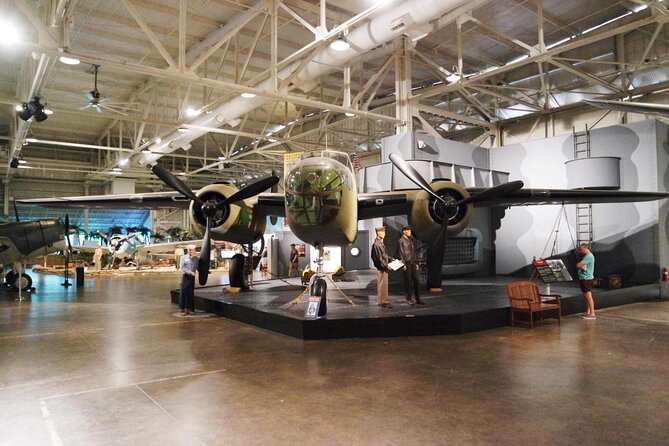
- Hangar 37 and Hangar 79: two WWII hangars tied to the 1941 attack, including Hangar 79’s visible bullet damage
- Docent storytelling: veteran experts guide you through what happened and why those aircraft mattered
- East Wind, Rain (12 minutes): an award-winning film that brings the Dec. 7 events into focus
- You’re not limited to hangar time: the ticket also includes general admission to museum exhibits
- MiG Alley included: a bonus space you can explore with your tour entry
- Flight simulators cost extra: you can add them, but they’re not part of the guided hangar portion
What This Hangar Guided Tour Really Is (Not Just Another Museum Ticket)
This tour is built for people who want context fast. You’re not wandering aimlessly through rooms; you’re being guided through two key WWII spaces that are still standing on Ford Island, and the guide stitches the details into a timeline.
At about 1 hour, it’s short enough to fit into a Pearl Harbor day, but long enough that the story doesn’t feel like a rushed “look and leave.” The price is $40.98 per person, and the value comes from what’s included: the docent-led hangar tour plus full general admission and the documentary, not just a quick hallway walk.
You can also read our reviews of more guided tours in Oahu



Arriving at Ford Island: Your Starting Point at Pearl Harbor Aviation Museum
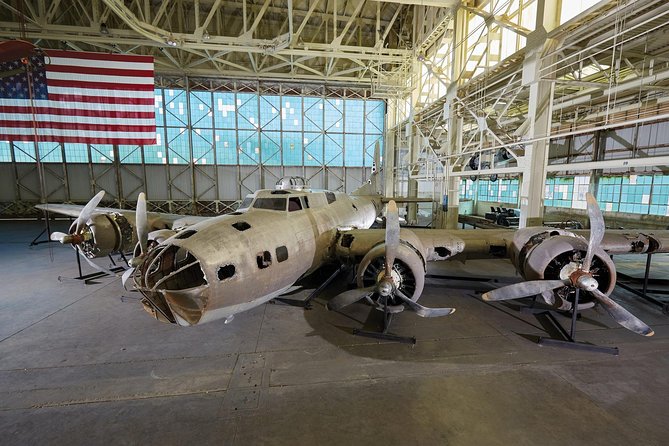
You’ll meet at Pearl Harbor Aviation Museum, 319 Lexington Blvd, Honolulu, HI 96818. From there, you’re set up for the museum’s layout with the hangars as the main event.
Tours run multiple times daily, so you can match the visit to your day (and to energy levels). A mobile ticket makes it easier to move through the day without extra paper, which matters at busy places like Pearl Harbor.
Timing Tip That Helps
If you’re pairing this with other Pearl Harbor stops, give yourself buffer time before your tour slot. The museum area can take a minute to get oriented, and once you’re with your docent you’ll want to be fully present.
Hangar 37: Starting With the Attack Story in Authentic Space
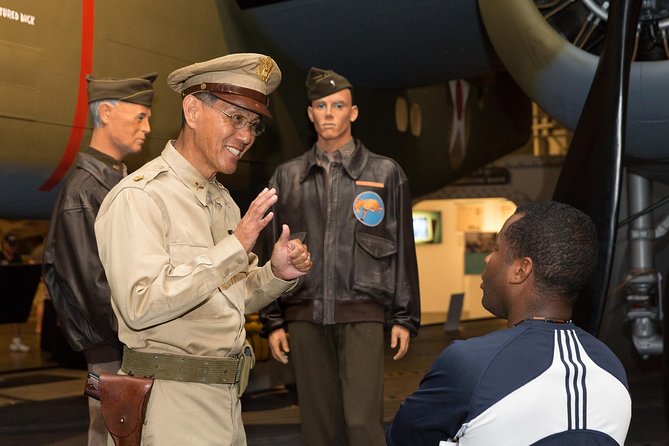
The tour begins with a behind-the-scenes look through the museum’s core spaces, and Hangar 37 is the opening chapter. This hangar is described as the entry point for visitors to the museum, and on the day of the attack it served as the utility squadron VJ-1 hangar, staffed and ready to fire back with machine guns aboard amphibious biplanes.
What you’ll appreciate here is the way the hangar’s purpose is explained, not just the aircraft names. Hangar 37 helps you understand how aviation worked during the attack: aircraft weren’t “decorations,” they were tools for reconnaissance, dispatch, and combat, built into daily operations, then suddenly forced into chaos.
In the hangar environment, details tend to land differently. Even if you’re mostly an aviation fan, you can feel the scale and the practicality of the space. It helps you understand why some aircraft and equipment could be used, saved, or repurposed during wartime.
Hangar 79 (Restoration Shop): Bullet Holes You Can See
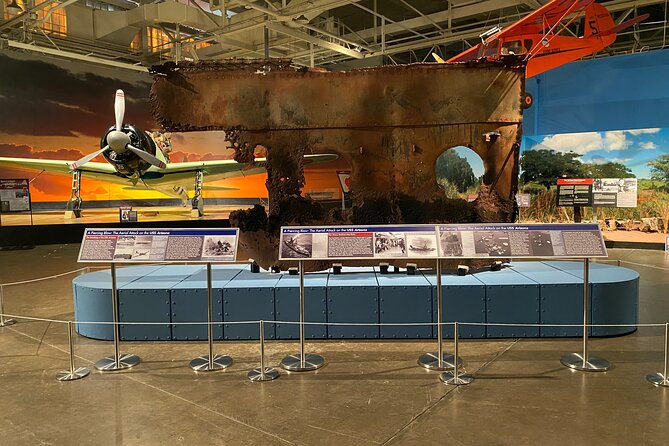
Then you shift to Hangar 79, also known as the Restoration Shop. This one is the emotional anchor of the tour because it still shows scars from the Dec. 7, 1941 attack.
During the war, Hangar 79 functioned as a maintenance and engine-repair facility, and today it’s still treated like a restoration space. In practice, that means you’re not just looking at artifacts, you can also see aircraft being restored with WWII tools and watch those awaiting restoration.
The tour highlights that Hangar 79 is still riddled with bullet holes from the Japanese attack. If you’ve seen Pearl Harbor imagery before, this is the moment that can make it feel more immediate and less “historical distance.” It’s not a replica; it’s part of the site you’re walking through.






Why This Part Matters
The hangars aren’t only about aircraft. They’re about infrastructure, where planes were maintained, how quickly repairs could happen, and how damaged equipment could be kept in service. That’s why this stop feels stronger than a standard museum walkthrough.
The Museum Ticket Bonus: General Admission Included
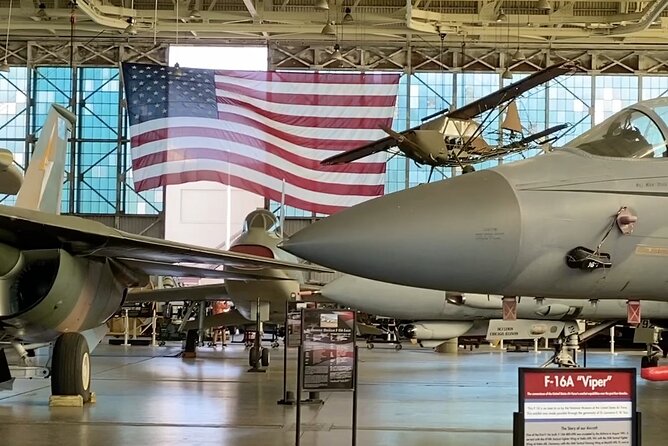
Your Aviator’s Tour ticket includes full general admission to the museum and its exhibits. That means you’re not stuck only with what your guide covers in the hangars.
Included stops and extras listed with the ticket include:
- MiG Alley
- The museum store
- The award-winning documentary East Wind, Rain
This matters because a hangar tour can be perfect for context, but not every exhibit will get the same level of attention from your guide. With general admission included, you can spend time where your interest genuinely goes.
East Wind, Rain Documentary: A 12-Minute Time Machine
One of the easiest “value boosters” here is that the tour ticket includes the documentary East Wind, Rain, described as a 12-minute award-winning film about the Dec. 7 attack events.
A short film is ideal for this kind of museum stop. It gives you a structured baseline before you move around afterward, and it can help you connect the aircraft and hangar details to what was happening overall.
You also get an added benefit for families and mixed-interest groups: even if someone isn’t the world’s biggest aviation person, the film format helps everyone follow the story.
What Else You May See On-Site (And How to Use Your Time)
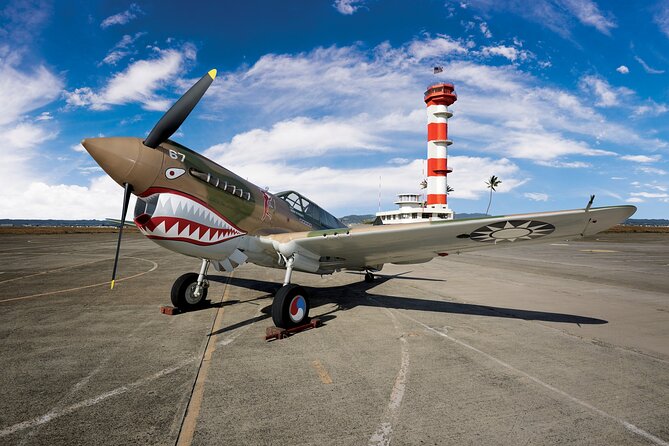
Beyond the hangars, the museum includes a range of aircraft displays. Some guides emphasize specific objects and wartime materials, like pieces and details tied to the Arizona and aircraft involved in the battle story.
You don’t need to memorize every model number. What helps is using your guided hour to learn the “why” behind what you’re seeing, then turning loose during general admission to follow your curiosity.
If You Love Aviation Tech
The museum’s hangar setting is a good fit for people who like how aircraft were supported and repaired. Restoration space and repair tools help you understand the behind-the-scenes work that kept planes operational.
If You’re Here for History
The Pacific War focus and the built-in narrative around the attack are what makes this visit more than a plane spotting session. The hangars make the timeline feel concrete.
Flight Simulators and Other Not-Included Add-Ons
Combat flight simulators are not included in the hangar guided tour. The experience description lists them as separate, and at least one guest note points out that the flight simulator adds an extra cost (noted around $10 for about 15 minutes).
If you want to try the simulator, plan for it as a separate decision after your tour. It can be a fun way to turn learning into active experience, but don’t count on it as part of the hour.
Also not included: Top of the Tower Tour. If you’re building a bigger Pearl Harbor day, check your priorities early so you don’t end up “shopping under time pressure.”
Keeping Your Expectations Right for a 60-Minute Tour
This is a tight, guided format. The best way to enjoy it is to treat it as the guided storyline segment of your day, not the entire museum experience.
Because the group size is capped at 25, you should expect a more personal pace than huge group tours. Still, with a fixed schedule, you won’t have long solo time inside each hangar. If you want slow reading, plan to return during general admission time.
A Simple Strategy I Recommend
1) Let the docent set the story in the hangars.
2) After the tour, revisit the hangars or exhibits that caught your attention.
3) If the documentary moved you, pair it with a few aircraft exhibits so the film sticks.
Price and Value: Is $40.98 Worth It?
At $40.98 per person, the price can feel steep if you’re comparing it to “free” museum time. The value only makes sense if you’re the type of visitor who likes guided explanation.
Here’s the math that matters:
- You’re paying for a docent-led hangar walkthrough through two WWII hangars tied to Dec. 7
- Your ticket also includes general admission to the museum exhibits
- Your entry includes the documentary East Wind, Rain
So you’re not just buying access; you’re buying interpretation. For many visitors, that interpretation is the difference between seeing aircraft and understanding what they did.
And because tours run multiple times daily, you can often pick a time that fits your schedule without sacrificing the experience.
Who This Tour Fits Best (And Who Might Skip It)
This hangar guided tour is a great fit if:
- you like WWII aviation but want a clear story, not just aircraft names
- you want the most meaningful parts of Ford Island without spending your whole day there
- you’re visiting with kids old enough to enjoy short, structured explanations
It might be less ideal if:
- you want a long, unhurried museum day as your main goal
- you prefer purely self-guided sightseeing with lots of reading time
If you’re “in between,” you can still make it work, use the guided hour for context, then roam the museum at your own pace afterward.
Quick Practical Notes That Help the Day Run Smoothly
- Language: offered in English
- Duration: about 1 hour
- Ticket: mobile ticket
- Children: must be accompanied by an adult; children under 4 are free
- End point: it ends back at the meeting point
If you like flexibility, the tour also allows free cancellation up to 24 hours before the experience start time, which is useful if your Pearl Harbor day needs adjusting.
Should You Book the Hangar Guided Tour?
Book it if you want the clearest, most structured way to experience the Pearl Harbor Aviation Museum. The biggest win is the combination of authentic WWII hangars plus docent storytelling plus an included short documentary, everything you need to understand why this place matters without turning your visit into a full-day school lesson.
Skip it only if you already know you don’t want guided time and you plan to focus on self-guided aircraft browsing. In that case, you might get more satisfaction saving the money and spending longer in the exhibits on your own.
If you’re aiming for “meaningful and efficient,” this is a strong choice.