REVIEW · OAHU
Family, Private & Group Standup Paddle Lessons in Waikiki
Book on Viator →Operated by Ohana Surf Project · Bookable on Viator
Learning to surf on Oahu sounds intimidating, until you’re in the hands of a team built for first-timers, with max 8 people per session. I like how the coaching stays practical and step-by-step, and you’re set up with all the equipment so you can focus on your technique instead of shopping or lugging gear.
The biggest watch-out is that even in a semi-private setup, you’re surfing in the same general water area as other groups. If you’re hoping for total isolation in the lineup, keep your expectations realistic.
Still, the whole loop is easy: hotel pickup, a short safety talk, lots of time on the water, then a quick stop back at the shop to view photos and videos (you can buy them if you want). For $118.84 for about 2 hours, it’s a strong value for Waikiki, especially if you want instruction plus transport without DIY stress.
In This Review
- Key reasons this lesson works
- Waikiki learning: why Ohana’s approach fits beginners
- Getting there: the hotel pickup and bus ride to the beach
- Gear-up at Ohana: what’s included and what it solves
- The 2-hour lesson flow: from safety talk to riding waves
- Semi-private coaching that scales: what you’ll actually learn
- Who this lesson suits best (and who should plan differently)
- Photos and videos: plan for the optional add-on
- Value check: is $118.84 worth it for 2 hours?
- Weather rules: how plan changes work if waves aren’t cooperating
- Tips to get more out of your lesson
- Should you book this Waikiki surf lesson?
- FAQ
- Is pickup available from Waikiki hotels?
- Where does the tour start and end?
- How long is the lesson?
- What’s included in the price?
- Are photos and videos included?
- What if someone in the group cannot swim?
- What happens if the weather is bad?
Key reasons this lesson works
- Small-group feel (up to 8 travelers) helps you get more direct attention instead of waiting around
- All gear included (rashguard, reef shoes, board, paddle) means you show up ready
- Hotel pickup in select Waikiki areas keeps the start painless and on-time
- Patient coaching for all levels so beginners can stand and more confident surfers can sharpen up
- After-water photo/video viewing gives you a record of your progress (optional purchase)
Waikiki learning: why Ohana’s approach fits beginners
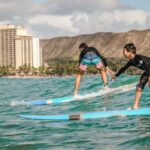
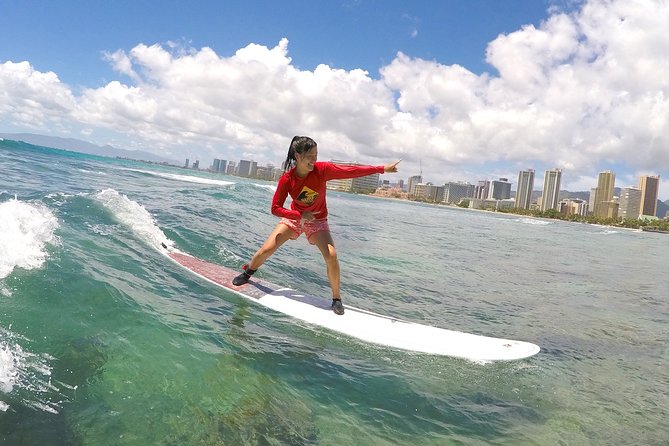
Waikiki is perfect for learning because the water is usually calm enough for practice, and the vibe is welcoming. This lesson leans into that. You’re not just handed a board and told good luck. Instead, you’re coached through the steps that actually matter: how to get into position, how to paddle efficiently, when to pop up, and how to read what’s happening around you.
What I like most about the teaching style here is the balance between encouragement and correction. The goal is not to make you feel rushed. It’s to help you repeat the same motion with the right timing, so you can get that first real stand-up moment without guessing.
You’ll also see a wide range of ages and ability levels, which tells me the system is built to scale. Instructors you might get include names like Kai, Mark, Markus, Tyler, Kevin, Romeo, Miguel, and others. The consistent theme is calm instruction and a focus on getting you riding rather than standing there watching everyone else.
You can also read our reviews of more private tours in Oahu

Getting there: the hotel pickup and bus ride to the beach
The day starts with transportation. If you’re staying in one of the pickup zones, you get courtesy pickup 10–45 minutes before your lesson. Standard pickup options include the Ilikai Hotel, Romer Waikiki (Ambassador Hotel), the Don Ho Lane Van Depot, and the Hyatt Regency.
If your hotel is closer to the other options, Ala Moana Hotel, Hale Koa, Kahala Hotel, The Ritz-Carlton, or The Ka La’i Waikiki Beach, you may be able to arrange a special pickup closer to your location if you give at least 24 hours’ notice.
Once you meet up, you ride to the Ohana Surf Center area at the Waikiki Beach Marriott. The shuttle is described as a clean, air-conditioned yellow bus or white van with the company logo, which matters more than people think. Waikiki is warm, and after the ride you want to be ready to gear up, not already sweaty and flustered.
Then it’s check-in, gear-up, a quick safety briefing, and off to the water. The session uses a tight sequence so you lose less time waiting around.
Gear-up at Ohana: what’s included and what it solves
This is one of the clearest “show up and go” parts of the experience. You’re provided with everything you need for your lesson:
- Rashguard
- Reef shoes
- Board (described as paddleboard equipment in the details)
- Paddle
- A safe place to store your belongings
That list is more valuable than it sounds. In Waikiki, surf and ocean gear can be scattered across rentals, convenience stores, and beach shops. If you’re traveling with family, the “where do we find the right shoes” problem can turn a simple morning into a scavenger hunt.
Here, you skip all that. You get matched with the gear and you can focus on technique. If you’ve ever tried to learn in the wrong footwear, or without reef-safe protection, this kind of included setup makes the whole lesson feel smoother.
One practical tip: come prepared by wearing your bathing suit and bringing a towel. You’ll also want sunscreen applied ahead of time so you’re not rushing between check-in and the ocean.
The 2-hour lesson flow: from safety talk to riding waves
Your session is about 2 hours, and it’s structured to give you multiple attempts. That time matters. Short lessons often end right before your brain and body sync up with the ocean’s rhythm.
Here’s what the flow typically looks like:
- Check-in and quick safety briefing
- Meet your instructor and talk through comfort level and experience
- Shuttle to the water and start with the basics
- Time on the ocean with coached attempts
- Return to the Surf Center to view photos and videos (optional purchase)
- Shuttle back to your drop-off point
Even when the lesson begins as a group explanation, it becomes more personalized once you hit the water. Many people describe a setup where there’s one instructor per 2 people, while other instructors are also on the water helping with safety, guidance, and photos.
That “instructors on the water” detail is key. It means if you’re struggling with positioning or tired from paddling, support is nearby. Some instructors are described as attentive and even helping you get pulled out for the next opportunity if you’re worn out, which reduces frustration and helps you keep catching tries during the full 2 hours.
Semi-private coaching that scales: what you’ll actually learn
The stated promise is that lessons are customized to your skill level and experience, and the feedback you provided supports that. The coaching aims at two things:
- Learning the fundamentals fast
- Getting you waves (not just standing practice)
For beginners, the instruction tends to focus on the sequence that leads to standing:
- paddling efficiently toward the right spot
- timing your pop-up
- staying balanced once you’re up
- handling small wipeouts without panic
For more experienced surfers or board riders, the instructor can shift to refinement: better positioning, more efficient paddling, and cleaner wave handling. You’ll still benefit from consistent cues because the ocean is always changing.
You’ll see instructors with different teaching styles, but the consistent output is the same: you’re encouraged to keep going after feedback. Several people specifically mention feeling safe at every stage, including during the transition from paddling to catching the next wave.
And yes, you might see kids getting up quickly, as well as adults in their 50s and beyond. That’s not about age, it’s about having the right coaching timing and the right gear.
You can also read our reviews of more tours and experiences in Oahu



Who this lesson suits best (and who should plan differently)
This experience is designed for “most travelers,” including families, solo travelers, and couples. It also explicitly notes an important rule: if you can’t swim, tell the staff ahead of time because you may need a private lesson.
That’s a good safety approach. It also means you shouldn’t wait until you’re at the beach to mention it. Send the info early so they can set up the safest teaching plan.
If anyone in your group has a medical condition or injury, also notify the staff ahead of time. Since you’re in open water, safety isn’t optional here.
If you’re prone to seasickness, they recommend considering a remedy you already use and discussing with your doctor. Waikiki sessions can involve enough movement and pacing that a sensitive stomach might get irritated, even when conditions aren’t dramatic.
As for comfort: if you’re nervous, you’ll probably appreciate how instructors explain each step and keep you relaxed. People mention instructors who are especially patient and encouraging, including instructors like Jaden/Jayden and Kai.
Photos and videos: plan for the optional add-on
After your time in the water, you return to the Ohana Surf Center to view photos and videos from your session. Photos/videos are not included, they’re available for purchase.
I actually like this setup because it lets you decide. If you’re the type who wants proof you can do the scary thing and not just remember it vaguely, you’ll probably enjoy buying at least a few shots. If you don’t care about photos, you’re not forced into a bundle.
Also, because there’s a built-in after-water viewing step, the day doesn’t end abruptly. You’ll have closure, a chance to see what went right, and something to share with friends back home.
Value check: is $118.84 worth it for 2 hours?
At $118.84 per person for about 2 hours, the value comes from what’s included, not the headline number.
You’re paying for:
- a professional instructor
- all necessary equipment (rashguard, reef shoes, board, paddle)
- transportation to and from designated Waikiki meeting spots
- a place to store belongings
- all taxes and fees
- small-group structure (max 8)
The two main things that are not included are photos/videos. So if you want souvenirs, you’ll likely spend extra. But if you don’t, your core experience is fully covered.
One more detail that affects value: pickup timing. Getting picked up 10–45 minutes before your lesson helps you avoid time lost to traffic, finding parking, or walking in a crowded Waikiki morning.
Booked about 24 days in advance on average, it’s clear this is a popular way to do Waikiki. That popularity usually means better consistency in scheduling and less hassle with availability.
If you’ve got limited vacation time and you’d rather spend your energy learning rather than handling logistics, this pricing is pretty fair.
Weather rules: how plan changes work if waves aren’t cooperating
This activity requires good weather. If it’s canceled due to poor weather, you’ll be offered a different date or a full refund. That’s what you want in Hawaii: a clear weather-based decision with an exit plan.
For you, the takeaway is simple. Build in flexibility on your calendar. Waikiki can be sunny and perfect one day and less cooperative the next, especially when wind affects how waves break.
Tips to get more out of your lesson
Here’s how to make the most of the 2 hours:
- Arrive ready: bathing suit on, bring a towel, and sunscreen already applied
- Tell them your comfort level early: especially if you’re a weaker swimmer
- Expect a learning curve: your first attempts might feel awkward, then suddenly click
- Use the feedback immediately: instructors are giving you the next step, not a lecture
- Stay relaxed between waves: tired paddling happens; that’s why the support is part of the plan
Also, if you’re deciding between shorter and longer sessions, go with the 2 hours. People specifically note that an hour can feel too tight for first-time progress, while 2 hours gives enough repetitions to actually improve.
Should you book this Waikiki surf lesson?
Book it if you want a beginner-friendly experience with instruction, gear, and transportation all handled for you. It’s a strong fit for families, mixed-ability groups, and anyone who doesn’t want to figure out rentals while also trying to learn ocean basics.
You might think twice if your top priority is absolute exclusivity in the water. Even with a small-group lesson, you’ll share the broader water area with other instruction groups.
If that trade-off doesn’t bother you, this is one of the easier ways to get real wave time in Waikiki without the stress of doing it solo. And when you see yourself standing after the coaching cues, it feels a lot more doable than it sounded from the beach.
FAQ
Is pickup available from Waikiki hotels?
Yes. Courtesy pickup is available from select Waikiki locations about 10–45 minutes prior to your lesson time, including the Ilikai Hotel, Romer Waikiki at the Ambassador Hotel, Don Ho Lane Van Depot, and Hyatt Regency. If you’re staying at Ala Moana, Hale Koa, Kahala, The Ritz Carlton, or The Ka La’i Waikiki Beach, special pickup may be arranged with notification at least 24 hours in advance.
Where does the tour start and end?
The meeting point is 2552 Kalākaua Ave, Honolulu, HI 96815, USA. The activity ends back at the meeting point.
How long is the lesson?
The session is approximately 2 hours.
What’s included in the price?
Included items are a professional instructor, all taxes and fees, necessary equipment (including rashguard, reef shoes, paddleboard, and paddle), a place to store belongings, and transportation to and from designated Waikiki meeting spots.
Are photos and videos included?
Photos and videos are not included. They are available for purchase after your lesson.
What if someone in the group cannot swim?
If any participant cannot swim, you should advise the staff ahead of time, because a private lesson may be required.
What happens if the weather is bad?
This activity requires good weather. If it’s canceled due to poor weather, you’ll be offered a different date or a full refund.