REVIEW · OAHU
1.5-Hour Private Surfing Lesson in Honolulu
Book on Viator →Operated by Gone Surfing Hawaii · Bookable on Viator
Waikīkī surf lessons are built for real beginners. This 1.5-hour private session starts on the sand with coaching you can understand fast, then moves right into the water, with instructors like Trevor or Tommy showing up with calm, practical teaching. I especially like the one-on-one focus and the clear safety mindset taught from the first minute.
One thing to plan for: you must be comfortable swimming, and the photo package is optional and extra (so it is worth confirming what is included before you start, especially if you care about getting action shots).
In This Review
- Key things to know before you go
- Why Waikīkī Works for First-Time Surfing
- From Kālia Rd to Waikīkī: How the 90 Minutes Run
- The Sand Safety Block: Ocean Awareness and Surf Etiquette
- Catching Your First Waves: Reading Breaks and Positioning for Takeoff
- Private Coaching That Actually Adjusts to You
- Safety and First Aid: Why CPR-Trained Instructors Matter
- What to Wear, Bring, and Expect About Photos
- What to wear
- Photos and souvenirs: treat them as add-ons
- When This Lesson Might Feel Off (and How to Fix It)
- You must be a swimmer
- Physical fitness is “moderate”
- Advanced surfers might want more technique depth
- Tides and conditions can affect riding
- Who Should Book This Private Waikīkī Lesson
- Book or Pass: My Straight Advice for Honolulu Surf Lessons
- FAQ
- How long is the private surfing lesson in Honolulu?
- Where does the lesson start?
- Is this a private lesson?
- Do I need to know how to swim?
- What is the minimum age?
- Are instructors trained in safety and first aid?
- What happens during the lesson?
- What is included, and are photos included?
- Is the lesson dependent on weather?
- What is the cancellation window?
Key things to know before you go
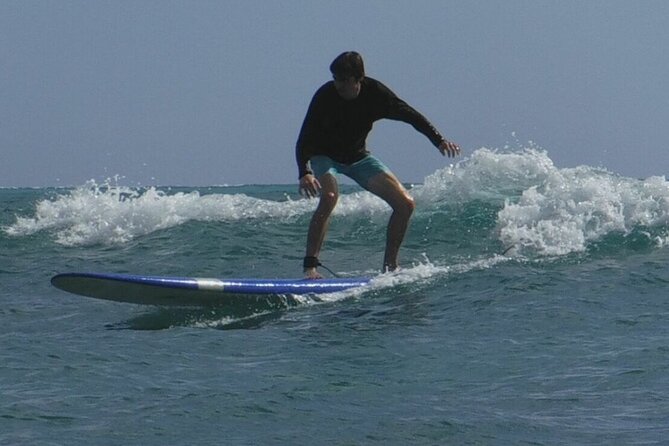
- Sand-first training in Waikīkī so you understand conditions and safety before you stand up
- Private, instructor-only attention tuned to your comfort and goals
- CPR and first-aid readiness for peace of mind, even if the ocean is doing ocean things
- Local etiquette lessons so you surf with awareness, not just adrenaline
- Photo add-on is separate and handled smoothly when it is part of your choice
- Reef-aware coaching for beginners, including tips that can help you avoid scraped feet
Why Waikīkī Works for First-Time Surfing
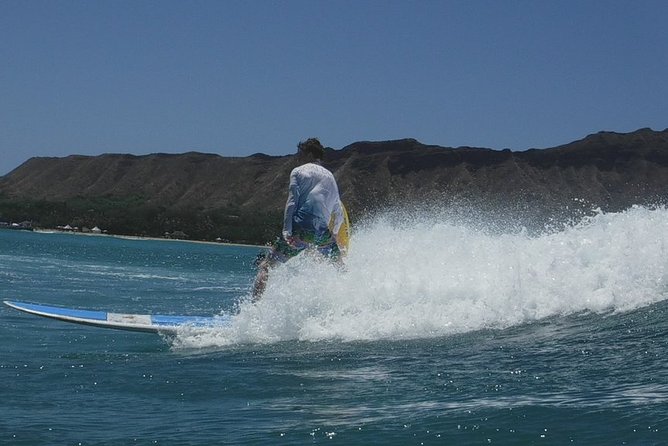
Waikīkī is a training ground. Not because it is easy all the time, but because it is where surf schools can teach the basics in a controlled way: ocean awareness, wave reading, and how to move on a surfboard without panic. For a first attempt, that matters more than chasing “the best wave of your life.”
This lesson is designed around confidence. You start with ocean awareness and safety, so the water feels less like a mystery and more like a place you can work with. Then the coaching shifts toward simple, repeatable skills: positioning, takeoff timing, and how to catch beginner-friendly sets.
It is also a good option if you want the trip highlight without turning your day into a logistics circus. Ninety minutes is enough time to learn something, but not so long that everyone gets exhausted and grumpy.
You can also read our reviews of more private tours in Oahu

From Kālia Rd to Waikīkī: How the 90 Minutes Run
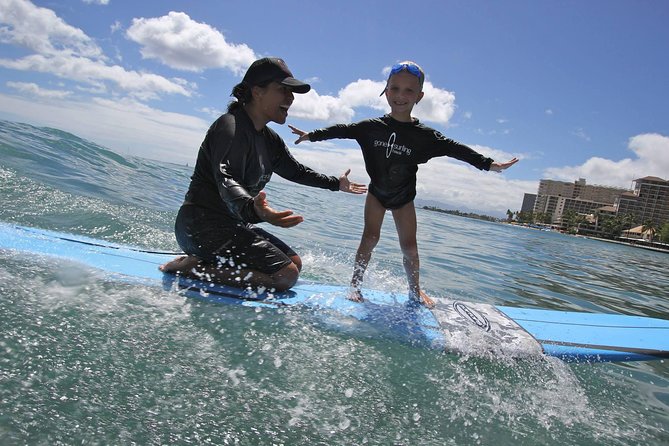
Your lesson meets at 2169 Kālia Rd, Honolulu, HI 96815, and it ends back at the meeting point. In practice, this format is easy: you show up, you get outfitted, and then you go straight into the core learning blocks.
Expect the session to follow this rhythm:
- First, a sand segment where your instructor explains what to watch for.
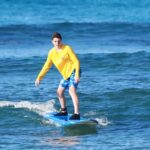
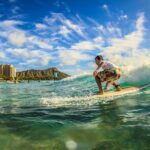
- Then, you head into the water for coaching and wave riding.
- The lesson stays private for your group, so you are not waiting your turn while someone else gets feedback.
Timing is tight in a good way. If you are the type who wants quick progress and clear next steps, the lesson structure tends to fit. If you are hoping for a long, slow clinic that covers every technical detail from stance to wave theory, you may find 1.5 hours a bit fast. You get enough time to start riding, but you do not get an entire surf semester.
The Sand Safety Block: Ocean Awareness and Surf Etiquette
The most valuable part is often the part before you paddle. Here, the sand training is not a formality. It is where your instructor sets you up with the basics you will use the moment you get in the water.
You can expect:
- Ocean awareness: what conditions mean on that day and how to stay smart around the surf.
- Wave understanding: how sets roll in and what you should look for so you are not blindly launching at the wrong time.
- Surf safety: how to think before you move, plus what to do if something feels off.
- Hawaiian surf etiquette tips: how to share the water respectfully, so your learning experience stays fun for you and everyone around you.
This is also where you learn faster because you are not trying to absorb everything while soaked and balancing. If you are bringing kids, the sand block can be the difference between a scary first try and a calm one. In past lessons, instructors have been praised for keeping kids comfortable and supported from the start, which usually comes from this early groundwork.
Quick practical tip: if you have any fears like currents, getting hit, or getting cold, tell your instructor right away. They can tailor guidance and pacing in a way that helps your brain relax.
Catching Your First Waves: Reading Breaks and Positioning for Takeoff
Once you are in the water, coaching shifts from concepts to actions. Your instructor helps you read waves, then works with you on positioning so your takeoff has a chance.
In plain terms, this is what you are training:
- Where you should be relative to the breaking part of the wave
- How to set up so the board is stable when you go from paddling to standing
- How to time the moment you commit to standing, instead of guessing too early or too late
- How to respond when conditions change, because they always do
For beginners, the biggest win is real-time feedback. Even small corrections can make you go from awkward wobble to a clean ride. That is why the private format matters. You are not waiting for the instructor’s attention while they check on other people.
If you are not getting consistent waves right away, do not interpret it as failure. It is usually about timing and positioning, not talent. The instructors trained for first aid and lifeguard-level CPR also bring a safety mindset that shows up as calm instructions, not frantic shouting.
Private Coaching That Actually Adjusts to You
This is built for people who want a dedicated instructor. Your lesson is private for your group, which means:
- One instructor is focused on your skill level
- Your pace can be adjusted
- Your comfort matters, not just your progress
In real lessons, instructors like Trevor and Tommy have been praised for being patient and supportive with kids, including stopping and bringing students in when they get too cold. That kind of responsiveness is more important than it sounds. When a child is shivering, attention drops fast, and learning becomes harder. The ability to pause, reset, and keep things safe makes the lesson feel like a team effort.
For adults and couples, the same idea applies. Beginners often say they felt comfortable and calm once the instruction became simple and supportive. If you are nervous about looking silly, private coaching helps. You get guidance that is specific to what your body is doing, not a generic script.
One note from a less-perfect experience: sometimes the teaching style depends on your instructor and how well you click with their communication. If you want a deeper technique breakdown, ask for it. If you feel the instructor is not matching your learning needs, you can still steer the conversation with direct questions about your stance, timing, or what to change next.
You can also read our reviews of more tours and experiences in Oahu


Safety and First Aid: Why CPR-Trained Instructors Matter
Water time is fun, until something goes wrong. This lesson is staffed by licensed instructors trained in first aid and lifeguard-level CPR. That does not guarantee you will never get scraped or bumped, but it does mean the response is ready if you need it.
Scrapes happen in ocean sports. Reef touches are common for beginners because the ocean floor is not a smooth fantasy. One useful tip you might hear is to consider reef walkers to help prevent cuts on your feet. It is not glamorous, but it is practical. If your feet are protected, you spend more time riding and less time worrying about pain.
Also, if someone gets cold, a good instructor will notice and adapt. In past private lessons, instructors have brought students back in when needed and even provided basic first-aid support for minor scrapes. That is a major part of what makes this kind of surf lesson feel trustworthy.
What to Wear, Bring, and Expect About Photos
You have two main choices to plan for: comfort and documentation.
What to wear
- Wear swimwear you can move in.
- Bring something to protect your feet. Reef walkers are a smart call for Waikīkī.
- If you tend to get cold in the water, plan for quick warmth afterward.
The ocean can be a surprise. Even on a good day, wind and spray change how you feel. When you feel fine on shore, you might feel chilly 20 minutes later. Build in layers and a towel.
Photos and souvenirs: treat them as add-ons
There is an on-wave photographer option, but photos are not automatically included. Souvenir photos are available for purchase, and so are items like rash guards, t-shirts, and similar keepsakes.
One thing I like about the photo process when it is offered: people have described an easy workflow. You typically get an email the evening of the lesson, you can preview images, and then download them after payment through a link. If you care about photos for your memory or your social feed, it is worth being clear about how the photo option works before you hit the water.
Also, there has been at least one unhappy experience where the photographer was not present. That is rare, but it is a good reminder: if photos matter, confirm the photo plan in advance so you are not counting on it accidentally.
When This Lesson Might Feel Off (and How to Fix It)
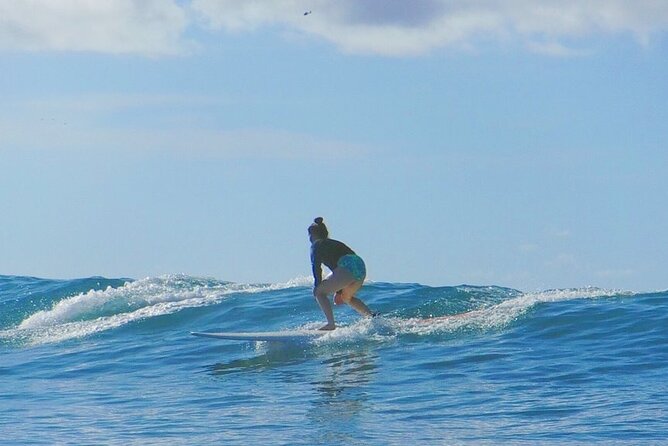
This surf lesson is well suited to first-timers, beginners, and people who want a calm learning environment. Still, there are a few situations where you might want to adjust expectations.
You must be a swimmer
All participants must know how to swim. If you are not confident in open water, this is not the day to practice that. Waikīkī is not a swimming pool.
Physical fitness is “moderate”
You should have a moderate physical fitness level. Surfing uses your legs, core, and shoulders in quick bursts. If you are coming straight off jet lag or you are recovering from injury, consider your limits.
Advanced surfers might want more technique depth
Private lessons are tailored, but one less-than-perfect experience suggested the instructor did not match the student’s level for deeper technique coaching. If you are not a complete beginner and you want advanced takeoff drills or performance tweaking, go in expecting a fundamentals-heavy structure and bring specific requests.
Tides and conditions can affect riding
Surf is weather-and-tide dependent. In at least one case, a lesson scheduled during high tide had limited riding, and the company rebooked the lesson to the next day at 10am to help ensure better wave time. If you have a strict itinerary, plan a little flexibility so you do not feel trapped by ocean conditions.
Who Should Book This Private Waikīkī Lesson
Book this if you:
- Want one-on-one attention in a beginner-friendly setting
- Are traveling with kids and want a safety-first, patient coach
- Prefer instruction that gives you simple next steps while you are actually learning
- Value surf etiquette as part of the experience, not just standing up and hoping
It can also work well for honeymooners or couples who want a shared activity that feels meaningful without requiring advanced fitness.
If you are the type who needs a longer, more technical training block, you might consider whether a longer lesson format would suit you better. But if your goal is to learn, try, and have a solid shot at catching waves during a short window in Honolulu, this format is built for that.
Book or Pass: My Straight Advice for Honolulu Surf Lessons
I would book this lesson if you want a structured first surf experience with safety training that does not treat beginners like an afterthought. The sand-to-water flow, the private attention, and the CPR/first-aid readiness are exactly what you want when the ocean is involved.
I would hesitate only if:
- You are not a confident swimmer.
- You do not like being coached and would rather learn by trial and error.
- You need guaranteed professional photos as part of the deal.
If you do book, do two things that will improve your odds:
- Show up honest about your comfort level, especially if you are bringing kids.
- If photos matter, confirm how the photographer option works so expectations match reality.
The payoff is usually confidence. Even when waves are modest, good instruction turns “I hope I can do this” into “I get the next step.” And in Waikīkī, that is a pretty good vacation souvenir.
FAQ
How long is the private surfing lesson in Honolulu?
The lesson runs about 1 hour 30 minutes.
Where does the lesson start?
The meeting point is 2169 Kālia Rd, Honolulu, HI 96815, USA.
Is this a private lesson?
Yes. It is a private activity, and only your group participates.
Do I need to know how to swim?
Yes. All participants MUST know how to swim.
What is the minimum age?
The minimum age is 5 years.
Are instructors trained in safety and first aid?
Yes. Instructors are certified and trained in first aid and lifeguard CPR.
What happens during the lesson?
It begins on the sand in Waikīkī with safety training and guidance, then you head into the water to learn wave reading, positioning, takeoff, and surf etiquette.
What is included, and are photos included?
Included: all activities and instruction from the local/professional instructor. Souvenir photos are available for purchase, and rash guards, t-shirts, and similar souvenirs are also available for purchase.
Is the lesson dependent on weather?
Yes. The experience requires good weather. If canceled due to poor weather, you will be offered a different date or a full refund.
What is the cancellation window?
You can cancel up to 24 hours in advance for a full refund. If you cancel less than 24 hours before, the amount paid is not refunded.