REVIEW · HONOLULU
Pearl Harbor with USS Arizona and Hawaiian Kingdom History Tour
Book on Viator →Operated by Go Tours Hawaii · Bookable on Viator
Pearl Harbor hits hard, then the stories widen. This 5-hour ride from Waikiki connects the emotional center of the Pacific War at USS Arizona Memorial with the political and royal chapters that shaped the Hawaiian Kingdom. It is a smart way to see Honolulu beyond beaches and resorts, without turning your day into a scavenger hunt.
I especially like how the trip keeps things simple with air-conditioned Waikiki pickup and a fully narrated format. And I appreciate that entrance fees are included, so you are not doing math the minute you step off the bus.
One drawback to plan for: Pearl Harbor has strict rules and tight timing, including baggage limitations at the memorial area and the possibility of ticket or standby complications if allotments are constrained. If your day is fragile, build in patience.
In This Review
- Key Highlights You Should Know Before You Go
- Why This Combo Tour Works: War Memorials Plus Hawaiian Kingdom Landmarks
- Getting There from Waikiki: Pickup Points, Start Times, and the No-Pearl-Harbor-Meet Rule
- USS Arizona Memorial: Film, Ferry Ride, and the Part That Makes People Go Quiet
- Pearl Harbor Historic Sites Visitor Center: The Road to War Exhibit You’ll Actually Remember
- Downtown Honolulu After Pearl Harbor: Iolani Palace and the King Kamehameha Statue
- Hawaii State Capitol and Mission Houses Museum: Modern Power Meets Early Cultural Contact
- Kawaiahao Church: A Quiet Civic-Spiritual Stop You Should Not Skip
- Value and Comfort: Is $57 Good for What You Get?
- Who This Tour Fits Best (and Who Should Consider Another Option)
- Practical Tips to Make This Day Easier
- Should You Book This Pearl Harbor and Hawaiian Kingdom History Tour?
- FAQ
- How long is the Pearl Harbor with USS Arizona and Hawaiian Kingdom History Tour?
- Does the price include the USS Arizona Memorial ticket?
- Are entrance fees included for the stops on the tour?
- Where do pickups happen?
- Can the tour operator meet you at Pearl Harbor?
- What happens if weather is poor?
Key Highlights You Should Know Before You Go
- USS Arizona access is built in, with the ferry/arrival flow starting after the on-site film
- Pearl Harbor Visitor Center time includes the Road to War exhibit, a strong way to understand what led up to Dec. 7
- Downtown royal landmarks include Iolani Palace and the King Kamehameha Statue
- You also hit state politics and civic institutions at the Hawaii State Capitol
- A stop at Mission Houses Museum gives context on the missionary era and early U.S.-Hawaii connections
- Group size is capped at 24, which usually makes the day feel more controlled
Why This Combo Tour Works: War Memorials Plus Hawaiian Kingdom Landmarks
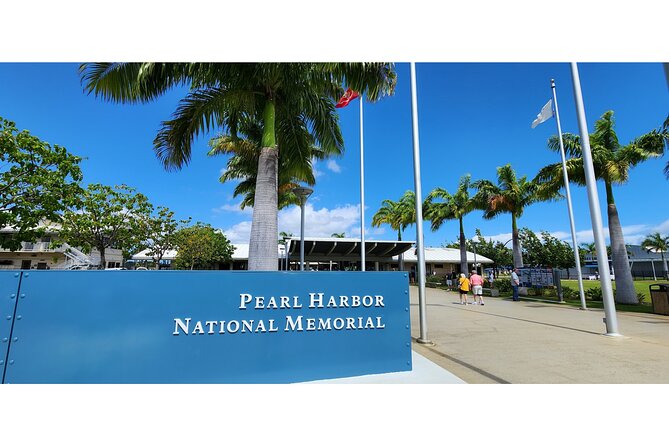
This tour’s real strength is its sequencing. You start with the moment everyone comes for: the USS Arizona Memorial and the attack itself, framed by film and time to reflect. Then you pivot to Honolulu’s older power story, where you see the people and institutions that mattered before and after the turning point.
That matters because Pearl Harbor is not just a battlefield snapshot. It is also a hinge in the history of Hawaii, and the city stops later in the day help you connect the war to governance, culture, and changing sovereignty. If you like history that explains the why, you’ll enjoy the through-line.
One more practical plus: it is all on one day with one pickup and one return. You are not stitching together rentals, separate tickets, and multiple guides just to cover the essentials plus a few high-value extras.
You can also read our reviews of more historical tours in Honolulu

Getting There from Waikiki: Pickup Points, Start Times, and the No-Pearl-Harbor-Meet Rule
This is a Waikiki-based operation. You meet the bus in Waikiki and ride together to Pearl Harbor; the operator notes they cannot meet you at Pearl Harbor or hand out tickets there. So even if Pearl Harbor feels close on a map, do not count on walking in on your own and catching up.
Pickup is scheduled with multiple Waikiki hotels and trolley stops. The early pickup window runs from about 7:30 AM to 8:00 AM, including stops like Ala Moana Hotel, Hilton Hawaiian Village (Grand Islander bus depot), Hyatt Regency Waikiki Beach Resort and Spa, and The Twin Fin Hotel. There is also a second pickup schedule that starts around 10:30 AM and reaches The Twin Fin Hotel by about 11:00 AM.
Why this matters: the Pearl Harbor side runs on fixed entry and ferry flow. If you miss your start window, you can lose ground fast. When in doubt, arrive at your pickup location early and keep your phone charged for any day-of updates you might receive.
USS Arizona Memorial: Film, Ferry Ride, and the Part That Makes People Go Quiet
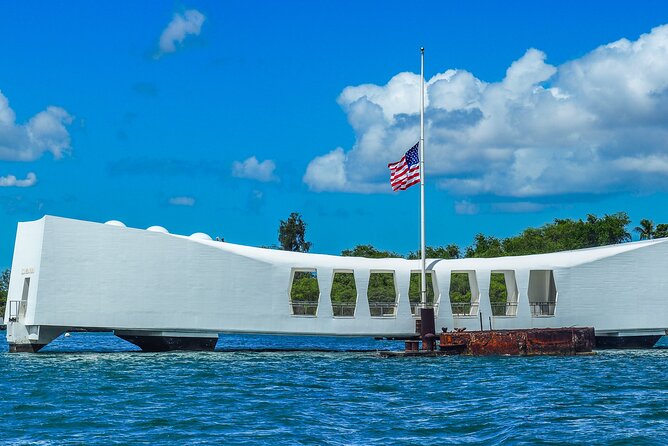
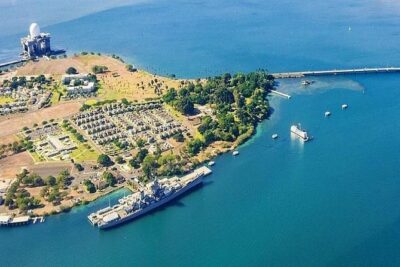
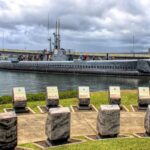
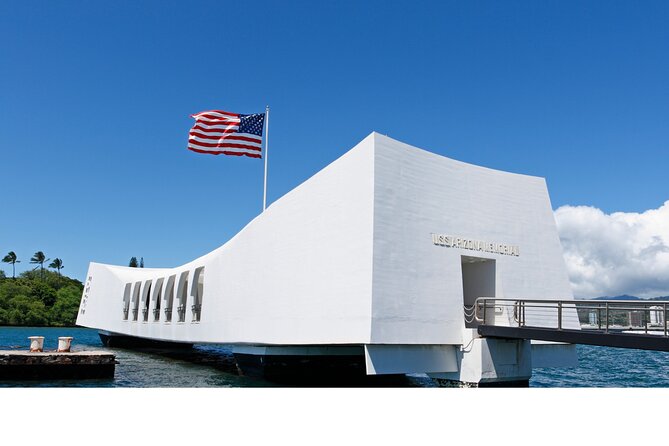
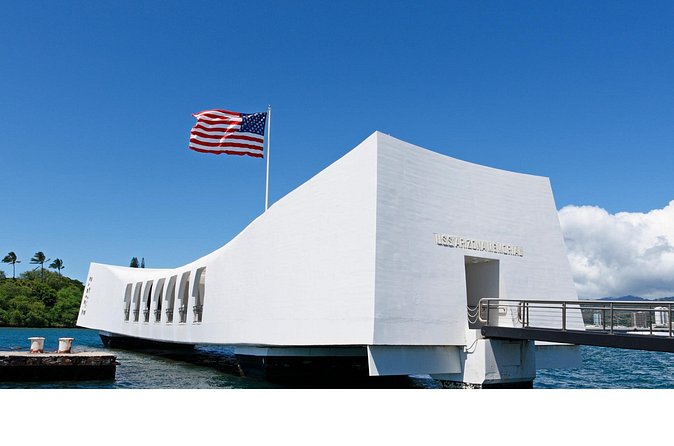
The day begins with the USS Arizona Memorial visit. You watch an on-site film first, then take a Navy-operated vessel to the memorial. After that comes the solemn part: time at the memorial built over the submerged USS Arizona.
Plan your mental mode for this stop. This is not the time for a quick selfie lap. It is a reflective space, and the schedule gives you enough time to sit, read plaques, and absorb the scale and significance. Even people who think they know Pearl Harbor often get hit by how grounded the setting feels when you are looking at the actual memorial structure.
Practical heads-up that can affect your comfort: baggage rules at the memorial can be strict. Some past trips have included reminders that bags are not allowed inside the memorial area and may need to be stored at on-site storage facilities. If you travel with a purse plus a jacket, try to keep it minimal. If you show up with a backpack, assume you may need extra time handling it.
Also, note that the USS Arizona piece depends on ticketing rules and capacity. The tour includes your admission ticket for USS Arizona, but because Pearl Harbor regulations are strict, there can be day-of stress when allotments get tight. The best defense is arriving early, following instructions, and keeping your expectations flexible.
Pearl Harbor Historic Sites Visitor Center: The Road to War Exhibit You’ll Actually Remember
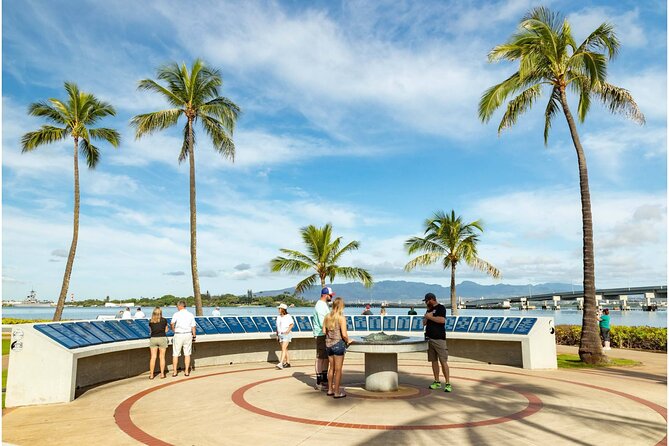
After the memorial, you head to the Pearl Harbor Historic Sites Visitor Center for about an hour. This is where the day stops being only about Dec. 7 and starts answering the bigger question: how did the world get to that point?
Inside, the Road to War exhibit uses artifacts, photographs, and personal materials to explain the lead-up and the aftermath. It is interactive and multimedia-focused, so it does not feel like standing in front of a single display case. You can pace yourself through the rooms and choose what to read more carefully.
Why I like this stop for first-timers: it helps you avoid the common Pearl Harbor problem, which is knowing the date without understanding the chain of events. The exhibit also adds clarity on how the attack changed Hawaii’s role in the global spotlight and reshaped local history.
Time matters here. If you rush the Visitor Center, you will miss the stuff that gives meaning to the memorial. If you slow down a bit, you’ll leave with details that make the memorial feel more specific and less general.
Downtown Honolulu After Pearl Harbor: Iolani Palace and the King Kamehameha Statue
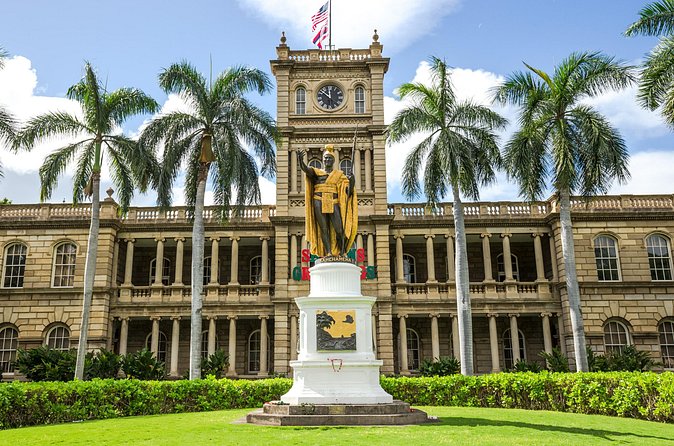
Once your day turns from wartime memory to Hawaiian governance, you head downtown. The tour includes major royal-era markers: the Iolani Palace and the King Kamehameha Statue.
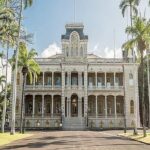
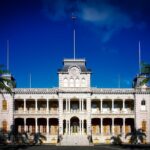
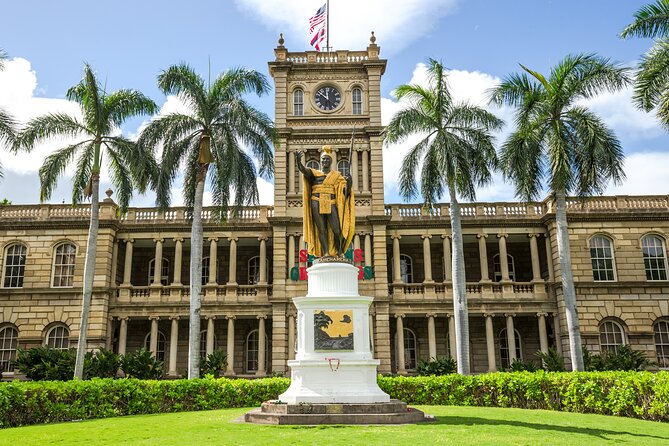
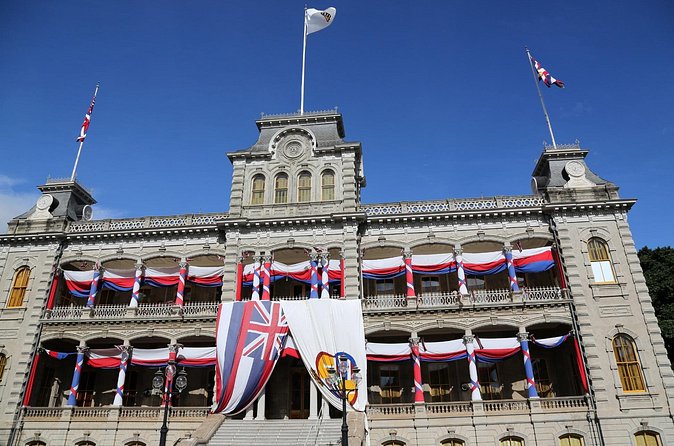
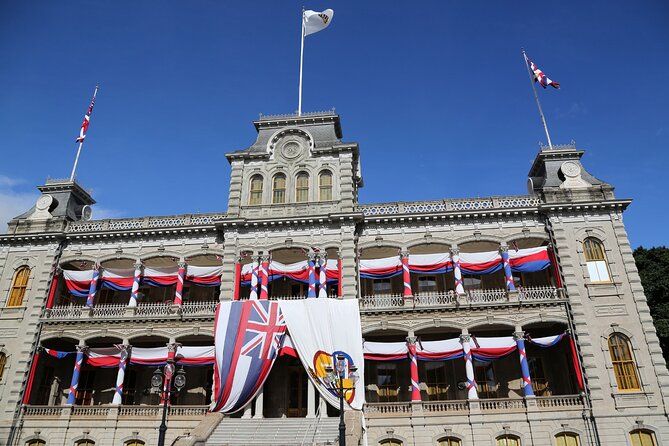
Iolani Palace is described as the only royal palace in the United States. It was built in 1882, served as the residence for Hawaiian monarchs, and later became a museum site. Even if you only get time to take in key rooms and exterior context, it is still a powerful contrast to what you saw at Pearl Harbor. You get a sense of how political authority looked when Hawaii was not yet folded into the U.S. story.
The King Kamehameha Statue is a tall bronze landmark depicting Kamehameha I with a spear and an extended hand. The statue is historically tied to the late-19th century royal effort to honor and symbolize Hawaiian leadership, commissioned in 1878.
Why these two stops work together: they give you both the symbolic and the physical face of monarchy. It is one thing to read about Hawaiian rulers; it is another to stand near public art and royal architecture that is still part of downtown Honolulu’s everyday scene.
One caution: some visitors report the palace experience can be more of a guided orientation plus walk-around time than a full inside tour. Since the tour format is subject to schedules and on-site operations, you should treat it as a stop you will spend time around, not necessarily a long, ticketed deep interior experience unless the day-of timing allows it.





Hawaii State Capitol and Mission Houses Museum: Modern Power Meets Early Cultural Contact
From the royal sites, the tour adds a modern governance stop at the Hawaii State Capitol. The building’s design is described as volcano-inspired, with chambers resembling lava flows and a central rotunda symbol tied to the eye of a hurricane. The campus includes an open-air courtyard with native plants and a reflecting pool, so even though it is government-focused, it can feel calming.
This is not just architecture sightseeing. It gives you a quick real-world look at how Hawaii’s political life operates today. After Pearl Harbor and royal-era landmarks, the Capitol stop helps you see the continuity and the change, from monarchs to modern state institutions.
Then you shift to a different historical lens at the Mission Houses Museum, a complex of restored missionary homes from the early 1800s. You can see structures linked to the Frame House (1821), Chamberlain House (1831), and Printing Office (1841). The museum’s context is about the lives of Protestant missionaries in early Hawaiʻi and how that period fed into major cultural and societal shifts.
I like this stop because it complicates the story in a useful way. Pearl Harbor is one dramatic event, but the forces that shaped Hawaii’s direction were years in the making. Mission Houses helps connect that earlier contact period to the larger historical arc.
Kawaiahao Church: A Quiet Civic-Spiritual Stop You Should Not Skip
The final civic-spiritual stop included is Kawaiahao Church, established in 1820. It is noted for its coral block construction and a prominent steeple in Honolulu’s skyline. Inside, there are koa wood furnishings and a calm worship atmosphere.
This stop gives you something the war-and-palace sequence cannot: a living, ongoing cultural and spiritual anchor. It also ties back to Hawaiian community life across eras, which makes the whole day feel less like a museum circuit and more like a layered view of how people actually inhabit the city.
If you are short on time elsewhere in Honolulu later, this is still worth the few moments you get here because it rounds out the day with human scale and place-based quiet.
Value and Comfort: Is $57 Good for What You Get?
At $57 per person for an around-5-hour day, this tour can be good value if you care about structure. You get round-trip transport in an air-conditioned vehicle from Waikiki, a fully narrated experience, and your USS Arizona admission ticket. Entrance fees for the included sites are stated as included, so your spending stays predictable.
Where the value really lands is the time-saving part. Planning a Pearl Harbor day on your own can turn into a juggling act of tickets, ferry timing, and separate stops across town. This tour bundles those pieces and gives you a guided path that keeps the day from fragmenting.
But value depends on expectations. If you want a long, door-to-door guided museum-style tour at every stop, you might find the downtown pieces more like structured stop time with orientation. The USS Arizona portion is the centerpiece, and the other Honolulu landmarks support it.
Also remember group size is capped at 24. That is large enough to meet other people but usually small enough to avoid feeling like you are in a cattle car.
Who This Tour Fits Best (and Who Should Consider Another Option)
This is a solid fit if:
- You want one guided day that includes the USS Arizona Memorial plus downtown Hawaiian Kingdom-era and political landmarks
- You like narration and context, not just photo stops
- You prefer not to budget extra for entry fees across multiple sites
It may not be the best fit if:
- You need a perfectly controlled, fully guided interior experience at every stop. Some locations may end up as walk-around and photo time depending on day-of flow.
- You travel with lots of luggage and hate the idea of bag handling at strict memorial areas.
- You get stressed by timed entry and regulated sites. Pearl Harbor is not the place to wing it.
If you enjoy history but also want a calmer rhythm, aim to keep the day uncomplicated. Bring layers for indoor film and outdoor lines, keep your bag light, and give yourself extra patience buffer.
Practical Tips to Make This Day Easier
Here are the changes that usually make the biggest difference on this kind of day:
- Keep your bag situation simple. If you have to store it, that can add friction at the busiest moment.
- Arrive early at pickup points. Waikiki is busy, and your best window is arriving before you think you need to.
- Take the memorial seriously. You will feel the best if you slow down at the memorial site instead of treating it like another stop.
- If your priority is the palace interior, plan to manage expectations. The tour includes key stops, but on-site timing controls how much you can get inside.
Also, if you care about the narration style, you may find the guide makes a big difference. In past experiences shared with this operator, guides have been praised for strong island context and personal connection. Names like Kaona, Kanoe, and Bob show up in guide stories, which suggests you might get a local-informed approach rather than generic talking points.
Should You Book This Pearl Harbor and Hawaiian Kingdom History Tour?
Yes, if you want a structured way to connect Pearl Harbor to the Hawaiian Kingdom and Honolulu’s institutions without spending your day on logistics. The USS Arizona Memorial component, plus the Visitor Center’s Road to War context, is the main reason to book, and the inclusion of transport and entry fees makes the pricing feel more rational than piecing it together yourself.
I would say book with eyes open if you are sensitive to rigid memorial rules, baggage limitations, and tight entry timing. If your plan is inflexible or you hate any chance of standby stress, consider alternatives that reduce ticket dependence.
FAQ
How long is the Pearl Harbor with USS Arizona and Hawaiian Kingdom History Tour?
The tour is listed at about 5 hours, with total duration including transportation between stops.
Does the price include the USS Arizona Memorial ticket?
Yes. The USS Arizona ticket is included.
Are entrance fees included for the stops on the tour?
Entrance fees for the included sites are stated as included, so you should not need extra money for entry to the included attractions.
Where do pickups happen?
Pickups are offered from multiple Waikiki locations, including hotels like Ala Moana Hotel, Hilton Hawaiian Village, and Hyatt Regency Waikiki Beach Resort, plus other nearby stops. The schedule lists different pickup times for the morning and later departures.
Can the tour operator meet you at Pearl Harbor?
No. Due to strict Pearl Harbor regulations, you must meet in Waikiki and ride the tour bus to participate.
What happens if weather is poor?
This experience requires good weather. If it is canceled due to poor weather, you will be offered a different date or a full refund.