REVIEW · OAHU
Paddleboard Yoga Class in Honolulu
Book on Viator →Operated by Yoga Floats, LLC · Bookable on Viator
Yoga on a rocking board in Honolulu is a different kind of win. You meet at Ala Moana Beach Park/Magic Island and do classic yoga, but on top of a SUP, so balance and breath suddenly matter in a whole new way.
Two things I really like: the small groups (max 10), which makes it easier to get hands-on help when your stance wobbles, and the finale lying savasana on the board, where the motion of the ocean becomes part of the relaxation.
One thing to consider: if you want to take your own in-class photos, that may not be the setup. There’s also a photo add-on described as $10 per picture, so decide if you’d rather pay for their pictures or bring your own plan.
In This Review
- Key Highlights You’ll Notice Fast
- Meeting at Magic Island, Ala Moana: getting oriented quickly
- Why this meeting setup matters
- The safety briefing and your first steps on the SUP
- What the coaching usually looks like
- The flow on the water: meditation, warmups, then sun salutations
- Why sun salutations work well on a SUP
- Standing and balancing poses: how you stay steady without getting tense
- The mental game is half the workout
- Free time to try what you want: challenge or calm
- Why this “your pace” window is worth it
- The end: deep stretching and savasana rocking in Hawaiian waves
- What to expect in your body
- Price and value: is $57.36 worth it?
- Who should book this SUP yoga class (and who might not)
- Practical tips to make your class smoother
- Should you book Paddleboard Yoga in Honolulu?
- FAQ
- Where does the paddleboard yoga class meet?
- How long is the class?
- How many people are in a class?
- Is the class taught in English?
- Do I need yoga experience or paddleboarding experience?
- Do children get to join?
- Is transportation included?
- What are the fitness requirements?
- What happens if the weather is bad?
- Can I cancel and get a full refund?
- Are there any motion-sickness supports?
Key Highlights You’ll Notice Fast
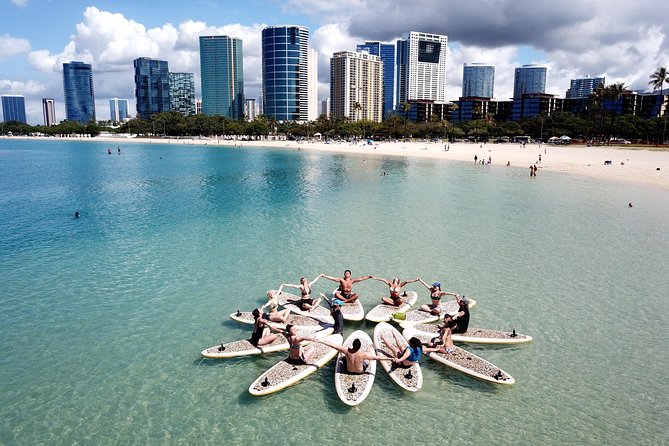
- Waist-deep start and shallow-water focus for a calmer first experience
- Small-group coaching (max 10) with options for beginner to advanced bodies
- Meditation on the board first, then sitting/kneeling warmups before standing
- Standing balance and sun salutations to test control without going far offshore
- Savasana rocking in the Hawaiian waves to end on a truly different note
Meeting at Magic Island, Ala Moana: getting oriented quickly
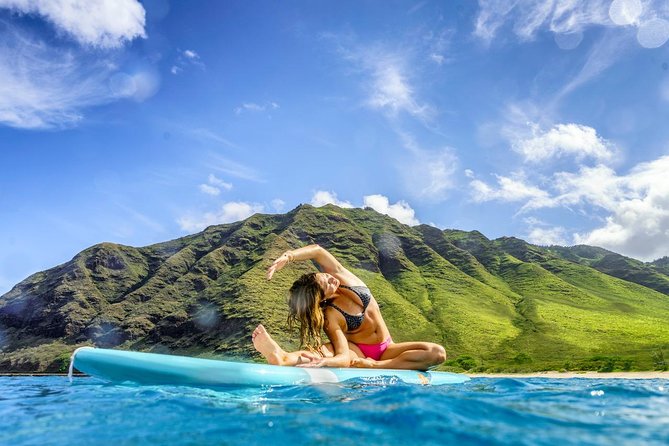
This is one of those Honolulu activities that works best when you arrive a few minutes early and take in the setting. Your class starts at Yoga Floats at Magic Island, Ala Moana Blvd Park. It’s a straightforward start point, and it’s described as easy to find when you search Yoga Floats on Google Maps.
Once you’re with the instructor and your small group, you’re not thrown straight into chaos. Before you even step in, you’ll get the basic ideas for paddleboard yoga: how to stay centered, what to do with your gaze, and how to protect your balance as the board rocks.
If you’re worried about being the only beginner, don’t be. Many people end up trying it for the first time in Hawaii, and instructors are used to bringing everyone up to the same level fast. In reviews, you’ll see names like Kelsey, Julie, Emily, Krysta, Stacy, Jen, Blake, and Karin, and the common thread is clear, supportive guidance that helps you feel safe enough to try.
You can also read our reviews of more tours and experiences in Oahu
Why this meeting setup matters
A good meeting flow is the difference between feeling awkward for 10 minutes and feeling confident for 70. Starting with instruction on shore means you learn what to do before the board starts moving under you.
The safety briefing and your first steps on the SUP
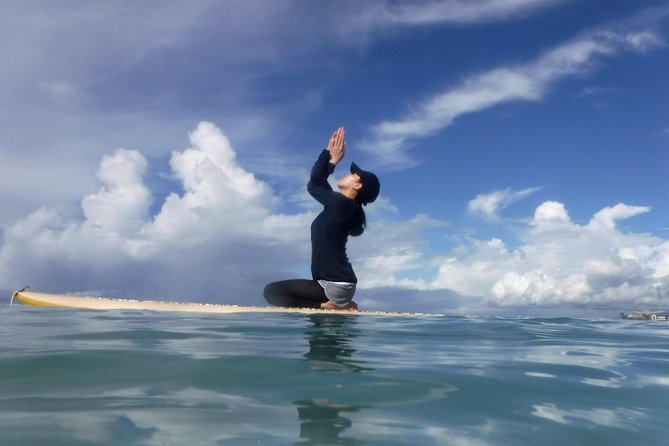
Here’s the rhythm of the class when you move from shore to water:
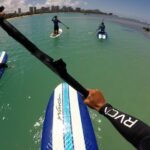
First, you’ll get a safety briefing. Then you’ll wade out with your board to waist-deep water, where you’ll drop an anchor. That anchor detail is a big deal. It keeps the board from drifting wildly, which lets you focus on balance and body position instead of fighting the current.
You start seated on the board, not standing. That’s smart for two reasons. One, it reduces the shock of the first moment on the water. Two, it helps you feel the board’s movement through your hips and legs before you ask your body to stand tall and steady.
What the coaching usually looks like
Instructors emphasize simple cues: where to look, how to shift weight, and how to keep your core engaged without tensing your shoulders. If you’ve done yoga on land, you’ll recognize the shapes. But you’ll also feel that your stability comes from different muscles on the water, so your instructor’s job is to translate familiar poses into water-friendly versions.
One review also mentioned motion-sickness bands being available if you need them. If you’re prone to nausea on boats, it’s worth telling the guide right away so they can guide you on the best pacing and positioning.
The flow on the water: meditation, warmups, then sun salutations
After you’re anchored and settled, the class turns on the yoga practice itself.
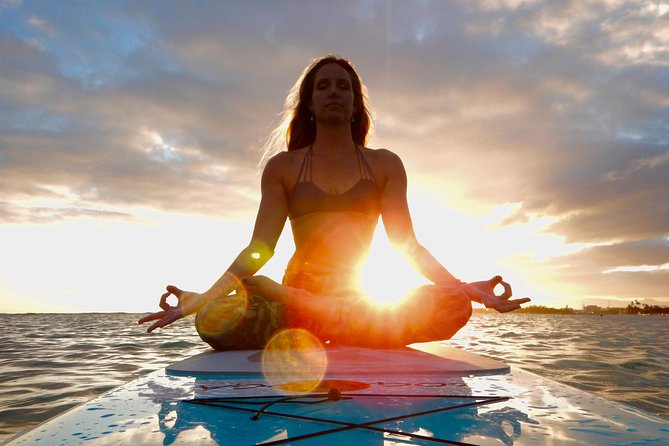
It begins with a meditation while seated on the board. That first moment changes the whole experience. You’re not just learning poses, you’re practicing calm while the ocean moves beneath you.
Then you’ll move through sitting and kneeling positions to warm up. This part tends to be less about acrobatics and more about control: posture, breathing, and learning how your center of gravity shifts as the board tilts.
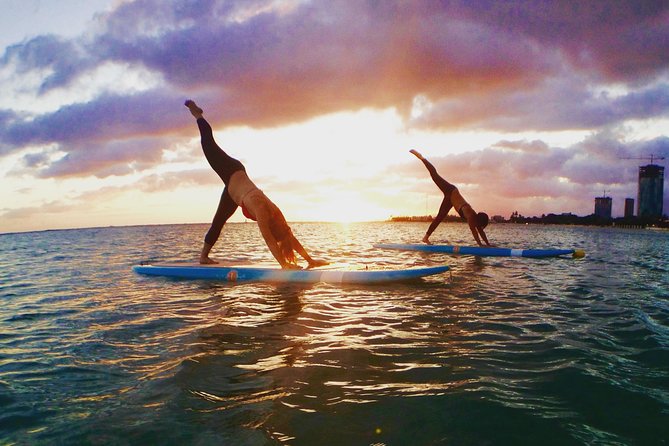
Next comes the moment many people are curious about: you stand up and try some sun salutations. This is where you’ll feel the challenge. The board will wobble, your feet will adjust, and your body will learn a new kind of balance. Even if you’re experienced at yoga, this can feel harder than expected because the ground is never fully still.


Why sun salutations work well on a SUP
Sun salutations are a built-in balance training sequence. You’re constantly moving your weight, reaching and returning, and staying aligned. On a paddleboard, that means your instructor can correct you in real time, helping you learn how to stabilize your stance instead of just surviving the pose.
Standing and balancing poses: how you stay steady without getting tense
Once you’ve tried the basic standing sequence, you’ll get into more balancing options. The highlight here is not just how hard the poses can be, it’s how the instructor helps you scale them.
Reviews include comments about instructors offering options that challenge without overwhelming. In other words, you’re not forced into one version of a pose. You’ll likely be given ways to adjust stance, hand position, or arm reach, so your class feels personal rather than like a strict routine for one body type.
Also, because you’re in shallow water and anchored, it’s realistic to keep practicing even when you lose balance a few times. One solo participant noted falling in a number of times but still described the session as smooth and fun. That’s a good sign: the class is set up so you can keep trying.
The mental game is half the workout
Paddleboard yoga asks for a specific kind of focus. Your breath helps. Your posture helps. And your willingness to reset matters more than perfection. If you can treat wobbling as information instead of failure, the whole hour gets easier.
Free time to try what you want: challenge or calm
After the guided warmup and main flow, there’s time built in for free time. This is one of the most valuable parts for most people because it turns the class from instruction-only into practice-you-own.
If you want to work on a pose that felt tricky, you can spend time there. If you want something more relaxing, you can linger in gentler stretches. Since the group is small, the instructor can still check in and help you make small adjustments while you experiment.
Why this “your pace” window is worth it
A lot of activities are either rigid or too loose. This approach gives you structure first, then freedom. You leave feeling like you actually practiced, not just watched a demonstration.
The end: deep stretching and savasana rocking in Hawaiian waves
The finale is what people remember. The class ends with deep stretching and a savasana done lying down on the board. Then the best part: you’re resting as the paddleboard rocks in the waves.
This is where paddleboard yoga stops being a novelty and becomes a mood. On land, savasana is still. Here, you’re gently carried by motion. It can feel almost like a guided reset for your nervous system.
If you’ve ever finished a yoga class and thought, I could stay here longer, this section delivers that feeling. People mention it as super relaxing and releasing, especially after standing balance work.
What to expect in your body
Your legs may feel like they did a real workout. Your core will likely feel engaged longer than you expected. That’s normal. The stretching helps transition you back to dry land without feeling like you just finished a cardio session.
Price and value: is $57.36 worth it?
The price is $57.36 per person for about 1 hour 15 minutes. For Honolulu, that’s not cheap, but it also isn’t trying to be a bargain bin experience.
What makes it feel worth it:
- Professional guide included (and not just “stand there” help, coaching balance and pose options).
- Small group (max 10), which usually means more attention and less waiting.
- A full practice arc: meditation, seated warmups, standing sun salutations, free practice time, and a board savasana.
- A setting that feels very specific to Honolulu, meeting near Magic Island/Ala Moana and staying shallow rather than making you travel far.
The main value “watch-outs” are mostly about your personal preferences:
- If you don’t like paying for a photo add-on, that could change the math. One review said photos were charged at $10 per picture and that taking your own photos wasn’t allowed in the class flow.
- If you expect an expedition far out in the ocean, this is not that. The class focuses on a safe, controlled experience in shallow water.
Who should book this SUP yoga class (and who might not)
You’ll likely love this if you:
- want a calm-water Honolulu morning that still has a real challenge
- like yoga but are curious how it changes on moving water
- enjoy small-group attention and clear instruction
- travel with a partner or a friend who wants a shared activity that’s scenic and different
You might reconsider if:
- you strongly prioritize taking your own photos during the session
- you’re looking for a long open-ocean outing rather than a guided, shallow-water class
- you’re expecting an ultra-fast class (some people noted timing being slightly short compared with the promise, so set expectations as approximate around the 75-minute mark)
That said, even people who are experienced with yoga sometimes find it harder on a board. Beginners often feel supported. It’s built for learning.
Practical tips to make your class smoother
A few small things can make a big difference in how you experience the hour:
- Choose the right mindset for balance. Wobbling is part of SUP yoga. Aim for control, not stillness.
- Use sunscreen. One reviewer called it out directly as a must.
- Plan your body for standing work. The class includes balancing poses and sun salutations, so a moderate fitness level helps.
- If motion sickness is a concern, speak up. There’s mention of motion-sickness bands being available through the team.
- Wear something you can move in and get a little wet. This is water practice, so think practicality over fashion.
Also, transportation isn’t included. The good news: it’s described as near public transportation, so getting there shouldn’t be a puzzle if you’re using transit.
Should you book Paddleboard Yoga in Honolulu?
I’d book it if you want something genuinely Honolulu and you like the idea of learning yoga balance in a safe, shallow setting. The structure is strong: shoreline instruction, waist-deep anchored start, a real flow, time to practice your own way, and a memorable savasana rocking in the waves.
If your top priorities are long distance ocean time, or you absolutely need to take all your own photos, you’ll want to weigh those details before you commit. But for most people, the small group, the coaching, and the board savasana make the class feel like a full experience rather than a quick stunt.
If you’re even mildly curious, it’s an easy yes for a morning plan near Waikiki.
FAQ
Where does the paddleboard yoga class meet?
The class meets at Yoga Floats at Magic Island, Ala Moana Blvd Park, Honolulu, HI 96814. You’ll also return to this same meeting point at the end.
How long is the class?
The paddleboard yoga class lasts about 1 hour 15 minutes.
How many people are in a class?
This activity has a maximum group size of 10 travelers, which helps keep attention more personal.
Is the class taught in English?
Yes. The experience is offered in English.
Do I need yoga experience or paddleboarding experience?
No prior experience is required. The class is designed so you can participate even if you are new to yoga and new to paddleboarding.
Do children get to join?
Children under 17 must be accompanied by an adult.
Is transportation included?
No. Transportation to/from attractions is not included.
What are the fitness requirements?
You should have a moderate physical fitness level since the class includes standing and balancing poses on the board.
What happens if the weather is bad?
The experience requires good weather. If it’s canceled due to poor weather, you’ll be offered a different date or a full refund.
Can I cancel and get a full refund?
Yes. You can cancel for a full refund if you cancel up to 24 hours in advance. If you cancel less than 24 hours before the experience starts, the amount paid is not refunded.
Are there any motion-sickness supports?
There’s at least one mention that motion sickness bands may be available for people who need them.