REVIEW · HONOLULU
Waikiki Beach: Surf Lessons
Book on GetYourGuide →Operated by Hans Hedemann Surf Shop · Bookable on GetYourGuide
Surfing in Waikiki starts with real coaching. This 2-hour class with Hans Hedemann Surf School turns ocean nerves into a step-by-step plan, with small group lessons and professional instruction built for beginners.
I like that you’re not sent out there “to figure it out.” You get hands-on guidance for paddling, popping up to your feet, and riding the waves, plus equipment included so you can focus on learning. One thing to consider: this experience isn’t for everyone, since it’s not suitable for non-swimmers or people with certain physical limitations.
In This Review
- Key things you’ll appreciate most
- Entering Hans Hedemann Surf Lessons at 150 Kapahulu Ave
- Safety Briefing on Waikiki Beach: The Part That Saves You Time
- The 2-Hour Surf Class: Paddling, Popping Up, and Riding
- A practical expectation
- What You’ll Wear and Use: Gear That Lowers the Friction
- Choosing the Right Lesson Style for Your Group
- Time on the Water: Why 2 Hours Is a Good Starter Length
- Who This Surf Lesson Works For, and Who Should Skip It
- Price and Value: Is $112 for 2 Hours Worth It?
- Before You Go: What to Bring for a Better Lesson
- Returning to 150 Kapahulu Ave: Wrap-Up and the Post-Water Reality
- Should You Book Waikiki Beach Surf Lessons with Hans Hedemann?
- FAQ
- Where does the surf lesson start?
- How long is the lesson?
- Do I need surfing experience?
- What equipment is included?
- What should I bring?
- What languages are the instructors?
- Is the lesson private or group-based?
- Are souvenir photos included?
- Who should not book this activity?
Key things you’ll appreciate most
- ISA-certified instructors with a safety-first approach
- Small group format that helps you get individualized feedback
- All gear included (surfboard, rash guard, reef shoes, leash)
- Beginner-friendly coaching that covers paddling, standing, and wave riding
- Waikiki location where you learn in classic surf conditions
- Multiple lesson styles (private, semi-private, or group) depending on your group size
Entering Hans Hedemann Surf Lessons at 150 Kapahulu Ave
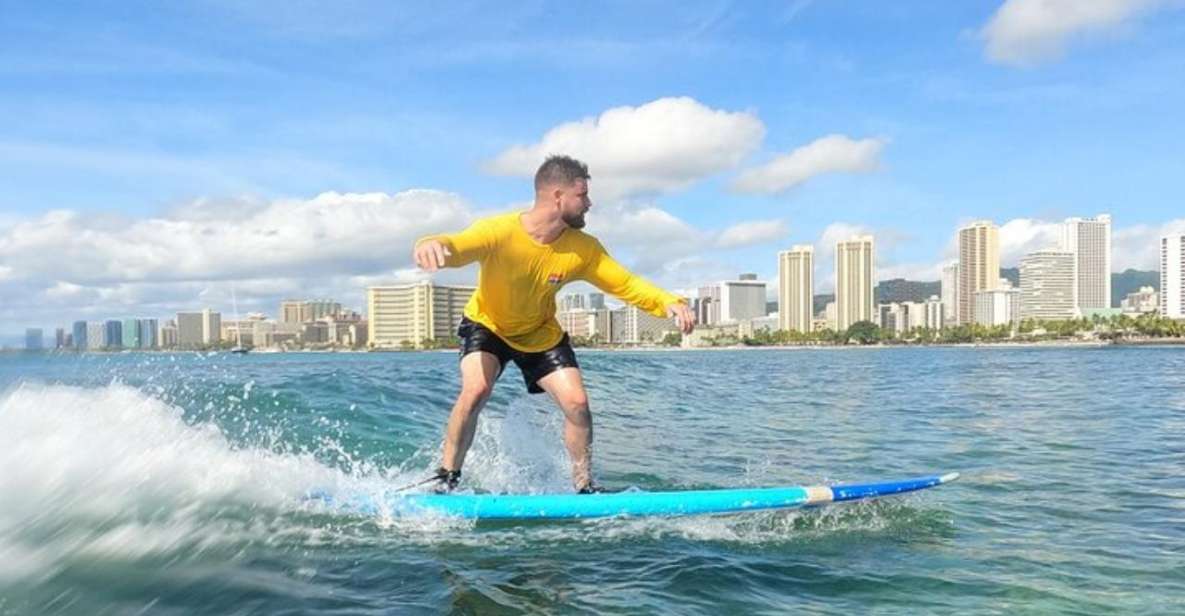
Your lesson day kicks off at Hans Hedemann Surf Shop, which sits inside the lobby at Queen Kapiolani Hotel. The address is 150 Kapahulu Ave, so it’s easy to plug into your maps app and meet right where the shop is.
Plan to check in 20–30 minutes early. That buffer matters because you’ll want time for the basics, getting oriented, making sure your gear fits, and taking care of anything you need before the briefing. If you arrive late, you’ll miss part of that “get ready” flow, and surfing lessons run on momentum.
Also note the language options: English, Korean, and Japanese. That can make a big difference for beginners, especially when the instructor is explaining paddling technique or safety rules.
You can also read our reviews of more tours and experiences in Honolulu


Safety Briefing on Waikiki Beach: The Part That Saves You Time
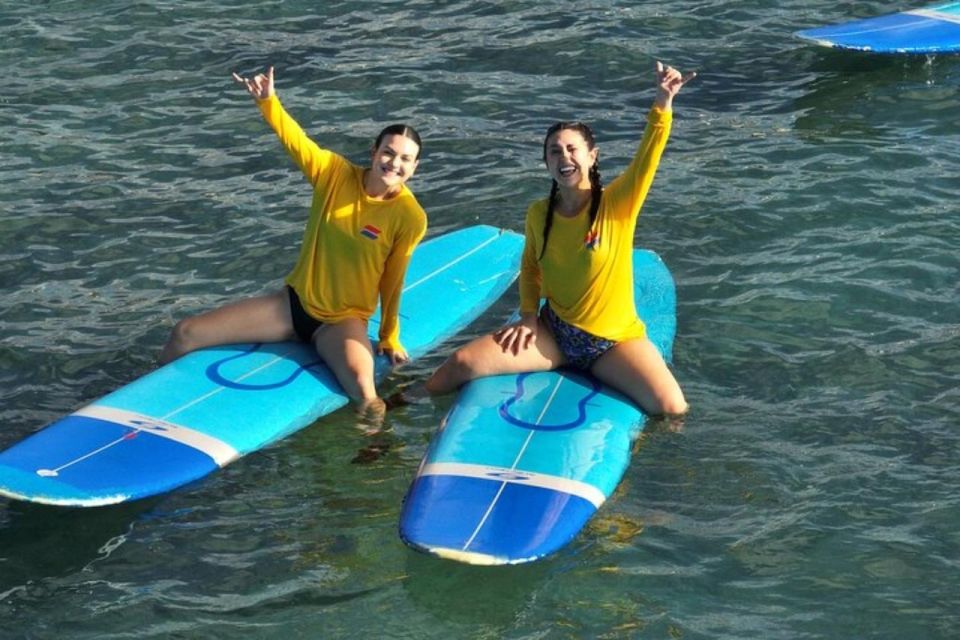
Once you’re at Waikiki Beach, the class starts with a safety briefing. This isn’t just formal talk. Expect the kind of coaching that helps you understand what to do once you’re in the water, how to handle the surf zone, and how to move with more confidence.
The lesson uses high-quality soft-top boards, which are designed to help beginners learn with less risk than hard boards. Soft-tops are easier to balance on, and they make early practice less stressful, especially when you’re still learning the core motions (paddle, stand, hold your line).
Here’s why this part is valuable: a lot of beginner frustration comes from trying to learn the hardest moments first. The briefing and early instruction help you build the right habits before you’re dealing with wave timing.
The 2-Hour Surf Class: Paddling, Popping Up, and Riding
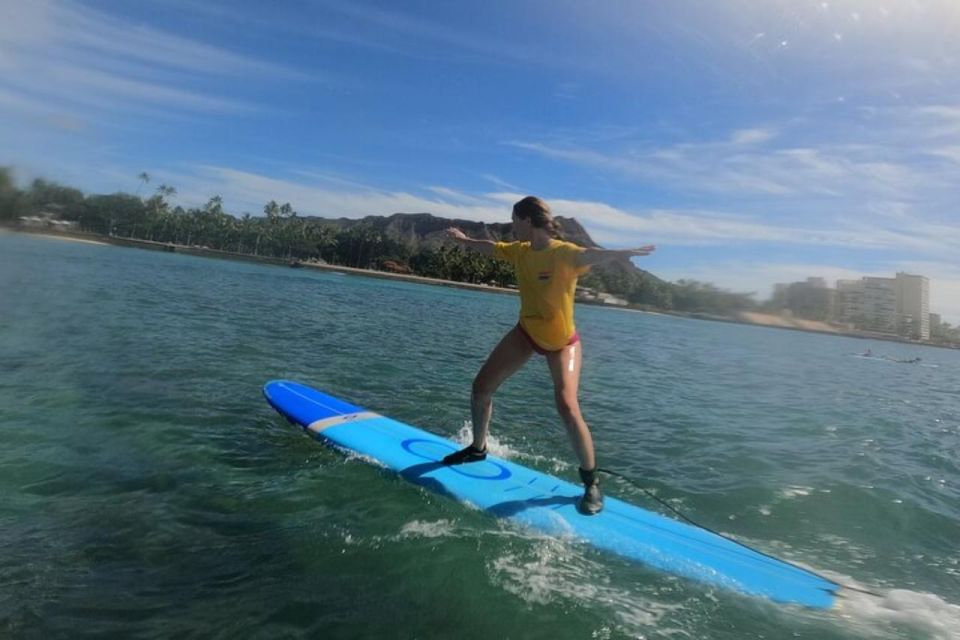
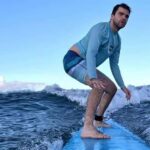
The core of the experience is the surf lesson itself, designed for beginner skill levels and for people who may have never worn a leash before. The coaching focuses on three skills that matter more than flashy tricks:
- Paddling: how to get into position efficiently
- Standing up: the quick, controlled transition from prone to feet
- Riding waves: how to move while keeping balance
Because the class is small group, you’re more likely to get corrections that match what you’re actually doing. In a big group, you might get one piece of advice and then hope it applies. In a smaller class, you get more chances to adjust fast.
You’ll also be dealing with Hawaii’s real beach reality: sun, wind, and the push-pull rhythm of the ocean. That’s part of the charm. Just remember that technique improves through repetition, and this class is timed to give you enough runs to feel progress.
A practical expectation
This is not a “memorize theory” lesson. You should expect to spend meaningful time in the water and practicing movements, with coaching cues delivered as you go. The goal is to leave with better balance and more control, not to master every wave.
What You’ll Wear and Use: Gear That Lowers the Friction
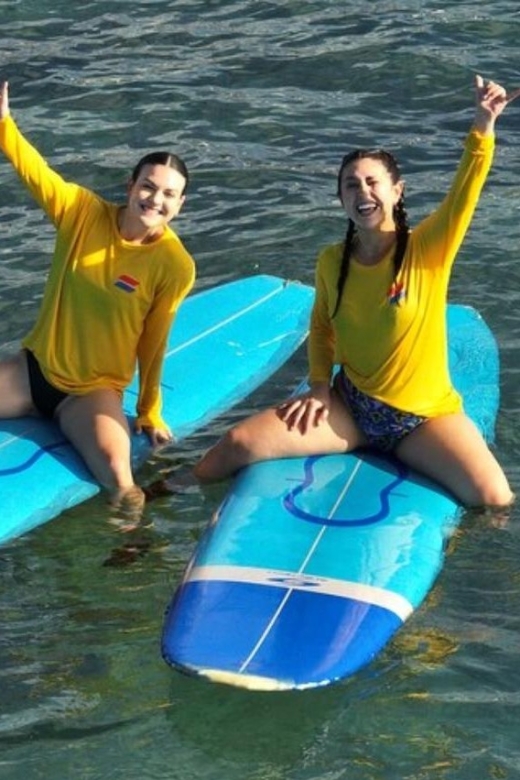
One of the best value parts of this lesson is the fact that you don’t need to buy or rent the whole setup separately. You’re provided with all the key items:
- Surfboard
- Rash guard
- Reef shoes
- Leash
- Safe storage lockers
This gear package matters more than it sounds. Rash guards help with comfort during repeated wipeouts. Reef shoes protect your feet when you’re on rocky or coral-adjacent areas. And yes, beginners often feel awkward about boards at first, having the right kind of board helps you learn sooner.
Also, the reef shoes are a smart add. It’s one less thing you’ll need to figure out, and it reduces the chance that a minor foot issue ends your lesson early.






Choosing the Right Lesson Style for Your Group
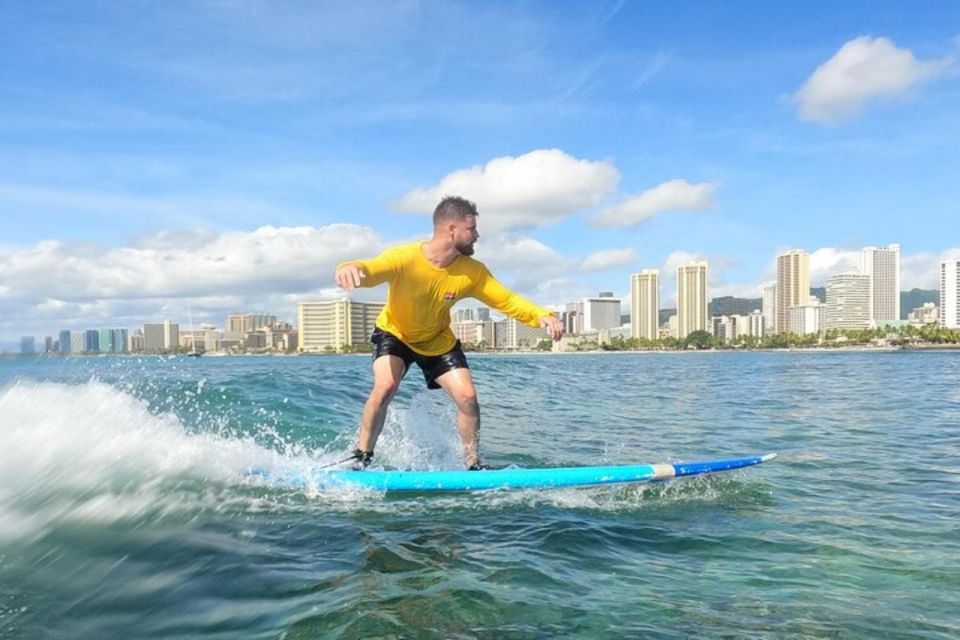
Hans Hedemann offers lesson options that fit different comfort levels and group sizes: private (1-on-1), semi-private (2–3 students), and group lessons.
If you want maximum attention, a private lesson can help you get faster corrections. If you’re traveling with friends and you all want the same guided experience, semi-private often hits a sweet spot, enough individual input without the full cost of one-on-one.
For solo travelers, group lessons are the usual path. The key is that the program emphasizes small groups, which is the difference between feeling coached and feeling herded.
Time on the Water: Why 2 Hours Is a Good Starter Length
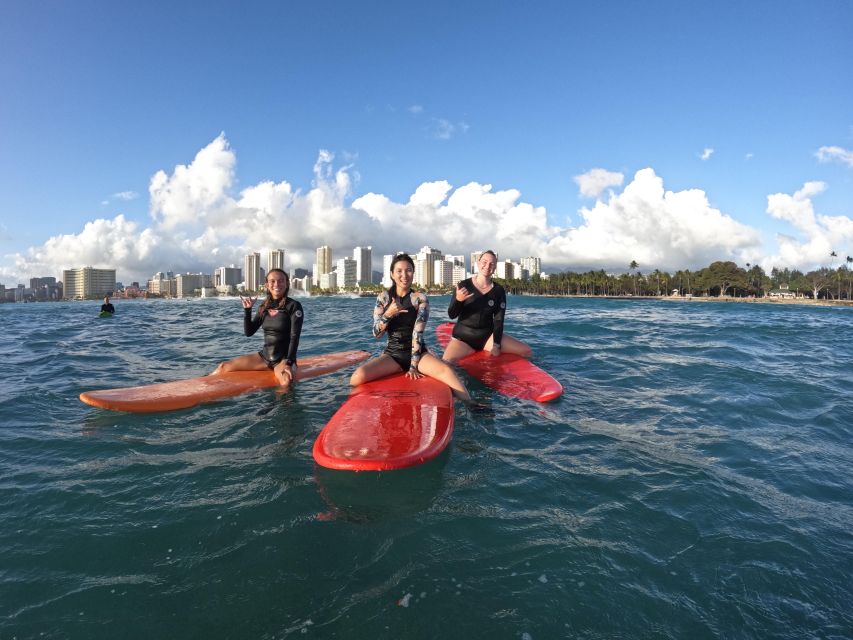
The duration is 2 hours, with the lesson typically lasting 1.5 to 2 hours. For beginners, that time window is practical. Long enough to get repetition, short enough that you’re not cooked by fatigue before your technique improves.
Surfing does require moderate fitness. You’ll be paddling, balancing, and getting up repeatedly. If you know you tire quickly on the water or you’re dealing with a limitation, tell the surf school in advance.
You should also keep in mind the age guidance: lessons are for ages 14 and up, and all skill levels are welcome within that age range.
Who This Surf Lesson Works For, and Who Should Skip It
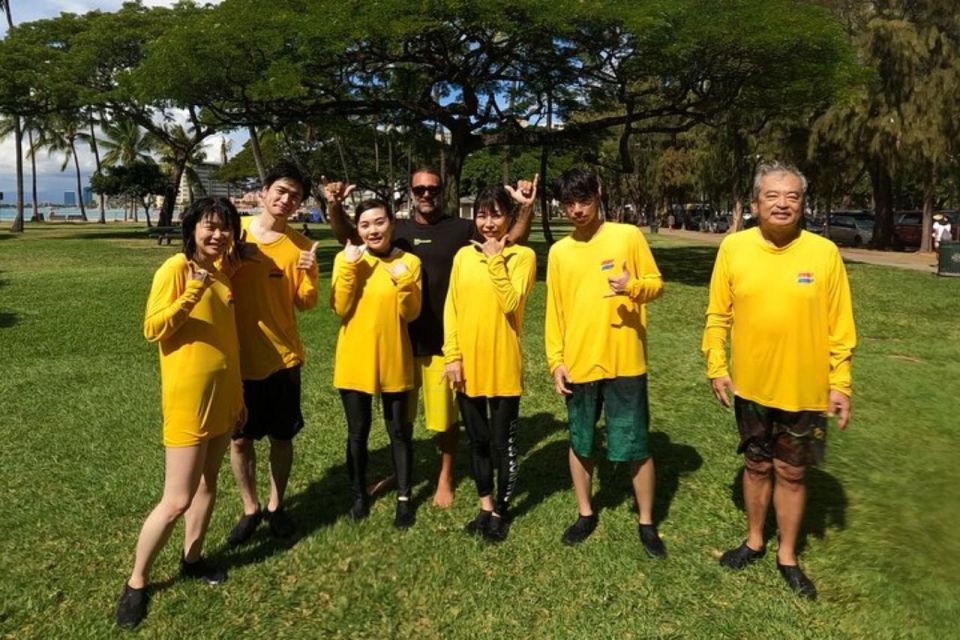
This activity is a great fit if you’re:
- a beginner (or returning to surfing after a break)
- someone who wants structured coaching in a small group
- a teen or adult ready for a fun, hands-on water workout
It’s not suitable for:
- children under 14
- pregnant women
- people with back problems
- non-swimmers
That last point matters. Even with instruction, you need comfort in the water environment. If swimming isn’t your strength, it’s better to pick a different type of beach activity or look for a lesson that explicitly serves non-swimmers.
Price and Value: Is $112 for 2 Hours Worth It?
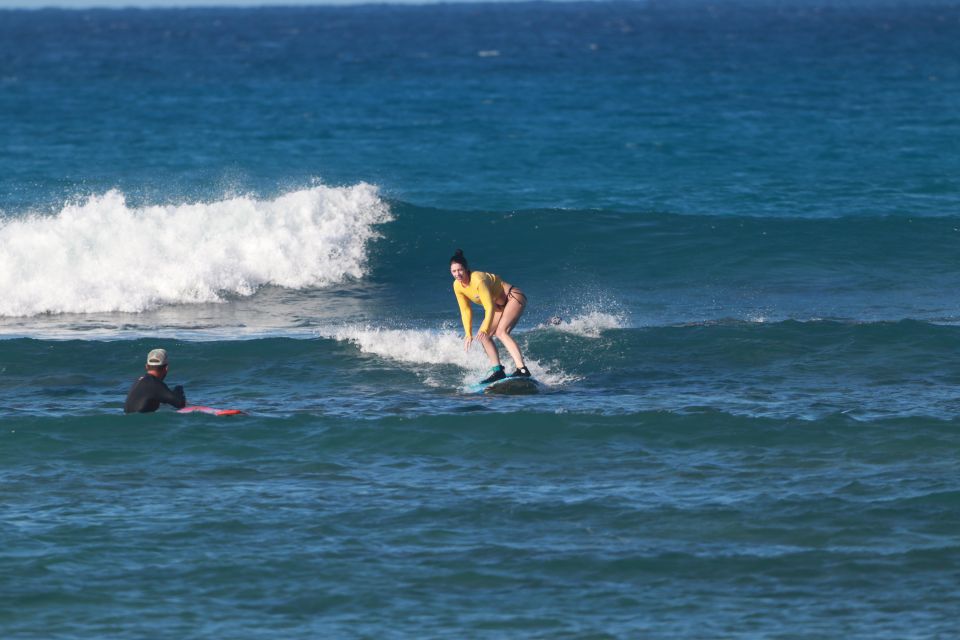
The price is $112 per person for about two hours. On paper, it’s not “cheap,” but it’s not just paying for board rental either. You’re paying for:
- certified instruction
- equipment included (board, rash guard, reef shoes, leash)
- safety briefings
- small group feedback
- safe storage lockers
For a beginner, those included costs are often the difference between a smooth first surf day and a stressful one. If you’ve ever tried to piece together rentals, lessons, and gear separately on a short Hawaii trip, you know how quickly costs add up, and how often you end up with gear that doesn’t match your skill level.
Also, the lesson has a very high satisfaction signal: an overall 4.9 rating from 73 reviews. The strongest praise is for patient teaching and a nice, helpful surf shop experience. That consistency matters when you’re learning something physical and new.
Before You Go: What to Bring for a Better Lesson
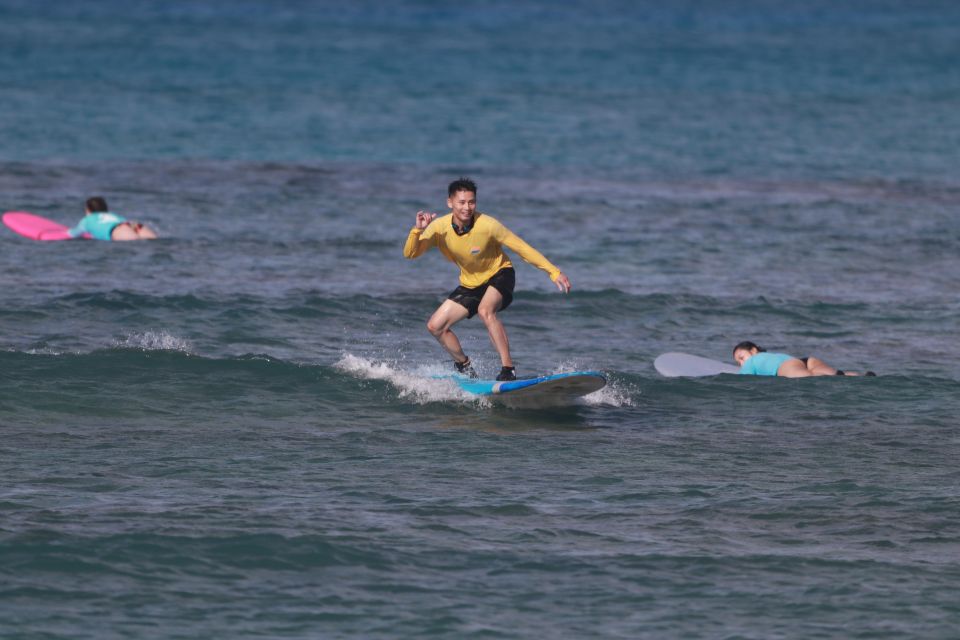
Don’t show up in “maybe” beach clothes. Bring:
- towel
- sunscreen
- beachwear
That’s it, but it’s still worth planning. Hawaii sun can be intense, and sunscreen needs time to set. If you can, apply before you arrive at the beach. Bring your towel so you’re not improvising with a jacket or rental-from-someone-else trick after the water time.
If you’re choosing between options like semi-private vs group, pick based on how much feedback you want. If you’re the type who learns faster with more direct correction, go semi-private or private.
Returning to 150 Kapahulu Ave: Wrap-Up and the Post-Water Reality
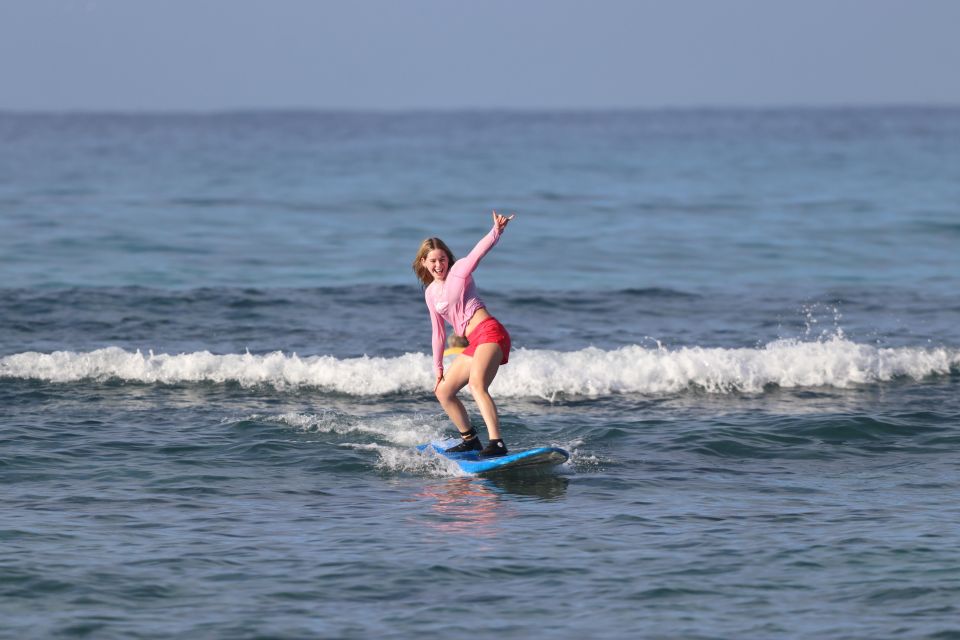
At the end of the session, you’ll head back to the starting point at 150 Kapahulu Ave. The return is part of the value: you don’t have to worry about timing, gear drop-offs, or how to get organized after you’re wet, salty, and done for the day.
This is also where you’ll appreciate the fact that you have safe storage lockers. Surf days can leave you thinking about where your stuff is. Having lockers handled keeps you focused on learning, not chasing personal items.
Should You Book Waikiki Beach Surf Lessons with Hans Hedemann?
If you’re looking for a beginner surf lesson in Waikiki that’s organized, gear-friendly, and coached by ISA-certified instructors, I’d say this is an easy yes, especially if you want a small group and you care about getting technique feedback instead of just going for a swim.
Book it if:
- you’re 14+ and comfortable with moderate physical effort
- you can swim (the lesson explicitly isn’t for non-swimmers)
- you want all gear included and clear instruction
Skip it if:
- you have back problems, you’re pregnant, or you’re under 14
- you’re not a confident swimmer yet
- you’re hoping for a quick photo-only beach outing (souvenir photos are available for purchase, but they aren’t included)
If that describes you, this is a solid way to spend a couple of hours in Waikiki, with real instruction and a setup that makes learning feel possible.
FAQ
Where does the surf lesson start?
You meet at Hans Hedemann Surf Shop inside the lobby at Queen Kapiolani Hotel, at 150 Kapahulu Ave. Check in 20–30 minutes before your scheduled lesson time.
How long is the lesson?
The experience is listed as 2 hours. The session lasts about 1.5 to 2 hours depending on the time slot.
Do I need surfing experience?
No prior experience is required. The lesson is suitable for beginners of all skill levels (and for beginners of all ages 14 and up).
What equipment is included?
You get all necessary equipment: surfboard, rash guard, reef shoes, and a leash. Safe storage lockers are included too.
What should I bring?
Bring a towel, sunscreen, and beachwear.
What languages are the instructors?
Instructors can teach in English, Korean, and Japanese.
Is the lesson private or group-based?
There are multiple lesson types: private (1-on-1), semi-private (2–3 students), and group lessons. Small group options are available.
Are souvenir photos included?
No. Souvenir photos are available to purchase, but they are not included.
Who should not book this activity?
It is not suitable for children under 14, non-swimmers, pregnant women, or people with back problems.