REVIEW · HONOLULU
Honolulu: SUP (Standup Paddleboard) Yoga Class
Book on GetYourGuide →Operated by Yoga Floats · Bookable on GetYourGuide
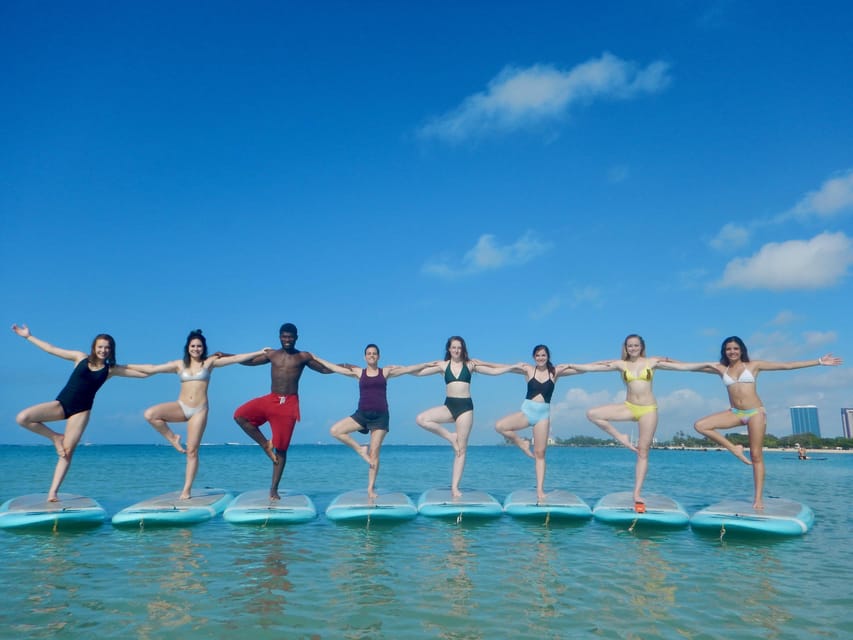
Yoga on water is harder than it sounds. What makes this class fun is that you practice familiar yoga shapes on a stand-up paddleboard, while an instructor guides you through balance without forcing you into deep water. I especially like the waist-deep setup with an anchor, so you can focus on form, breath, and not panicking. One consideration: if you hate getting wet or you’re uneasy with floating on any moving surface, this will feel like a bigger mental jump than a land-based class.
My second favorite part is the ending: a calm ocean-wave savasana where you recline and let the motion of the water do the work. The small-group format (up to 10) means you’re not just getting pushed into poses; you get options and corrections as you go.
In This Review
- Key Things I’d Plan Around
- Honolulu SUP Yoga Starts at Magic Island, Not a Gym
- Your 75 Minutes: From Shore Basics to Anchored Poses
- Poses on a Board: Balance, Core, and Options for All Levels
- The Shallow-Water Safety Setup (Why It Feels Less Risky)
- Price and Value: What $53 Buys You in Honolulu
- Practical Stuff: What to Bring and How to Make It Easier
- A quick mindset tip
- Should You Book Honolulu SUP Yoga at Magic Island?
- FAQ
- How long is the Honolulu SUP yoga class?
- Where do I meet the instructor and small group?
- Do I need to be a strong swimmer?
- What’s included in the price?
- What is not included?
- What should I bring with me?
- Is the class suitable for beginners?
- Is this class appropriate for children or pregnancy?
- What’s the cancellation and pay-later situation?
Key Things I’d Plan Around
- Magic Island start: you meet at the south end of the parking lot, near the boards and the Yoga Floats van
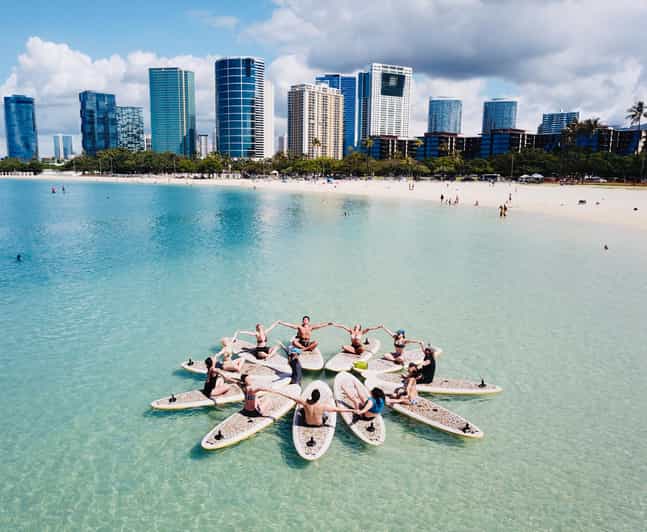
- Anchor + waist-deep water: you wade out and then drop an anchor for steadier practice
- 75-minute progression: seated meditation on shore, then poses on the board, then wave-rocked savasana
- Standing balance with options: you can challenge your core while still keeping it beginner-friendly
- Small group attention: limited to 10 participants for more personalized coaching
Honolulu SUP Yoga Starts at Magic Island, Not a Gym
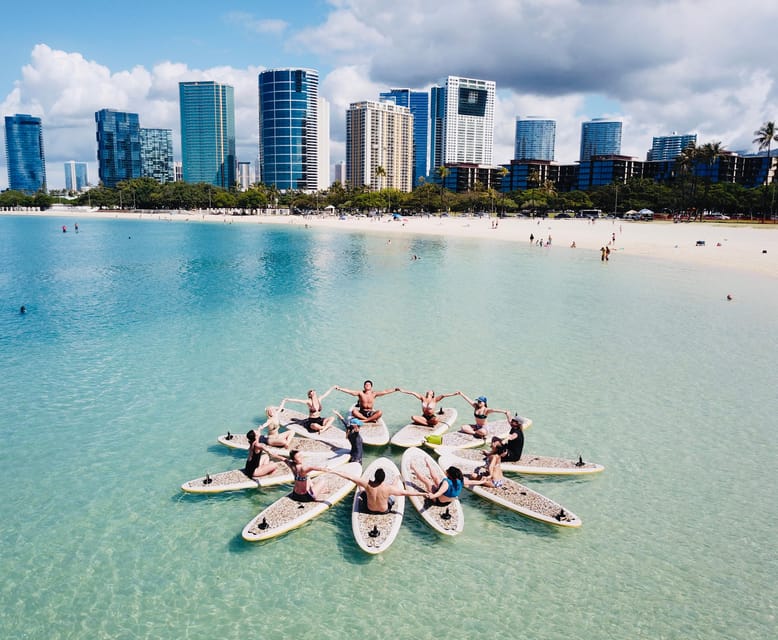
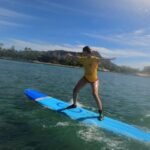
If you picture paddleboard yoga as a wild stunt, this class changes that quickly. The meeting point is Magic Island in Ala Moana Beach Park, at the south end of the Magic Island parking lot. You’ll look for white and gray boards in the grass or the colorful Yoga Floats van. This matters because the class is built around an easy, confidence-first transition from shore to water.
Once you’re with your small group, the instructor explains the basics of paddleboard yoga and how to stay balanced and centered. You’re not thrown straight into standing poses. You’re taught the mechanics first: how to control your stance on the board and how to keep your attention where it helps most.
I also like that you don’t have to worry about “Where do I put my stuff?”, equipment and gear are provided, and there’s a safe place to store belongings. That lets you arrive, change into swimwear, and focus on the lesson instead of logistics.
You can also read our reviews of more tours and experiences in Honolulu
Your 75 Minutes: From Shore Basics to Anchored Poses
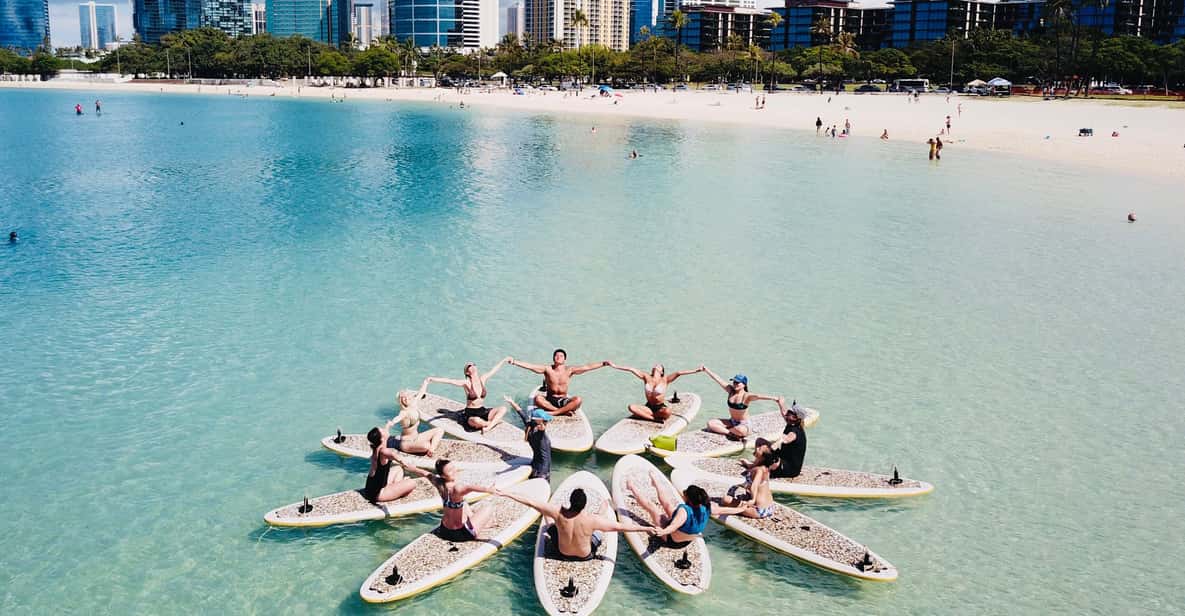
This class is designed as a smooth sequence, not a random string of poses. It lasts 75 minutes, and the flow goes like this:
First, you meet your instructor and small group at Magic Island. While you’re still on land, you get the key fundamentals: how the board moves, what balance feels like out on the water, and the general approach to moving through yoga on a paddleboard. The goal is to help you understand what your body needs so you can follow along with less guessing.
Next, you wade out to waist-deep water with your board. Then the instructor drops an anchor, so the board steadies up for practice. This is a big deal for comfort. You’re floating, but you’re not out in open water with constant drifting.
Then you begin with a seated meditation. That’s not an afterthought, it’s how you “arrive” to the experience. Instead of jumping into movement immediately, you settle your focus. It also sets up the rest of the session, because balance gets easier when your breath and attention are steady.
After meditation, the class moves through yoga poses adapted for the water. You’ll practice seated, kneeling, and reclining positions, and you’ll also work in standing poses as you feel ready. Throughout the class, the instructor offers options so you can match the difficulty to your comfort level.
The session also leaves room to explore. There’s free time where you can work on poses you want to practice more, or repeat what you liked earlier, useful if you’re learning a flow style that feels new.
Finally, the class closes with savasana, you lie down and let the ocean’s rocking support the meditation. Fingers and toes can trail in the water. If you came for the challenge, it’s a sweet payoff.
Poses on a Board: Balance, Core, and Options for All Levels
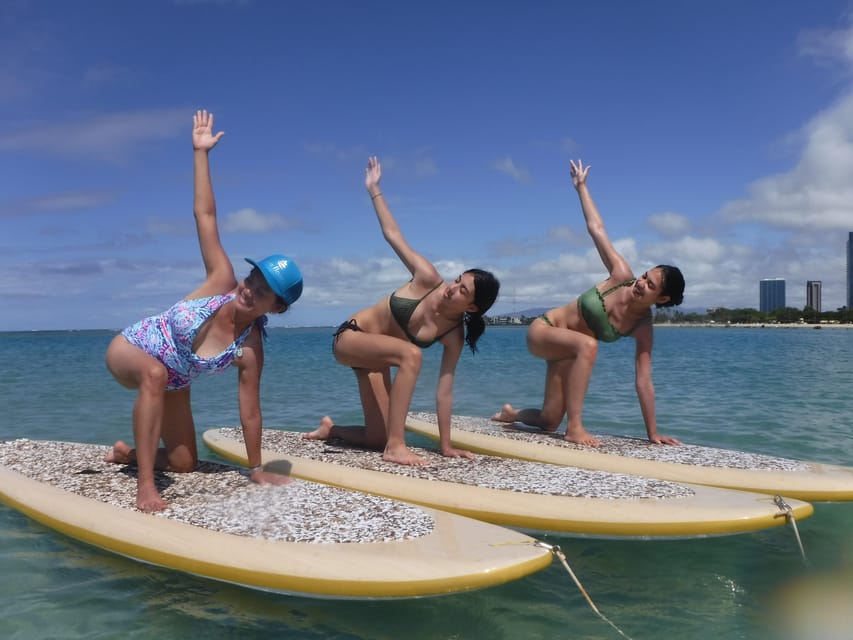
Yoga on a paddleboard is basically a balancing act with stretchy rules. What I like here is that the instruction is built around real adaptation. You’re not expected to do every pose “perfectly” on day one. The instructor helps you translate familiar yoga shapes, seated, kneeling, reclining, into a version that works on a floating board.
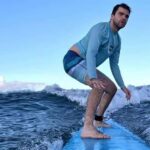
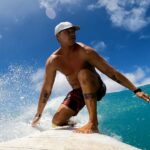
Standing and balancing poses are part of the experience, too. This is where you’ll feel your core working in a different way than on a mat. Even small movements require more control because the board responds to you and the water’s motion.
At the same time, the class is suitable for all skill levels, and that shows up in how options are offered. Beginners can focus on steadier versions of poses while more experienced yogis can add balance challenges. Instructors also keep things realistic: there’s room for fun experiments, and the vibe stays chill even if you tip over.
One review vibe that fits what the class is built to do: falls aren’t treated like mistakes. If someone goes in, it’s handled with good humor, so you don’t feel like you’re ruining the group’s experience.
If you’re looking for a workout, expect core engagement and a noticeable balance challenge. If you’re looking for a reset, expect a calmer pace early on, then a focused effort as you learn how to stabilize.
The Shallow-Water Safety Setup (Why It Feels Less Risky)
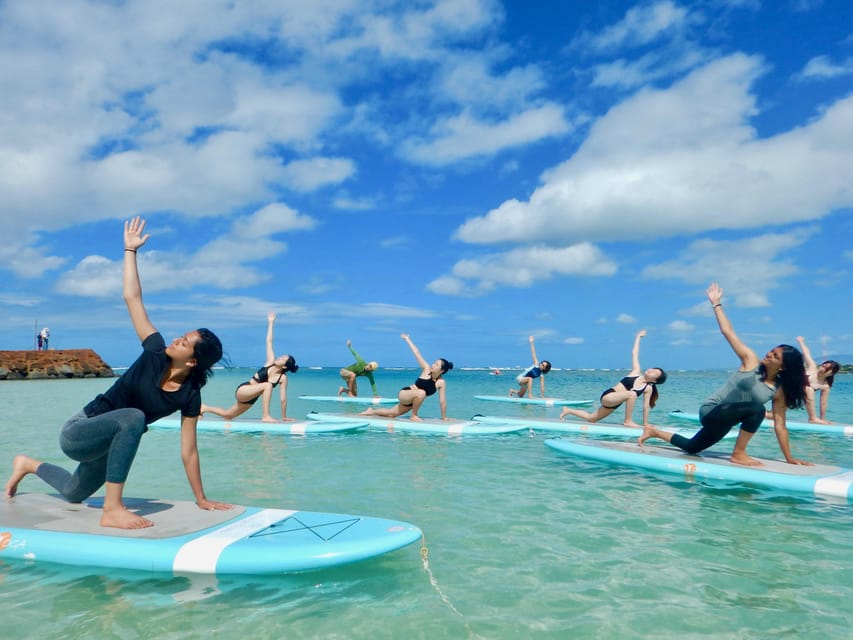
You might wonder: is paddleboard yoga scary if you’re not a confident swimmer? Here’s the straightforward answer from how the class runs. You wade out to waist-deep water, and the group stays in a safe, shallow area throughout the session. An anchor is dropped, which helps keep the board from drifting away.
That means your attention can stay on your body, hips, knees, core, breath, rather than on survival mode. It’s also why this can feel approachable even if you haven’t done stand-up paddleboarding before.
That said, you’re still on water, and water is slippery and unpredictable compared to a mat. The best way to prepare mentally is to treat this like a learning session. You’re practicing how to move with the board, not “conquering” it.
Also, the class isn’t designed for everyone physically. It isn’t suitable for pregnant women, and it’s not for children under 12. If you fall into either category, it’s better to look for a different type of yoga outing.
Price and Value: What $53 Buys You in Honolulu
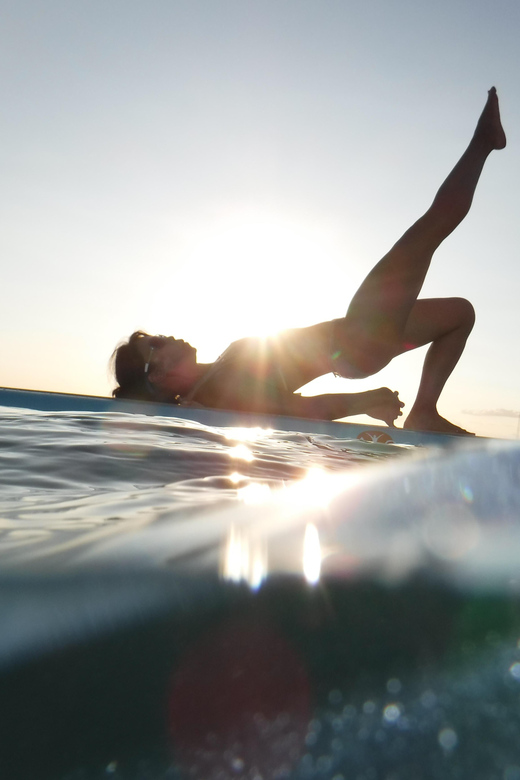
The price is $53 per person, and the value comes from what’s included, plus the uniqueness of the setting.
What’s included:
- a professional guide
- all necessary equipment
- a safe place to store belongings
What’s not included:
- a photo package ($10 per person)
- transportation to and from the activity
When you compare this to typical yoga classes, the difference is the equipment and the guided coaching in a moving environment. You’re not renting gear or figuring out how to set up your own board. You also get instruction that’s specifically about adapting yoga to water, not just doing yoga while standing somewhere.
If you’re on a tight vacation schedule, the time matters too. 75 minutes is long enough to learn and practice, but short enough to still enjoy the rest of your day in Honolulu without feeling trapped.
If you love photos and want a souvenir, the separate photo package can be worth it. If you don’t, you’re not forced into spending more to keep memories of the experience.


Practical Stuff: What to Bring and How to Make It Easier
This class asks for simple basics, but they’re the ones that make the session smoother.
Bring:
- swimwear
- towel
- sunscreen
- water
Plan to arrive ready to get wet. Even when the instructor keeps things in shallow water, you’ll be near moving waves and splash zones. A towel helps a lot for the transition after class, especially if you’re continuing exploring after.
Sun protection matters in Honolulu. Sunscreen is listed for a reason, and it’s smart even if the session starts early. Also bring water so you don’t feel wiped out after balancing work.
On the rules side, smoking and alcohol and drugs aren’t allowed.
If you have questions or need help finding the meeting spot, you can call 808-585-1917. They note they don’t receive text messages at that number, so calling is the safe bet.
A quick mindset tip
Go in expecting you’ll adjust. The board’s movement changes how you feel in poses. The class is built to coach that adjustment, but your attitude still matters. Treat it as playful training, small steps, steady breath, and a willingness to wobble.
Should You Book Honolulu SUP Yoga at Magic Island?
I’d book this if you want a Honolulu activity that’s:
- seriously different from standard beach time
- coached, with options for your level
- designed to feel safe with waist-deep water and an anchor
- ending with a relaxing savasana that actually matches the ocean setting
I’d skip it if you’re dealing with limitations that make standing and balance work difficult, or if you fall into the categories listed as not suitable (children under 12, and pregnant women). And if you’re strongly uncomfortable around water getting on you, you may find the experience more stressful than fun.
If you’re deciding between doing a quiet morning walk or doing something more active, this class is one of the better middle paths. It mixes movement and focus with real calm at the end. Small group size helps the instructor keep an eye on you, and that support is exactly what makes beginners feel steady.
If that sounds like your kind of travel day, take the slot and bring your towel. The ocean does the rest.
FAQ
How long is the Honolulu SUP yoga class?
It runs for 75 minutes.
Where do I meet the instructor and small group?
Meet at the south end of the Magic Island parking lot. Look for white and gray boards in the grass or the Yoga Floats van.
Do I need to be a strong swimmer?
No. You wade out to waist-deep water and the board is anchored, so the class stays shallow.
What’s included in the price?
The price includes a professional guide, all necessary equipment, and a safe place to store belongings.
What is not included?
Transportation isn’t included. A photo package is available for $10 per person and is not included in the base price.
What should I bring with me?
Bring swimwear, a towel, sunscreen, and water.
Is the class suitable for beginners?
Yes. The class is stated to be suitable for all skill levels, and the instructor offers options as you go.
Is this class appropriate for children or pregnancy?
It is not suitable for children under 12 and it is not suitable for pregnant women.
What’s the cancellation and pay-later situation?
You can cancel up to 24 hours in advance for a full refund. There’s also a reserve now & pay later option.