REVIEW · OAHU
Oahu: High Ropes Adventure, Climbing, & Rappel Experience
Book on GetYourGuide →Operated by Coral Crater Adventure Park · Bookable on GetYourGuide
You get hooked fast on ropes and heights. This Oahu high-ropes session at Coral Crater pairs a 60-foot Adventure Tower with an 18-element challenge course built to push your body and your balance. I especially like that you get real instruction from an English-speaking host, plus safety gear right from the start. Another thing I like: it is not just walking around, this is hands-on climbing, abseiling, and even a freefall moment for people who want a true adrenaline hit. One drawback to plan for: it is physical, and the height and weight rules are strict, so if you are not able to support your own body weight, you may find it too tough.
If you want a mix of workout and thrill, Coral Crater is a strong bet. The course takes you through rope elements where you are working your grip, core, and coordination while staying clipped in. You’ll also get a chance to show off on the climbing wall with different difficulty levels, which makes it more than one single stunt. The main consideration for most people is logistics: Coral Crater is about a 40-minute drive from Waikīkī with light traffic, but afternoon weekday traffic can push it over an hour, and there is no hotel pickup.
In This Review
- Key Points Before You Go
- Coral Crater’s Adventure Tower: The Height That Changes Everything
- The High Ropes Challenge Course: 18 Obstacles, Real Balance Work
- Climb and Abseil: How the Safety Setup Helps You Push Without Free-Falling Until Later
- 50-Foot Freefall: The Adrenaline Peak
- Climbing Wall Time: Ninja Moves and Adjustable Difficulty
- The 90-Minute Rhythm: Why Time Matters Here
- Price and Value: Is $104 Worth It?
- Getting to Coral Crater From Waikīkī Without Losing Your Day
- What to Bring (and What to Leave Out)
- The Rules That Affect Whether You’ll Get In
- Who This High Ropes Adventure Fits Best
- Should You Book This High Ropes Session?
- FAQ
- How tall is the Adventure Tower and how high is the freefall?
- How long is the experience?
- What’s included in the price?
- What should I bring, and what shoes are required?
- What are the height requirements to do the course?
- What are the weight limits?
- Does the activity run rain or shine?
Key Points Before You Go
- 60-foot Adventure Tower: build confidence high up before the bigger moves
- 18 challenge elements on the high ropes course: steady progress, not one long grind
- 50-foot freefall option: the most intense moment of the whole session
- Instructor-led safety and coaching: you get tips for rope work and climbing form
- Strict height and weight requirements: check them early so you do not waste your booking
Coral Crater’s Adventure Tower: The Height That Changes Everything
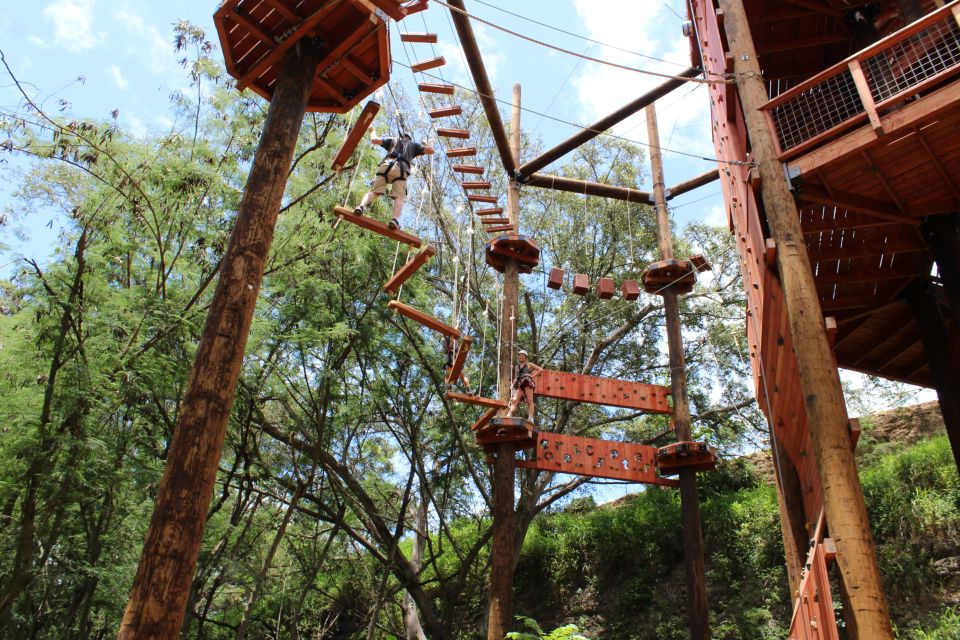
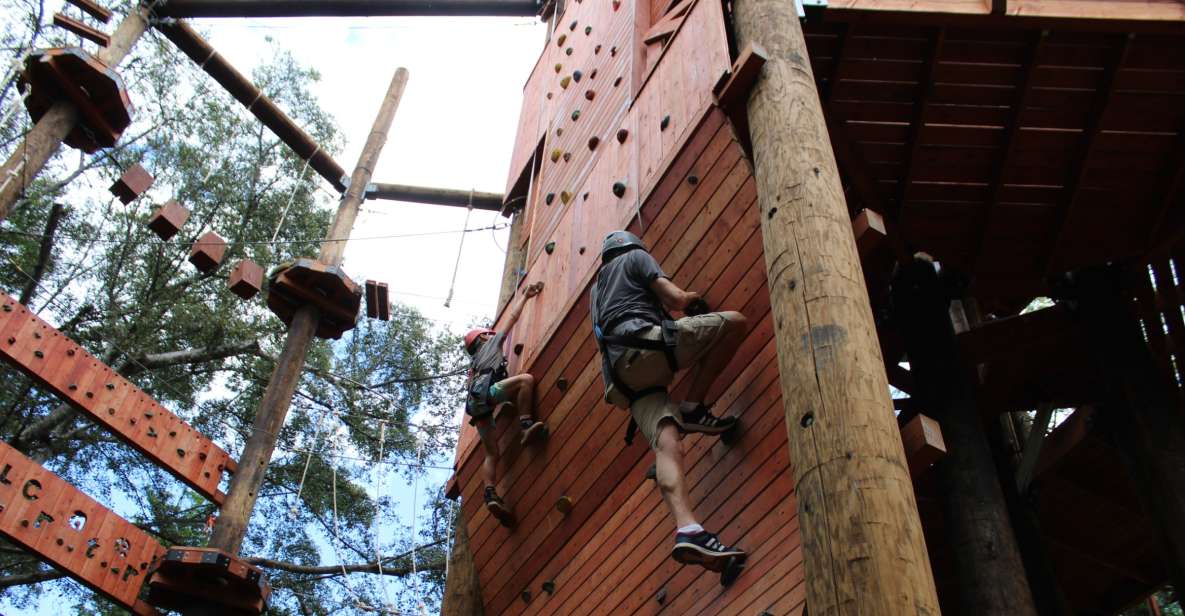
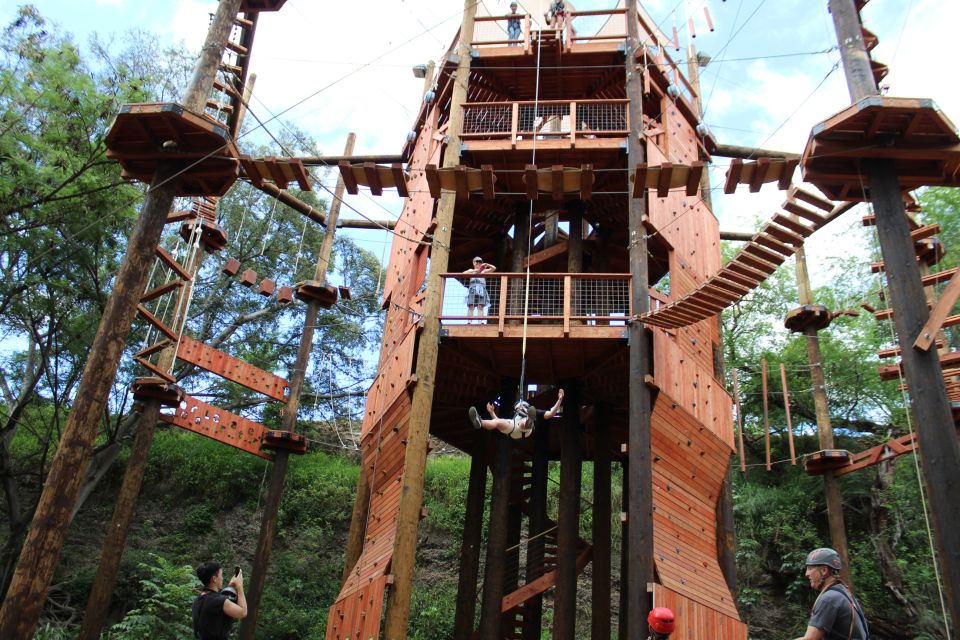
The first thing that sets this activity apart is scale. You are working around a 60-foot Adventure Tower, and that height does something mental before it does anything physical. Even if you are comfortable climbing, you have to stay calm, keep your focus on the next handhold or foot placement, and trust the safety setup.
The tower experience is built for variety. Instead of repeating one move, you go through a sequence that includes climbing and controlled rope work, and it leads into bigger thrills later. If you like earning your adrenaline, this is the right shape of challenge: you do not just launch yourself right away, you build into it.
There is also a practical side. A high tower setup forces you to slow down your thinking. That’s why the instructor coaching matters. You will get pointers to help rope you in and get you going, which can make the difference between feeling overwhelmed and feeling like you have a plan.
You can also read our reviews of more tours and experiences in Oahu.
The High Ropes Challenge Course: 18 Obstacles, Real Balance Work
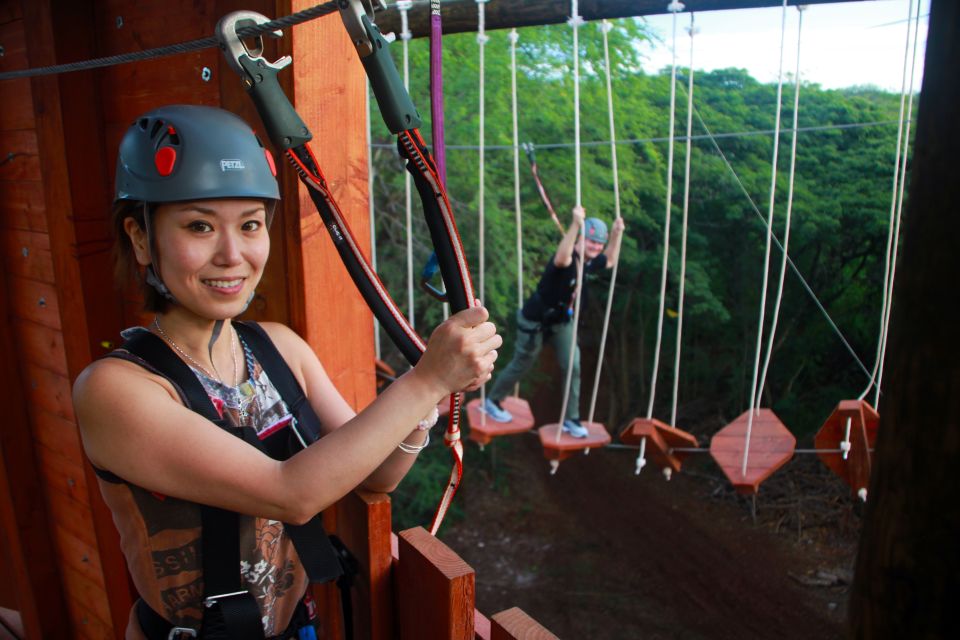
The core of the session is the high ropes course with 18 challenge elements. This is where you feel the most “workout,” because you are using your grip, legs, and core to keep your body stable while moving through rope structures. The course is designed as obstacle-by-obstacle progress, so you are not stuck with one single technical problem for the whole 90 minutes.
You can expect a mix of rope navigation that includes climbing and abseiling. Abseiling especially changes your perspective, you are lowering yourself under control rather than just pulling up. That takes patience. If you tend to rush, you might feel tense until someone shows you the key technique and timing.
One of the best things about this format is that it is not only about raw strength. Balance, decision-making, and body control matter just as much. If you have done hiking with lots of stairs, you already have part of the skill set, but ropes add a new layer.
And yes, it takes place rain or shine. So if you come on a humid, wet, or breezy day, expect everything to feel slightly different underfoot and in your hands. Wear clothing that lets your shoulders move freely and shoes that grip well.
Climb and Abseil: How the Safety Setup Helps You Push Without Free-Falling Until Later
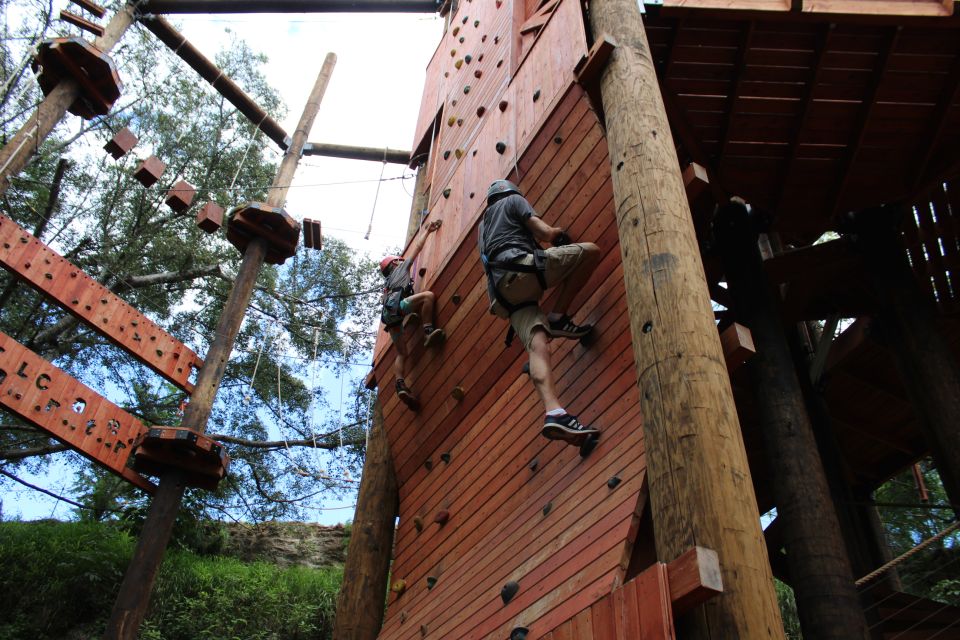
This is not a “show up and figure it out alone” style activity. Your session includes an instructor and safety gear, and that setup is what allows you to attempt harder moves. You will also be weighed at check-in before each tour. That is important because the park has firm limits, and they apply before you gear up.
Here’s what this means for you: the coaching is part safety and part technique. When someone points out how to move your hands, where to place your feet, and how to keep your balance, you stop guessing. That turns a scary height into a series of manageable steps.
The course is not described as easy, and I think it is smart to treat it that way. If you cannot hold your own body weight with your arms and legs, the experience will likely feel frustrating instead of fun. On the flip side, if you can climb a few flights of stairs without losing your rhythm, you may be surprised how quickly your body adapts once you get clipped in and start moving.
50-Foot Freefall: The Adrenaline Peak
The highlight that most people talk about is the 50-foot freefall. This is the moment where your brain goes very quiet and your body does the reacting. Even if you are a thrill seeker, freefall is a unique kind of intensity. It is not just about height, it is about the sudden shift in motion.
Why it works in this course: by the time you reach the freefall, you have already spent time on the ropes, already learned how your equipment feels, and already adjusted to being high off the ground. That preparation makes the freefall feel like the culmination instead of a random leap.
If you are nervous about it, do not ignore that feeling. Treat it as useful information. Talk with your instructor during briefing, listen carefully, and focus on what you must do right at the moment it starts. People who do well usually follow instructions closely and do not fight the process.
Climbing Wall Time: Ninja Moves and Adjustable Difficulty
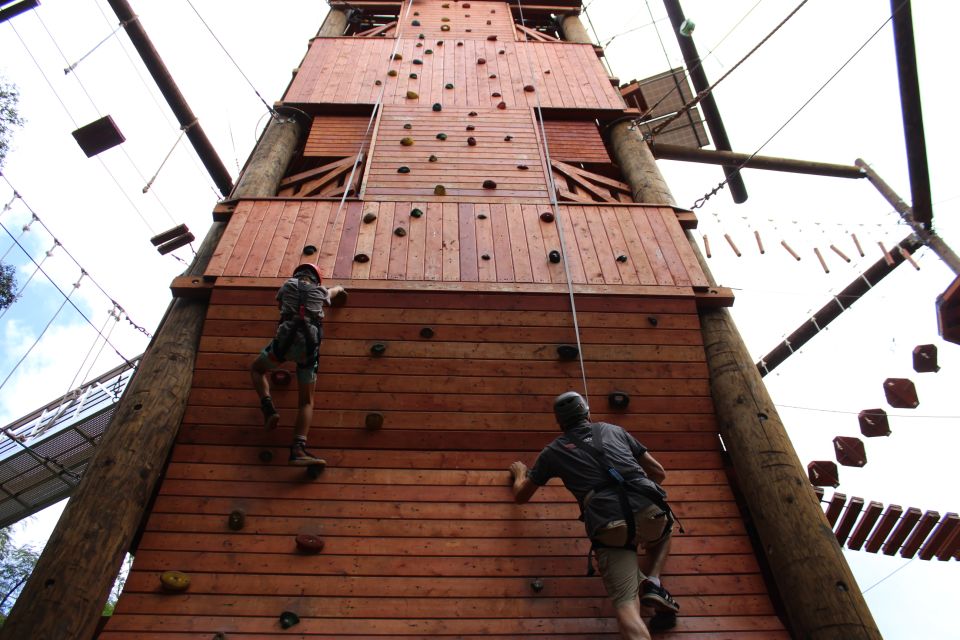
Between rope elements and the tower moments, you also get the climbing wall component. The idea is simple: show your “ninja skills” and see how fast you can reach the top. It sounds playful, but the wall is still a workout, different routes mean different grips, holds, and body angles.
The key advantage of the wall is choice in difficulty. You can improve by trying harder levels as you gain confidence. That makes it a good fit even if your strength varies across different tasks. If you are weaker on one rope element, the wall might be where you shine.
I also like the way this balances the session. You get the vertical thrill of ropes and towers, but you also get a more straightforward climbing challenge where you can focus on technique and reach rather than complex navigation.


The 90-Minute Rhythm: Why Time Matters Here
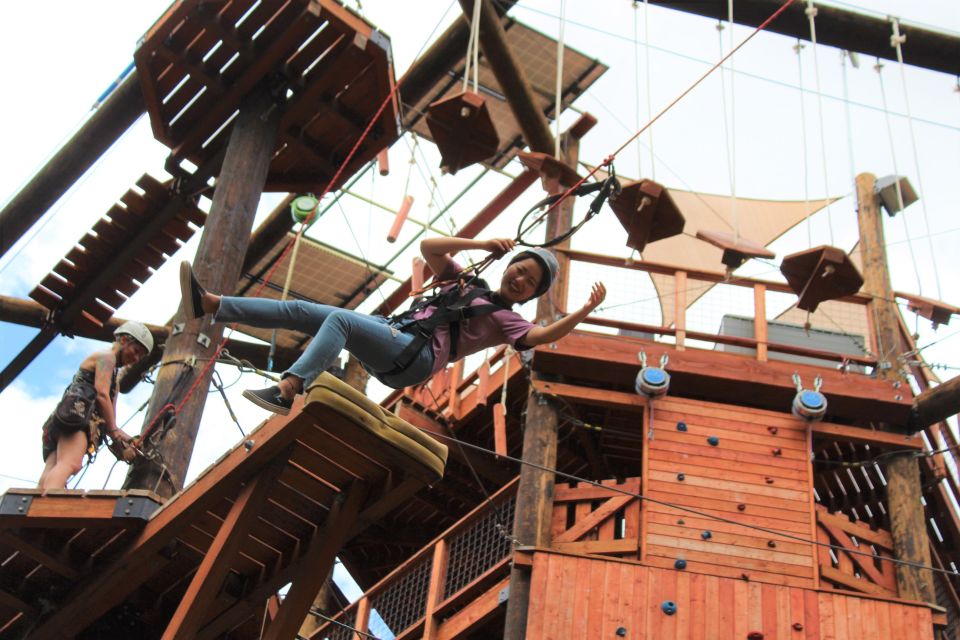
This experience lasts 90 minutes, which is long enough to feel like you did something, but short enough to keep adrenaline from turning into exhaustion. The practical result is pacing. You will likely move through multiple segments, get coached, and take on a sequence of obstacles without a lot of downtime.
For planning, think about your energy like this: you want to arrive feeling ready to work, not already tired from the drive. If you are tempted to squeeze it in on a day you have tons planned, I’d rethink that. It is not the kind of activity where you can coast.
Also remember: no food or drinks are included. So if you skip a meal beforehand, you may feel it quickly when your body starts using muscles in a new way. You do not need a fancy meal, just something that sits well and gives you steady energy.
Price and Value: Is $104 Worth It?
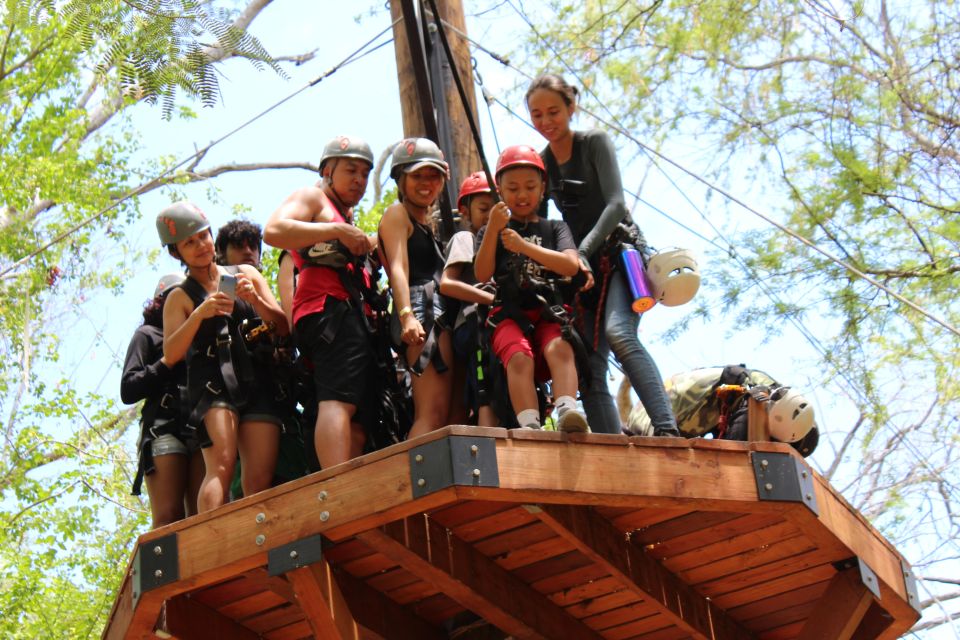
At $104 per person for a 90-minute session, this is not a budget add-on. But it can be good value if you care about real physical challenge plus guided safety. You are paying for more than access to a platform, you are paying for an instructor, safety gear, and a structured set of high-intensity activities.
Here’s how I judge value on a ropes course like this:
- You get multiple big-ticket moments (tower elements, a course with 18 challenge elements, and 50-foot freefall)
- You get coaching instead of guessing
- You do not need to bring specialized gear
If your goal is a calm nature walk or a relaxed scenic stop, then no, this price will feel heavy. If your goal is a workout that also delivers a true thrill, this price can make sense.
The biggest value tip is to match your expectations to your body. If you are physically able and you want heights, this is likely to feel worth it quickly.
Getting to Coral Crater From Waikīkī Without Losing Your Day
Coral Crater is about a 40-minute drive from Waikīkī with no traffic. The catch is timing: afternoon weekday traffic can push it to over an hour, so you should check conditions ahead of time.
If you have a car, you can follow a straightforward route:
- Take H1 West
- Drive from I-H-201 W and I-H-1 W toward Makakilo
- Take exit 2 from I-H-1 W toward Makakilo/Kapolei/Kalaeloa
- Pass Kapolei High School on your left
- Turn left on Roosevelt Ave
- Next right is Midway St, and Coral Crater’s parking lot is on the corner
What matters most: plan extra buffer time. Ropes courses run on tight scheduling because everyone has to check in, get weighed, and get geared up. Arrive late and you risk missing your window.
What to Bring (and What to Leave Out)
The park is clear about footwear. Closed-toe shoes are required, and open-toed shoes are not allowed. You’ll also want comfortable, grippy sports shoes and clothes that let you move your arms freely.
Bring:
- Passport or ID card
- Comfortable shoes and clothes
- Sports shoes
- Closed-toe shoes
Also good to know: the park is stroller accessible, and service animals are allowed. Still, the activity itself has limits, so stroller access mainly helps you get around the site comfortably.
The Rules That Affect Whether You’ll Get In
Read these early. They are strict, and they impact your ability to participate.
Weight requirement: between 40 lbs and 275 lbs (124 kg). You’ll be weighed during check-in before each tour. If you do not meet the requirement, you will not be permitted and there is no refund or reschedule offered.
Height requirement: you must be 4’6” to navigate the course independently. Participants shorter than 4’6” are encouraged to participate if they are at least 6 years old, but they will require an adult participant to lead them through the course or hiring one of the guides to help perform safety tasks.
Not suitable for: children under 6, pregnant women, people with back problems, people with mobility impairments, and people with heart problems. The upper weight limit also aligns with these restrictions.
If you’re unsure where you fit, check your measurements first rather than guessing. That little step saves a lot of stress.
Who This High Ropes Adventure Fits Best
This is best for thrill seekers who want adrenaline and an actual workout. If you like climbing, ropes, and controlled challenges, you’ll likely enjoy the mix here: high tower moments, a rope course with 18 obstacles, and then the big peak with 50-foot freefall.
It also suits people who enjoy learning. The instructor coaching matters, and you’re given tips to get you going with rope work and climbing technique. If you are the type who likes clear instructions, you’ll probably feel more confident faster.
If you want a gentle activity, or you have medical limits like back or heart problems, this may not be the right choice. Even if the setting is fun, the physical demands are real.
Should You Book This High Ropes Session?
Book it if you want a guided, structured challenge with big height moments and a clear payoff at the top. The best part of the experience is the combination: hands-on rope obstacles, real coaching, and the kind of thrill you remember on the flight home, especially the 50-foot freefall.
Skip it or think twice if you cannot comfortably handle your own body weight, you fall outside the height or weight ranges, or you have health conditions listed as not suitable. Also take the drive seriously, plan timing so you arrive ready, not rushed.
FAQ
How tall is the Adventure Tower and how high is the freefall?
The Adventure Tower measures 60 feet. The freefall jump is from a 50-foot height.
How long is the experience?
The experience lasts 90 minutes.
What’s included in the price?
You get an instructor and safety gear.
What should I bring, and what shoes are required?
Bring your passport or ID, comfortable clothes, and closed-toe shoes. Open-toed shoes are not allowed.
What are the height requirements to do the course?
Participants must be 4’6” to navigate the course independently. Shorter participants (at least 6 years old) can still participate with an adult participant leading them or with guides helping perform safety tasks.
What are the weight limits?
Participants must weigh between 40 lbs and 275 lbs. Everyone is weighed during check-in, and if you do not meet the requirement, you will not be permitted.
Does the activity run rain or shine?
Yes, the activity takes place rain or shine.