REVIEW · OAHU
Oahu: Waikiki BYOB Sunset Cruise
Book on GetYourGuide →Operated by Iruka Hawaii Dolphin · Bookable on GetYourGuide
Mere two hours, but it hits the sweet spot. You get a classic Waikiki coast sunset cruise vibe with the practical twist of BYOB, so you can control what you’re sipping while watching Diamond Head (Lē‘ahi) slide into the horizon. The crew also adds local context and music, which turns the ride into more than just sitting on a boat.
I especially like how this trip is built for sea-life spotting, turtles early on, and when conditions line up, whales close enough to pay attention to. The one real consideration is that it runs rain or shine, and you can’t bring glass bottles or other glass items, so plan your drinks with that rule in mind.
In This Review
- Key Highlights You Should Care About
- How the Waikiki BYOB Sunset Cruise Works (and why 2 hours fits)
- Getting Onboard: Meeting at Kewalo Basin Harbor slip F-16
- What You’ll See: Waikiki Coastline and Diamond Head (Lē‘ahi) from the water
- Wildlife Chances You Can Plan For: turtles, dolphins, and whales
- The Crew Experience: music, narration, and the Hawaiian start-to-the-sea feeling
- BYOB Rules That Keep Your Sunset Smooth (no glass bottles)
- Tuesday Night Special: sunset plus guided meditation and herbal tea
- Price and Value: what $70 buys, and when BYOB makes it worth it
- Practical Tips Before You Go (so the sunset feels easy)
- Should You Book This Waikiki BYOB Sunset Cruise?
- FAQ
- Where is the meeting point for the Waikiki BYOB sunset cruise?
- How long is the cruise?
- Can I bring my own food and drinks?
- Is alcohol allowed?
- Are glass bottles allowed?
- Does the cruise run in bad weather?
- What wildlife might I see?
- Is it suitable for wheelchair users or people with mobility impairments?
Key Highlights You Should Care About
- BYOB with a no-glass rule keeps the experience flexible while keeping things safer onboard
- Sunset + Diamond Head (Lē‘ahi) from the water gives you the views without the shoreline crowd pressure
- Whale season timing (Nov–Mar) matters for your expectations and photo odds
- Crew-led spotting and music helps you know where to look and when to stay quiet
- Tuesday night meditation option adds a calm, grounded twist to the same sunset setting
How the Waikiki BYOB Sunset Cruise Works (and why 2 hours fits)
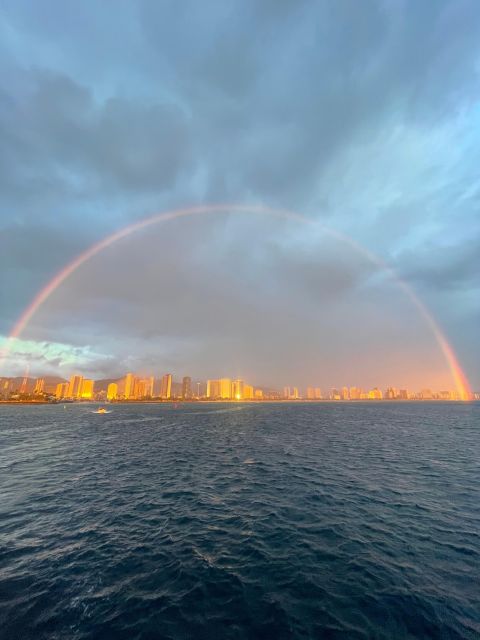
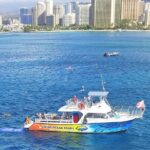
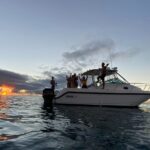
This is a 2-hour sunset cruise that leaves you enough time for dinner plans afterward, but long enough to feel the change from late afternoon to real dusk. The format is simple: you check in, board Island Princess, cruise along Waikiki’s coast, and ride the light as the horizon cools. Along the way, you’ll listen to music and hear commentary from the crew, which helps you connect the scenery to what’s happening out on the water.
The value here is that you’re not paying “all-inclusive” prices for food and drinks you might not even like. The tour includes the cruise and music, but you bring your own food and drinks. That turns the $70 per person into something more like: you’re paying for the boat time, the guide presence, and the views, not for a packaged meal.
One small but important mindset shift: this isn’t a guided nature class where you’ll always get every animal. It’s an open-ocean experience with the potential for turtles, dolphins, and whales, and the crew’s job is to maximize your chances while respecting the rhythm of the sea.
You can also read our reviews of more boat tours in Oahu
Getting Onboard: Meeting at Kewalo Basin Harbor slip F-16
The biggest “logistics” win is that the meeting point is very specific, which reduces stress right before sunset. Check in at Kewalo Basin Harbor slip F-16 at the blue Iruka Hawaii Dolphin kiosk. Look for the blue kiosk between the 955-fish sign and Waikiki Marine Sports, across from the Dive O‘ahu bathrooms.
Give yourself extra time: the tour asks you to arrive 15 minutes early. Parking is limited, so arriving early (or getting dropped off) is the smarter move. This matters because sunset cruises run on daylight schedules, and when you’re racing the clock, you’ll spend more time worrying than enjoying the pre-boarding vibe.
Also plan for waivers. After you book, the provider sends waivers by email and you should fill them out before you arrive to keep check-in quick.
Finally, this is rain or shine. That means your best “on time” strategy is not just speed, it’s showing up ready for changing weather without needing to run around after you’ve already missed the start.
What You’ll See: Waikiki Coastline and Diamond Head (Lē‘ahi) from the water
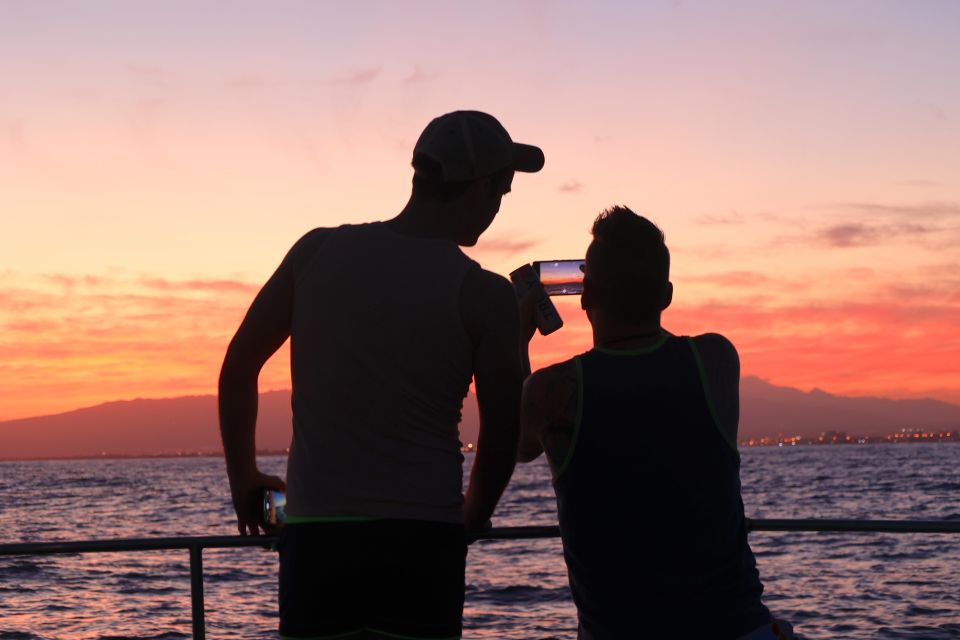
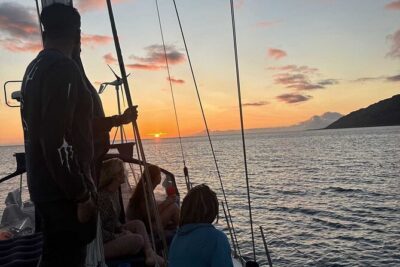
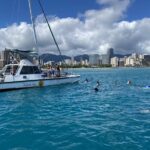
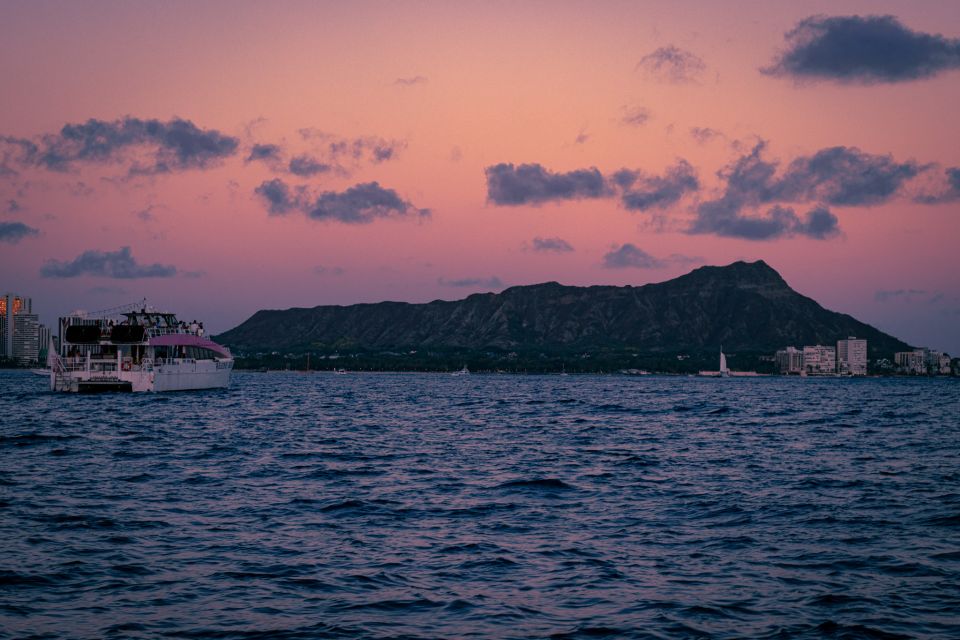
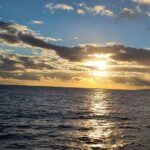
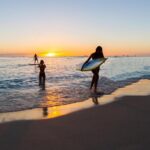
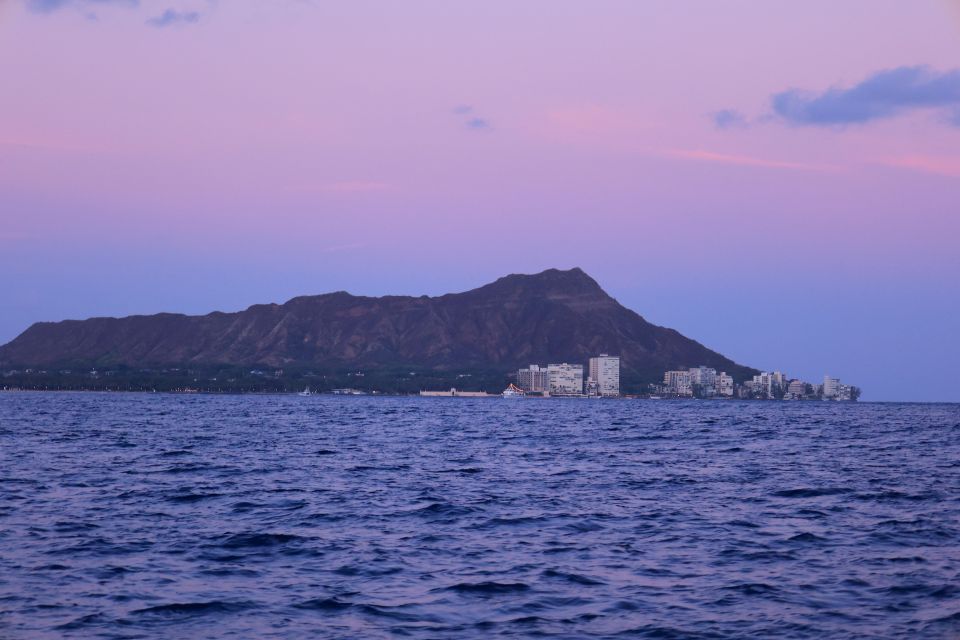
From the water, Waikiki looks different, less like a postcard strip and more like a living shoreline. As you cruise along the coast, you’re positioned for wide horizon views that are hard to recreate from land at street level. The ride is timed around sunset, so the light changes across the bay and builds toward that moment when the horizon turns gold and then softens toward dark.
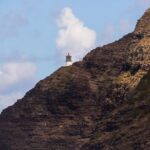
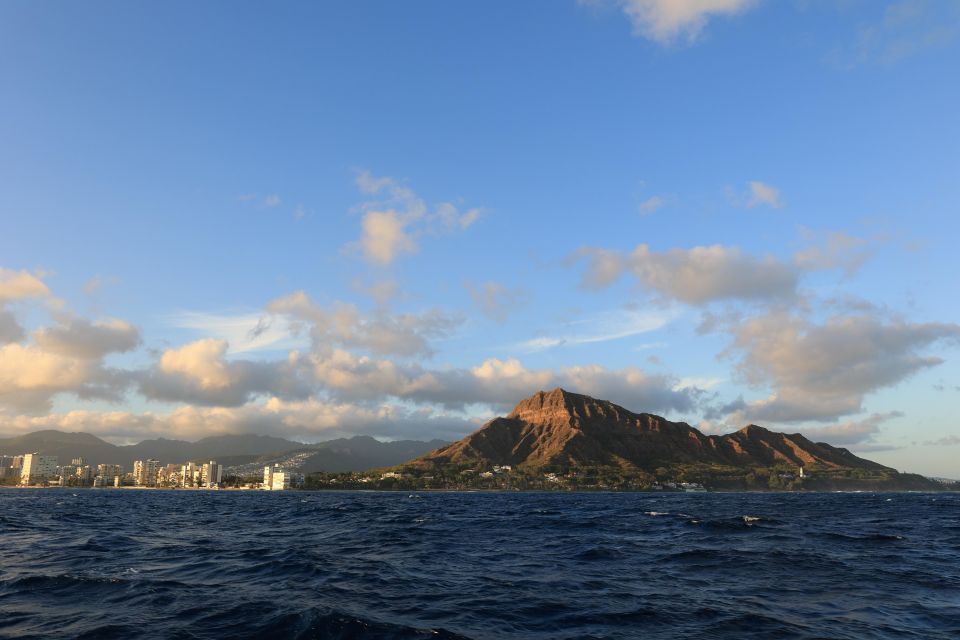
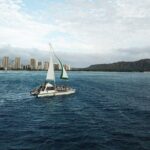
Diamond Head (Lē‘ahi) is the other visual anchor. Seeing it from the water gives you scale, suddenly you can understand why locals treat it like a landmark, not just a scenic background. The water perspective also helps you appreciate the coastline’s shape as the boat moves, so the view is never static.
The tour also includes the chance to spot sea life, and that affects how the crew may pace the cruise. If they’re working a sighting, they might slow down or adjust the boat’s position so you can see what’s happening. The goal is to make the scenery plus the spotting feel connected, not like two separate activities.
If you love photography, remember this: you’re moving. Your best photos usually come when you’re ready for the view to shift every few minutes, not when you try to “freeze” the entire scene from one angle.
Wildlife Chances You Can Plan For: turtles, dolphins, and whales
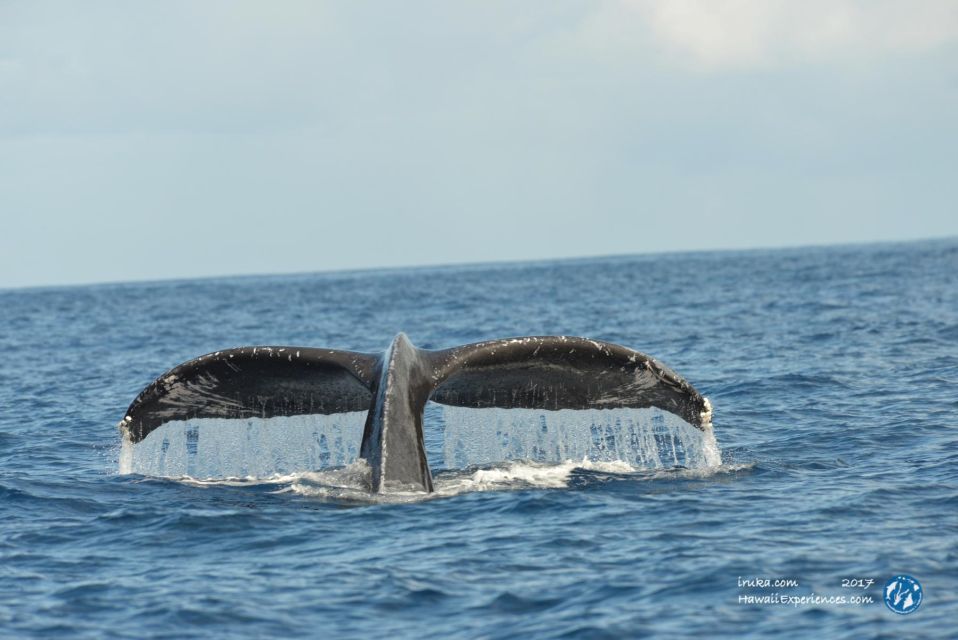
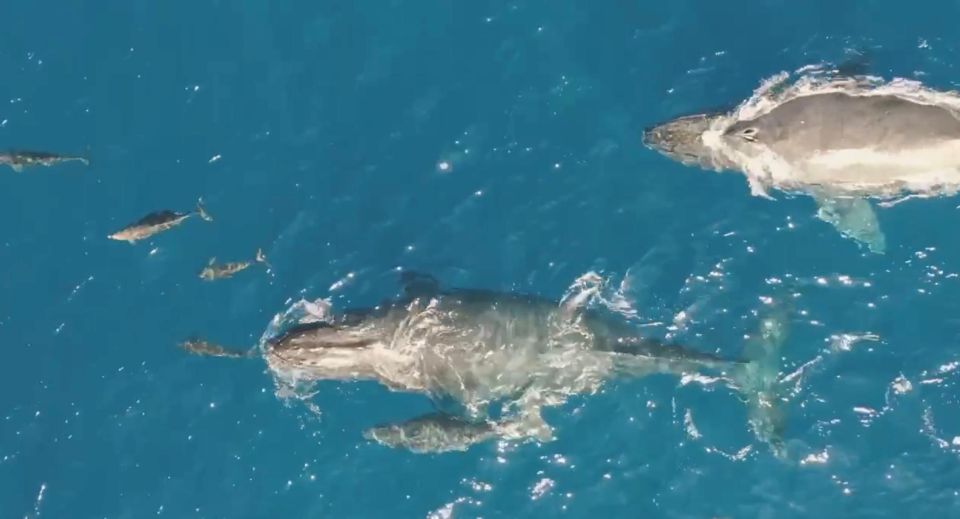
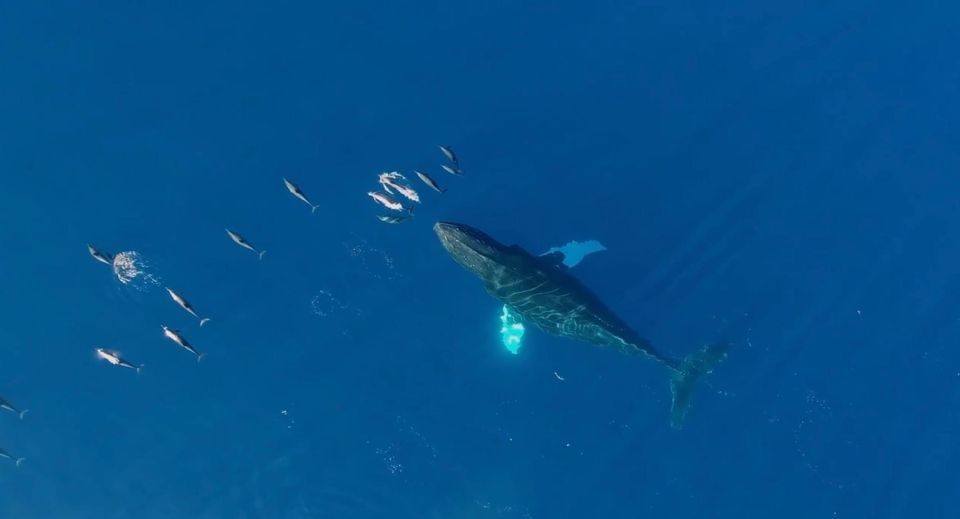
The “potential sightings” are part of the reason people choose a cruise like this. You might see turtles, dolphins, and whales, but the realistic expectation is: conditions decide how much you’ll get. The provided info also points to whale season, November through March, so if you’re traveling outside that window, whales may be less likely.
What’s useful is that this cruise isn’t only whale-focused in how it’s described. The experience also highlights the possibility of turtles and dolphins, so you’re not stuck waiting for one animal only. In practice, the crew’s guidance helps you know where to look when a sighting could be developing.
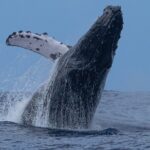
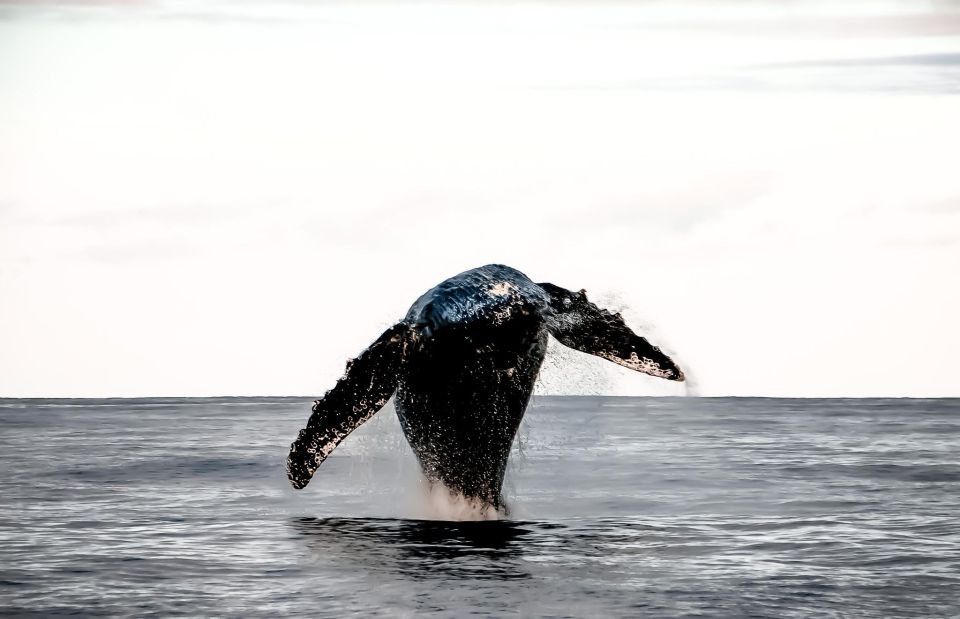
When whales are in play, the most exciting moments tend to be the brief ones: a blow, a tail flip, a calf surfacing close enough to change the whole mood on the boat. Your best “success habit” is to stay ready and listen for the crew’s cues, because the time between “nothing” and “there it is” can be short.
One more seasonal tip: if you’re aiming for whale viewing specifically, plan your dates with the November–March window in mind. It doesn’t guarantee success, but it gives you a much more realistic shot at the classic whale-and-sunset combo people hope for.
The Crew Experience: music, narration, and the Hawaiian start-to-the-sea feeling
This is one of those tours where the crew can make the difference between a pleasant ride and a memorable one. You’ll get music onboard, and you’ll also hear from the crew about the island and what to watch for in the water.
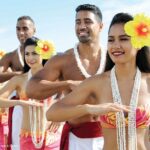
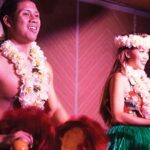
You may also notice a Hawaiian cultural moment at the start. On some sailings, the crew begins with a karakia (a song asking for permission) before heading out. That sets a respectful tone and can make the experience feel more grounded than a typical tourist cruise.
The guides you might encounter include people like Captain Nolan and Sarah, who are described as attentive and very focused on sea life and whale behavior. There are also other crew names showing up across trips, like Stephan, Sean, Nate, and Max, so the common theme is a team that talks, watches, and keeps the energy balanced between excitement and patience.
From what’s described, the crew also knows how to time the “loud attention” and the “quiet sunset attention.” When whale activity is happening, the boat feels focused. When the horizon takes over, the mood shifts so you can actually see the sunset instead of constantly scanning for the next cue.
If you want a cruise that feels like it has a plan, without being overly formal, this is the right style.
You can also read our reviews of more evening experiences in Oahu
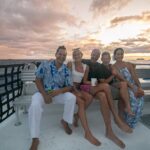
BYOB Rules That Keep Your Sunset Smooth (no glass bottles)
The BYOB part is the practical hook, and it’s also where you need to follow the rules. The tour clearly states that you should bring food and drinks, and you can bring your own alcohol with the big restriction: no glass objects. That includes glass bottles.
So when you pack your drinks, think “safe container first.” If you show up with glass, you’ll have to solve that problem at the start of your trip, which is the worst time to deal with it.
This BYOB setup usually helps in two ways. First, you can match what you drink to your preferences instead of paying tourist-drink prices. Second, you get to tailor your snacks to your needs, especially useful if you’re picky or traveling with someone who doesn’t want the standard onboard fare.
One tradeoff: because food and drinks aren’t included, you’re responsible for your own timing. Don’t assume there will be a snack stop or that you’ll be handed drinks onboard. Plan enough for the full 2-hour window, including the calm period when you might be watching whales and listening rather than snacking constantly.
Tuesday Night Special: sunset plus guided meditation and herbal tea
If your schedule has a Tuesday, the cruise has a bonus identity. On Tuesday nights, the atmosphere shifts into a guided meditation session led by a certified yoga teacher. It’s not just “quiet”, you’re actually guided through meditation, while still on the water at sunset.
Bring a towel if you want the option to lie down, or join in sitting up. After the meditation, you’ll enjoy fresh herbal tea, which adds a gentle wind-down after the active sighting period.
This Tuesday format is a smart choice if you like your vacations with variety: part wildlife adventure, part reset for your nervous system. You also get a built-in reason to stay on the boat during the transitional light, rather than treating the sunset as an “edge-of-the-day” thing you rush through.
If meditation isn’t your thing, you can still benefit from the cruise portion, views and sea life potential are still the core, but Tuesday nights are clearly designed for people who want that calmer, guided tone.
Price and Value: what $70 buys, and when BYOB makes it worth it
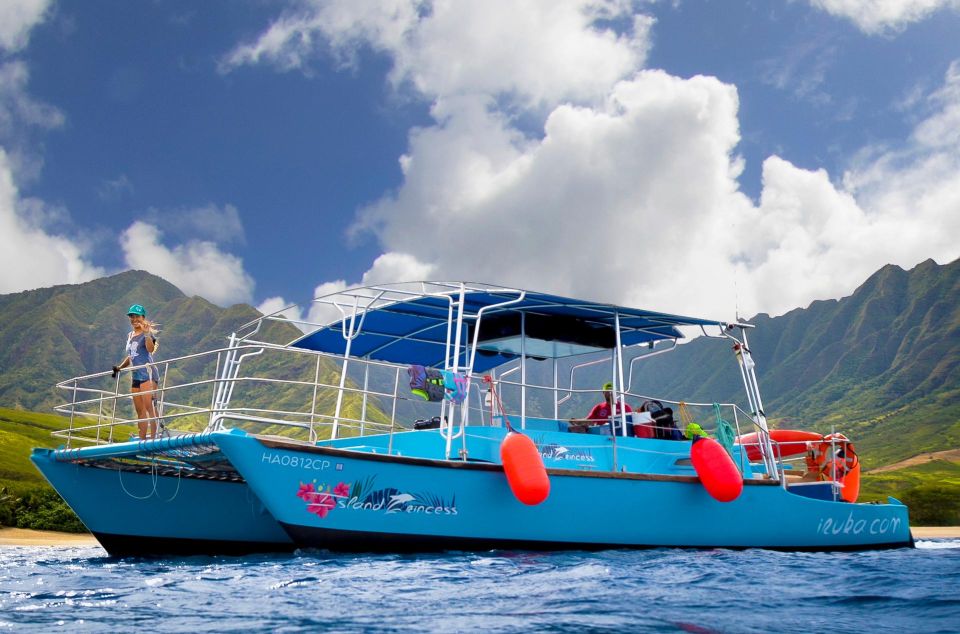
At $70 per person for a 2-hour cruise, you’re paying for the boat time, the crew, and the sunset views from open water. What makes the price feel more reasonable than many similar “cruise plus extras” deals is that food and drinks aren’t bundled into the ticket cost. BYOB means you can spend your money where you want, on drinks you like, and snacks that actually work for you.
If you already planned to drink or snack anyway, this is the value path. You can control the amount, the type, and the budget. If you plan to buy everything onboard (since nothing is included), you’ll likely spend more than you expected, so it’s best to treat this as a “bring your own and enjoy” experience from the start.
Also, this cruise includes music, and you get live guidance in English and Japanese. That live component matters because it changes how you experience the water. When the crew tells you what to watch for, like where sightings might appear, you spend less time guessing and more time actually seeing.
Who it suits best:
- People who want a straightforward Oahu sunset cruise without complicated planning
- Anyone who enjoys wildlife spotting and whale-season timing
- Couples, friends, and families looking for a relaxed activity that still feels special
Who might find it less ideal:
- Anyone with mobility impairments or wheelchair users, since it’s not suitable for wheelchair access
- People who don’t want to handle BYOB rules or who prefer fully catered tours
Practical Tips Before You Go (so the sunset feels easy)
This one is all about reducing little frictions. Start by handling the waiver paperwork ahead of time so check-in is fast. Then arrive early, 15 minutes before is the target, because parking is limited around the harbor.
Bring your own food and drinks, and stick to the no glass rule. The simplest way to avoid last-minute problems is to prepare containers that won’t create an issue onboard.
Plan for weather. The cruise happens rain or shine, so your day should have some flexibility. Since it’s a sunset cruise, you’re also dealing with changing light and conditions, so expect the vibe to shift as the sky changes.
Finally, consider your timing if whales are your main goal. If you’re in November to March, your odds for whale viewing are much more aligned with the experience as described. Outside that window, you’re still there for the sunset and possible sea-life sightings, but set your expectations accordingly.
Should You Book This Waikiki BYOB Sunset Cruise?
Book it if you want a classic Waikiki sunset experience with real flexibility. The combination of Diamond Head views, music onboard, and a crew-led search for sea life gives you a lot for the money, especially when you’re comfortable with BYOB.
Skip it (or choose carefully) if you need wheelchair access or you’re expecting a fully catered food-and-drink experience. Also, if weather sensitivity is a big issue for you, remember it runs rain or shine, so you’ll want to be fine with that reality.
If Tuesday night is on your calendar, it’s an extra reason to choose this cruise. The guided meditation plus herbal tea turns a sunset ride into something you can feel in your body, not just see in photos.
FAQ
Where is the meeting point for the Waikiki BYOB sunset cruise?
Check in at Kewalo Basin Harbor slip F-16 at the blue Iruka Hawaii Dolphin Kiosk. It’s between the 955-fish sign and Waikiki Marine Sports, across from the Dive O‘ahu bathrooms.
How long is the cruise?
The tour duration is 2 hours.
Can I bring my own food and drinks?
Yes. Food and drinks are not included, so you should bring your own.
Is alcohol allowed?
The tour is BYOB, and you can bring your own alcohol as part of the BYOB setup.
Are glass bottles allowed?
No. Glass objects are not allowed.
Does the cruise run in bad weather?
Yes. The tour takes place rain or shine.
What wildlife might I see?
You may see turtles, dolphins, and whales. Whale season is from November to March.
Is it suitable for wheelchair users or people with mobility impairments?
No. The tour is not suitable for people with mobility impairments or wheelchair users.