REVIEW · OAHU
Oahu Night Dive: Adventure for Certified Divers
Book on GetYourGuide →Operated by Dive Oahu Inc · Bookable on GetYourGuide
Night water makes Oahu feel like a different planet. I love the built-in rhythm here: you start at twilight and then move into true darkness for a second underwater session. I also really appreciate the premium gear rental that comes with two tanks plus night lighting, so you’re not scrambling to sort equipment after you arrive. The one drawback to keep in mind is that this is only for certified divers in good health, and it’s not suitable for kids under 15 or anyone pregnant or with pre-existing medical conditions.
On the boat, you get the practical stuff that matters for a smooth evening: a comfortable charter with both sun and shaded deck space, plus a restroom onboard. The guide keeps things structured with a safety briefing first, then you’ll get two guided excursions for a total of about 2 hours in the water, with a surface interval built around sunset snacks.
Below is how this experience plays out in real terms, what you’re likely to see, and how to decide if it’s worth your $248.
In This Review
- Key things to know before you go
- Night on Oahu for certified divers: what you’re really buying
- Price and value: is $248 fair for 3 hours?
- Getting to the harbor and boarding: what to expect
- The 25-minute safety briefing: why it’s worth not treating it casually
- Stop 1: twilight on Oahu’s south shore
- Surface interval: 30 minutes of snacks at sunset
- Stop 2: ocean nightlife in complete darkness
- Marine life you may encounter (and how to look without getting stressed)
- Gear rental: what’s included and what you still need to pack
- Health and limits: who this tour fits best
- How the 3-hour schedule feels in real life
- Is this worth it compared to a regular day session?
- Should you book this Oahu night underwater tour?
- FAQ
- How long is the Oahu night underwater experience?
- How much does it cost?
- Is this tour for certified divers only?
- What underwater sessions are included?
- What gear is included in the price?
- What should I bring with me?
- Where do I meet the group?
- Is parking included?
- Are there health or age restrictions?
Key things to know before you go
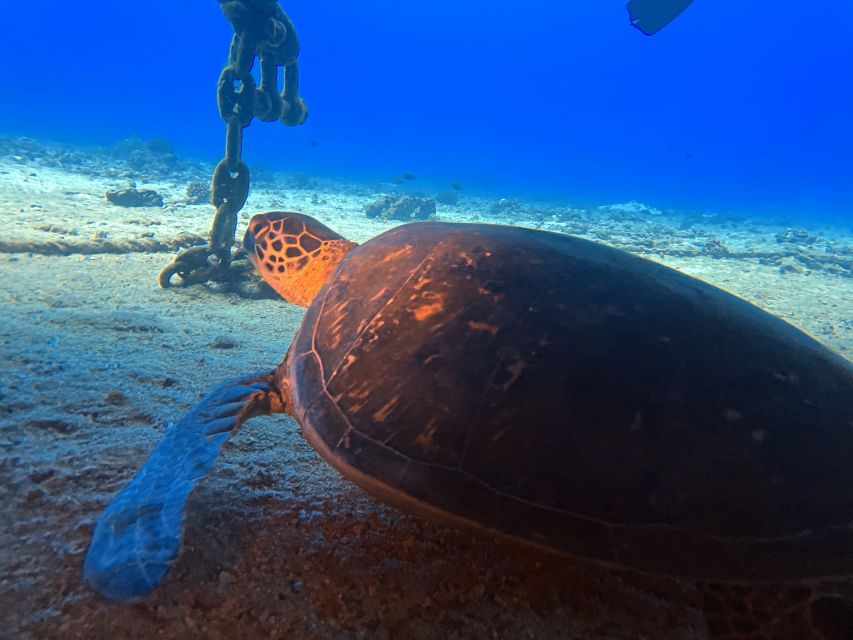
- Twilight to darkness, on purpose: the first session is calmer and transitional; the second shifts to complete darkness with lighting.
- You’re covered with real rentals: two tanks, wetsuit, weights, fins, BCD, and lights are included.
- South shore focus: the schedule is designed for Oahu’s conditions in the south-shore evening window.
- Short, guided, and structured: safety briefing, then two 1-hour guided sessions with a 30-minute reset on top.
- Marine-life hunting without guesswork: your guide points out night activity like sharks, turtles, rays, eels, and more.
- Small time commitment, big payoff: you get a full night experience in about 3 hours total.
Night on Oahu for certified divers: what you’re really buying
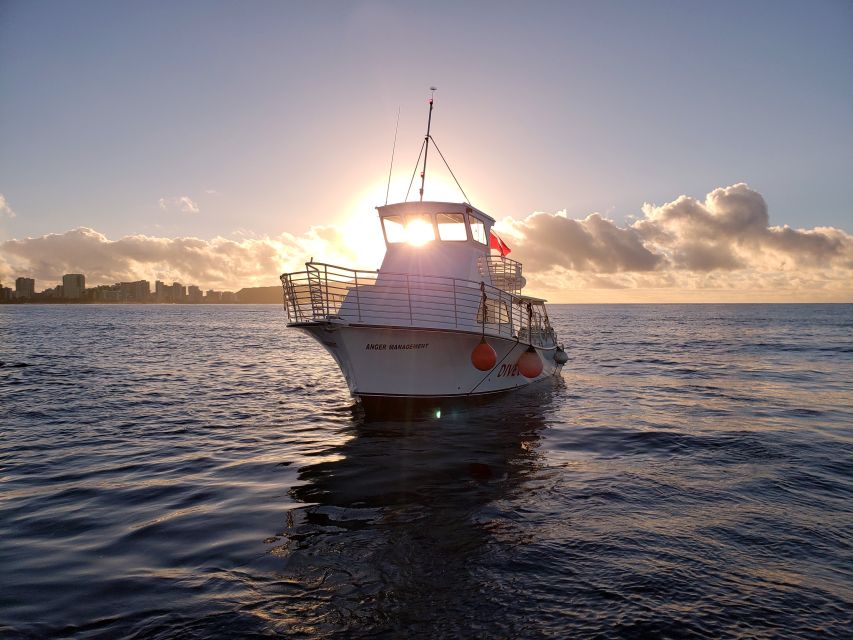
This tour is built for people who already have scuba experience and want the “night effect” without the hassle of planning everything on your own. You’re not just going out after dark, you’re going out with an intentional sequence: first twilight, then full dark.
That matters because marine life behavior changes fast around sunset. Some animals slow down, some become more active, and your visibility and lighting needs shift. The structure of two sessions separated by a surface break helps you adapt without rushing.
You also get a guided approach that’s ideal if you want to maximize what you’ll actually notice. Night underwater watching is different from daytime, and having a PADI-certified guide doing the navigation and spotting helps you see more than you might on your own.
You can also read our reviews of more evening experiences in Oahu
Price and value: is $248 fair for 3 hours?
At $248 per person, this isn’t the cheapest thing on Oahu. But you’re paying for several pieces that add up quickly when you price them separately: guided time, a proper gear rental package, and night lighting.
Here’s what that $248 effectively covers:
- A 3-hour PADI-certified guided experience
- Premier gear rental including 2 tanks
- Wetsuit, weights, fins, and BCD
- Night lighting (complimentary)
- Snacks and refreshments during the surface interval
If you’ve ever had to rent tanks, wetsuits, and dive lights separately, or worse, had to coordinate multiple vendors, this price can start to feel more reasonable. The short duration also helps value: you get a complete night plan without giving up an entire afternoon or evening.
One more thing: the overall rating is 3.6 based on 6 reviews. That’s not a massive data set, so I’d treat it as a “small sample” and use the details below to judge fit for your own comfort level.
Getting to the harbor and boarding: what to expect
Meet at the harbor, front row, slip 8, and look for the large picture of a turtle. Plan to arrive at least 30 minutes early so you can check in calmly and be ready for the safety briefing.
Parking is not included, but you’ve got options: Kewalo Basin for about $1 an hour or Ala Moana Beach Park for free. If you’re arriving from Waikiki, the free option can be a big savings, especially if you park and walk over rather than trying to fight close-in traffic.
Once onboard, the charter is set up for evening comfort. There’s a sun deck and a shaded deck, plus a restroom. That’s a quiet quality-of-life detail that really helps when you’re traveling at night and you’re waiting between your first and second session.
The 25-minute safety briefing: why it’s worth not treating it casually
You’ll start with a safety briefing that runs about 25 minutes. This is your chance to confirm your comfort with gear setup, night procedures, and basic expectations for the guide’s plan.
Even if you’re already certified, night work has extra variables: you’ll rely more on your light, you’ll be aware of different animal behavior, and buoyancy awareness matters because visual reference points are different.
Use this time well. If there’s anything you haven’t practiced recently, mask clearing, buoyancy control, or how you handle your light, ask during the briefing rather than waiting until you’re already underwater.
Stop 1: twilight on Oahu’s south shore
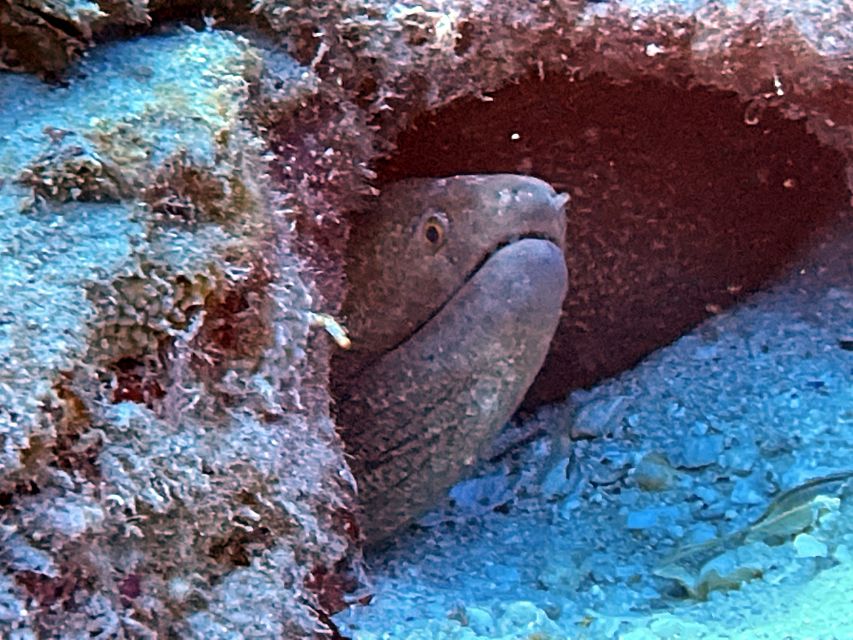
Your first session happens at twilight, guided by a PADI-certified instructor. This is a great choice for two reasons: you still get some natural ambient light fading in stages, and you’re likely to see marine life shifting from daytime patterns into night behavior.
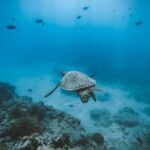
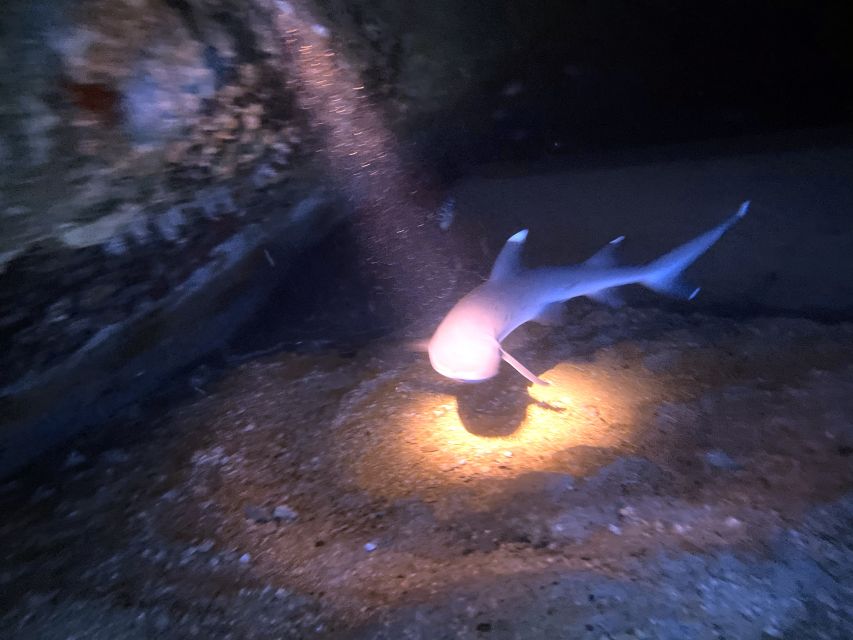
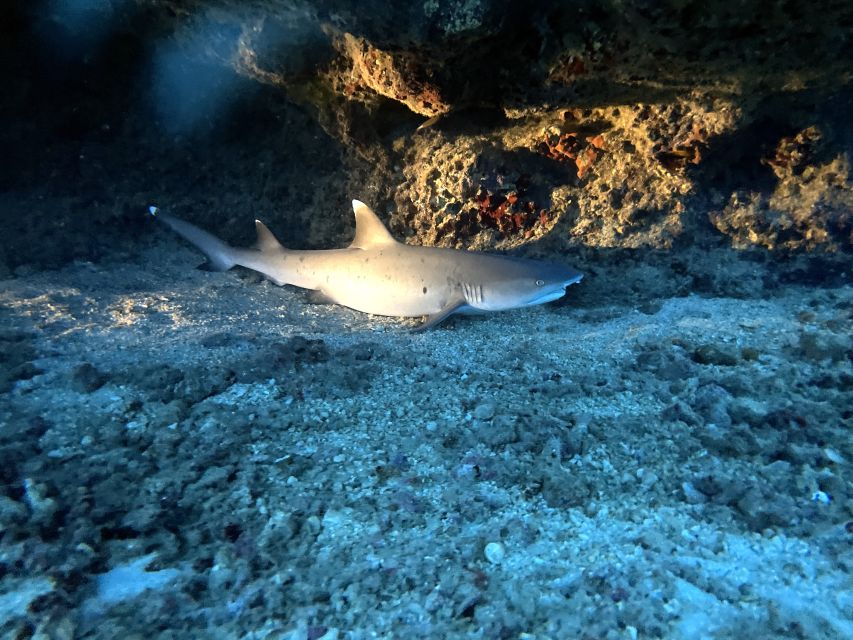
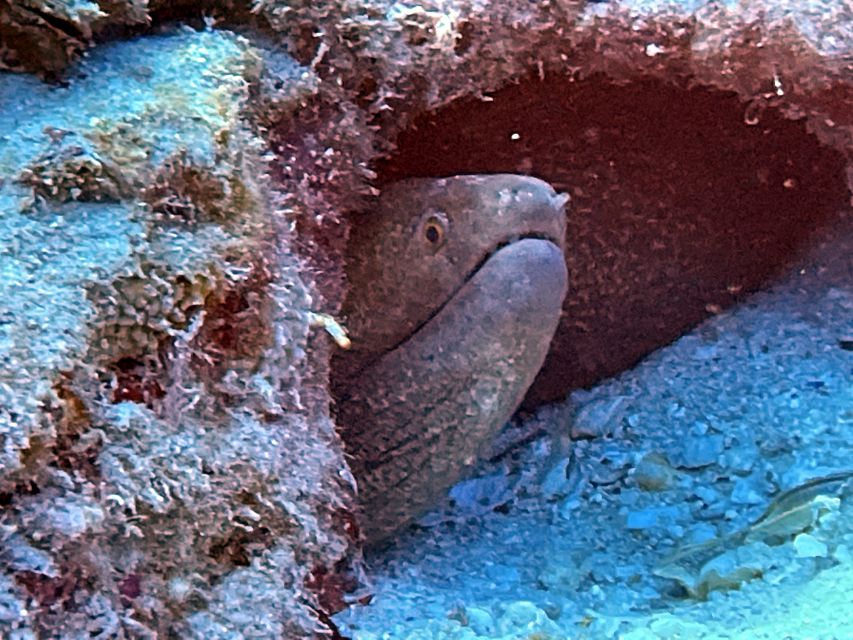
You’ll explore reefs during their transition period, exactly when some animals begin resting and others start showing up. The guide will help you look for likely sightings, including sharks, turtles, eels, rays, octopus, starfish, crabs, and Hawaiian endemic fish.
Twilight also tends to make your viewing easier for many people. Even though it’s still night-adjacent, your eyes usually adjust faster than they do once you’re in complete dark. You’ll also have that first session to settle into the gear and your buoyancy before the second, darker stop.
Practical tip: keep your expectations flexible. With night conditions, your “must-see” list can change, but twilight gives you a strong chance to see a mix rather than only one kind of animal activity.
Surface interval: 30 minutes of snacks at sunset
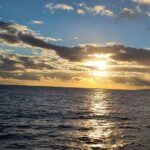
After your first underwater session, you’ll take a break for about 30 minutes at the surface while you watch the sunset.
This is not just downtime. It’s when you can refuel (snacks and refreshments are included), reset your gear, and catch your breath before the second session. If you tend to get a little chilly after time in a wetsuit, this break can be your comfort checkpoint.
Also, it’s the natural transition between “light-assisted viewing” and “light-dependent viewing.” Use it to mentally prepare for what darkness changes, your attention shifts to movement patterns and the beam of your light.
Stop 2: ocean nightlife in complete darkness
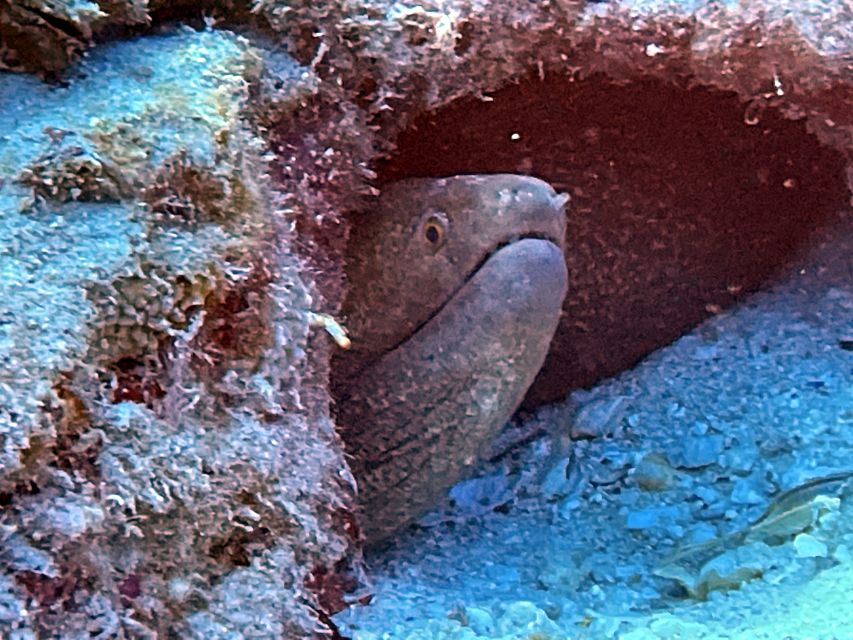
Your second guided session is where the tour earns its name. You go into the dark with complimentary night lighting, guided so you can experience how the ocean feels when most visual cues disappear.
The guide’s job here is huge: you’re not just trying to look around, you’re following a plan and learning how to spot what’s active in low light. That’s why the lighting being included is more than a convenience. It shapes what you’ll actually be able to see.
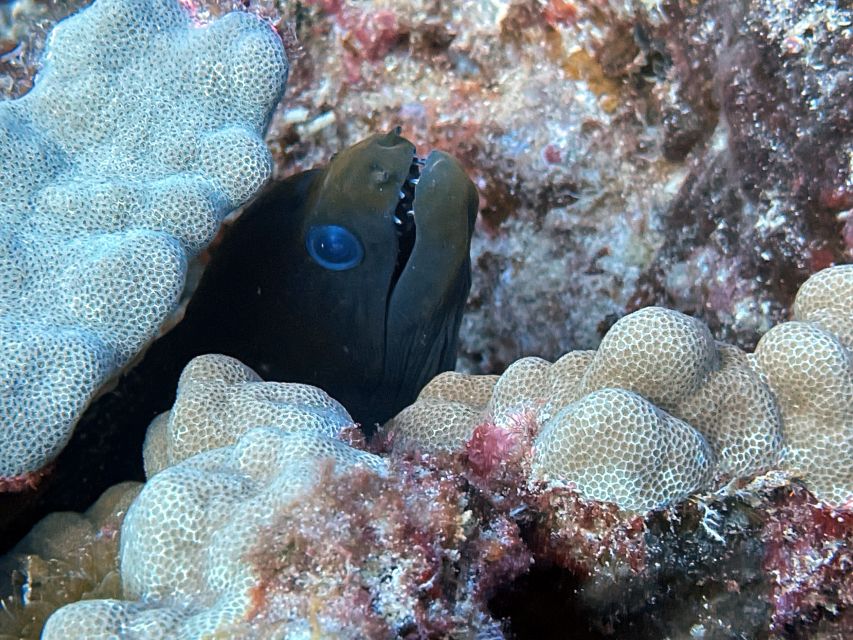
This session is likely to bring different behavior than the first one. You might see rays gliding where they were less noticeable earlier, turtles feeding or moving between spots, and eels and nocturnal species doing their evening rounds. The tour also notes the possibility of dolphin sightings.
I like that the second session is guided rather than “go play in the dark.” Night underwater can be magical, but it can also become stressful if you feel disconnected from the plan.
Marine life you may encounter (and how to look without getting stressed)
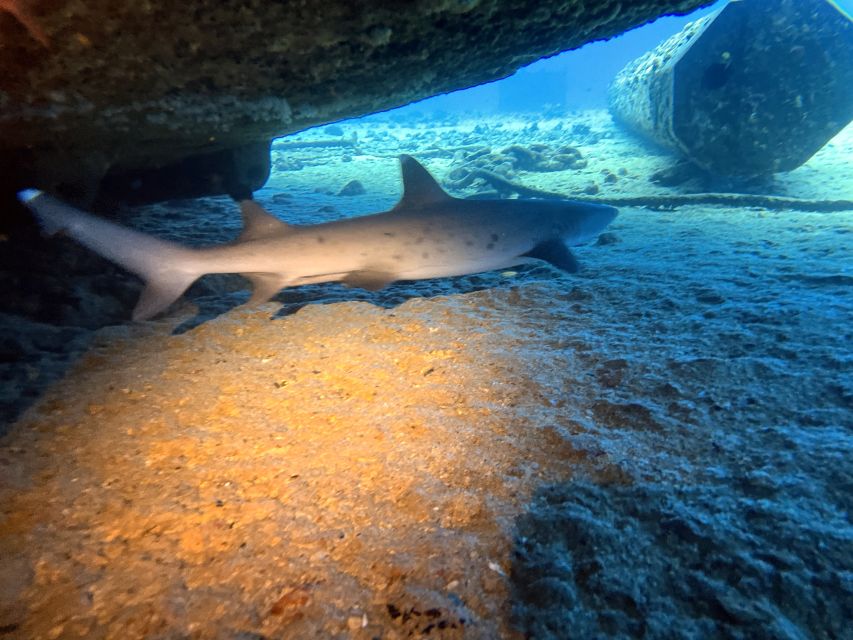
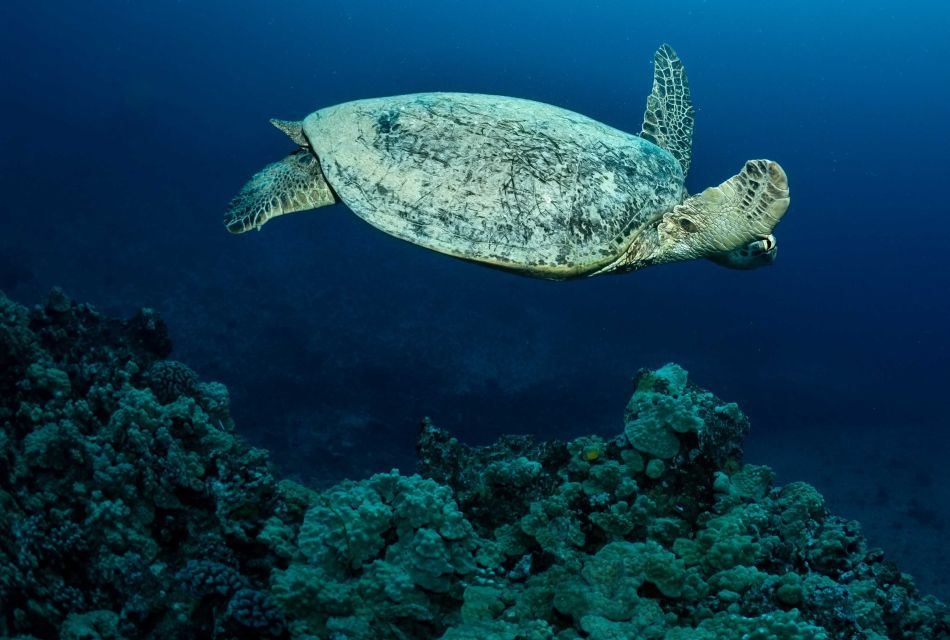
The tour includes a strong list of possible sightings: sharks, turtles, eels, rays, octopus, starfish, crabs, Hawaiian endemic fish, and dolphins, plus other marine life.
What you should take from that list is not a promise, it’s a signal that the sites are known for night activity. The best way to maximize your chances is to watch patterns, not just search.
Here’s a simple mindset that helps:
- Move slowly and keep your buoyancy steady so you don’t scare off skittish animals.
- Use your light in controlled sweeps rather than blasting everything constantly.
- Pause when you see movement. Many nighttime animals are easier to spot when you stop “looking” and start observing.
If you’re the type who gets excited and then forgets to breathe slowly, night conditions can amplify that. Keep it calm. Your eyes adjust, your light beam steadies, and your best sightings often happen during still moments.
Gear rental: what’s included and what you still need to pack
One of the biggest practical wins here is what you don’t have to arrange. Gear rental includes:
- 2 tanks
- night lighting
- wetsuit
- weights
- fins
- BCD
To me, this is a value point because the night-light piece is easy to overlook when you’re planning. And having the full BCD setup plus weights handled for you reduces decision fatigue.
What you should bring:
- Swimwear
- Towel
- Proof of your diving certification (you must show it on the boat)
Since you’re on a boat and changing quickly, a towel matters more than you might think. Pack something you’ll actually be comfortable using right after you’re done in the water.
Health and limits: who this tour fits best
This experience is not suitable for everyone. You must be a certified diver and be able to swim and be in good health. You must also avoid flying within 24 hours after your underwater session.
It’s not suitable for:
- Children under 15
- Pregnant women
- People with pre-existing medical conditions
If you’re on the fence, the key is straightforward: night underwater activities demand calm control and physical readiness. If your doctor has ever advised caution for anything that affects breathing, heart rate, or pressure changes, this is not the time to “test it.”
How the 3-hour schedule feels in real life
On paper, 3 hours looks compact. In practice, that tight window is a good thing because the logistics are focused.
You’ll use your time efficiently:
- Arrive early, check in, and get ready
- Safety briefing (~25 minutes)
- First guided underwater session (about 1 hour)
- Surface interval with snacks and sunset (about 30 minutes)
- Second guided underwater session (about 1 hour)
- Head back
If you like activities with clear structure, rather than an all-day “maybe we’ll see something”, this schedule is satisfying. You also get two separate “chapters” to the night, which makes it feel longer than it is.
Is this worth it compared to a regular day session?
If you’ve only done daytime underwater trips, a night session can feel like a different world. Not because the location changes, but because behavior changes. Animals that hide or rest in the day can show up at night, and the reef can look totally different once your light becomes the main tool.
This tour also gives you a stronger variety of conditions than a single-night-only outing, since twilight comes first and darkness comes second. That’s a smart way to handle the learning curve of night visibility.
If you already love daytime reefs, you’ll probably love this. If you’re new to night conditions, even if you’re certified, having the guide and the lights included makes a big difference.
Should you book this Oahu night underwater tour?
I’d book it if:
- You’re already a certified diver and comfortable with night underwater conditions.
- You want a guided plan with two sessions rather than a single, shorter outing.
- You want premium gear handled for you, including tanks and night lighting, plus a comfortable charter with a restroom.
- You’re excited by the possibility of sharks, turtles, rays, eels, and other reef night life.
I would skip it if:
- You’re not able to meet the certification/health requirements.
- You get easily stressed in low-visibility settings and you’d rather do something more gradual.
- You’re looking for a family-friendly or beginner-friendly option. This one isn’t that.
Bottom line: for the right certified diver, this is a focused, well-supported way to experience Oahu’s south shore after dark, without having to solve the hardest parts of night planning.
FAQ
How long is the Oahu night underwater experience?
The total duration is about 3 hours.
How much does it cost?
It costs $248 per person.
Is this tour for certified divers only?
Yes. You must be a certified diver and show proof of your certification when you board.
What underwater sessions are included?
You get two guided underwater sessions: one at twilight and a second in complete darkness.
What gear is included in the price?
Premier gear rental is included, including 2 tanks, night lighting, wetsuit, weights, fins, and BCD.
What should I bring with me?
Bring swimwear, a towel, and your diving certification proof.
Where do I meet the group?
Meet at the harbor, front row, slip 8, and look for the large picture of the turtle. Arrive at least 30 minutes early.
Is parking included?
No. Parking is available at Kewalo Basin for $1 an hour or at Ala Moana Beach Park for free.
Are there health or age restrictions?
Yes. This isn’t suitable for children under 15, pregnant women, or people with pre-existing medical conditions. You must be able to swim and be in good health, and you should not fly within 24 hours after your underwater session.