REVIEW · OAHU
Oahu: Ko Olina Resort Polynesian Star Voyage
Book on GetYourGuide →Operated by Stars Above Hawaii · Bookable on GetYourGuide
Laser-guided skies are a lot more fun. This Ko Olina beach stargazing show pairs Polynesian star navigation with a powerful laser tour, then backs it up with telescope views that make the sky feel close and readable, especially the Moon’s crater shadows. One thing to plan for: parking can add a fee if you choose valet at the Four Seasons.
You’ll get a 1-hour, all-ages friendly astronomy lesson on Hawaiian ocean air, where a professional astronomer guides the show and connects star names, star lines, and sky stories to what NASA is tracking today. If you’re worried that stargazing will be vague, this is built to keep you oriented, laser pointer first, then giant telescope views.
The experience also has a couple of practical quirks. The show is staged in a specific Four Seasons setup (either an ocean lawn or a rooftop tennis court), and the last show of the evening is adults only, so timing matters if you’re traveling with kids.
In This Review
- Key Highlights You Should Know
- Where the Show Happens at Ko Olina’s Four Seasons (and Why It Matters)
- Parking Reality Check
- The “Polynesian Star Voyage” Part: More Than Just Pretty Lights
- Laser Tour + Big Telescopes: What You’ll Actually See
- A Note on the Guide
- The 1-Hour Flow: Sunset, Direction, and Telescope Time
- Price and Value: Is $49 Worth It?
- Logistics That Matter: Location, Timing, and Rules
- Timing Tips That Actually Help
- What’s Not Allowed
- Accessibility Note (Read This Carefully)
- Who This Tour Fits Best (and Who Might Skip It)
- Should You Book the Ko Olina Polynesian Star Voyage?
- FAQ
- Where does the Polynesian Star Voyage show take place?
- How long is the tour?
- What will I see during the stargazing?
- What’s included in the price?
- What languages is the live guide available in?
- Are there any rules I should know before going?
Key Highlights You Should Know
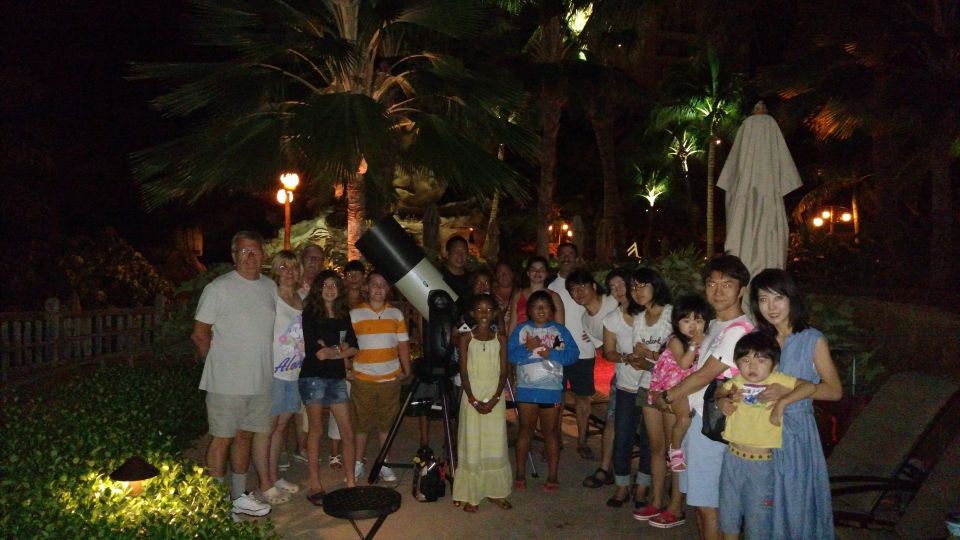
- Polynesian star navigation plus Hawaiian star lines: you learn how people used the sky for wayfinding, not just what’s up there.
- Laser guidance you can actually follow: the tour traces constellations and prominent stars so you’re not hunting blindly.
- Telescope views that target famous objects: Moon craters and shadows, plus planets and star clusters.
- Color views of Jupiter (season dependent): in the right time of year, you can also see Jupiter’s clouds in color.
- Photos after the show: at least some participants report getting images from the experience.
- A professional astronomer runs the program: not just a casual walk-and-look.
Where the Show Happens at Ko Olina’s Four Seasons (and Why It Matters)
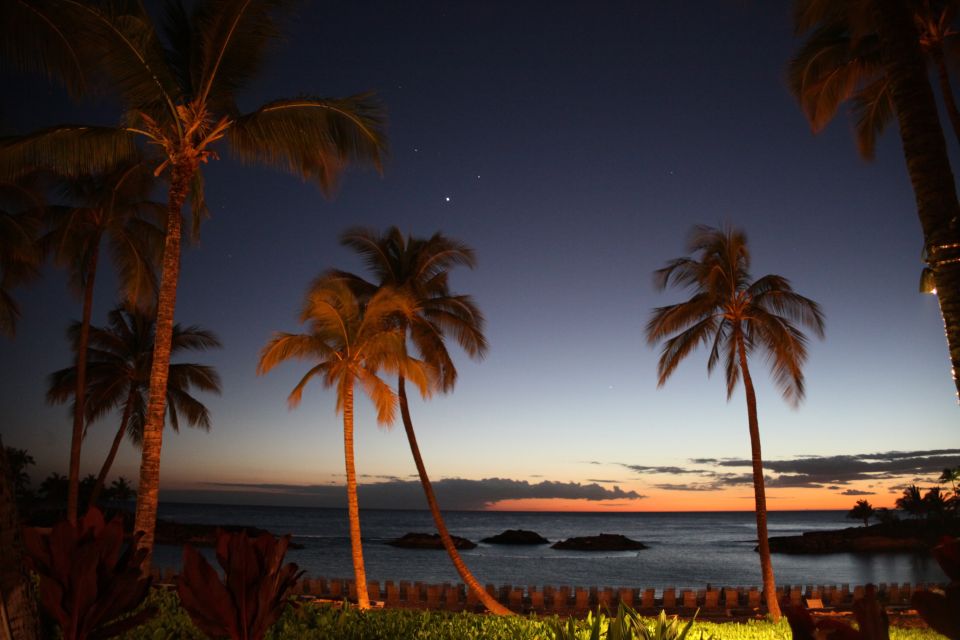
The star show takes place at the Four Seasons Oahu Resort & Spa in Ko Olina, not at a generic outdoor viewing spot. Expect the show to be staged at either the hotel’s private Ocean Lawn or on the hotel’s Spa Tennis Court area, which is on a rooftop (above the hotel parking lot).
Why I think this matters for your experience: the venue shape affects how you see the sky and how the guide directs your attention. With a setup like this, you’re not relying on random sight lines. You’re guided to the targets the telescopes are showing, and that makes the whole evening feel more like a live lesson than a scattershot stargazing session.
You’ll also get directions by text on the day of the event, including parking instructions. So when you book, plan to keep your phone handy and readable after dark.
You can also read our reviews of more tours and experiences in Oahu.


Parking Reality Check
Parking in resort areas can be expensive if you don’t choose carefully. Here’s what’s explicitly offered:
- Hotel parking by valet costs $20 (a 50% discount from $40).
- There is free parking at the lagoons (before sundown) and at the shopping center across the street from the hotel.
- You can also find multiple parking options around the resort that range from free to discounted valet.
A small detail that can save money: the text message directions include which option to use. If you’d rather not gamble after dark, follow that message closely.
Also note: the last show per evening is adults only, and other groups won’t be allowed into that final session. If you’re traveling with kids, pick an earlier showing.
The “Polynesian Star Voyage” Part: More Than Just Pretty Lights
This tour’s signature move is connecting what’s in the sky with how cultures read it. You learn about Polynesian star navigation, including the Hawaiian star line that is up that evening, and you’ll also learn star names in Hawaiian.
At the same time, the show leans into modern space knowledge. The program references the latest NASA-style information on space and astronomy discoveries, then blends that with cultural mythologies of constellations from around the world.
Why this combination works: stargazing often becomes a list of names. This format tries to give you a framework. When you know the star line and what constellations mean to a navigation tradition, you stop seeing the sky as random points of light.
I also like that the tour doesn’t treat this as a side topic. It’s central to what you’re learning as the laser traces the sky.
Laser Tour + Big Telescopes: What You’ll Actually See
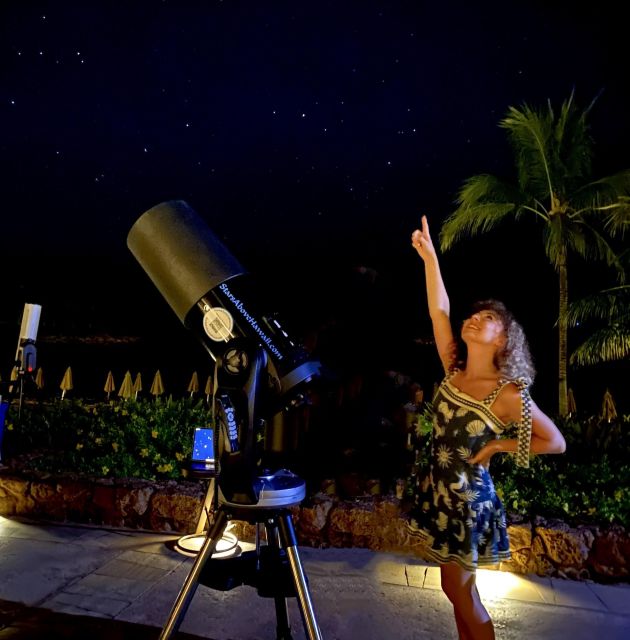
This is the part that makes the experience feel worth the ticket price. The show uses a powerful laser and large telescopes, and the targets are the kind that people recognize and want to understand.
Here are the highlights the program is designed to show you, depending on timing and conditions:
- The Moon’s craters, including shadows inside the craters shown in color
- Jupiter’s clouds in color, plus Jupiter’s moons (when it’s the right time of year)
- Saturn, including its rings and moons
- Planets across the solar system, from Mercury to Pluto (visibility depends on the evening)
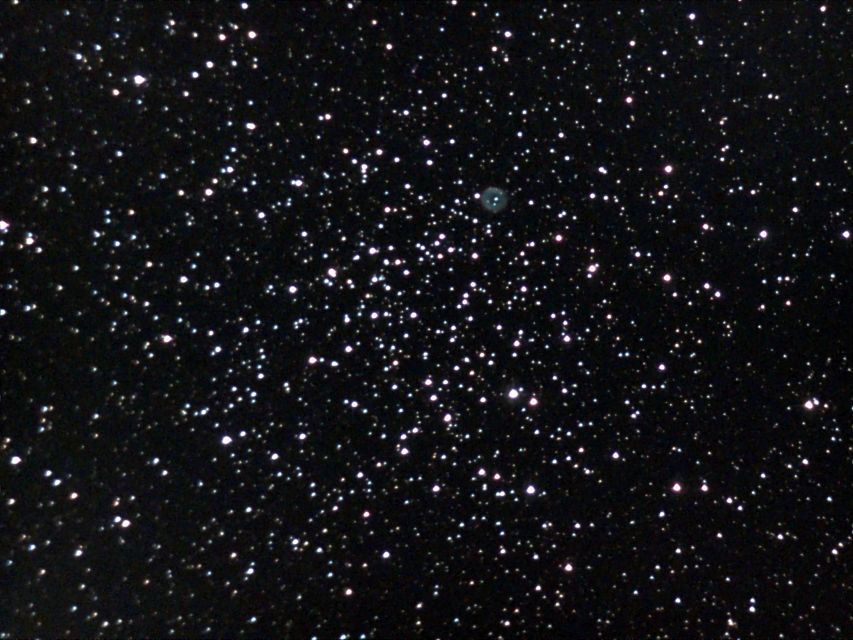
- Star clusters, including hundreds of stars in certain clusters
- Multi-colored star systems
- Stellar nurseries and newborn baby stars
- Stars that have blown out and died (as part of how stars evolve)
- Passing comets when they’re in view
A useful way to think about it: the show isn’t just trying to list everything the sky can do. It’s selecting eye-catching objects and explaining what you’re seeing, then letting you trace constellations and prominent stars.
One thing I’d keep realistic expectations about: not every object will be visible every night. Jupiter’s colored clouds are explicitly seasonal. So if you go in expecting the exact same set of highlights every time, you might feel a little let down. If you go in ready for a strong “best-of” view of what’s up that evening, it lands better.
A Note on the Guide
This is led by a professional astronomer tour guide. One booking comment mentioned an astronomer named Anthony, and the overall tone was that the guide was informative and friendly, exactly what you want when someone is translating the sky into something you can follow.



The 1-Hour Flow: Sunset, Direction, and Telescope Time
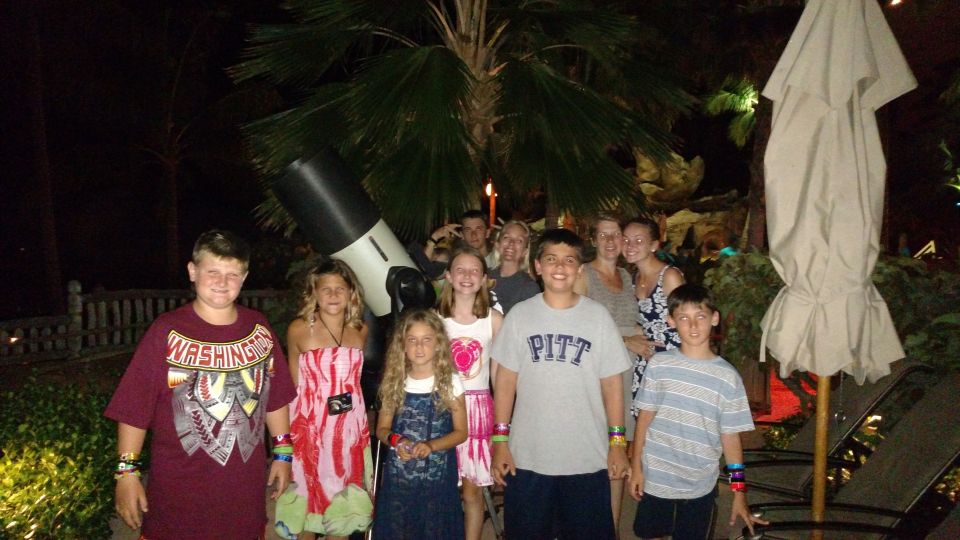
Your experience is scheduled for about 1 hour, and the overall feel is structured: sightseeing and sunset lead into the guided class and star-touring.
The pacing is built around two modes:
1) You learn with the laser, constellations, prominent stars, and the Hawaiian star line for that night.
2) You switch to telescope viewing, the show emphasizes seeing detail, like crater shadows on the Moon, and planet features like Saturn’s rings.
Even if you’ve never pointed at the sky and known what you were looking at, the laser guidance helps you “get your bearings fast.” You’re not forced to guess. The guide points, explains, then connects it back to star lines and myth stories.
There’s also sightseeing on the way (the description includes scenic views), and the tour is framed as enjoyable for a romantic night or a family activity. That mix of romance and education is a good fit if you want something more memorable than a standard dinner-and-a-view.
Price and Value: Is $49 Worth It?

At $49 per person for a 1-hour stargazing show, the value depends on what you want out of the evening.
Here’s the value logic that makes sense:
- You get a professional astronomer guide.
- You get access to the largest telescope in Hawaii for private use as part of the activity.
- The show isn’t just looking; it’s a guided tour with star lines, constellations, and cultural mythologies.
- Some participants report receiving photos after the show, which adds a real souvenir value beyond the memory of what you saw.
So the pricing feels more like you’re paying for an organized astronomy lesson with top-tier viewing equipment, not just a casual beach activity.
Where you should be careful: your total cost may creep upward if you choose valet parking at the hotel ($20). If you want to keep the budget tight, use the free options mentioned (lagoons before sundown, or the shopping center across the street) and let the text directions steer you.
Logistics That Matter: Location, Timing, and Rules
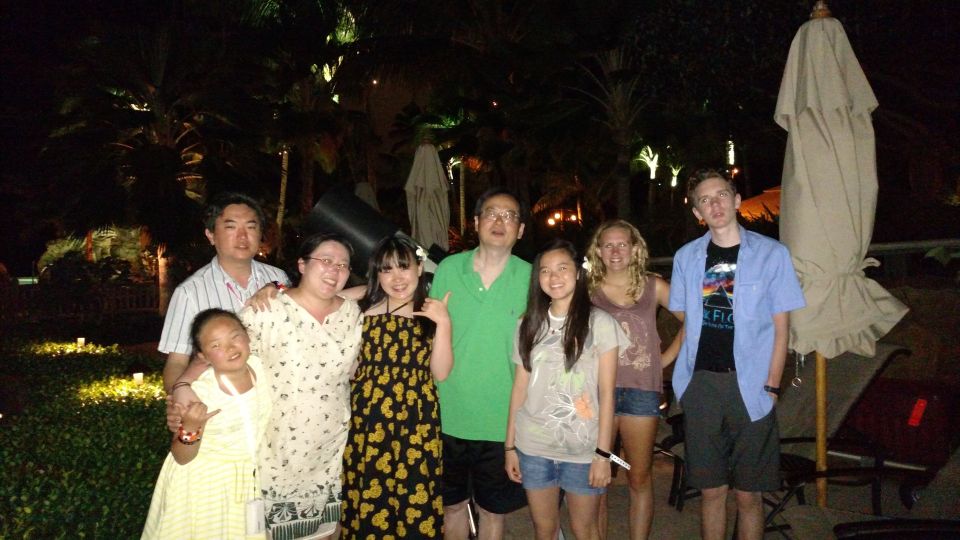
This tour is at the Four Seasons area in Ko Olina, and your starting location is listed as 1001 Olani St. On arrival, your main instruction is simple: follow the day-of-event text instructions for where to park and where exactly to meet/show up.
Timing Tips That Actually Help
- Arrive with enough time to settle in and find the right venue area (ocean lawn vs rooftop tennis court).
- If you’re traveling with kids, avoid the adult-only last show.
- If Jupiter’s colored clouds are a must for you, pick a showing date that aligns with your travel calendar (since the program explicitly says Jupiter color depends on time of year).
What’s Not Allowed
The activity has clear restrictions:
- No pets
- No smoking
- No alcohol or drugs
So plan accordingly, especially if you’re coming from the resort pool area or dinner spot.
Accessibility Note (Read This Carefully)
The information says wheelchair accessible, but it also lists “not suitable for wheelchair users.” Because the show location can be on a rooftop tennis court above parking, I’d treat this as a “check first” situation. Contact the provider so they can confirm how your specific wheelchair access will work for the exact show location that night.
Who This Tour Fits Best (and Who Might Skip It)
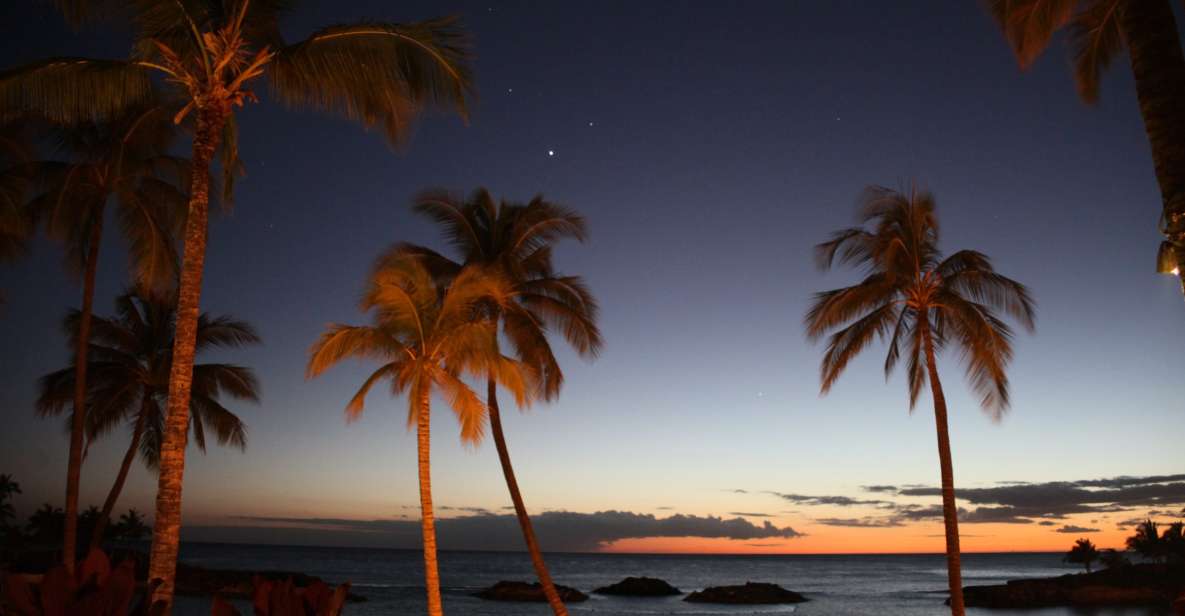
This is a strong pick if you want:
- A guided stargazing experience where you actually learn the sky, including Hawaiian star lines
- A night activity that works for couples and families
- A structured, one-hour format with big telescope viewing and laser tracing
It may be less ideal if:
- You want total freedom to wander and explore at your own pace (this is a guided show)
- You’re sensitive to schedule constraints (the last show is adults only)
- You’re counting on seeing every specific object every time (some targets are seasonal or visibility-dependent)
If your goal is a “wow” stargazing memory, you’re likely to like this. One positive booking highlighted vivid star clusters and planets, another specifically called out seeing Saturn, and multiple comments praised the informative astronomer and the photo-sharing.
Should You Book the Ko Olina Polynesian Star Voyage?
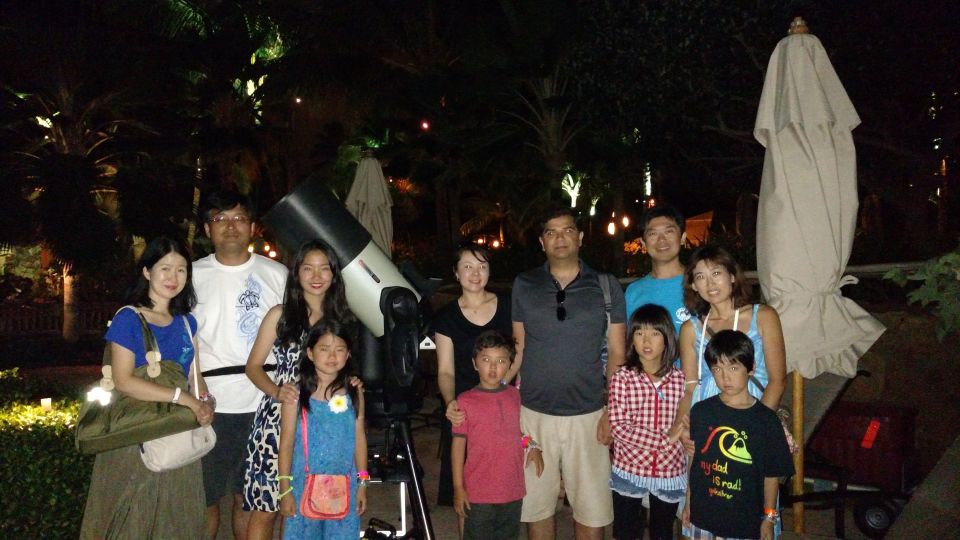
If you like the idea of stargazing with structure, laser tracing, big telescope views, and a mix of Polynesian navigation and astronomy science, this is a great value use of an Oahu night. The $49 price makes more sense when you factor in the astronomer guide and the telescope access for a private-style show.
I’d book it if:
- You want a learning-focused night activity
- You’re excited about Moon detail and classic planets like Saturn
- You’re okay with the fact that Jupiter’s color and some other targets depend on the season
I’d think twice if:
- You’re traveling only for a single, very specific object and you can’t flex dates
- You strongly prefer wheelchair-specific access certainty without confirmation (because the details conflict and the show can be in different venues)
FAQ
Where does the Polynesian Star Voyage show take place?
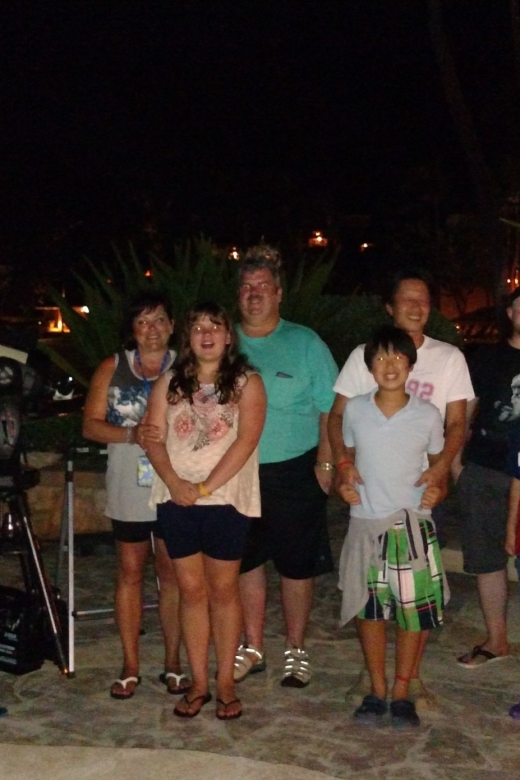
The show is at the Four Seasons Oahu Resort & Spa in Ko Olina. It’s held either on the hotel’s private Ocean Lawn facing the ocean or on the Spa Tennis Court on the 6th floor rooftop above the hotel parking lot.
How long is the tour?
The experience runs for 1 hour.
What will I see during the stargazing?
You can see the Moon’s crater shadows in color, plus constellations and prominent stars traced by laser. Depending on time of year, you may also see Jupiter’s clouds in color and its moons, Saturn’s rings and moons, planets from Mercury to Pluto, star clusters, multi-colored star systems, stellar nurseries, and passing comets.
What’s included in the price?
You get access to the largest telescope in Hawaii for private use, plus a professional astronomer tour guide.
What languages is the live guide available in?
The tour guide is listed as available in Chinese, English, French, Japanese, Tagalog, Spanish, and Korean.
Are there any rules I should know before going?
Pets are not allowed. Smoking is not allowed. Alcohol and drugs are not allowed.