REVIEW · OAHU
From Oahu: Big Island Volcano Adventure
Book on GetYourGuide →Operated by Polynesian Adventure · Bookable on GetYourGuide
Kīlauea in one day? Here’s why it works: you get Hawai‘i Volcanoes National Park at full throttle and a real walk through Nāhuku (Thurston) Lava Tube, but the 16-hour schedule means you’ll need comfy shoes and a steady pace.
I like that this tour is built around the Big Island’s most important “wow” zones, not just quick photo stops. A guide like Aki (when he’s leading) is praised for keeping the day organized and explaining the geology in plain English, which helps a lot when you’re standing by an active caldera.
One possible drawback to plan for: the day includes a picnic lunch in the park, so if you’re used to a heavy meal, you may feel a little underfed unless you snack smart.
Key highlights worth your attention
- Halema‘uma‘u Crater edge and steam vents: see how active the area still feels
- Nāhuku (Thurston) Lava Tube walk: a rare chance to be under ancient lava
- Chain of Craters Road driving: volcanic terrain changes fast as you move
- ʻAkaka Falls (442-foot): misty, rainforest energy without needing a separate ticket day
- Hilo classics plus gardens: Rainbow Falls, Banyan Drive, and Lili‘uokalani Gardens
- Black sand beach finale: the island’s volcanic origin hits hard at the shoreline
In This Review
- Flying O‘ahu to the Big Island in One Long Day (and why it’s smart)
- First contact: Hilo Airport, timing, and getting ready for Kīlauea country
- Hawai‘i Volcanoes National Park: Halema‘uma‘u Crater and steam vents
- Nāhuku (Thurston) Lava Tube: the walk under ancient lava
- Chain of Craters Road: drive-by geology with big view payoffs
- Picnic lunch in the park: what it means for your energy
- ʻAkaka Falls and the Hāmākua Coast rainforest stop
- Hilo Town classics: Rainbow Falls, Banyan Drive, and Lili‘uokalani Gardens
- Black sand beach: ending on the most visual proof of volcanoes
- Price and value: is $575 per person worth it?
- Who should choose this Big Island volcano day and who should skip it
- Should you book the O‘ahu to Big Island Volcano Adventure?
- FAQ
- How long is the Big Island Volcano Adventure tour?
- What is included in the price?
- Where do I meet for the tour?
- Do I get hotel pickup and drop-off?
- Is a helicopter tour included?
- Does the tour include a visit to Hawai‘i Volcanoes National Park?
- What are the main stops I’ll see?
- What should I bring?
- Is the tour cancellation free?
Flying O‘ahu to the Big Island in One Long Day (and why it’s smart)
Doing the Big Island by ferry is slow. Doing it by self-drive means spending at least a full day just getting around. This plan uses one efficient trick: you fly from Daniel K. Inouye International Airport (Honolulu) to Hilo, then spend the daylight doing the Big Island’s must-see routes.
That matters for value. With $575 per person, you’re paying for more than sightseeing. You’re paying for the logistics that usually eat hours: inter-island airfare, park entry, and an organized route that strings together volcano, waterfalls, and Hilo Town without you needing to map everything from scratch.
Your time is also protected. Once you’re in the van, your guide handles the flow, where to stop, what to watch for, and how to move through the day without turning it into a scattershot drive.
First contact: Hilo Airport, timing, and getting ready for Kīlauea country
The day starts at Honolulu Airport, then you take the inter-island flight to Hilo. After you land, the tour includes roundtrip transportation to and from Hilo Airport, so you’re not left figuring out how to connect to the next part of your day.
This is one reason tours like this work well when you’re visiting from O‘ahu: you don’t have to rent a car, and you don’t have to negotiate Big Island driving on your first day. You still get the real geography, though, volcano park first, then the coast and waterfalls, then Hilo Town.
Practical note: you’ll want to travel light. The day includes an airport screening step on the O‘ahu side, and you’re advised not to bring large or heavy bags on the flight. So think small daypack, comfortable layers, and a plan for water.
You can also read our reviews of more tours and experiences in Oahu.



Hawai‘i Volcanoes National Park: Halema‘uma‘u Crater and steam vents
Hawai‘i Volcanoes National Park is the Big Island’s gravitational center. On this tour, you’re not just passing by the idea of it, you’re in the park early enough to feel the drama.
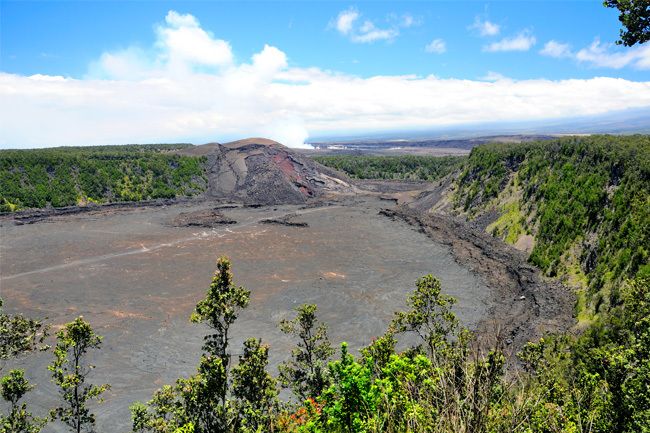
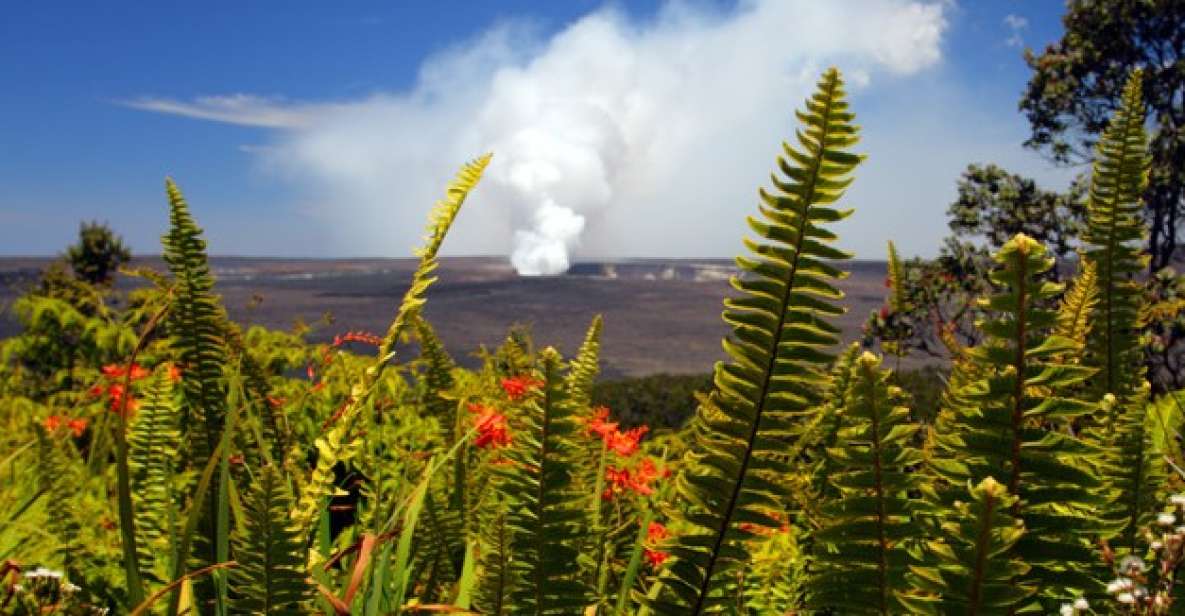
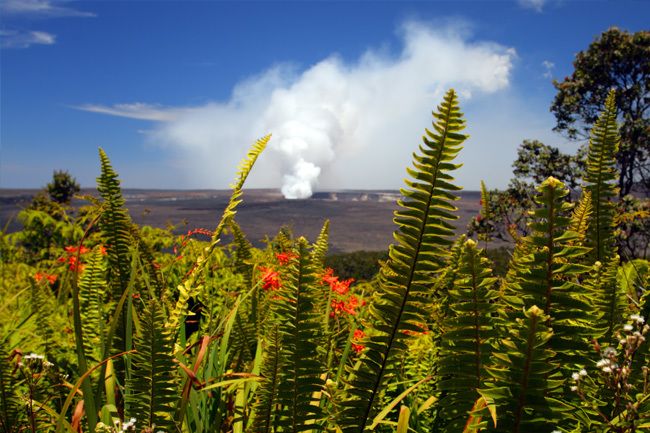
The core stop is the edge of Halema‘uma‘u Crater, described as a massive caldera area that has continued to reshape itself after the 2018 eruption. Standing near something that’s actively changing is different from looking at a finished landscape. You’re seeing a living system, and the guide’s job here is to help you connect what you’re seeing with how the volcano works.
You’ll also visit steam vents, where groundwater meets underground lava flows. This is one of those moments where the visuals plus the explanation make the whole place click. You’re not just smelling or hearing activity, you’re learning why it happens and what it means for volcanic behavior in the region.
If you’re sensitive to crowds, go in with the mindset that national parks are popular. Still, being inside a guided day means you’re less likely to get stuck waiting for viewpoints to open up.
Nāhuku (Thurston) Lava Tube: the walk under ancient lava
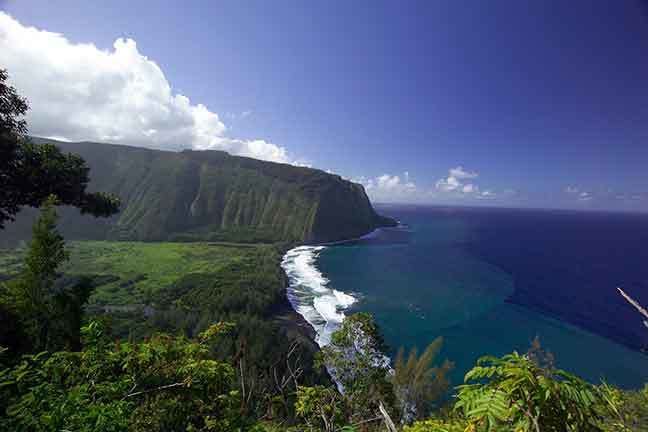
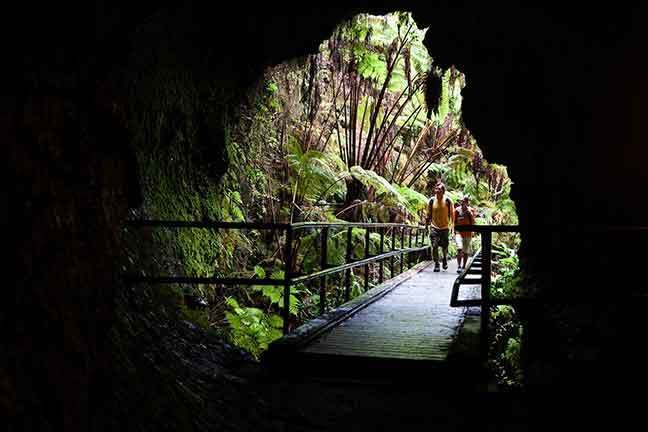
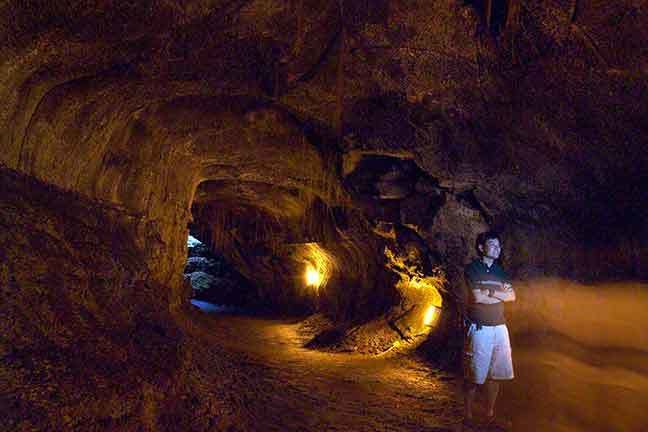
After the park’s active sights, you step into a different kind of volcano experience: the Nāhuku (Thurston Lava Tube). Walking through a lava tube changes your perspective fast. Instead of looking outward, you’re moving through a space that used to be filled with flowing lava.
The rainforest part is key. The tube is surrounded by lush canopy, so the walk feels like a mix of geology lesson and living ecosystem. Light can be dim under the canopy, and the air near rock can feel cooler or damp. Wear closed-toe shoes you trust.
What I like about this stop for first-timers: it’s not only impressive, it’s memorable in a sensory way. Lava tubes are not like museums. You’re inside the formation, and that makes the volcano feel real rather than abstract.
Chain of Craters Road: drive-by geology with big view payoffs
Next you’ll head out along Chain of Craters Road, which is famous for letting you watch the island’s volcanic story unfold as you drive. The idea is simple: lava fields stretch toward the ocean, and the terrain shows you different stages and forms.
The stop is especially valuable if you’re the type who likes to understand what you’re seeing, not just photograph it. The guide helps connect the viewpoints, sea cliffs, old lava flows, and coastal overlooks, to the larger volcano system.
A consideration: this is still driving and viewing from pull-offs, so you’ll want to keep your schedule flexible in your mind. There’s no “one perfect photo spot and then done” rhythm. It’s more like a guided drive where the story matters as much as the frame.
Picnic lunch in the park: what it means for your energy
You’ll have a picnic lunch in the park before shifting to the Hāmākua Coast area. This is a smart use of time. You avoid backtracking, and you keep the day’s momentum.
The balance point: one of the feedback notes that the lunch can feel a bit light. That doesn’t mean you’ll go hungry, but it does mean I’d plan for your body. If you know you burn through calories while hiking or walking, bring a small snack for your own peace of mind (or add one stop when you can).


ʻAkaka Falls and the Hāmākua Coast rainforest stop
After the volcano core, the tour moves into rainforest-and-water territory along the Hāmākua Coast. The highlight here is ʻAkaka Falls State Park, where you’ll walk through lush rainforest with bamboo, orchids, and ferns (the setting is part of the show, not just the waterfall).
ʻAkaka Falls is listed as a 442-foot waterfall plunging into a misty gorge. Even if you’ve seen waterfalls elsewhere, the height and the rainforest mist change the experience. It’s the kind of place where you get wet without realizing it.
This stop is also valuable because it shows another side of the Big Island: volcano doesn’t only mean lava. It shapes rainfall, soil, and the vegetation that follows. The rainforest setting helps you understand why so many Hawai‘i ecosystems developed in pockets with very different textures.
Hilo Town classics: Rainbow Falls, Banyan Drive, and Lili‘uokalani Gardens
Once you’re back in Hilo, the day turns toward the easiest sightseeing wins, places you can appreciate even without deep background reading.
You’ll see Rainbow Falls, known for colorful mist in morning sunlight. Even if conditions vary on the day, the concept is simple: when the light hits the spray the right way, it can look like a rainbow banding in the air.
Then comes Banyan Drive, a scenic section lined with towering trees planted by celebrities. It’s quirky, a little odd, and that’s why it’s fun. It’s also a reminder that Hilo is more than a waypoint. It’s a real town with roots that go beyond tourism brochures.
Finally, you’ll visit Lili‘uokalani Gardens, a landscaped Japanese-style garden with views of Hilo Bay. This is a chance to slow down a bit after all the volcanic intensity. It also helps your brain file the day: volcano, then water and rainforest, then calm green space.
Black sand beach: ending on the most visual proof of volcanoes
The tour finishes at a black sand beach, where the island’s volcanic origins show up at the shoreline. It’s not just a pretty color. Black sand is a direct result of volcanic rock breaking down into sand-sized material.
This last stop is smart because it ties back to everything earlier in the day. You started with Kīlauea-area volcanic activity, moved into lava tube geology, drove through old lava fields, then watched waterfalls and rainforest ecosystems. Ending at the beach is like getting the final sentence to the story.
If you’re photo-focused, bring what you need to avoid frustration. Mist and wind can happen around coasts. Dress for it, and take your time at the sand instead of rushing for the car.
Price and value: is $575 per person worth it?
Let’s break down what you’re actually buying for $575 per person over a 16-hour day.
Included costs you’d otherwise have to handle:
- Roundtrip inter-island flights from O‘ahu to Hilo
- Hawai‘i Volcanoes National Park entry fee
- Roundtrip transportation to and from Hilo Airport
- Driver/guide
- Bottled water
- Local treats
That’s a lot of “hard to DIY” value. The airfare alone can be the biggest line item for most O‘ahu visitors. Add the park entry and guided route, and you’re paying for convenience plus a planned route that hits the island’s big names.
What’s not included:
- Hotel pickup/drop-off, so you must arrange your own ride to/from the airport
- Helicopter tour, which some similar options may add
So is it worth it? It’s a good deal if you want one day that actually covers the Big Island’s major highlights without the work. It may feel pricey if you’re the type who enjoys long independent drives and wants to spread things out over multiple days.
Who should choose this Big Island volcano day and who should skip it
This tour is a great fit if:
- You’re short on time and want a full-day Big Island experience from O‘ahu
- You want an expert English-speaking guide who connects what you see to how the volcano works
- You like variety: lava tube, volcanic road views, waterfalls, and Hilo Town in one sweep
You might want to think twice if:
- You hate long days. 16 hours is a commitment, especially with the inter-island flight.
- You need a lot of food at lunch. The day includes a picnic, and at least one note calls it light.
- You expect hotel pickup. This one assumes you handle ground transport on both ends of the flight.
Should you book the O‘ahu to Big Island Volcano Adventure?
I’d book it if you want a high-effort day that hits the Big Island’s headline scenes without you building an itinerary. The best reason is the way the day is stitched together: Kīlauea-area views, a real walk through Nāhuku Lava Tube, the drive along Chain of Craters Road, then waterfalls and classic Hilo stops.
If you’re deciding between doing “some volcano” and doing “the most important volcano highlights,” this tour leans into the second choice. It’s also good value when you factor in the included inter-island flight and the guided transport.
If the 16-hour rhythm sounds exhausting, or if you want a slower travel style, you may prefer a multi-day Big Island stay. But for a one-day mission from O‘ahu, this route makes strong sense.
FAQ
How long is the Big Island Volcano Adventure tour?
The duration is 16 hours.
What is included in the price?
It includes round-trip inter-island airfare from Honolulu (O‘ahu) to Hilo, Hawai‘i Volcanoes National Park entry, roundtrip transportation to and from Hilo Airport, a driver/guide, bottled water, and local treats.
Where do I meet for the tour?
You’ll be responsible for meeting at Honolulu’s Daniel K. Inouye International Airport for your flight to Hilo.
Do I get hotel pickup and drop-off?
No. Hotel pickup and drop-off is not included.
Is a helicopter tour included?
No. The helicopter tour is not included.
Does the tour include a visit to Hawai‘i Volcanoes National Park?
Yes. You’ll have access to Hawai‘i Volcanoes National Park, including stops connected to Kīlauea.
What are the main stops I’ll see?
You’ll see Halema‘uma‘u Crater (Kīlauea area), steam vents, walk through the Nāhuku (Thurston Lava Tube), drive Chain of Craters Road, visit ʻAkaka Falls State Park, see Rainbow Falls, Banyan Drive, Lili‘uokalani Gardens, and end at a black sand beach.
What should I bring?
Bring passport or a valid ID and comfortable clothes. You’re also advised not to bring large or heavy bags on the flight.
Is the tour cancellation free?
There is free cancellation up to 24 hours in advance for a full refund.