REVIEW · HONOLULU
Arizona Memorial Pearl Harbor and Honolulu City Tour from Kona
Book on Viator →Operated by Aloha Sunshine Tours · Bookable on Viator
Pearl Harbor hits different when it’s on your schedule. This Kona-to-Oahu day trip is built around direct access to the USS Arizona Memorial plus a guided slice of Honolulu that includes Punchbowl and historic royal stops. I like that the tour combines the big-ticket memorial with city context, so you’re not just hopping between stops with no thread tying it together.
Two things I’d highlight right away: the small-group feel (max 15) and the fact that you’re not planning this stuff alone, round-trip flights and attraction tickets are packaged in. One drawback to keep in mind: this is an early, flight-driven day, and some people have reported tight timing or communication issues, so it’s smart to double-check your exact pickup/flight details before travel.
In This Review
- Key highlights at a glance
- A long day on Oahu: how this Kona-to-Honolulu package works
- Price and what you actually get for $399.99
- Pearl Harbor Visitor Center: getting the story before you see the wreck
- The short Navy boat ride: calm water, serious purpose
- USS Arizona Memorial: tears, names, and the power of silence
- Downtown Honolulu with narration: history in motion
- Punchbowl Cemetery (National Memorial Cemetery of the Pacific): the view you remember
- Iolani Palace, Kamehameha Statue, and Aliʻiōlani Hale: royalty in the middle of town
- Kawaiahaʻo Church: one of the oldest worship sites on Oahu
- Group size, timing, and the one thing you should verify
- What to pack: Pearl Harbor bag rules and comfort basics
- Weather and closures: why flexibility matters in Hawaii
- Who this tour suits best (and who should choose something else)
- Should you book this Kona-to-Honolulu Pearl Harbor day trip?
- FAQ
- What time does the tour start?
- Where do I get picked up in Honolulu?
- What’s included in the price?
- What’s not included?
- Are bags allowed at Pearl Harbor?
- How long is the tour?
- What if weather causes closures?
Key highlights at a glance
- Small-group pacing (max 15) so you can hear the guide without fighting a crowd
- Flights + pickup included so you’re not stuck figuring out connections on your own
- Pearl Harbor Visitor Center + 23-minute documentary to set the scene before you go out to the water
- USS Arizona Memorial includes the boat ride and admission, plus time at the remembrance wall
- Punchbowl (National Memorial Cemetery of the Pacific) for the rare mix of solemn ground and city views
- Honolulu royal stops like Iolani Palace and a visit to Kawaiahaʻo Church
A long day on Oahu: how this Kona-to-Honolulu package works
This is a full-day operation with an early start. You begin with pickup tied to your Honolulu arrival terminal, then you fly from the Big Island to Honolulu and spend the day on Oahu with a guide and an air-conditioned vehicle for the city parts.
Time matters here. You’ll be walking, riding, and moving through security at Pearl Harbor, so the day is designed to keep you on rails. If you prefer slow travel and long lunches, this may feel like a “see it all” sprint.
The best part is that you don’t have to stitch the puzzle together. When a tour includes round-trip airfare and entry tickets, it saves time and decision-making, especially for something as reservation-sensitive as Pearl Harbor. Just expect the day to run with purpose and plan your mornings accordingly.
You can also read our reviews of more city tours in Honolulu
Price and what you actually get for $399.99
At $399.99 per person, the real question isn’t the number, it’s what’s bundled. This price includes round-trip airfare between the Big Island and Honolulu, air-conditioned transportation, a local guide for narration during the Honolulu portion, and entry tickets to the stops on your itinerary.
You’re also paying for logistics that are usually annoying on your own: airport coordination, group pacing, and handling the entry process for key sites. For Pearl Harbor especially, admission can involve timed access and security rules. If the package is able to deliver on its promise of smoother entry, that value can feel very real.
Meals are not included, though, so you’ll still want a plan for breakfast before you head out and a stop for lunch or snacks near the Visitor Center. Think of this tour as a “memorial + context + major landmarks” day, worth it if you’d rather spend your energy inside the sites than on planning.
Pearl Harbor Visitor Center: getting the story before you see the wreck
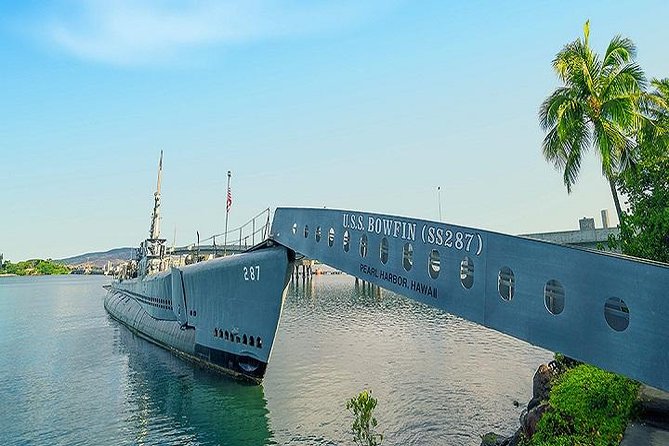
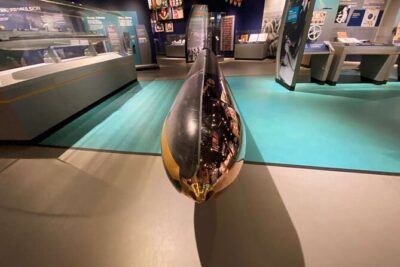
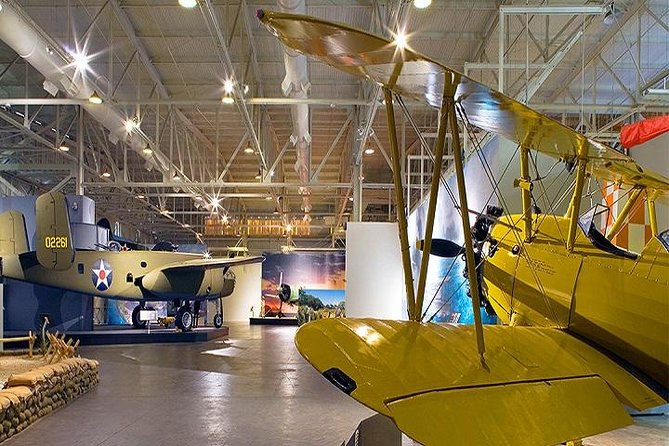
The day starts with the Pearl Harbor Historic Sites Visitor Center, where you can reset your brain before you board the boat. You’ll have time to explore exhibits that explain what led up to the attack on December 7, 1941. Then there’s a 23-minute documentary film that connects the dots in a way you can carry to the memorial.
This is the part I appreciate most as a traveler, because the memorial works better when you understand what you’re looking at. Without that setup, you still feel the gravity, but with it, you get context: the timeline, the significance of the USS Arizona, and why this site is preserved the way it is.
A quick practical note: the Visitor Center is also where you’ll be managing your bag situation. You can’t bring purses and bags inside Pearl Harbor, and there’s a paid storage option available on-site.
The short Navy boat ride: calm water, serious purpose
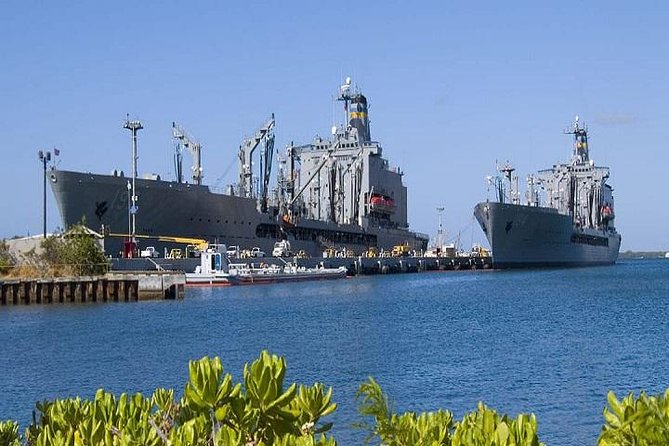
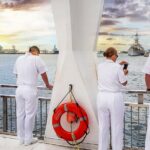
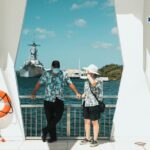
After the film, you head to the harbor for a short ride to the USS Arizona Memorial. You’ll board a U.S. Navy-operated boat for about a 10-minute crossing. The boat ride is calm, and you’ll look out at surrounding military installations while you’re on the water.
It’s a simple segment, but it does something important: it creates a boundary between the loud world of touring and the quieter world of remembrance. Even if you’ve seen photos, this in-between moment gives you a physical sense of place.
If you’re someone who gets motion sickness, you’ll want to plan accordingly, though the ride is described as calm. And bring your patience. This isn’t the kind of stop where you want to rush ahead of the group; you’ll enjoy it more if you slow down and let the atmosphere land.
USS Arizona Memorial: tears, names, and the power of silence
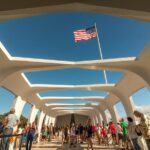
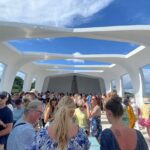
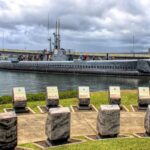
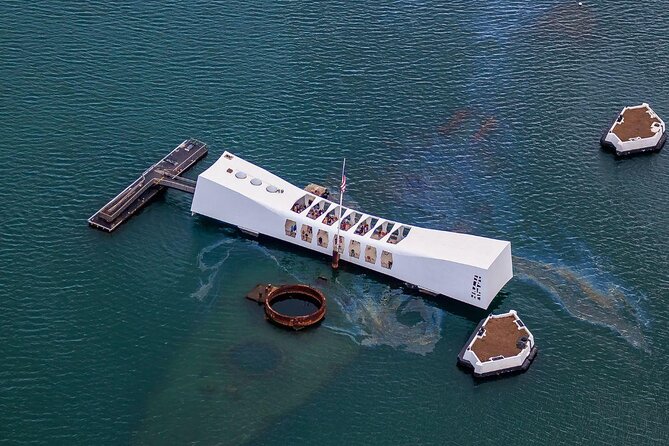
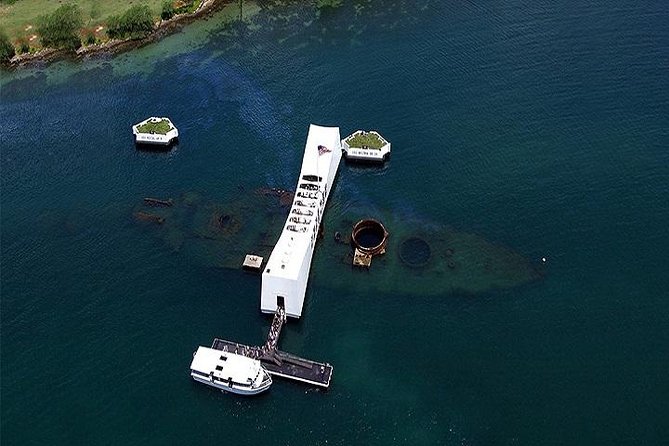
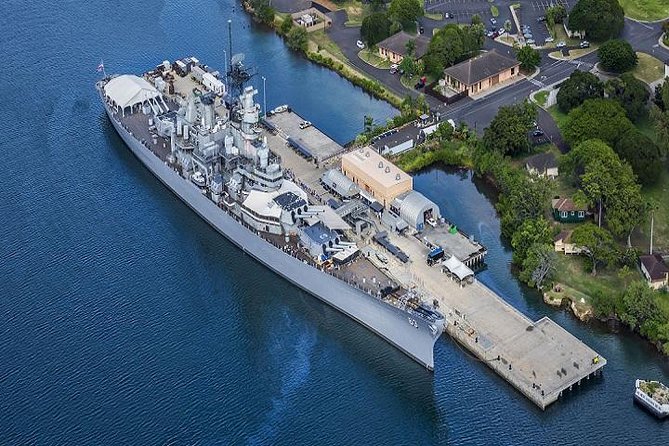
The USS Arizona Memorial is a white, open-air structure over the remains of the battleship. It’s designed for reflection, not sightseeing. Inside, you can look down into the water to see parts of the sunken ship, including the outline that sits just below the surface. You may also notice oil droplets rising to the water; people often call these The Tears of the Arizona.
At the far end, you’ll find the Remembrance Wall with the names of 1,177 crew members who were lost. This is where the site feels most personal. The names make it clear that the history you just learned isn’t abstract.
One detail I’d take seriously: the site encourages respectful silence while you’re on the USS Arizona Memorial. That doesn’t mean you can’t think or feel. It means you’re agreeing to let the space do its job. If you’re traveling with people who talk a lot, gently set expectations beforehand, this is not the moment for loud commentary.




Downtown Honolulu with narration: history in motion
After Pearl Harbor, you shift into Honolulu with a guided city portion. You’ll spend about 45 minutes in historic downtown, with an expert guide narrating stories that connect Hawaii’s cultural heritage with the modern city around it.
In a compressed schedule, narration is the difference between “I saw buildings” and “I understood what I saw.” You’ll likely get a quicker sense of how the monarchy era shaped what came later, and how certain landmarks sit at crossroads of culture, politics, and place.
This isn’t a slow walking tour with lots of photo stops. It’s more like a guided route that gives you context efficiently. If you want to linger for shopping or beach breaks, you’ll need to plan that on a different day.
Punchbowl Cemetery (National Memorial Cemetery of the Pacific): the view you remember
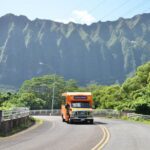
One of the most moving stops on this route is the National Memorial Cemetery of the Pacific, also known as Punchbowl. The cemetery sits on top of an extinct volcano, and you’ll walk through a landscape of white headstones set against lush greenery.
What makes Punchbowl special is how it combines quiet respect with wide sightlines. Because of the crater topography, you get stunning views over Honolulu, including downtown, Diamond Head, and the coastline.
This stop is also a good reminder that geography in Hawaii isn’t background, it’s part of the story. The extinct volcano gives the cemetery a natural amphitheater feel, which changes the mood compared to a flat memorial.
Give yourself permission to slow down here. It’s the kind of place where being rushed takes something away.
Iolani Palace, Kamehameha Statue, and Aliʻiōlani Hale: royalty in the middle of town
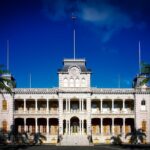
The tour includes a stop at Iolani Palace, described as the only royal palace in the United States. You’ll learn about Hawaii’s monarchy and hear stories connected to King Kalākaua and Queen Liliʻuokalani, the last reigning monarchs.
Even with a short time window, the visual impact can be strong. You’re in the middle of modern Honolulu, yet this site anchors a different era of governance and identity.
From there, you’ll view the King Kamehameha Statue in front of Aliʻiōlani Hale, the building that now houses the Hawaii State Supreme Court. Your guide will add story through talk-story style explanations about how the original government building of the Hawaiian Kingdom connects to today.
Tip: if you love history but hate rigid museum rules, this portion is the sweet spot. It’s not just exhibits, it’s interpretation connected to real landmarks.
Kawaiahaʻo Church: one of the oldest worship sites on Oahu
The last major cultural stop on this itinerary is Kawaiahaʻo Church, described as one of the oldest Christian places of worship in Hawaii. Your guide shares what the church means and how it has played a role in Hawaii’s religious history.
The tour also positions it alongside the idea of a landmark church comparable in spirit to famous historic churches, without pretending it’s the same place or the same story. The value here is understanding why this site matters locally, not just marking another building on a checklist.
Time is limited, so treat this as a “walk up, learn the why, and move on” stop. If architecture is your thing, you’ll get enough to appreciate it, but you won’t get hours to study details.
That said, it rounds out the day well. You’ve already had history through Pearl Harbor. Now you have another kind of history: how people built faith spaces in a changing island kingdom.
Group size, timing, and the one thing you should verify
The tour is advertised as a small group with a maximum of 15, which is the kind of cap that usually helps the guide keep track of people. At the same time, there’s also a note that the overall activity can involve up to 40 travelers, so I’d treat this as a “could be tighter than you expect” situation depending on how groups split.
The other timing issue is real-world: this is flight-driven. You start at 7:00 am, and pickup depends on which airline you flew into Honolulu with. If you flew Southwest, pickup is at Terminal 2, baggage claim 31, area 5. If you flew Hawaiian Airlines, pickup is at terminal 1, area 1.
Here’s the one practical verification I’d do: right before departure, confirm your exact pickup window and departure time for the flights. Some scheduling confusion has shown up in people’s experiences, including claims of early departure changes and mismatched pickup expectations. It’s not about assuming it will happen, it’s about protecting your morning.
Also remember: bags and purses are not allowed inside Pearl Harbor. You’ll want to pack smart so you’re not stuck renting storage for a bunch of bulky items.
What to pack: Pearl Harbor bag rules and comfort basics
Wear comfortable shoes. You’ll be walking throughout the day, and there are stops that involve outdoor walking and stair-like paths. If your feet aren’t happy early, the rest of the day will feel longer than it needs to.
For Pearl Harbor security, plan for the no purses and no bags rule. On-site bag storage is available for a fee (listed as $7.00 per item). You can bring clear plastic bags if the contents are visible, like those used at sports venues. Medical equipment that doesn’t fit light, transparent shopping bags is also allowed.
A few other rules to respect:
- No smoking on the Visitor Center grounds or at the memorial
- No swimwear
- No swimming activities implied, and you’ll want normal day attire for the memorial and city stops
Finally, bring a bit of cash if you plan to tip. Tipping your guide in cash is appreciated.
Weather and closures: why flexibility matters in Hawaii
The tour notes that sites are subject to close due to stormy weather. That matters most for outdoor segments like harbor views, cemetery grounds, and church settings.
If you show up during rough weather, it’s not a “your day is ruined” situation, but it can change what you’re able to see. The good news: the experience is designed with the understanding that conditions happen. If the tour is canceled due to poor weather, you’ll be offered another date or a full refund.
Your best move is to keep your schedule on Oahu flexible. If you’ve already booked a separate timed activity right after this day trip, you might want a buffer.
Who this tour suits best (and who should choose something else)
This tour is a strong fit if you want a one-day itinerary with major historical weight at Pearl Harbor and a guided framework for Honolulu’s landmarks. It’s also good for travelers who don’t want to handle flights, admission tickets, and daily routing on their own.
It’s less ideal if you need lots of free time at each stop. The itinerary moves, and you may feel the pressure to keep pace. It’s also not recommended for visitors who can’t walk the equivalent of about four city blocks.
If you’re traveling with mobility limits, you’ll want to think hard. The day involves multiple outdoor areas and walking even at the shorter stops like Iolani Palace.
Should you book this Kona-to-Honolulu Pearl Harbor day trip?
If your top priorities are Pearl Harbor access, a guided Honolulu route, and you value having flights and tickets handled for you, this is worth considering. The payoff is that you get the memorial story (Visitor Center film and exhibits), the solemn boat-and-memorial experience at the USS Arizona, and then you balance it with Honolulu landmarks like Punchbowl and Iolani Palace.
I’d book it if you’re the kind of traveler who’s comfortable with an early start and wants a guided day that reduces planning stress. I’d skip or look for a different operator if you strongly prefer loose schedules, hate tight timing tied to flights, or you want lots of unstructured time at each stop.
Best practical decision tool: confirm your exact flight and pickup times before you leave the Big Island, pack small enough to manage Pearl Harbor bag rules, and wear shoes that are ready for a full day.
FAQ
What time does the tour start?
The start time is 7:00 am.
Where do I get picked up in Honolulu?
If you flew Southwest Airlines into Honolulu Airport, pickup is at Terminal 2, baggage claim 31, area 5. If you flew Hawaiian Airlines, pickup is at terminal 1, area 1.
What’s included in the price?
The tour includes round-trip airfare to Honolulu International Airport from the Big Island, air-conditioned vehicle transportation, narration during the Honolulu portion, and entry tickets to the attractions on the tour (provided by your driver on the day).
What’s not included?
Transportation to Kona International Airport is not included, and meals are at your own expense.
Are bags allowed at Pearl Harbor?
No purses and bags are allowed inside Pearl Harbor. Bags can be stored for $7.00 each. Clear plastic bags with visible contents are allowed.
How long is the tour?
It’s listed as approximately 5 to 6 hours.
What if weather causes closures?
Sites are subject to close due to stormy weather. If the experience is canceled due to poor weather, you’ll be offered a different date or a full refund.