REVIEW · HALEIWA
Oahu: Beginner Group Surf Lesson on North Shore
Book on GetYourGuide →Operated by North Shore Banzai Surf School · Bookable on GetYourGuide
Learning to surf on Oahu starts with the right kind of coaching. This beginner group lesson focuses on safety, paddling, and popping up fast, with local instructors Keoni and Kalani Nozaki.
What I like most is the chance to get in the water quickly with a small group (up to 8), and the steady, patient teaching style you’d expect from instructors with 20+ years of experience. A practical consideration: there’s no pickup, so you’ll want to plan to get to the surf school near Haleiwa on your own.
If you’re heading to the North Shore, this is a smart way to experience it without turning your trip into a stressful science project. You start with a warm welcome and a safety briefing, then you’ll get a surfboard and rash guard and spend the lesson practicing skills before you’re set loose on real waves.
One drawback to note: it’s not suitable for kids under 6, and the lesson isn’t designed for wheelchair users.
In This Review
- Key things you’ll notice right away
- Why Oahu’s North Shore is great for your first waves
- Getting there near Haleiwa: check-in and what the start feels like
- The first lesson step: safety briefing that actually makes sense
- Learning the basics: paddling and standing up, step by step
- Catching waves: what “lots of wave riding” really means
- Solo options: if you book one spot, you may get more attention
- Who this beginner lesson is best for (and who should look elsewhere)
- What you get for $125: value, not just a ticket
- Practical gear tips that keep the day comfortable
- How the 2 hours are likely to feel from start to finish
- The instructors make or break a beginner lesson
- Should you book this North Shore beginner surf lesson?
- FAQ
- Where is the meeting point?
- How long is the beginner surf lesson?
- How much does it cost?
- Is pickup included?
- What’s included in the lesson?
- What should I wear and bring?
- What age is this lesson suitable for?
- Is the lesson suitable for wheelchair users?
- How many people are in the group?
- What if I book solo?
Key things you’ll notice right away
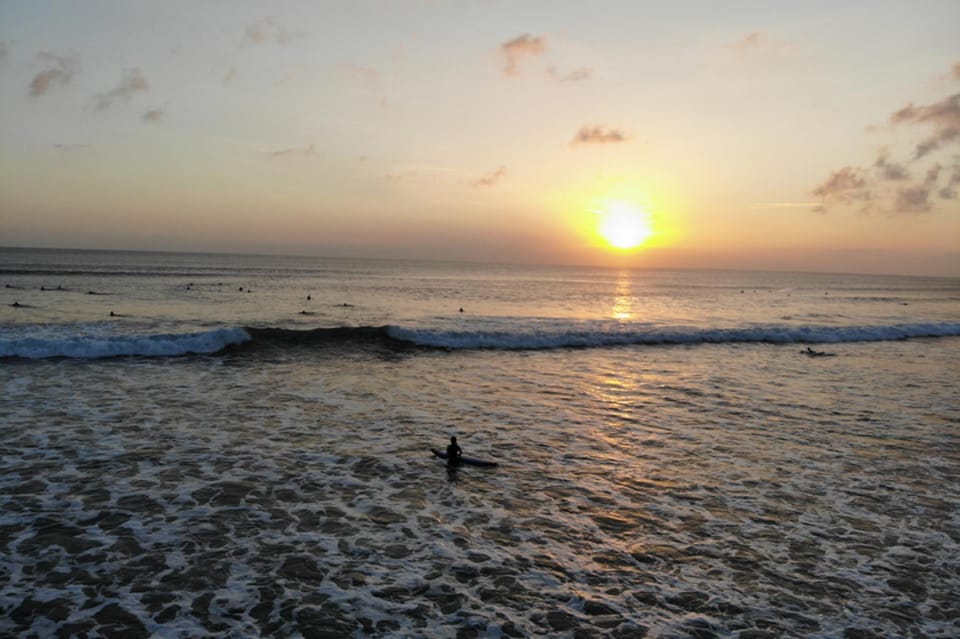
- North Shore focus: learn beginner skills in the same region famous for Oahu surf culture
- Small group energy: limited to 8 participants, so you’re not stuck watching from shore
- Coaching from Keoni and Kalani Nozaki: instructors with 20+ years teaching
- Real practice time: you’ll cycle through paddling and standing up, then ride and repeat
- Good family setup: suitable for ages 6+, with a safe and fun vibe
- Locally owned feel: one of the few locally owned surf schools around
Why Oahu’s North Shore is great for your first waves
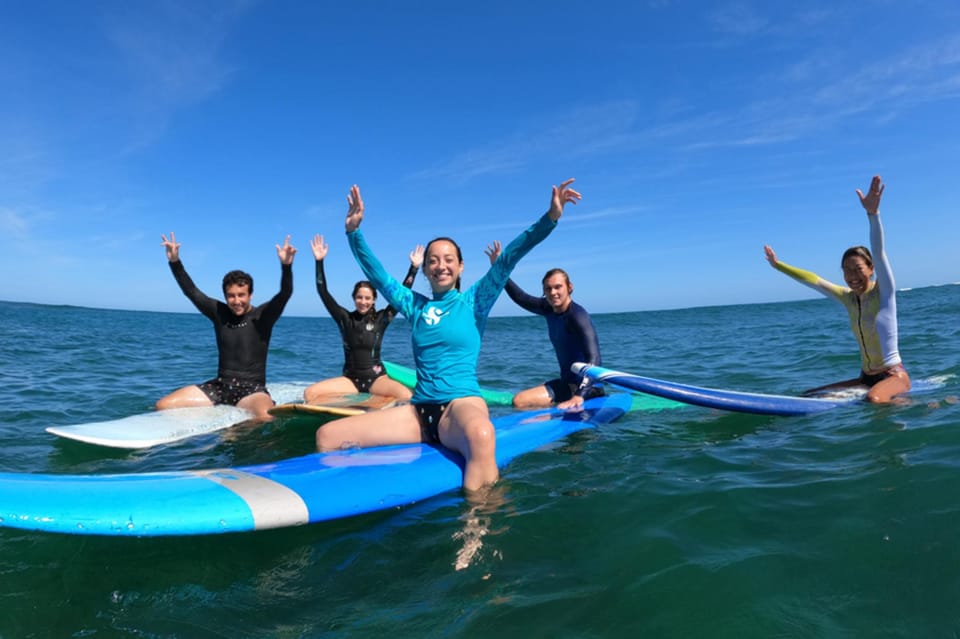
The North Shore has gravity. Even if you know nothing about surfing, you’ll feel it when you see people setting up boards and chasing sets of waves. For a beginner, that matters because the scenery doesn’t just look cool, it helps you stay motivated when the learning part gets frustrating.
This lesson takes the pressure off by breaking surfing into teachable steps. You’re not just thrown into the ocean and told to figure it out. Instead, you’ll work through paddling and standing up in a structured way, then you’ll get time in the water to apply it as you go.
Also, the setting near Haleiwa keeps things grounded. You’re not trying to pull off a “surf and vanish” day. You start at a surf school, get checked in, get geared up, and then spend the session practicing in the waves with instructors watching. That flow is what turns first-time surfing into an actual skill-building experience.
You can also read our reviews of more tours and experiences in Haleiwa.


Getting there near Haleiwa: check-in and what the start feels like
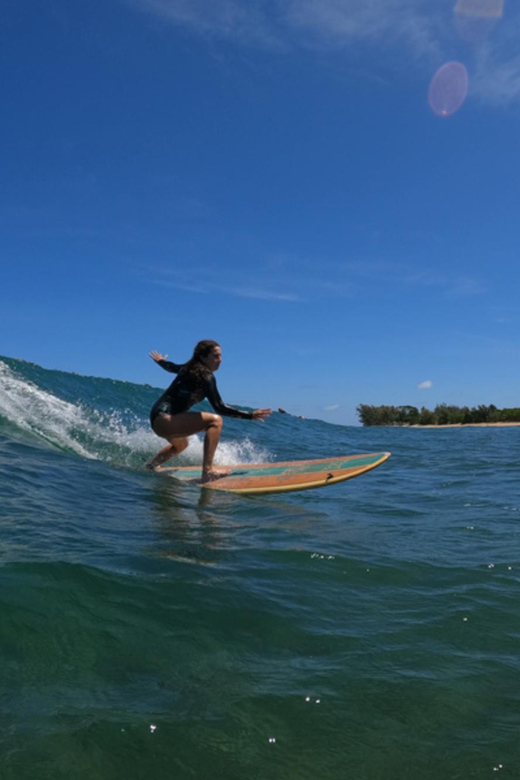
You’ll meet in the parking lot close by the beach near Haleiwa. The simple setup matters because beginners don’t need extra friction. Show up 5–10 minutes early, check in, and get into the rhythm before you’re standing around in wet gear.
You’ll begin with a warm welcome, a brief introduction, and a safety briefing. Then it’s gear time: you’ll be provided a surfboard and rash guard. (You’ll still want to wear comfortable swimwear and bring a towel, because you’ll be getting sandy and getting changed at the end.)
Group size is limited to 8 participants, which is a big deal for beginners. With a crowded lesson, you can end up waiting your turn while your confidence drains. Here, the small group format helps keep the focus on you, even when you’re learning.
And one more practical point: there’s no pickup. You’re responsible for getting to the meeting point yourself, so build in a little buffer time, especially if you’re coordinating with family members or a tight itinerary.
The first lesson step: safety briefing that actually makes sense
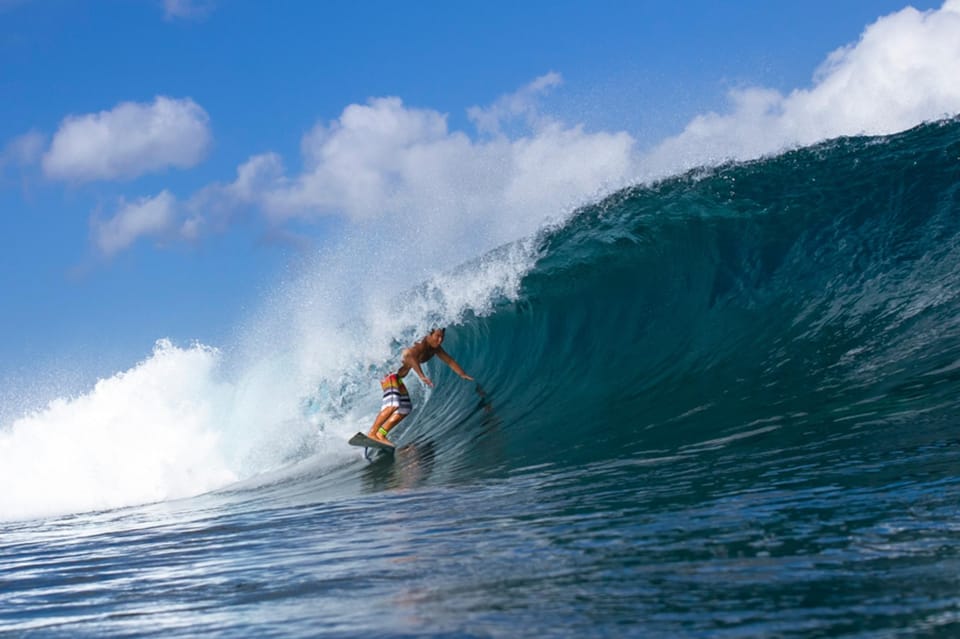
A lot of surf lessons say safety, but what you want is clarity. This one starts with a safety briefing right after check-in. You’ll get the basics of how the session will run and what to do so you stay safe while you learn.
In a beginner lesson, the goal isn’t fear, it’s confidence. When you understand how paddling, timing, and board control fit together, you stop panicking. That’s when you start improving quickly.
I also like that the instruction team is certified and has 20+ years of teaching experience. That kind of experience shows up most in the small details: knowing what beginners typically mess up, explaining it in plain language, and adjusting fast when conditions change.
Learning the basics: paddling and standing up, step by step
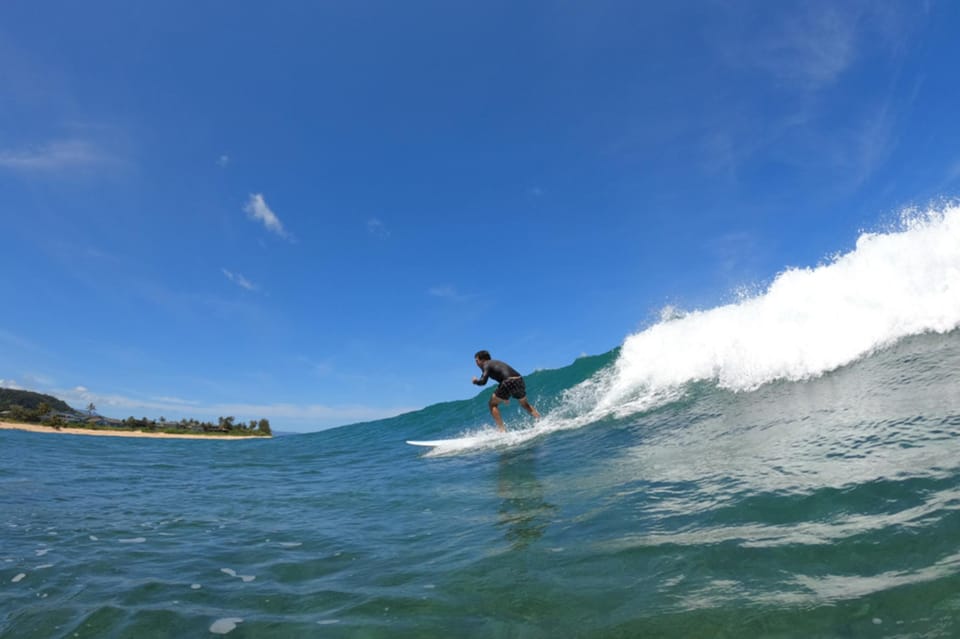
The teaching progression is straightforward. You’ll practice:
- Paddling: how to position your body, how to use your arms efficiently, and how to conserve energy
- Standing up: the mechanics of getting from lying down to a stable stance
The instructors guide you through these fundamentals before you spend a good chunk of time actually riding and practicing on waves. For first-timers, that order matters. If you try to stand up without solid paddling technique, you get tossed into the “burn energy, feel helpless” cycle.
A big plus from the coaching style you can expect: instructors pay close attention to your paddling. One helpful theme you’ll hear in the lesson is getting support so you can conserve energy while you’re waiting for waves and timing your approach. That kind of correction can be the difference between lasting the whole session or exhausting yourself early.
Catching waves: what “lots of wave riding” really means
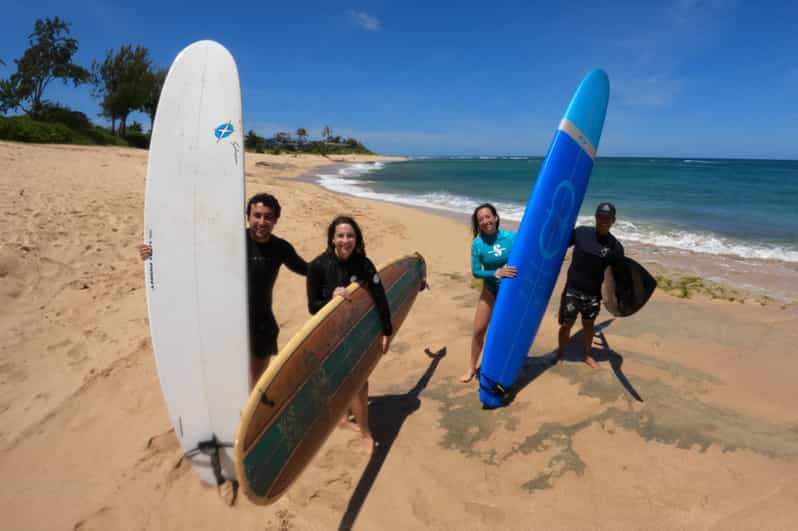
North Shore waves can look intimidating from shore. The trick for beginners is learning how to meet the wave instead of wrestling it. In this lesson, once you’ve worked the basics, you’ll hit the water with the instructors watching closely.
You’ll get plenty of practice time to ride and repeat. And that repeat cycle is where skill happens. One wave is fun. Ten waves where you adjust one tiny thing? That’s progress.
This is also where the instructor’s experience shows. Beginners often do the same things over and over, not because they don’t want to learn, but because they’re working hard just to stay on the board. With constant observation and correction, you can get quick feedback on what to change.
If you’re someone who worries about being the only beginner in the group, breathe easy. The lesson is designed for ages 6 and above, and the pace is built for first timers. The environment is described as safe and fun, and the small group structure helps keep it that way.

Solo options: if you book one spot, you may get more attention
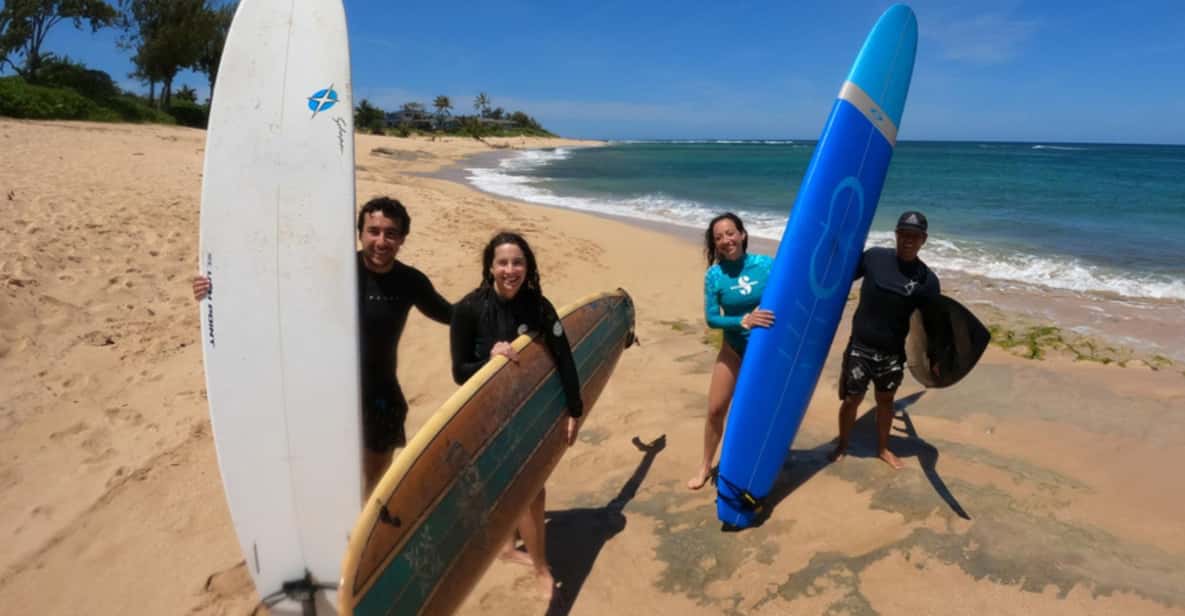
If you book as a single participant, the session can run for 1 hour to allow for more personalized attention. That’s especially valuable if you:
- want tighter coaching time per skill
- learn best with fewer people around
- feel nervous in a group setting
You still get the beginner-focused instruction, just with less waiting and more direct feedback. For independent travelers, that’s a solid way to make the most of your limited time.
It also means this lesson isn’t only for families. If you’re traveling solo but want a real coaching experience, this format can work well.
Who this beginner lesson is best for (and who should look elsewhere)
This is a beginner group lesson on the North Shore, suitable for ages 6+. That makes it a good fit for:
- families with kids old enough to handle basic water rules
- teens trying surfing as a first activity with friends
- adults who want structured instruction rather than “figure it out” time
- travelers who want a short, memorable activity in the middle of a bigger Oahu itinerary
The big limits are clear. It’s not suitable for children under 6, and it’s not designed for wheelchair users.
If you’re older, athletic, and eager to move fast, you might think two hours won’t be enough. But beginners often improve fastest in focused coaching + repeated practice. You’ll leave with the basics you need to keep learning after the lesson, not just a couple of lucky rides.
What you get for $125: value, not just a ticket
At $125 per person for a 2-hour lesson, you’re paying for two main things: qualified instruction and time in the water. Surf lessons that cost less sometimes cut corners on coaching time or equipment quality. Here, the lesson includes a certified instructor and a surfboard (plus you’re provided a rash guard).
The real value is the small group size of up to 8. In surfing, feedback timing matters. The faster you understand what to adjust, the quicker you get better. That’s why “small group” isn’t a marketing line, it’s part of how you improve during the session.
Also, the instructors are locally based and described as locally owned, with teachers Keoni and Kalani Nozaki. That tends to create a more community-rooted feel. You’re not just buying a generic activity; you’re learning from people embedded in the local surf scene.
Food and drinks aren’t included, so plan to eat before or after. And since there’s no pickup, your total cost is mostly the lesson plus whatever you spend on getting yourself there and handling your own day-of basics.
Practical gear tips that keep the day comfortable
This lesson keeps things simple. You’ll want to:
- wear comfortable swimwear
- bring a towel
- arrive 5–10 minutes early
If you want to feel at ease, pack a small towel, and consider something for after you rinse off, comfort matters when you’re changing in and out of wet gear. The rash guard and board handling are taken care of, but you still need to manage your comfort before and after.
Also, plan your timing. Oahu sun and wind can mess with your energy. A lesson like this is active, and you’ll be in and out of the water repeatedly.
How the 2 hours are likely to feel from start to finish
The session is 2 hours, starting near Haleiwa. You’ll spend early time on check-in and safety rules, then you’ll shift into skill instruction (paddling and standing up). After that, you’ll spend time in the water practicing and riding with instructors watching and helping you make adjustments.
For beginners, the “feel” of the lesson often depends on wave conditions. When it’s working, you can get into a smooth rhythm: paddle, set your position, stand, ride, reset. When it’s trickier, you’ll rely even more on coaching cues. Either way, your time is structured so you’re not stuck waiting for instruction while everyone else surfs.
One thing I appreciate is that the lesson doesn’t pretend you’ll become a surfer in a single day. Instead, it focuses on the fundamentals you can build on. That’s what makes it a smart first step.
The instructors make or break a beginner lesson
The instructors, Keoni and Kalani Nozaki, are the heart of the experience. The teaching style emphasized in the lesson is friendly, patient, and hands-on. For beginners, that’s not optional. You want someone who can correct paddling technique without making you feel embarrassed, and someone who can coach standing up so you actually understand what to do next.
You’ll likely get specific feedback on paddling so you can save your energy. That might sound minor, but it’s huge. Beginners burn through power quickly, then the session ends with you feeling spent instead of accomplished.
You’ll also see coaching that helps with standing. Even if you only catch a few clean rides at first, the goal is to connect the instruction to what you feel on the board. That’s how you improve during the session rather than just hoping for good luck.
Should you book this North Shore beginner surf lesson?
Yes, if your priority is a safe, confidence-building start with real coaching and plenty of time to practice. The small group size (up to 8), the experienced instructors (Keoni and Kalani Nozaki), and the structured focus on paddling and standing up make this a strong fit for first-timers.
Skip it (or choose another option) if you:
- need wheelchair accessibility (this one isn’t suitable)
- are bringing a child under 6
- want food included (it isn’t)
- need pickup from your hotel (it’s not offered)
If you’re ready to trade “watching surfers” for “learning how to ride,” this is a practical, value-focused way to do it on Oahu’s North Shore.
FAQ
Where is the meeting point?
You meet in the parking lot close by the beach near Haleiwa.
How long is the beginner surf lesson?
The standard duration is 2 hours.
How much does it cost?
It’s $125 per person.
Is pickup included?
No, pickup is not included.
What’s included in the lesson?
You get a surfboard and a certified instructor.
What should I wear and bring?
Wear comfortable swimwear and bring a towel. You’ll also want to arrive a bit early for check-in.
What age is this lesson suitable for?
It’s suitable for ages 6 and above.
Is the lesson suitable for wheelchair users?
No, it’s not suitable for wheelchair users.
How many people are in the group?
It’s a small group limited to 8 participants.
What if I book solo?
If you book as a single participant, the lesson will be 1 hour long to allow for more personalized attention.